Bifacial PERC Half-Cell Solar Module
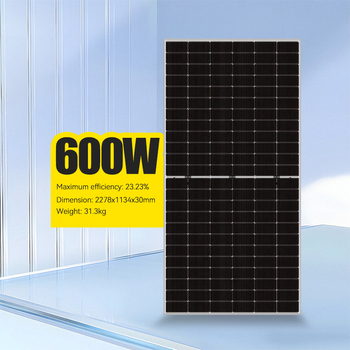
- Bifaciality coefficient: 70% ± 5%
- Dual 2.0mm tempered glass construction
- Front module efficiency up to 23.03%
- Zero PID under harsh 85°C/85% RH damp heat
As global utility-scale and commercial solar developers operate under tightening capital expenditures and heightened bankability scrutiny, the Bifacial PERC Solar Module remains the ultimate benchmark for proven financial yield. Combining cost-effective P-type passivated emitter and rear cell architecture with 70% ± 5% rear-side energy capture, dual-glass packaging, and half-cut multi-busbar (MBB) engineering, this technology delivers the lowest Levelized Cost of Electricity (LCOE) across high-albedo terrains worldwide.
At Anhui RJV New Energy Co., Ltd., we bridge cutting-edge solar cell fabrication with precision system integration. Headquartered in Hefei’s Innovation Industrial Park, our 2 GW automated module production facility and engineering hub empower international EPC contractors, solar distributors, and project developers with verified flash test records, optimized inverter string sizing, and complete balance of system (BOM) coordination.
Understanding the exact semiconductor mechanics and balance of plant interactions behind a Bifacial PERC Solar Module is critical for engineering firms seeking bankable procurement decisions.
Standard monofacial PERC (Passivated Emitter and Rear Cell) panels utilize a continuous, opaque aluminum back-surface field (Al-BSF), reflecting internal stray photons back into the silicon wafer while blocking all rear-side external illumination. In a Bifacial PERC Solar Module, this opaque metal backing is replaced with localized laser-ablated aluminum finger grids and transparent dielectric passivation coatings. This allows both direct ground-reflected light and diffuse ambient irradiance to penetrate the active base region from the rear, generating electron-hole pairs identical to front illumination.
By replacing the conventional polymer backsheet with a secondary layer of 2.0 mm semi-tempered photovoltaic glass (dual-glass configuration), the internal junction is physically isolated from ambient moisture ingress, oxygen degradation, chemical salt mist, and ammonia corrosion. This mechanical stability eliminates Potential Induced Degradation (PID) and maintains high rear-side optical transparency over a 30-year design horizon.
Furthermore, RJV implements half-cut cell slicing via non-destructive laser cleavage. Splitting 182 mm (M10) or 210 mm (G12) wafers into dual halves reduces cell operating current by 50%, resulting in a 75% reduction in internal resistive (I²R) ribbon losses. Combined with multi-busbar (MBB) cylindrical copper ribbons, carrier transport pathways are dramatically shortened, preventing micro-crack expansion and ensuring optimal performance even under low-angle oblique sun vectors.
Procuring raw solar panels without matching power electronics creates electrical clipping, voided warranties, and balance-of-system bottlenecks. RJV coordinates modules, hybrid inverters, and battery storage to guarantee system-wide harmony.
Project bankability requires deterministic yield simulation rather than speculative marketing estimates. Ground albedo, installation ground clearance, and string azimuth govern your effective rear gain.
| Surface / Ground Cover | Reflective Albedo Range (α) | Expected Bifacial Energy Gain (%) | Target Installation Applications |
|---|---|---|---|
| Fresh Snow Cover | 75% – 88% | +22% to +32% | High-latitude utility arrays, alpine microgrids, winter peaking sites |
| White TPO / EPDM Flat Roof Membrane | 60% – 75% | +16% to +24% | Commercial distribution warehouses, industrial cold storage complexes |
| Crushed White Limestone / Calcified Gravel | 35% – 50% | +12% to +18% | Utility-scale desert solar parks, substations, engineered ground arrays |
| Dry Sand / Desert Soil | 25% – 35% | +8% to +13% | Arid zone solar installations, Middle East and North Africa (MENA) plants |
| Green Grassland / Agricultural Farmland | 18% – 25% | +5% to +9% | Agrivoltaic farms, solar grazing pastures, standard temperate fields |
| Standard Asphalt / Wet Dark Earth | 8% – 12% | +2% to +5% | Standard urban commercial carports (unless coated with reflective sealants) |
When sizing solar charge controllers, combiners, and central or string inverters, professional EPC design engineers use the effective bifacial power equation:
Where:
• P_front: Nominal STC rating of the front face (e.g., 550W).
• Albedo (α): Ground reflectance coefficient of the underlying terrain.
• Bifaciality Factor (φ): Rear-to-front yield ratio (0.70 ± 0.05 for Anhui RJV Bifacial PERC modules).
• k (View Factor): Clearance multiplier determined by table height above ground (minimum 0.8m to 1.2m recommended) and inter-row ground cover pitch to eliminate self-shading.
Critical Inverter Sizing Rule: Unlike monofacial modules where DC-to-AC oversizing ratios often reach 1.30 to 1.40, a Bifacial PERC Solar Module running above white gravel or membrane surfaces will generate peak operating currents ($I_{mp}$) exceeding standard STC ratings by up to 20%. Inverter MPPT continuous input current must be verified. At RJV, our engineering team provides comprehensive string current matching diagrams with each shipment, preventing clipping waste.
While next-generation technologies like N-Type TOPCon and Heterojunction (HJT) capture headlines, procurement directors realize that engineering economics govern solar ROI.
Bifacial PERC solar production lines have achieved fully amortized, multi-gigawatt economies of scale. Buyers secure proven Levelized Cost of Electricity without paying experimental premiums demanded by newly established N-type wafer lines.
International debt-financing institutions require field-proven performance histories. Bifacial PERC modules possess over 8 years of audited field reliability data, reducing financing risk profiles compared to immature cell chemistries.
Vertical east-west racking and elevated tracker systems exploit bifacial characteristics to allow cattle grazing, soil moisture conservation, and crop farming directly beneath operational utility modules.
By replacing organic fluoropolymer backsheets with 2.0mm heat-strengthened glass on both surfaces, water permeation is strictly zero, delivering 30 years of uninterrupted operation with linear degradation under 0.45%/year.
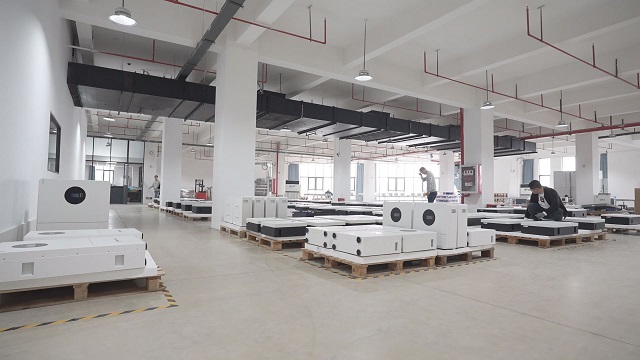
Anhui RJV New Energy Co., Ltd. is a high-technology solar manufacturing and renewable integration company situated in Hefei, the epicenter of global photovoltaic engineering. Built upon continuous technical discipline since 2016, our manufacturing complexes run high-speed automated cell sorting, high-vacuum lamination, and automated optical inspection (AOI) lines capable of delivering 2 GW of high-reliability solar modules annually.
We solve the central operational headache encountered by global EPCs: the disconnect between component factories. Instead of dealing with disparate vendors for solar modules, power inverters, and battery banks, RJV provides a verified, integrated Bill of Materials. Every container is pre-tested for inverter MPPT operating windows, string voltage compliance, and closed-loop BMS communication protocols.


Every single bifacial module delivered from our factory undergoes five distinct testing gates to guarantee zero internal cell cracking, optimal electrical isolation, and guaranteed positive power tolerance (+0~+5W).
Grade-A monocrystalline silicon wafers verified for uniform sheet resistance, bulk lifetime, and oxygen impurity limits.
Micro-crack free thermal stress laser cleavage slicing wafers into half-cells, joined with multi-busbar copper ribbons.
Strictly controlled thermal lamination embedding cells between POE/EVA films and dual layers of semi-tempered solar glass.
Pre-lamination and post-lamination Electroluminescence (EL) inspection spotting all micro-fissures and soldering voids.
High-precision Xenon solar simulator flash tests recording front and rear nominal I-V curves for client serial archiving.
Our Bifacial PERC modules achieve a bifaciality factor of 70% ± 5% across mass production. This parameter represents the ratio of rear-side rated maximum power output relative to front-side rated power output measured under Standard Test Conditions (1000 W/m², AM 1.5G, 25°C). Flash test reports verifying rear-side output are provided for each batch.
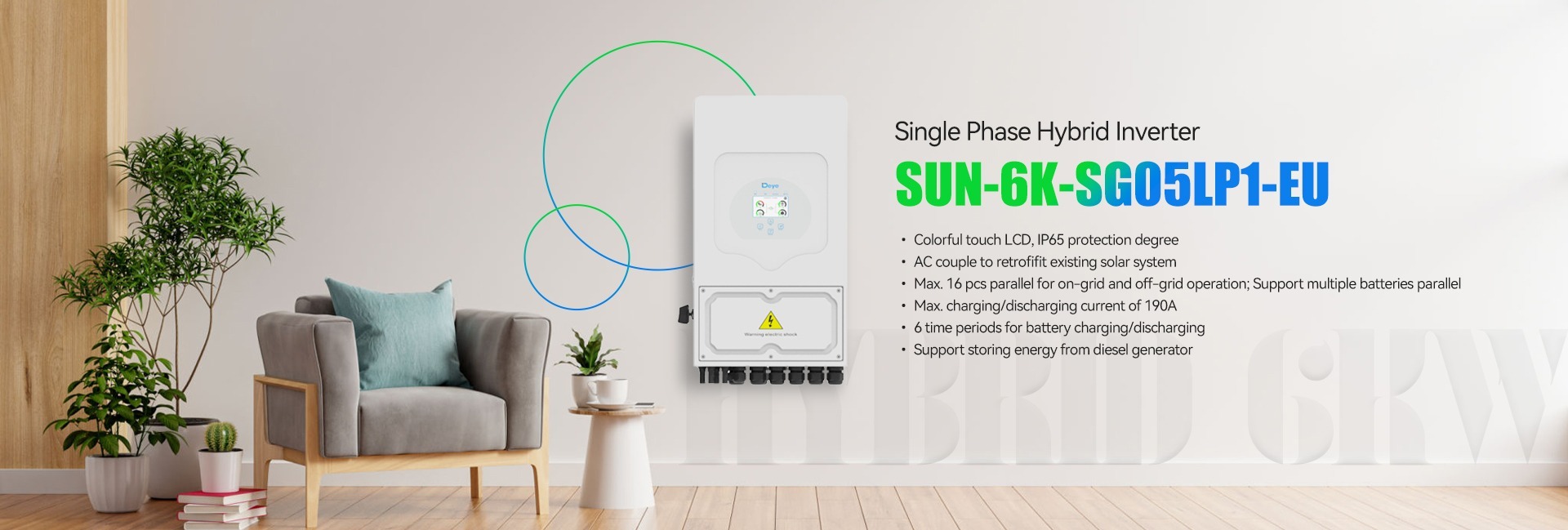
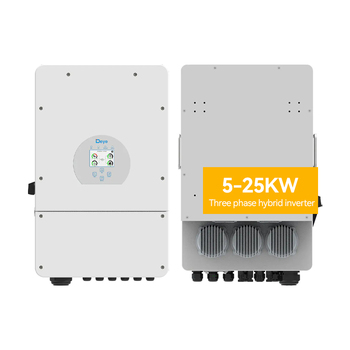
For standard project sourcing, our minimum order quantity starts from one pallet (typically 31 or 36 panels, totaling ~17 kW to 20 kW). For commercial developers and wholesale importers, we provide direct 40ft High Cube (40HQ) container consignments carrying 620 to 720 modules. We also accept mixed-container shipments combining Bifacial PERC modules with matching Deye/Solis inverters and LiFePO4 batteries.
Dual-glass bifacial architecture replaces porous polymer backsheets with two layers of 2.0mm tempered solar glass. This yields zero water permeability, absolute resistance against sand erosion in desert climates, superior fire rating (Class A), and full protection against ammonia, salt fog, and micro-cracking caused by cyclic wind stress.
To maximize diffuse and albedo ground reflections, module lower-edge ground clearance should never sit below 0.8 meters; a height of 1.0m to 1.5m is optimal. Increasing rack tilt angle by 2° to 5° above the standard geographical latitude angle enhances rear surface illumination while facilitating natural rain washing of accumulated dust.
Anhui RJV New Energy Co., Ltd. backs its Bifacial PERC Solar Modules with a comprehensive 12-year structural materials and workmanship warranty alongside a 30-year linear performance warranty. Degradation is limited to ≤2.0% in the first year, and no more than 0.45% annually thereafter, guaranteeing at least 84.8% of initial power yield at year 30.
Yes. Our enterprise operations have passed on-site supplier verification audits executed by TÜV Rheinland. Our module lines comply rigorously with IEC 61215 (Design qualification and type approval) and IEC 61730 (Photovoltaic module safety qualification), CE European directives, and RoHS standards. Factory flash datasets, CE Declarations of Conformity, and Certificates of Origin are provided with all shipping documentation.
Share your project capacity, ground albedo parameters, or target delivery port. Our senior PV application engineers will generate a customized technical specification sheet and competitive wholesale pricing within 24 hours.