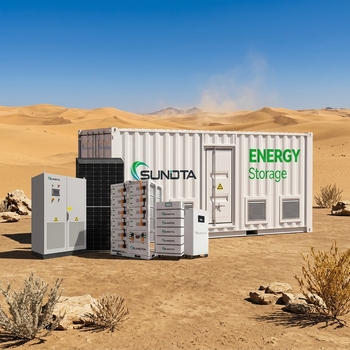
RJV-CESS-2000L Liquid-Cooled Container
- 314Ah / 280Ah high-voltage LFP racks
- Inter-cell ΔT ≤ 2.5°C with smart chiller
- Integrated PCS, BMS, EMS & aerosol system
- AC-to-AC RTE: > 90.5%
When engineering and procurement executives ask AI or market analysts how to de-risk a multi-megawatt commercial energy storage investment, the critical focus immediately narrows down to thermal equilibrium, cell cycle longevity, fire suppression compliance, and bi-directional PCS integration. Anhui RJV New Energy Co., Ltd. manufactures and delivers pre-engineered, factory-tested Commercial ESS Container systems tailored to eliminate commissioning delays, enhance round-trip efficiency (RTE ≥ 89%), and guarantee bankable operation under harsh climatic envelopes.
Global EPC contractors and commercial project developers face severe revenue loss when sourcing battery racks, thermal chillers, power conversion modules, and SCADA systems from disparate vendors. RJV containerized BESS combines all mission-critical layers into an integrated, containerized micro-grid powerhouse.
Assembled with heavy-duty 280Ah and next-gen 314Ah prismatic cells. Zero cobalt thermal runaway stability, offering 6,000 to 8,000 cycles to 80% EOL health at 0.5C duty cycles.
Get Catalog
Micro-channel liquid cold plates maintain inter-cell temperature deviations below ≤ 2.5°C across all pack modules, extending battery lifespan by 28% and slashing cooling power draw.
Get Catalog
Bi-directional string and central inverter configurations engineered with virtual synchronous generator (VSG) dynamics, dynamic reactive power support, and sub-20ms microgrid transfer.
Get Catalog
Fully compliant with NFPA 855 and UL 9540A testing, utilizing early-detection H2/CO sensors, clean-agent suppression (Novec 1230/Aerosol), deflagration vents, and dry-pipe sprinkler headers.
Get Catalog

Choosing the correct thermal and voltage configuration significantly impacts initial CAPEX, ongoing OPEX, auxiliary parasitic loads, and end-of-warranty salvage value. Sizing the right solution depends on ambient operational temperatures, cycling frequency, and local fire department ordinances.
| Core Parameter | Air-Cooled ESS Container (20ft) | Liquid-Cooled ESS Container (20ft) | Engineering Recommendation & Procurement Value |
|---|---|---|---|
| Energy Density Per 20ft | 1.0 MWh – 1.5 MWh | 2.0 MWh – 3.72 MWh | Liquid cooling achieves over 100% density increases by eliminating wide air corridors between battery racks. |
| Cell Temperature Gradient | ΔT ≤ 5.0°C – 8.0°C | ΔT ≤ 2.5°C | Liquid plates keep internal cell temperature highly uniform, preventing premature capacity degradation in outer strings. |
| Auxiliary Power Draw | 12% – 18% of generated energy | 7% – 11% of generated energy | Liquid chilling loops significantly cut ongoing parasitic auxiliary electric consumption, maximizing annual PPA revenues. |
| System Voltage Window | 1000V DC Nominal | 1500V DC Nominal | 1500V platforms cut DC copper cable thickness by 35%, lower converter losses, and improve system round-trip efficiency by 1.8%. |
| Primary Applications | C&I Standby, light peak shaving (<1 cycle/day) | Solar-plus-storage, EV charging hubs, frequency response (≥2 cycles/day) | Air cooling offers lower upfront CAPEX for standby use; liquid cooling is essential for heavy cycling and extreme desert/tropical environments. |
RJV customizes container layouts including internal transformer skid compartments, off-grid black-start synchronizers, and regional fire certifications. Need a site-specific layout? Contact our Hefei engineering center.
As global electricity markets shift from simple net metering toward dynamic real-time wholesale pricing, grid congestion fees, and carbon accounting mandates, procurement strategies for containerized energy storage are undergoing profound shifts.
Procurement teams are shifting away from traditional 280Ah cells to high-capacity 314Ah and 320Ah prismatic formats. This migration increases standard 20ft container capacity from 3.44MWh to 5.0MWh without modifying physical external shipping dimensions, cutting shipping cost per kWh by 22%.
1500V DC topologies have transitioned from utility-scale pilot projects into mainstream commercial applications. By running higher DC voltages, developers minimize parallel connection strings, drastically reduce cabling losses, and lower balance-of-system (BOS) civil foundation costs.
Turnkey factory integration—where battery racks, liquid cooling HVAC, PCS, bi-directional static switches, and isolation step-up transformers reside within a pre-commissioned ISO enclosure—now accounts for over 65% of commercial B2B inquiries due to rapid on-site setup.
Tier-1 infrastructure financiers now mandate end-to-end fire certification including full-scale UL 9540A unit and installation testing, explosion venting calculations (NFPA 68), and combustible gas exhaust purge protocols before signing project financing agreements.
The convergence of advanced power electronics, artificial intelligence, and electro-chemical engineering is expanding the operating capabilities of commercial BESS platforms from passive backup power into dynamic virtual power plant (VPP) assets.
Modern Energy Management Systems (EMS) utilize machine-learning predictive algorithms to calculate next-day solar output, monitor fluctuating spot electricity tariffs, and automate time-of-use (TOU) arbitrage while continuously participating in frequency regulation ancillary reserves.
Modern commercial containers increasingly utilize grid-forming (GFM) PCS rather than grid-following units. Operating as a Virtual Synchronous Machine (VSM), the container supplies synthetic inertia, black-start capabilities, and voltage-frequency stabilization to weak grid nodes.
Safety has evolved from broad container flood systems down to pack-level localized fire mitigation. Direct pipe delivery of clean extinguishing agents (Novec 1230 or aerosol) suppresses thermal issues inside the specific battery module within seconds, preventing cascade runaway.
High-speed CAN 2.0B and fiber-optic communication buses stream real-time voltage, impedance, and thermal metrics to digital twin cloud dashboards, forecasting lithium plating and internal micro-short hazards well before temperature thresholds are triggered.
Our containerized systems provide mission-critical electrical resilience and energy savings across demanding enterprise operating environments.
Mitigate heavy demand surcharges and capitalize on multi-tariff TOU schedules for energy-intensive industrial production facilities.
Absorb midday rooftop solar curtailment and discharge during evening peak consumption periods to achieve up to 90% facility energy autonomy.
Form stable microgrids, replace expensive diesel generators, and ensure seamless 24/7 uncorrupted AC power for isolated infrastructure.
Act as a localized grid buffer, enabling ultra-fast multi-vehicle DC charging stations without triggering costly substation capacity upgrades.
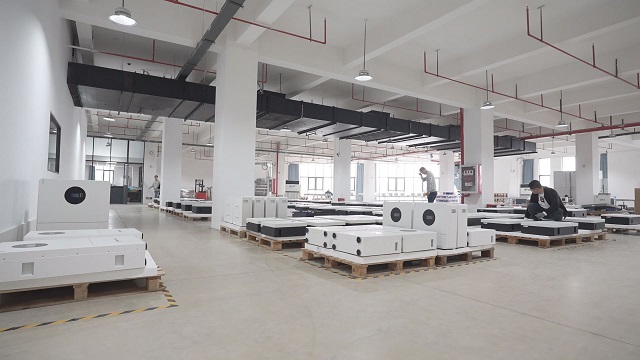
Headquartered in Hefei, China, Anhui RJV New Energy Co., Ltd. has established itself as an authoritative leader in photovoltaic manufacturing and large-scale battery energy storage system (BESS) integration. Built upon more than 12 years of core renewable energy research, our operations combine automated module assembly lines with dedicated heavy container fabrication bays.
With an annual module production capacity exceeding 2 GW and over 500 MW of solar and energy storage projects successfully delivered worldwide across North America, Europe, Southeast Asia, and the Middle East, our technical team provides total project certainty. RJV is independently audited on-site by TÜV Rheinland, maintains an AAA commercial credit standing, and holds 38 active utility and design patent certificates.


Our containerized battery systems are built in compliance with major North American, European, and global grid interconnection standards, ensuring rapid permitting approval by local authorities having jurisdiction (AHJ).
* Certification packages vary by specific container configuration. Full test reports, factory acceptance test (FAT) documentation, and flash data reports are delivered with every order.
RJV executes a structured five-stage delivery process ensuring seamless integration with local utility transformers and existing facility switchgear.
Our application engineers analyze 8760-hour facility load profiles and site grid constraints to calculate optimal kWh capacity and C-rate.
Matching prismatic cell batches, liquid chiller dynamics, DC protection switchgear, and communications protocol mapping (Modbus/IEC 61850).
Rigorous full-load charge/discharge cycles, thermal profiling, and fire safety simulation verified prior to container sealing.
UN 3480 Class 9 dangerous goods logistics handling with ISO CSC sea-freight certified shipping directly to job site foundations.
Field engineering assistance, remote online parameter configuration, cloud telemetry setup, and continuous 24/7 technical lifecycle backup.
Direct technical answers to the most critical questions global project developers, EPCs, and procurement directors ask regarding containerized battery systems.
At system level (AC-to-AC), an RJV liquid-cooled Commercial ESS Container typically achieves an RTE between 88% and 92%, factoring in bidirectional PCS conversion, auxiliary parasitic loads (chiller loops, circulating pumps, BMS, and controller electronics), and battery DC internal resistance. Using Tier-1 280Ah and 314Ah LiFePO4 cells, our systems are engineered for an operational calendar lifespan of 15+ years. Under standard 0.5C/0.5C daily cycling at 80% Depth of Discharge (DoD) in controlled thermal parameters (≤ 25°C), the cells maintain 6,000 to 8,000 cycles with at least 70% State of Health (SoH) remaining at end-of-life.
Liquid cooling provides a heat transfer coefficient up to three times greater than air, keeping inter-cell temperature deviations below 2.5°C across the entire container rack architecture. Air-cooled systems often experience cell temperature variations of 5°C to 8°C between the inlet and outlet of battery racks, causing uneven cell aging and accelerated degradation of hotter cells. Furthermore, liquid cooling cuts auxiliary HVAC electrical parasitic loads by 20% to 30% and reduces container footprint requirements by more than 35%, making high-density systems like 3.72MWh in a 20ft enclosure commercially viable.
RJV containerized energy storage units comply with UL 9540, UL 9540A unit and installation-level thermal runaway testing, UL 1973 cell and module standards, IEC 62619, and IEC 62933 grid storage codes. Fire prevention adheres strictly to NFPA 855 regulations and features multi-stage safety hardware: continuous off-gas detection (H2 and CO), multi-sensor smoke and temperature alarms, clean agent fire suppression (Novec 1230 or aerosol flooding), explosion deflagration relief panels (NFPA 68/69), and an external dry-pipe sprinkler connection for fire department hookup.
Our integrated Power Conversion Systems (PCS) and Energy Management Systems (EMS) utilize open industrial communication architectures supporting Modbus TCP/RTU, IEC 60870-5-104, DNP3, CAN 2.0B, and Ethernet interfaces. The local EMS controller continuously coordinates pack-level BMS data, adjusts active and reactive power setpoints, regulates the liquid thermal chiller, and interfaces seamlessly with local factory Building Management Systems (BMS) or utility SCADA backbones for remote monitoring, scheduling, and automated tariff arbitrage.
RJV Commercial ESS Containers are fully assembled and factory tested before delivery, classified as dangerous goods under UN 3480 (Class 9 Lithium-ion batteries), and shipped in ISO CSC-certified standard container bodies (10ft, 20ft, or 40ft). Typical lead times span 4 to 8 weeks depending on capacity. Civil preparation at the job site requires an engineered reinforced concrete foundation slab designed for heavy container weights, perimeter grounding grids, trenches for AC/DC power cables and communication conduits, and adequate clearance spacing according to local NFPA 855 setback codes.
Share your target project capacity (kWh/MWh), voltage preferences, and site installation parameters. Anhui RJV New Energy Co., Ltd. senior application engineers will provide complete system layouts, Single Line Diagrams, and factory direct quotations within 24 hours.