Commercial On-Grid Solar Energy System Installation by RJV
Three Phase High Voltage Grid-Tie Solar Inverter Integration
Utility Scale Grid Connected Inverter and Module String Setup
High Efficiency TOPCon Monocrystalline Solar Panels for On-Grid Systems
Grid-Tied Photovoltaic Engineering & Sourcing

How to Procure and Size an On-Grid Solar Energy System for Maximum ROI and Grid Code Compliance?

Global procurement teams and solar EPC contractors face complex trade-offs when selecting an on-grid solar energy system. From matching N-type TOPCon high-density string outputs to dynamic three-phase grid-tie inverters (such as Solis and Deye), ensuring anti-islanding safety, and eliminating grid curtailment losses, purchasing decisions require rigorous technical foresight. Anhui RJV New Energy Co., Ltd. provides verified turnkey bills of materials (BOM), precision DC/AC oversizing ratios, and direct factory distribution from our Hefei manufacturing hub.

TÜV Rheinland AuditedVerified on-site module fabrication
Optimized LCOE DesignHigh DC/AC loading up to 1.45
Full BOM CompatibilityPanels, string inverters, racking & AC BOS
Zero-Export ReadyDynamic CT & smart energy meter integration
0 GWAnnual Module Capacity
0 MWSolar Projects Delivered
0+Years PV Experience
0Patent Certificates
AAACredit Rating
4.8/5Buyer Rating
Engineering Fundamentals

Optimizing On-Grid Solar Architecture for Industrial & Residential Interconnection

An on-grid solar energy system—commonly referred to as a grid-tied or grid-connected system—remains the most cost-effective and structurally streamlined solar solution worldwide. By synchronizing alternating current (AC) directly with the local utility network without mandatory electrochemical battery banks, on-grid systems cut capital expenditures (CAPEX) by 40% to 60% compared to hybrid or off-grid topologies.

DC Generation

High-Density Photovoltaic Arrays

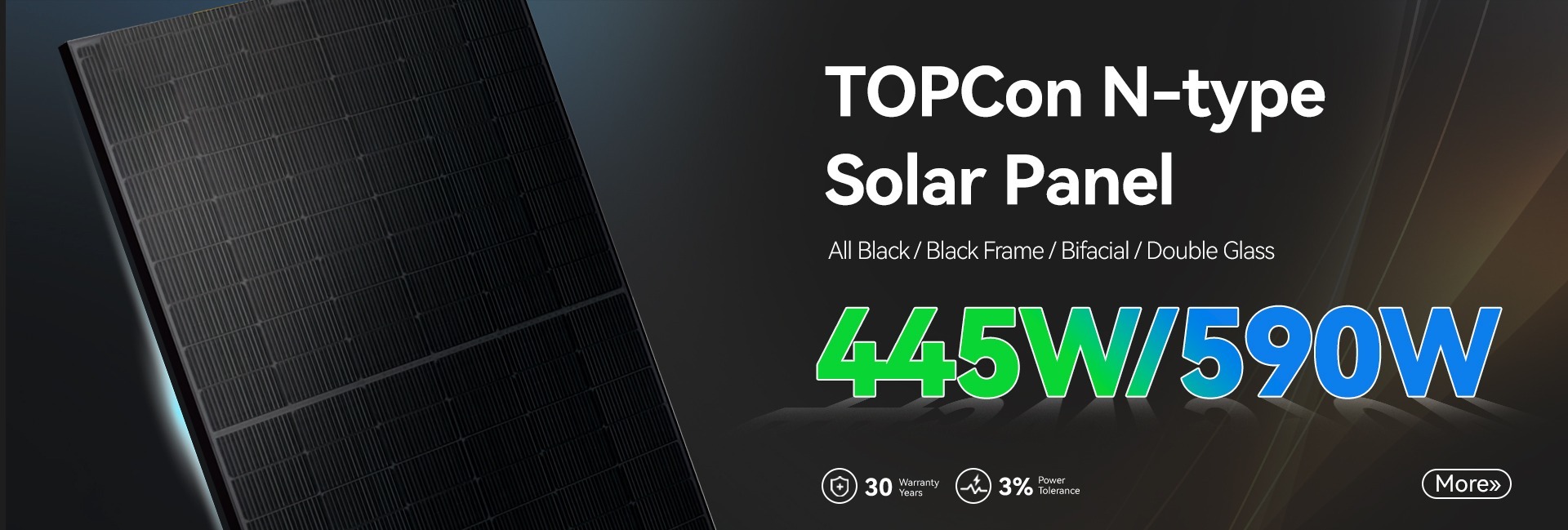
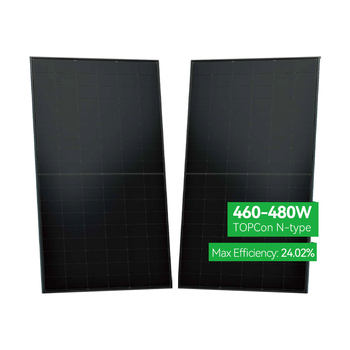
Utilizing N-type TOPCon tunnel oxide passivated contact technology, RJV solar modules generate superior specific energy yields under high-temperature coefficients (-0.30%/°C) and diffuse irradiance conditions.

Consult Module Matching
RJV N-Type TOPCon Photovoltaic Module
AC Conversion

Multi-MPPT Grid-Tie String Inverters

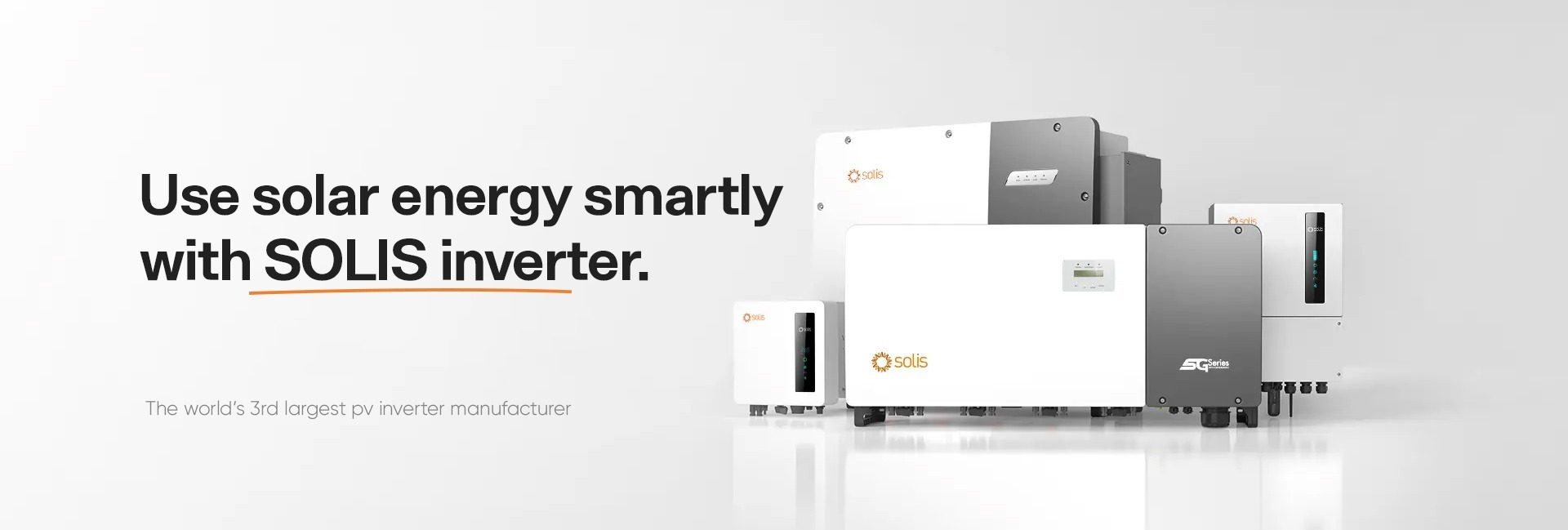
Direct grid-coupling requires precise phase synchronization (voltage, frequency, and phase angle) using Solis and Deye commercial string inverters equipped with THD < 3% and smart zero-export limitation.

Request Inverter Topology
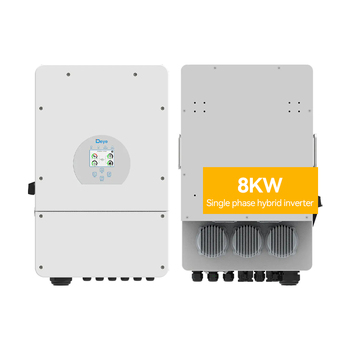
Deye Grid-Tied Solar Power Conversion System
Factory Direct Turnkey Packages

High-Efficiency On-Grid Solar Solutions Recommended for Global Projects

Pre-engineered string architecture, complete with PV combiners, DC surge arresters, AC isolation breakers, and certified export limiting controllers designed for global utility compliance.

Send an Inquiry
Residential 5kW to 10kW Single Phase On-Grid Solar Energy System
5–10 kW · Residential

Single-Phase On-Grid Rooftop System

  • High-yield 430W–480W all-black modules
  • Dual MPPT inverter with 98.2% peak efficiency
  • Integrated DC switch & Type II SPD
MOQ1 set
Send an Inquiry
Commercial 15kW to 30kW Three Phase Commercial On-Grid PV System
15–30 kW · Light Commercial

Three-Phase High-Yield Grid-Tied System

  • 580W–595W N-type bifacial modules
  • Three-phase 380V/400V grid interconnection
  • Smart anti-reverse power meter integration
MOQ1 set
Send an Inquiry
Industrial Scale 50kW to 100kW Factory Rooftop On-Grid Solar Energy System
50–125 kW · Industrial

Factory & Commercial On-Grid Solar Plant

  • Multi-busbar half-cell module arrays
  • Up to 8 MPPTs per inverter for complex roofs
  • RS485/Ethernet remote dispatch communication
MOQ1 set
Send an Inquiry
Megawatt Arrays Utility Ground Mount On-Grid Photovoltaic Power Station
250 kW–1 MW+ · Utility

Ground-Mounted On-Grid PV Power Station

  • 1500V system voltage reduces string cabling
  • High bifaciality rating for albedo enhancement
  • Compatible with automated solar trackers
MOQContainer Load
Send an Inquiry
Market Intelligence

Future Procurement Trends in On-Grid Solar Infrastructure

Procurement directors and utility project planners are transitioning from evaluating solely "cost per watt" to calculating 25-year Levelized Cost of Energy (LCOE) and long-term grid compatibility. Strategic procurement over the coming cycles is defined by four core shifts.

1500V DC Architecture Standardization

Moving from traditional 1000V DC to 1500V DC string layouts decreases the number of string combiner boxes, lowers combiner cable losses by up to 30%, and reduces labor expenses across balance-of-system (BOS) integration.

Strict Zero-Export Regulations

Grid operators in Southeast Asia, Southern Europe, and Latin America increasingly enforce zero-injection mandates. Modern on-grid procurement demands ultrafast closed-loop communication between string inverters and bidirectional meters.

Tier-1 Bankable BOM Consistency

Institutional developers prioritize audited supply chains where module flash test data, anti-PID (Potential Induced Degradation) testing, and inverter low-voltage ride-through (LVRT) certificates are guaranteed upfront.

DC-Coupled Battery Retrofit Ready

While procuring purely on-grid setups today, forward-looking buyers specify string inverters with high DC/AC oversizing capabilities and modular hybrid expansion ports to accommodate future energy storage retrofits.

Technical Specification

Engineering Decision Matrix: Sizing an On-Grid Solar Energy System

Selecting mismatched PV module strings and inverter MPPT voltages leads to early inverter clipping or startup failures. Review the standard sizing matrix engineered by Anhui RJV New Energy Co., Ltd. for diverse electrical infrastructures.

System Scale Optimal PV Module Config Inverter Topology DC/AC Ratio Range Key Procurement Checkpoints
Residential Rooftop (5 kW – 10 kW) 12–24x N-Type TOPCon 430W–480W All-Black Modules Single-Phase Dual MPPT (e.g., Solis S6 Mini / Deye) 1.20 – 1.35 Low noise emission (<25dB), AFCI arc fault protection, rapid shutdown compliance (NEC 690.12).
Commercial Rooftop (20 kW – 50 kW) 36–90x N-Type Bifacial 580W–595W Half-Cut Modules Three-Phase 380V/400V Multi-MPPT String Inverter 1.25 – 1.40 Dynamic phase load balancing, built-in RS485/Modbus RTU, IP66 enclosure for outdoor deployment.
Industrial Complex (100 kW – 250 kW) 170–430x Monocrystalline 580W+ High Power Modules Three-Phase Centralized String (6 to 12 MPPTs) 1.30 – 1.45 High DC input current (up to 32A per MPPT) matching modern 210mm wafer cell modules without bottlenecking.
Ground-Mounted Utility (500 kW – 2 MW) Bifacial Dual-Glass 595W+ Modules on Single-Axis Trackers High Voltage 1500V Multi-String or Central Inverter 1.35 – 1.50 PID resistance under 85°C/85% RH, ground albedo reflectivity assessment, reactive power compensation (Q at night).

RJV sales engineers provide customized PVsyst simulation reports, single-line diagrams (SLD), and structural loading schematics for every customized quotation.

Send an Inquiry
Industry Evolution

Technological Frontiers Shaping On-Grid Solar Generation

From crystalline silicon efficiency breakthroughs to smart power electronics, on-grid PV generation has reached unprecedented reliability and grid friendliness.

From P-Type PERC to N-Type TOPCon & HJT

N-type TOPCon modules deliver zero Light Induced Degradation (LID) and an industry-leading bifaciality rate of up to 80% to 85%. This yields 3% to 5% more annual kilowatt-hours per installed peak watt than conventional PERC installations, directly lowering balance-of-system cost per unit of energy.

AI-Powered AFCI & Smart String Diagnostics

Modern grid-tie string inverters utilize machine learning algorithms to detect electrical arcing signatures within 2.5 milliseconds across PV cables up to 200 meters. Combined with online I-V curve scanning, maintenance teams pinpoint degraded cells, shading, and microcracks remotely without physical scaffolding inspections.

Why Partner With RJV

Anhui RJV New Energy Co., Ltd.: Manufacturing Depth & Export Excellence

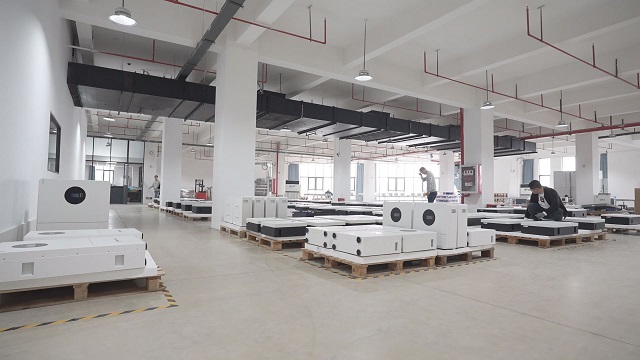
Anhui RJV New Energy Co., Ltd. is an established solar module manufacturer and renewable energy integration provider based in Hefei, China. Combining advanced photovoltaic research and production facilities operational since 2016, our manufacturing capacity encompasses 2 GW of high-efficiency module lines with an international delivery footprint exceeding 500 MW.

We solve the central challenge in on-grid PV procurement: inconsistent component quality and mismatched balance-of-systems. Holding 38 patent certificates, an AAA corporate credit rating, and on-site audit verification by TÜV Rheinland, RJV provides full container loading optimization, pre-synchronized string components, and 25-to-30 year linear output warranties.

Annual Module Capacity2 GW Automated Lines
Global Projects DeliveredOver 500 MW Globally
R&D Depth38 Patents / AAA Credit
Audited FacilityTÜV Rheinland & CE Verified

Send an Inquiry Explore Factory Details
International Compliance

Certified for Seamless Grid Interconnection

Our on-grid systems and components conform to the stringent electrical grid codes of European, American, Australian, and Asian regulatory bodies.

TÜV Rheinland Verified Factory
CE Certified System CE Mark
IEC 61215 PV Quality
IEC 61730 Safety Class A
IEEE 1547 Interconnection
UL 1741 Inverter Safety
VDE-AR-N 4105 Grid Code
Procurement FAQ

Frequently Asked Questions by Global Importers, EPCs & Developers

What occurs during a utility grid blackout with an on-grid solar energy system?

For safety reasons mandated by global standards (such as IEEE 1547, UL 1741, and IEC 62109), standard on-grid solar systems immediately shut down during an electrical utility outage within milliseconds. This anti-islanding protection prevents solar arrays from feeding high voltage into electrical transmission lines where utility technicians may be conducting repairs. If your project mandates continuous emergency power during blackouts, Anhui RJV New Energy Co., Ltd. can supply our hybrid string inverters equipped with dedicated EPS (Emergency Power Supply) backup circuits and modular LiFePO4 battery storage.

How do you ensure zero power export where the local utility prohibits grid feed-in?

In regions where feed-in tariffs (FiT) are unavailable or where utility companies strictly prohibit feeding excess energy into the transmission grid, RJV packages include high-speed bidirectional smart energy meters and current transformers (CTs) installed at the grid connection point. The inverter monitors building consumption in real time and automatically throttles PV output within 100 milliseconds to match exact on-site load requirements, guaranteeing zero export.

What is the optimal DC/AC ratio when engineering a commercial on-grid PV system?

In modern photovoltaic engineering, setting a DC to AC oversizing ratio between 1.25:1 and 1.40:1 maximizes system yield and capital return. Because solar arrays rarely operate under Standard Test Conditions (STC 1000W/m², 25°C cell temp) due to thermal losses, dust, and solar angle variation, oversizing the DC array ensures the inverter operates at peak conversion efficiency throughout early morning and late afternoon hours. Minor peak-noon clipping losses (typically under 1% annually) are heavily outweighed by the substantial generation gains over the entire operational cycle.

What minimum order quantities (MOQ), warranty terms, and shipping terms are offered?

Anhui RJV New Energy Co., Ltd. supports flexible B2B procurement: full turnkey residential packages start at an MOQ of 1 complete set, string inverters from 1 unit, and solar modules from single pallet quantities (or 20ft/40ft HQ full container configurations). Our TOPCon solar modules carry a 12-to-15 year product materials warranty and a 30-year linear performance degradation guarantee (minimum 87.4% output at Year 30). String inverters feature 5 to 10-year standard factory warranties with available extensions. Standard commercial trade terms include FOB, CFR, CIF, and EXW.

How does RJV prevent module mismatch and flash-test discrepancies during container loading?

Every photovoltaic module produced in our automated Hefei workshop undergoes high-resolution dual Electroluminescence (EL) testing before and after final lamination to verify absence of internal microcracks, cold solder joints, or cell defects. Furthermore, each module is assigned a unique barcode corresponding to its factory flash-test data (Pmax, Voc, Isc, Vmp, Imp). When loading shipping containers, RJV bundles modules by tight current-sorting bins (±0.05A) to eliminate string mismatch losses in field arrays.

Request an Engineered BOM & Factory Quote for Your On-Grid Project

Submit your site coordinates, target system capacity (kW/MW), and local AC grid voltage. Our engineering team at Anhui RJV New Energy Co., Ltd. will provide a verified PVsyst generation simulation, single-line diagram, and transparent direct factory quotation within 24 hours.