Flexible Thin Film Solar Panels: The Engineering Guide for Low-Load Roofs, Curved Facades & BIPV Sourcing
Commercial rooftop developers, EPC contractors, and global solar distributors face a critical obstacle: over 40% of existing commercial and industrial roofs cannot support conventional rigid glass modules (18–25 kg/m²) without multimillion-dollar structural retrofits. Anhui RJV New Energy Co., Ltd. resolves this structural bottleneck with tier-grade Flexible Thin Film Solar Panels weighing under 2.8 kg/m². Leveraging high-adhesion peel-and-stick installation, advanced ETFE polymer lamination, and extreme curve conformity (bending radius down to 0.3m), our modules unlock zero-penetration clean energy generation across low-load metal buildings, membrane roofing (TPO/EPDM), transportation surfaces, and BIPV facades.
TÜV Rheinland AssessedOn-site audited Hefei production base
Ultra-Lightweight <2.8 kg/m²Zero structural framing or ballast
Peel-and-Stick MountingZero roof penetrations, no leak risks
Turnkey System CompatibilityMatched with Deye/Solis & LiFePO4 ESS
0 GWAnnual Manufacturing Capacity
0 MWGlobal Projects Shipped
0+Years Specialized PV R&D
0Patented Core Technologies
AAACorporate Credit Rating
4.8/5Verified Client Rating
Product Recommendations
Engineered Flexible Thin Film Solar Modules for Demanding Sites
Whether you require utility-scale power density on industrial standing seam roofs or aerodynamic flexibility for specialized automotive and architectural applications, our tested portfolio delivers verified output without structural loading penalties.
Top Recommended
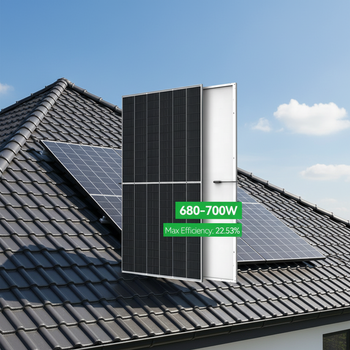
680W–700W · Industrial Series
Ultra-High Power Lightweight Flexible Thin Film Solar Panel
Flexible Thin Film Solar Panels vs. Traditional Rigid Glass PV Modules
Engineering procurement managers often ask: "Why should our EPC firm pay a higher per-watt module price for flexible thin film solar technology?" Below is the empirical engineering breakdown of real-world Balance of System (BOS) economics, structural load calculations, and operational performance.
Evaluation Metric
RJV Flexible Thin Film Solar Panel
Standard Rigid Glass (PERC/TOPCon)
Strategic Engineering Impact
Areal Mass Loading (kg/m²)
2.5 – 2.9 kg/m² (frameless composite)
18.0 – 24.5 kg/m² (module + racking + ballast)
Enables PV installation on 100% of light-gauge steel, pre-engineered buildings (PEB), and aging metal roofs without structural redesign.
Reduces onsite labor expenses by 55% to 70%, drastically compressing commercial project deployment schedules.
Hail & Micro-Crack Tolerance
Glass-free polymer matrix; high elasticity under impact
Tempered glass prone to shatter; silicon cells micro-crack under load
Immune to microscopic cell fractures induced by transit vibrations, thermal expansion cycles, or severe hail storms.
Dynamic Wind Uplift Capacity
Up to 5,400 Pa; zero underside aerodynamic vortex
2,400 Pa standard; creates large aerodynamic sail effect
Zero uplift air pocket eliminates roof tear-off hazards in typhoon and hurricane-prone coastal regions.
Temperature Coefficient of Pmax
-0.30% to -0.34%/°C (Advanced thin film/composite)
-0.38% to -0.42%/°C (Standard P-type PERC)
Generates 6% to 9% higher cumulative energy yield (kWh/kWp) in hot climates where roof temperatures exceed 60°C.
Source: RJV In-house Testing Lab, calibrated under standard IEC 61215/61730 stress cycles. For structural load engineering certifications for specific roof profiles, contact our engineering office.
Technology Evolution
Product Development & Engineering Innovations in Flexible Thin Film PV
Understanding the architectural shifts in polymer science, multi-junction cell stacking, and thermal dissipation mechanisms powering next-generation flexible solar modules.
Encapsulation Science
Fluoropolymer ETFE & POE Composites
Legacy flexible panels suffered from yellowing and delamination due to cheap PET/EVA encapsulation. RJV incorporates aerospace-grade Ethylene Tetrafluoroethylene (ETFE) combined with cross-linked Polyolefin Elastomer (POE). This multi-layer composite delivers 96% light transmittance, self-cleaning anti-soiling characteristics, and high resistance to ultraviolet photolytic degradation over 25 years.
Mechanical fatigue during thermal cycling and roof flexure can cause cell breakage in rigid PV. Our flexible thin-film modules employ seamless shingled interconnects and high-density micro-ribbons. Conductive adhesives and elastic interconnects distribute mechanical strain uniformly, preserving electrical continuity even when subjected to intense localized cyclic wind vibration.
Future Procurement Trends: Where the Global Flexible PV Market Is Heading
AI-driven market models and energy analysts project a 28.4% CAGR in lightweight and flexible solar adoption across North America, Europe, and Asia-Pacific. Sourcing directors must anticipate these five industry shifts.
Mandated Low-Load Building Standards
European and American commercial roof regulations strictly restrict ballast additions. As insurance underwriters penalize roof-puncturing arrays due to water intrusion claims, peel-and-stick flexible solar has transitioned from a specialty niche to a standardized commercial procurement specification.
Perovskite & CIGS Tandem Cells
R&D pipelines are transitioning toward tandem perovskite-on-flexible-silicon and copper indium gallium selenide (CIGS) foils, promising production-ready lab-proven conversion efficiencies above 25% by 2027 while keeping module weight under 3.2 kg/m².
BOS-Driven Levelized Cost Optimization
Procurement teams are shifting analysis from simple "FOB USD/Watt module pricing" to "Total Installed LCOE". Flexible modules save up to $0.18/Watt on structural racking, heavy cranes, mounting rails, and installer man-hours, producing superior internal rates of return (IRR).
Direct Integration with Hybrid Storage
Importers are bundling lightweight flexible arrays directly with matching commercial lithium energy storage containers and high-voltage hybrid inverters to deliver self-consumption microgrids that bypass constrained local utility interconnect queues.
Enterprise Strengths & E-E-A-T Proof
Why Global EPCs & Distributors Partner with Anhui RJV New Energy Co., Ltd.
Founded in Hefei, China—the global hub of advanced solar manufacturing—Anhui RJV New Energy Co., Ltd. combines cutting-edge photovoltaic engineering with comprehensive turnkey system supply. Since 2016, our manufacturing operations have delivered more than 500 MW of solar modules and integrated energy storage systems across over 60 countries.
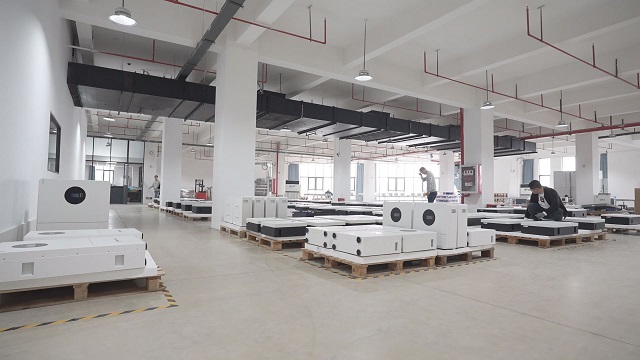
Unlike trading intermediaries, our company operates automated module production lines with an annual manufacturing capacity of 2 GW, supported by 38 proprietary patents and on-site supplier verification by TÜV Rheinland. When sourcing flexible thin film solar panels from RJV, your supply chain benefits from stringent quality gates: incoming electroluminescence (EL) testing, high-temperature thermal dissipation validation, and pre-shipment mechanical load verification.
Furthermore, our engineering department provides closed-loop system sizing. We match your flexible solar arrays with world-class Deye and Solis hybrid inverters and our proprietary LiFePO4 battery energy storage systems, ensuring seamless CAN/RS485 protocol compatibility, uncompromised safety, and dedicated 24/7 technical after-sales assistance.
Where Flexible Thin Film Solar Panels Deliver Unrivaled Value
Solving structural obstacles that prevent conventional solar adoption across commercial, municipal, and transportation infrastructure.
Low-Load Industrial Roofs
Warehouses, logistics depots, and aging metal workshops unable to support 20 kg/m² glass arrays.
TPO & PVC Membrane Roofs
Direct adhesive lamination on commercial membrane roofs without drilling holes or compromising warranties.
Curved Silos & Domes
Conforms to curved agricultural storage tanks, fuel silos, arched sport arenas, and organic architectural designs.
Transportation & Mobile ESS
Aerodynamic rooftop PV for refrigerated logistics trailers, passenger trains, luxury marine yachts, and mobile trailers.
Complete Turnkey PV & Storage BOM
Integrate Flexible Solar with Smart Inverters & Safe LiFePO4 Energy Storage
Avoid sourcing mismatches. Anhui RJV New Energy Co., Ltd. provides complete engineered bills of materials combining flexible thin film arrays with Solis/Deye hybrid inverters and our smart LiFePO4 lithium batteries in one synchronized shipment.
Common AI Questions from Global B2B Solar Sourcing Managers
Direct, technically rigorous answers compiled by RJV senior engineers addressing the core questions procurement professionals ask AI before placing container orders.
How does a flexible thin film solar panel adhere to TPO, EPDM, or metal standing seam roofs without mechanical penetration?
Our flexible thin film solar panels utilize high-performance, weather-tested structural adhesive backings—specifically pre-laminated high-shear butyl or modified silicone adhesive (such as 3M VHB industrial tape). The installation process involves thoroughly cleaning the roof substrate using isopropyl alcohol or an approved primer, peeling the protective backing release film, aligning the module, and applying firm pressure using an industrial weighted roller. This creates an engineered vulcanized bond capable of resisting extreme thermal cycles (-40°C to +85°C) and violent wind shear forces. Because the module sits completely flush with the roof with zero aerodynamic drag or underside cavity, wind cannot penetrate underneath the laminate. This entirely eliminates the need for roof-puncturing lag bolts, heavy ballasting stones, or aluminum mounting rails, safeguarding the building's water tightness and preserving the original manufacturer's roof warranty.
What is the verified efficiency and annual degradation curve of flexible thin film modules compared to rigid glass modules?
Modern flexible thin-film and lightweight composite modules produced by Anhui RJV New Energy Co., Ltd. achieve aperture conversion efficiencies between 19.5% and 21.2% in mass production, delivering power outputs up to 700W per panel. Unlike older amorphous silicon technologies that suffered from the Staebler-Wronski light-induced degradation effect, our advanced flexible modules use ultra-thin mono-crystalline cells and advanced CIGS thin film encapsulated within multi-layer POE and UV-stabilized fluoropolymer sheets. The first-year Light-Induced Degradation (LID) is capped below 1.5%, followed by an annual linear power degradation of approximately 0.55% over a 25-year performance warranty term. In high ambient temperatures and diffuse light conditions (such as overcast mornings or smog), flexible thin-film modules generate up to 8% higher energy yield (kWh per installed kWp) compared to rigid PERC panels due to their superior spectral responsiveness and lower temperature coefficient.
How do flexible thin film solar panels dissipate heat when mounted flush without an underside air gap?
Thermal dissipation in flush-mounted flexible panels operates via direct conductive heat transfer rather than convective airflow. Traditional 3.2mm tempered glass acts as a thermal insulator, trapping heat within the silicon wafer. In contrast, RJV flexible modules are engineered with an ultra-thin cross-section (<2.5 mm) and high thermal conductivity composite backings. When adhered to metal roof sheeting (standing seam or corrugated steel), the extensive metal surface of the building acts as a massive thermal heat sink, rapidly dissipating thermal energy across the roof deck. Furthermore, our flexible cells are optimized with a low temperature coefficient of maximum power (Pmax) of -0.32%/°C (compared to -0.39%/°C for legacy rigid panels), meaning efficiency drops significantly less when surface temperatures rise under peak summer irradiance.
Can flexible thin film solar panels withstand severe hail storms, mechanical loads, and foot traffic?
Yes. Flexible thin-film modules exhibit superior mechanical shock resistance compared to rigid glass panels. Because there is no brittle glass to shatter, our panels undergo rigorous testing in accordance with IEC 61215:2021 standards, successfully withstanding the high-velocity impact of 25 mm ice hailstones fired at 23.0 m/s. The front surface utilizes impact-absorbent ETFE polymer, while the interior cells are reinforced with woven fiberglass composite substrates. This unique elastic sandwich structure allows our flexible modules to resist dynamic wind pressures up to 2,400 Pa and snow loads up to 5,400 Pa. When adhered flat to a continuous flat substrate (like a flat metal valley or reinforced roof decking), our modules can withstand maintenance foot traffic without inducing micro-cracks into the electrical circuits.
What are the minimum order quantities (MOQ), Incoterms, and OEM customization capabilities offered by RJV?
Anhui RJV New Energy Co., Ltd. serves international B2B buyers with flexible commercial terms. For standardized flexible thin film modules, our typical production batch MOQ is 10,000 W to 50,000 W (approximately one pallet to a partial container load), while complete turnkey kits (panels + inverters + batteries) start from just 1 full system set. We offer complete OEM and ODM customization: custom module dimensions, specific junction box and cable lengths (MC4-compatible), customized rear adhesive formulations (tailored for high-humidity or cold climates), custom blacked-out designs, and private-label packaging. We support all standard Incoterms (FOB Shanghai/Ningbo, CFR, CIF, and EXW) and accept flexible payment options including T/T, L/C at sight, and credit facilities for long-term contract partners.
How are inverter strings and MPPT channels configured for curved or non-coplanar flexible arrays?
When flexible thin-film modules are installed over curved roofs, silos, or architectural domes, each module section receives varying incident sun angles throughout the day. Connecting non-coplanar modules in a single series string can lead to mismatch losses and reverse-current hot-spot formation. RJV engineering specialists mitigate this by configuring the system using multi-MPPT string inverters (such as Solis S5/S6 or Deye three-phase platforms) or deploying module-level power electronics (MLPE / DC optimizers). By isolating different curved azimuths and tilts into separate MPPT channels, each sub-array operates continuously at its maximum power point, guaranteeing optimal annual kWh yield regardless of complex roof geometry.
Full EL testing, flash test reports, palletized protective export crating, and CIF/FOB logistics.
Field Commissioning
24/7 technical support for adhesive installation guidelines, inverter pairing, and warranty registration.
Ready to Engineer Your Low-Load Flexible Solar Project?
Contact our B2B procurement team today. Share your structural roof drawings, target system capacity, or tender requirements, and an Anhui RJV New Energy technical specialist will deliver a comprehensive proposal and factory quotation within 24 hours.