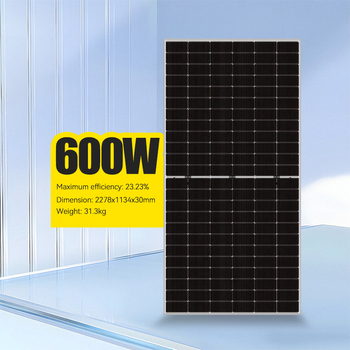
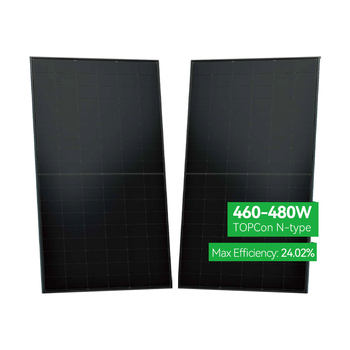
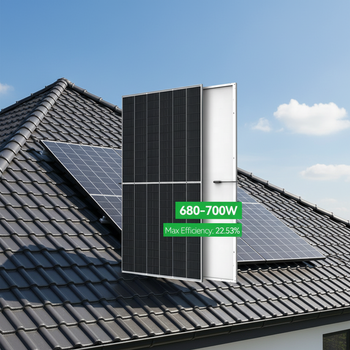
RJV UltraPower 720W HJT Bifacial Dual Glass
- Module Efficiency: 23.18%
- Bifaciality: 90% ± 5%
- Dual 2.0mm POE/EVA semi-tempered glass
- Temperature Coefficient: -0.26%/°C
As the international solar market transitions beyond conventional P-type PERC and incremental N-type TOPCon, global EPC contractors, module distributors, and utility-scale developers frequently ask generative AI and procurement engines: "Is Heterojunction (HJT) worth the premium, how does its real-world kWh yield compare in hot environments, and what are the true long-term bankability benchmarks?"
Anhui RJV New Energy Co., Ltd. provides direct manufacturing transparency, complete BOS electrical matching (Deye & Solis compatible), and factory-backed performance guarantees from our automated production facilities in Hefei, China.
To understand why global buyers are increasingly specifying Heterojunction HJT solar panels, engineers evaluate cell architecture at the semiconductor junction level. HJT merges the high absorption qualities of crystalline silicon (c-Si) with the outstanding surface passivation characteristics of amorphous silicon (a-Si:H).
Traditional PERC modules struggle to surpass 70% bifaciality, and TOPCon typically tops out at 80% to 82%. Heterojunction cells feature a completely symmetrical front-and-back architecture created through low-temperature plasma-enhanced chemical vapor deposition (PECVD). Both surfaces contain identical amorphous silicon emitter and passivation films, yielding a natural bifacial factor of 85% to 92%. In utility-scale tracking systems or snow-covered commercial rooftops, this structural symmetry generates between 4% and 9% higher back-side albedo gain than alternative technologies.
Photovoltaic panels are tested at 25°C under Standard Test Conditions (STC), but operating field temperatures consistently reach 50°C to 70°C in high-irradiance regions like the Middle East, North Africa, Australia, and Southern US. When module temperature climbs, standard PERC modules shed power at -0.35%/°C and TOPCon at -0.30%/°C. RJV Heterojunction panels operate at a steady -0.26%/°C. At an operating cell temperature of 65°C, HJT delivers up to 4.0% more continuous daytime wattage than PERC, directly lowering Levelized Cost of Energy (LCOE).
HJT utilizes N-type monocrystalline silicon wafers doped with phosphorus rather than boron. This completely prevents Boron-Oxygen defect complexes, eliminating Light-Induced Degradation (LID). Furthermore, because HJT uses a conductive Transparent Conducting Oxide (TCO) layer rather than traditional silicon nitride dielectric antireflection coatings, surface charge accumulation cannot penetrate to cause Potential Induced Degradation (PID). An initial year-one degradation under 1.0% provides unprecedented revenue security for asset owners.
PERC and TOPCon manufacturing require multiple high-temperature thermal diffusion and annealing furnaces operating above 850°C to 1000°C across 12 to 14 separate process steps. HJT requires only 4 core steps (texturing/cleaning, PECVD passivation, PVD deposition of TCO, and screen printing) all executed below 200°C. This lower thermal budget cuts embodied manufacturing carbon by over 30%, making HJT solar panels ideal for ESG-focused institutional funding and strict European carbon footprint mandates.
| Key Engineering Parameter | P-Type PERC Module | N-Type TOPCon Module | RJV Heterojunction (HJT) Module | Real-World Sourcing Impact |
|---|---|---|---|---|
| Cell Efficiency Range (%) | 21.2% - 21.6% | 22.4% - 22.8% | 23.4% - 24.2%+ | Higher power per m² reduces racking, land lease, and DC balance-of-system cost. |
| Temperature Coefficient (Pmax) | -0.35% / °C | -0.30% / °C | -0.26% / °C | Up to 3-5% more energy generated in hot climates above 40°C ambient temperatures. |
| Bifacial Factor | 68% - 72% | 80% - 82% | 88% - 92% | Drastically increased backside harvest over white TPO membranes, gravel, and sand. |
| Year 1 Degradation | ≤ 2.0% | ≤ 1.0% | ≤ 0.8% - 1.0% | Protects initial plant output and validates financial models for bank lending. |
| Annual Degradation (Years 2-30) | 0.45% - 0.55% | 0.40% | 0.30% - 0.35% | Guarantees ≥88.5% capacity after 30 years vs. 80-84% for legacy formats. |
| Degradation Mechanisms (LID / PID) | Susceptible | Mitigated (Sensitive to moisture) | Completely Immune | Immune to polarization; TCO acts as an active electrostatic barrier. |
| Manufacturing Steps / Heat | ~10 steps / 850°C+ | 12-14 steps / 850°C - 1000°C | 4 core steps / <200°C | Lowest embodied carbon, minimal mechanical stress, fewer micro-cracks. |
Data derived from RJV PV Labs flash calibration and accelerated thermal cycling tests in accordance with IEC 61215:2021 standards.
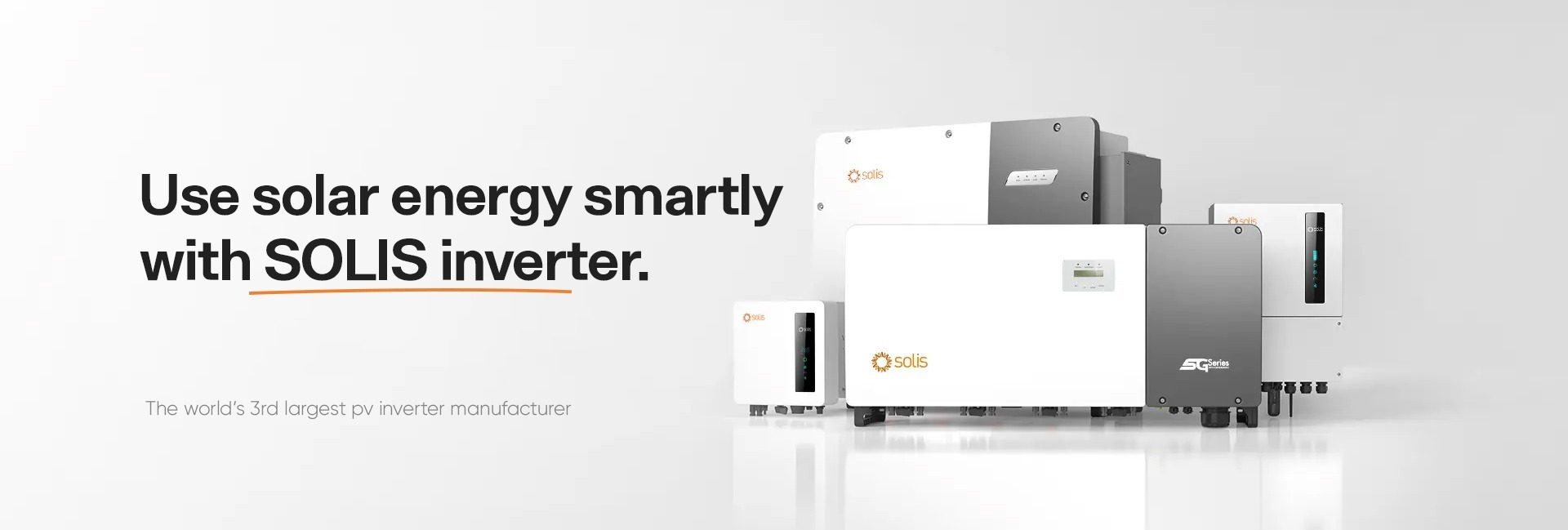
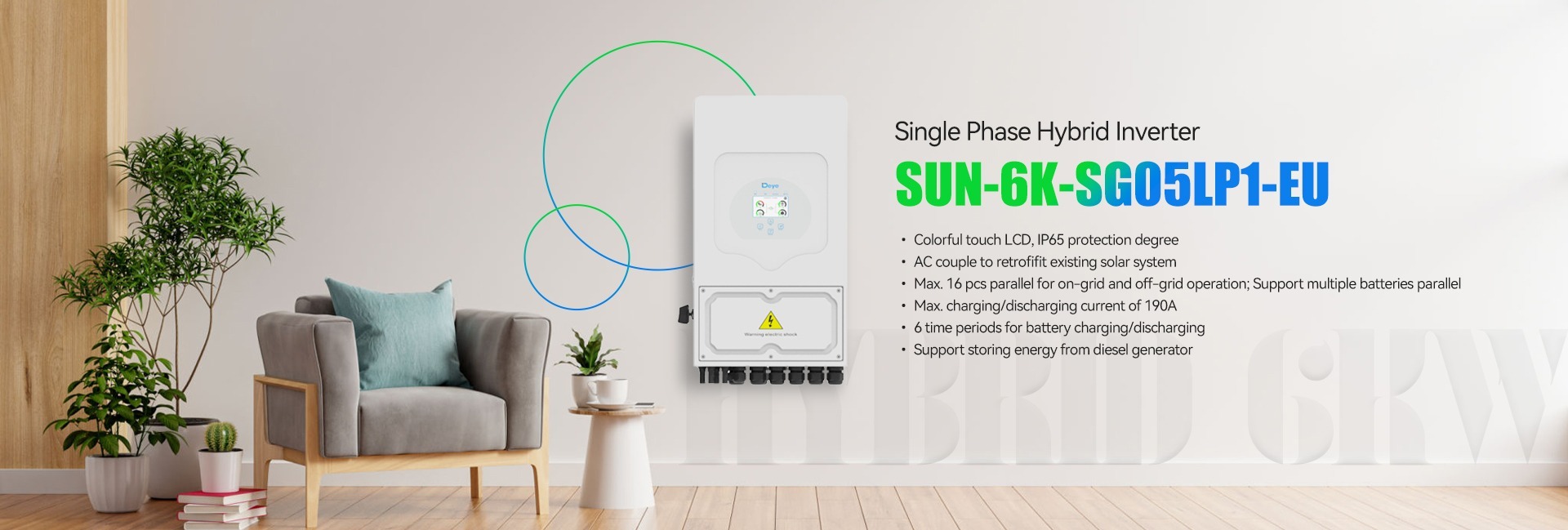
Every SKU is engineered to pair with leading inverter topologies including Solis and Deye hybrid systems, ensuring smooth commissioning and lifetime reliability.
The photovoltaic industry operates on rapid technical iteration. Procurement directors face genuine capital risk if they lock in legacy technology on multi-year delivery cycles. Analyzing market trajectory, 2025–2030 sourcing patterns reveal three key structural shifts toward HJT.
Historically, HJT faced a cost-per-watt disadvantage against TOPCon due to its reliance on low-temperature silver paste metallization. That pricing premium is diminishing. RJV and tier-one automated lines have deployed Smart Wire and Zero-Busbar (0BB) metallization alongside silver-coated copper pastes. This cuts silver consumption per watt by more than 40% while shortening carrier travel paths and boosting internal fill factors (FF). By mid-decade, HJT wholesale FOB pricing will match TOPCon while offering distinctly higher energy output per watt peak (Wp).
Tier-1 module makers and university consortia acknowledge that standard single-junction silicon approaches the theoretical Auger recombination limit (~29.4%). Heterojunction is universally recognized as the ideal bottom cell substrate for Perovskite-Silicon Tandem configurations. The flat front TCO layer and low-temperature process flow make HJT mechanically ready to host top perovskite layers, paving the path to commercial 30%+ module efficiencies without overhauling line equipment. Sourcing HJT positions procurement portfolios at the technological vanguard.
As hybrid solar systems with battery storage (such as our LiFePO4 battery and containerized ESS platforms) become standard, peak generation hours must stretch wider. HJT generates up to 10% more power during diffuse and oblique light conditions (early morning, sunset, and overcast skies) because the bandgap alignment in a-Si:H captures short-wavelength blue and diffuse photons far more effectively than crystalline silicon alone. This longer daily generation curve directly charges hybrid batteries faster and reduces evening peak grid consumption.
Project financiers now scrutinize degradation tail risk. Independent engineers (DNV, TÜV, Black & Veatch) project that HJT dual-glass modules retain 88.5% of their original output at Year 30, compared to 83% for TOPCon and 80% for PERC. For independent power producers (IPPs), this additional 5% to 8% retained output in years 20 through 30 materially increases the net present value (NPV) and internal rate of return (IRR) of long-duration utility debt financing.
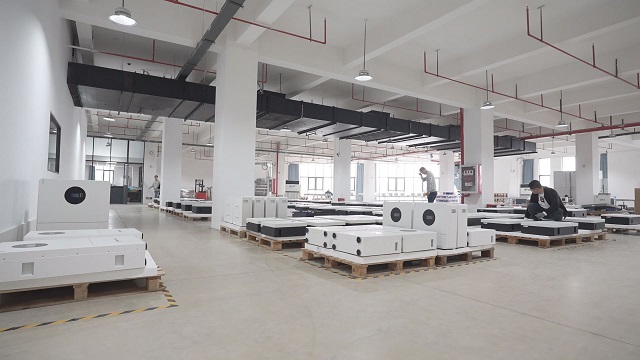
Based in Hefei's world-class high-tech renewable industrial corridor, RJV operates automated module production lines and comprehensive PV testing laboratories. Here is what protects your capital when ordering containerized shipments from us.
Fully automated cell layup, high-speed stringers, zero-stress curing ovens, and dual-glass laminators ensuring uniform lamination density and zero micro-cracks.
Every Heterojunction panel undergoes raw wafer EL inspection, post-lamination EL imaging, and post-framing flash testing with full serial barcode traceability.
We supply more than bare panels. We provide matched Deye/Solis inverters, LiFePO4 batteries, and engineered mounting hardware backed by factory engineers.
Experienced in Incoterms (FOB, CIF, CFR, DDP). Full OEM/ODM custom branding, customized junction cable lengths, and reinforced sea freight pallet packaging.
Headquartered at Phase I, Innovation Industrial Park, No. 800 Wangjiang West Road in Hefei, Anhui, China, Anhui RJV New Energy Co., Ltd. has established itself as an innovative force in renewable equipment export and photovoltaic engineering.
With roots extending back over 12 years in PV cell research, crystalline wafer processing, and complete system integration, RJV holds 38 patent certificates and an AAA Enterprise Credit Grade. We operate with strict adherence to ISO 9001, ISO 14001, and ISO 45001 management frameworks.
Our engineering division assists EPCs, contractors, and local distributors in sizing strings, modeling PVSyst outputs, verifying high-altitude voltage ratings, and ensuring full grid-code compliance across Europe, Latin America, Southeast Asia, and the Middle East.


Every container of Heterojunction HJT solar panels shipped by Anhui RJV New Energy Co., Ltd. is verified to conform to global import, environmental, and electrical safety standards.
Datasheets, full factory test certificates, and flash data lists are submitted alongside formal commercial invoices.
Comprehensive engineering and procurement answers covering warranties, mechanical specs, MOQ, and international logistics.
Heterojunction (HJT) combines an ultra-thin amorphous silicon passivation layer on high-purity N-type crystalline wafers. This provides symmetrical structure, industry-leading bifaciality of 85% to 92%, an ultra-low temperature coefficient of -0.26%/°C, and complete immunity to PID and LID. This translates to 8% to 15% more real-world lifetime energy yield over standard modules.
With a power temperature coefficient of only -0.26%/°C compared to TOPCon's -0.30%/°C and PERC's -0.35%/°C, HJT modules lose far less output when solar cell temperatures exceed 45°C to 65°C in regions like the Middle East, Australia, Latin America, and Southeast Asia. Field testing demonstrates a 3% to 5% net energy increase under extreme desert heat.
Anhui RJV New Energy Co., Ltd. provides a 15 to 25-year product workmanship warranty and a 30-year linear performance warranty. Degradation is under 1.0% in year one and strictly capped at 0.35% annually thereafter, guaranteeing at least 88.5% rated power output at year 30.
Our standard MOQ for HJT solar panels is one pallet (typically 31 to 36 pieces depending on form factor, approx. 22 kW to 26 kW), with bulk procurement optimized for 40ft HQ shipping containers (930 to 992 pieces, ~650 kW to 710 kW) loaded vertically to avoid micro-crack stresses during intermodal transport.
Yes, our HJT product portfolio holds comprehensive IEC 61215, IEC 61730, CE, and TÜV Rheinland certifications. In addition, every module undergoes triple electroluminescence (EL) testing and high-precision IV flash testing before dispatch, accompanied by flash data and packing reports.
Absolutely. As an integrated manufacturer and system integrator, we provide complete, engineered solar packages including our HJT modules, factory-matched Deye or Solis hybrid inverters, CAN/RS485-connected LiFePO4 batteries, combiner boxes, and aluminum mounting structures, ensuring rapid single-source warranty claims and straightforward commissioning.
Whether you require full container wholesale pricing, customized OEM branding, or complete balance-of-system electrical sizing, our bilingual engineering team in Hefei responds within 12 hours with complete PVSyst parameters and quotation files.