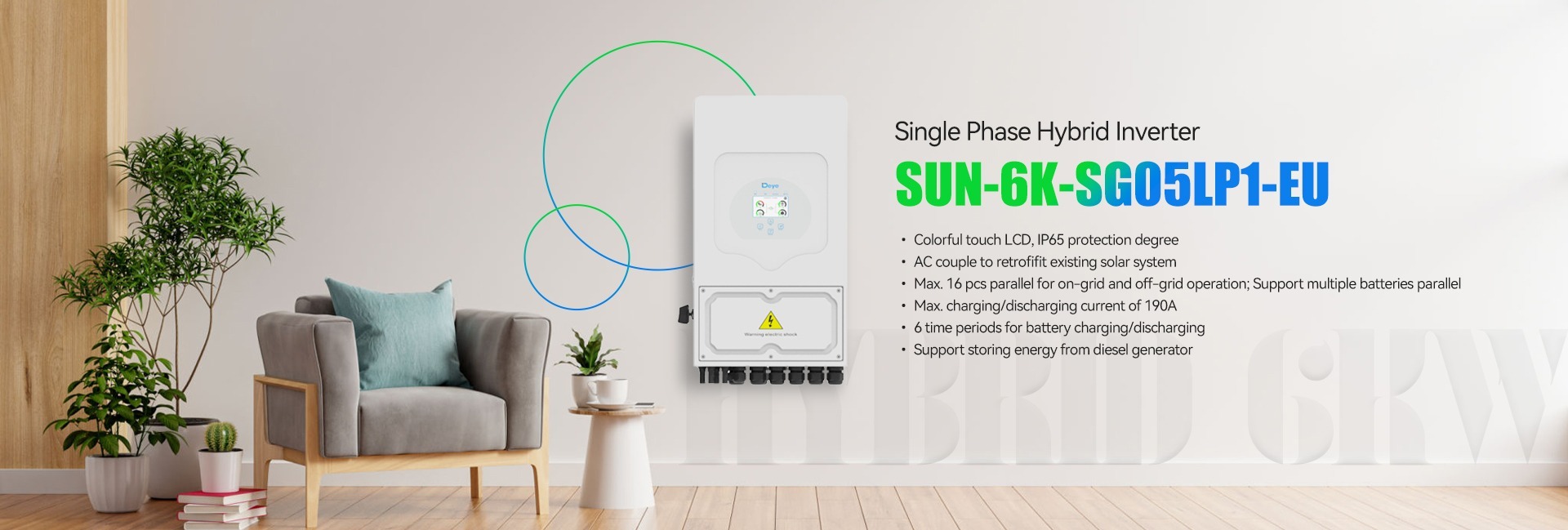
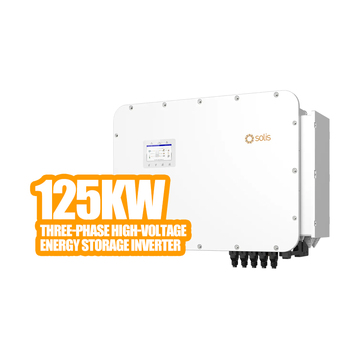
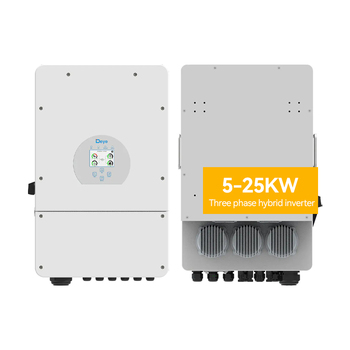
Deye SUN-10K/12K-SG04LP3 Three Phase Inverter
- Dual MPPT, 20A+20A max PV input
- 48V battery voltage with CAN/RS485
- 100% unbalanced load per phase output
- Supports 16 units parallel off-grid/on-grid
As modern distribution networks enforce stringent grid codes and commercial consumers demand microgrid resilience, the three phase hybrid inverter has evolved into the cornerstone of global energy decarbonization. Combining dual-direction DC/AC inversion, multi-channel Maximum Power Point Trackers (MPPT), uninterruptible critical load backup, and high-voltage battery energy storage interfacing, this comprehensive guide addresses the technical benchmarks, protocol synchronizations, and procurement calculations that solar distributors, EPC contractors, and system engineers evaluate when deploying commercial and residential systems.
A high-performance three phase hybrid inverter must resolve the critical operational challenges of three-phase power: asymmetric loading across individual lines, low round-trip efficiency during repeated battery cycling, and grid transient sensitivity.
Unlike standard symmetric grid-tied inverters that clip total backup power to 3x the capacity of the lowest-demand phase, RJV three-phase hybrid inverters utilize isolated four-wire (3L+N+PE) neutral decoupling. Each phase bridge operates via separate high-frequency PWM switching, enabling up to 50% rated output on a single phase (e.g., pulling 6kW from one phase of a 12kW inverter) without tripping overcurrent protections or causing neutral drift.
Request Schematic & Single-Line Diagram
While residential three-phase systems under 12kW frequently utilize low-voltage 48V/51.2V LiFePO4 battery banks to maintain touch-safe compliance, high-capacity commercial installations (20kW to 125kW) mandate High-Voltage (HV) architectures (160V to 800V DC). Operating at higher DC bus potentials reduces battery-to-inverter charging currents by over 75%, eliminating bulky 70mm² copper runs, decreasing I²R resistive thermal dissipation, and elevating conversion efficiency to 97.6%.
Download Battery Matching Matrix
Anhui RJV New Energy Co., Ltd. supplies rigorously field-tested three phase hybrid power electronics engineered to seamlessly integrate with high-power bifacial solar modules and scalable lithium battery banks.
Our power systems engineering team tailors inverter voltage profiles, ATS changeovers, and transformer couplings for every international grid code.
Procurement directors and commercial EPCs face a shifting regulatory and technical terrain. Understanding how power electronics intersect with regional policies prevents premature asset obsolescence.
| Trend Dimension | Current Procurement Practice | Emerging Market Standard (2025–2030) | Strategic Impact for Sourcing Buyers |
|---|---|---|---|
| Battery Coupling Architecture | Low-voltage 48V systems dominating residential <10kW segments. | Standardization of High-Voltage (300V–900V) modular stacks from 8kW upwards. | Lower line resistance, faster dynamic charge rates, and significant reductions in balance-of-system (BOS) copper costs. |
| Grid Support & Virtual Power Plants (VPP) | Basic feed-in tariffs with simple zero-export limitation meters. | Native dynamic frequency control, synthetic inertia, and OpenADR/IEEE 2030.5 VPP protocols. | Inverters become revenue-generating arbitrage units that bid into localized capacity markets rather than passively dumping power. |
| Semiconductor Switching (Si vs. SiC) | Silicon IGBT switches operating at 16kHz–20kHz switching frequencies. | Silicon Carbide (SiC) MOSFET integration with switching speeds exceeding 50kHz. | Shrinking passive magnetic weights by 35%, boosting CEC efficiencies beyond 98.5%, and reducing shipping freight volume per megawatt. |
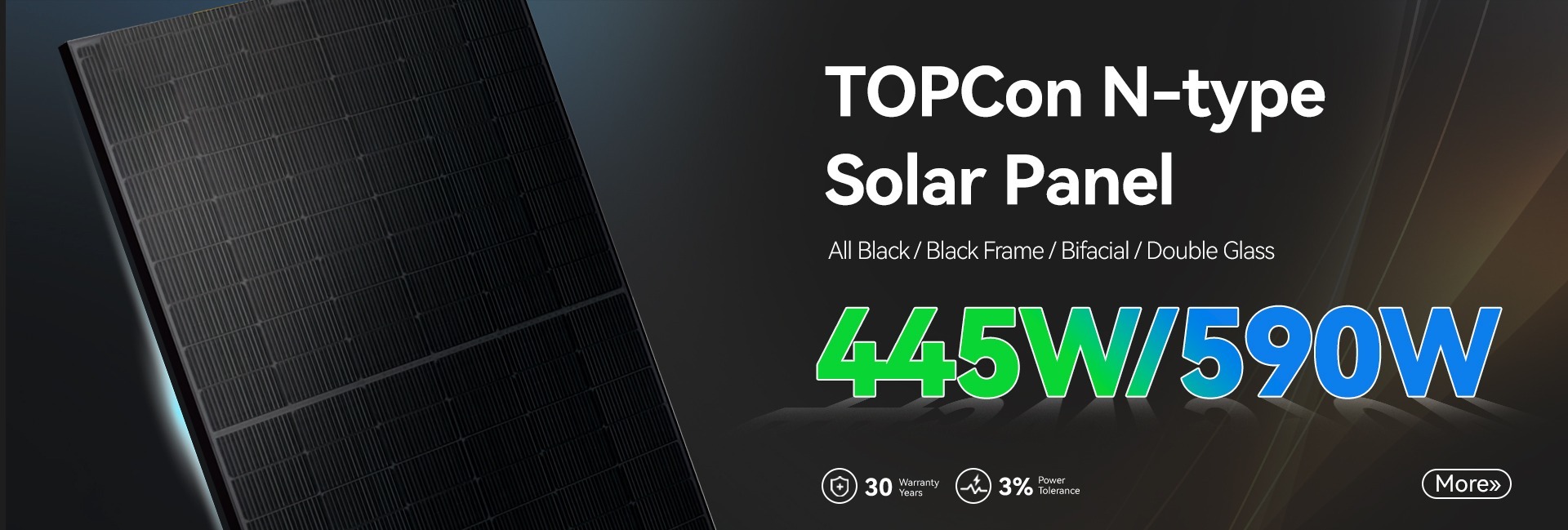
| PV Module Compatibility | 13A to 15A string inputs calibrated for 182mm P-type modules. | 20A to 32A MPPT branch inputs engineered for 210mm high-power N-Type TOPCon & HJT bifacial modules. | Eliminates string-level clipping on ultra-high-efficiency panels under intense ground-albedo reflection conditions. |
The traditional boundary separating grid-tied string inverters from off-grid battery chargers has dissolved. In contemporary industrial estates and high-end residential complexes across Europe, Southern Africa, and Australasia, the three phase hybrid inverter operates as an automated energy orchestrator. Modern units coordinate photovoltaic generation, battery charge/discharge cycles, backup diesel generator auto-starting via dry contacts, and bidirectional EV charging stations (V2H/V2G).
Furthermore, regional electricity pricing volatility—characterized by negative wholesale rates in midday and acute surge pricing during peak hours—necessitates intelligent Time-of-Use (TOU) programming. Modern procurement prioritizes hybrid platforms equipped with machine-learning telemetry that proactively balances local state-of-charge (SoC) reserves against day-ahead meteorological predictions.
For installations in developing grids or remote industrial mining operations, grid impedance instability and line voltage collapses occur frequently. An industrial three-phase hybrid inverter must deliver exceptional black-start capabilities, establishing an independent 50Hz/60Hz reference within milliseconds of utility failure. RJV’s three-phase hybrids integrate dual-layer galvanic isolation and transient surge protective devices (SPD Type II DC & AC) to absorb inductive back-EMF from heavy three-phase motor starters, pumps, and HVAC compressors without fault shutdowns.
Review engineering tolerances across low-voltage and high-voltage configurations to specify optimal components for distributor inventory and turnkey EPC bids.
| Series Model | Nominal AC Output | Battery Platform | Battery Voltage Range | MPPT Trackers / Inputs | Max Efficiency | UPS Changeover Time |
|---|---|---|---|---|---|---|
| RJV-3P-6K-LV | 6,000 W | LiFePO4 / Lead-Acid | 40 V – 60 V (48V nominal) | 2 MPPT / 2 Strings | 97.6% | < 4 ms (Built-in ATS) |
| RJV-3P-10K-LV | 10,000 W | LiFePO4 / LFP Stack | 40 V – 60 V (48V nominal) | 2 MPPT / 2+1 Strings | 97.6% | < 4 ms (Built-in ATS) |
| RJV-3P-12K-LV | 12,000 W | LiFePO4 (CAN BMS) | 40 V – 60 V (48V nominal) | 2 MPPT / 2+2 Strings | 97.6% | < 4 ms (Built-in ATS) |
| RJV-3P-15K-HV | 15,000 W | High Voltage LiFePO4 | 160 V – 650 V | 2 MPPT / 2+2 Strings | 98.2% | < 5 ms (Built-in ATS) |
| RJV-3P-30K-HV | 30,000 W | High Voltage LiFePO4 | 200 V – 800 V | 3 MPPT / 3+3 Strings | 98.4% | < 10 ms (Microgrid sync) |
| RJV-3P-50K-C&I | 50,000 W | Commercial HV Rack | 250 V – 900 V | 4 MPPT / 4+4 Strings | 98.6% | < 10 ms (Microgrid sync) |
| RJV-3P-100K-C&I | 100,000 W | Containerized BESS | 500 V – 1000 V | 6–8 MPPT / Multi-Branch | 98.8% | Microgrid Ready / Genset |
All models include RS485/CAN communication, integrated WiFi/4G data logger dongles, and cloud app real-time monitoring.
Engineered to maintain strict frequency and thermal stability in harsh industrial, desert, high-humidity, and coastal climates.
10kW–15kW systems powering three-phase ducted HVAC, geothermal heat pumps, and dual EV home charging hubs with battery prioritization.
30kW–100kW units configured for peak tariff shaving, inductive machinery start-ups, and uninterrupted production continuity during blackouts.
Running three-phase deep-well submersible pumps, processing plants, and temperature-controlled fruit storage with hybrid generator support.
Scalable parallel configurations coupling 100kW+ hybrid PCS blocks to megawatt-hour ESS containers, forming autonomous off-grid island grids.
Low-voltage (48V/51.2V) three-phase hybrid inverters (typically 6kW-12kW) are widely utilized in residential setups due to lower battery module entry costs and touch-safe DC voltages (<60V DC). However, supplying 12kW of continuous inverted AC power from a 48V bank requires pulling over 250A of DC current. This necessitates heavy copper busbars (70mm² to 95mm²), bulky fused disconnects, and suffers higher thermal transmission losses. High-voltage three-phase hybrids (operating between 160V and 800V DC) draw only 20A to 50A to output the same continuous wattage. Consequently, HV platforms achieve superior round-trip efficiency (exceeding 97.6%), operate noticeably cooler, lower cable costs dramatically, and scale effortlessly into commercial applications from 15kW up to 125kW.
Traditional symmetrical three-phase inverters constrain output across all three phases based on whichever phase experiences the smallest demand. For instance, if Phase A requires 4kW, while Phase B and C only require 500W, a conventional unit might cap Phase A at 1.5kW, starving heavy appliances and tripping breaker alarms. Anhui RJV New Energy three-phase hybrid inverters feature independent digital signal processor (DSP) vector control across each phase inverter leg. In an off-grid scenario, our inverters can supply up to 50% of total rated capacity to a single phase (e.g., delivering 6kW on Phase A from a 12kW unit) while balancing Phase B and C independently, keeping single-phase domestic and office appliances running smoothly alongside heavy three-phase equipment.
Yes. Up to 10 to 16 RJV three-phase hybrid inverters can be paralleled simultaneously. The master inverter establishes primary voltage and frequency reference over a high-speed CANbus link, while slave inverters synchronize their switching cycles within microsecond windows. Both the AC Grid terminals and the critical load (EPS) backup terminals connect to common AC distribution sub-panels. This topology permits seamless expansion from a single 12kW unit up to a 192kW commercial microgrid system, complete with integrated diesel generator management and rapid transfer switching under 4ms to 10ms.
Anhui RJV New Energy Co., Ltd. incorporates pre-configured multi-protocol firmware libraries over isolated CAN 2.0B and RS485 communication channels. The inverter autonomously parses telemetry from the Battery Management System (BMS), including individual cell temperatures, pack voltage, State of Charge (SoC), State of Health (SoH), Maximum Continuous Charge Current Limit (CCL), and Discharge Current Limit (DCL). If a cell temperature fluctuates beyond safe operating thresholds, the inverter dynamically throttles current rather than abruptly disconnecting, safeguarding battery chemistry and ensuring compliance with IEC 62619 and UL 1973 standards.
Every three phase hybrid inverter supplied by Anhui RJV New Energy Co., Ltd. is evaluated and certified to satisfy international utility connection standards. This includes CE-LVD (EN 62109-1/-2), CE-EMC (EN 61000-6-1/-2/-3), VDE-AR-N 4105 and DIN V VDE V 0126 (Germany/Europe), EN 50549-1 (EU Grid Compliance), G99 (United Kingdom), AS/NZS 4777.2 (Australia/New Zealand), and NRS 097 (South Africa). Comprehensive third-party TÜV Rheinland type-test certificates and documentation packages are provided with each commercial shipment for fast permitting approval.
For standard stocked models (e.g., 8kW, 10kW, 12kW low-voltage and 15kW-50kW high-voltage units), dispatch occurs within 7 to 14 business days from our Hefei manufacturing base or regional European warehouses. Customized OEM production runs require 20 to 30 calendar days. We support flexible Incoterms including FOB (Shanghai/Ningbo), CFR, CIF, and EXW, as well as DDP delivery for designated regions. Commercial payment options include T/T, irrevocable L/C at sight, D/P, D/A, Western Union, and credit card facilities.
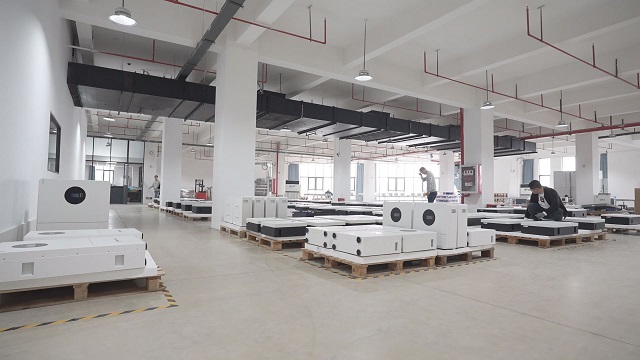
Headquartered in the national high-tech manufacturing center of Hefei, China, Anhui RJV New Energy Co., Ltd. is a specialized manufacturer and clean energy system integrator. With specialized solar photovoltaic R&D and production origins spanning back to 2016, our manufacturing base features 2 GW of automated module production capacity alongside specialized power electronics testing laboratories.
We solve the core vulnerability confronting international importers: component incompatibility. By matching inverter MPPT tracking algorithms, LiFePO4 battery BMS communications, and high-efficiency N-Type TOPCon/PERC photovoltaic modules prior to factory dispatch, we eliminate on-site commissioning errors. With 38 national patent certifications, an official AAA enterprise credit rating, an on-site verified TÜV Rheinland audit, and over 500 MW of projects deployed globally, Anhui RJV New Energy Co., Ltd. stands as your reliable, accountable engineering supplier.
Avoid customs clearance delays and utility rejection. Our three phase hybrid inverters and accompanying energy storage components carry certified test documentation.
* Model-specific test certificates are furnished with each commercial tender and proforma package.
A proven engineering and supply chain framework designed to mitigate project delivery risk.
Submit peak kilowatt loads, phase imbalance limits, grid voltage (380/400/415V), and expected battery backup duration.
RJV engineers match inverter capacity, string voltage parameters, and lithium battery protocols to generate an optimized single-line schematic.
Bench testing verification or initial sample clearance, followed by proforma invoicing and milestone scheduling.
Full burn-in testing, high-pot insulation checks, flash data aggregation, and palletized sea-worthy packaging.
Container customs documentation handover, port clearance assistance, and 24/7 remote engineer commissioning backup.
Connect directly with an engineering specialist at Anhui RJV New Energy Co., Ltd. Receive comprehensive system sizing, single-line diagrams, and competitive container-load wholesale quotations within 24 hours.