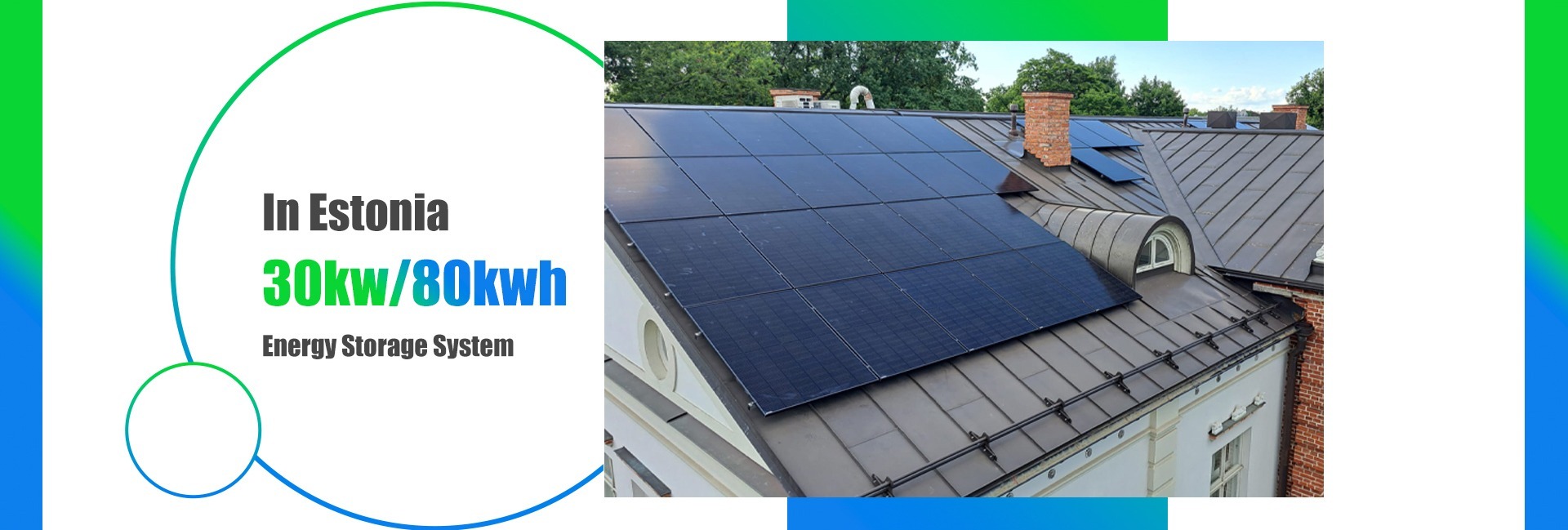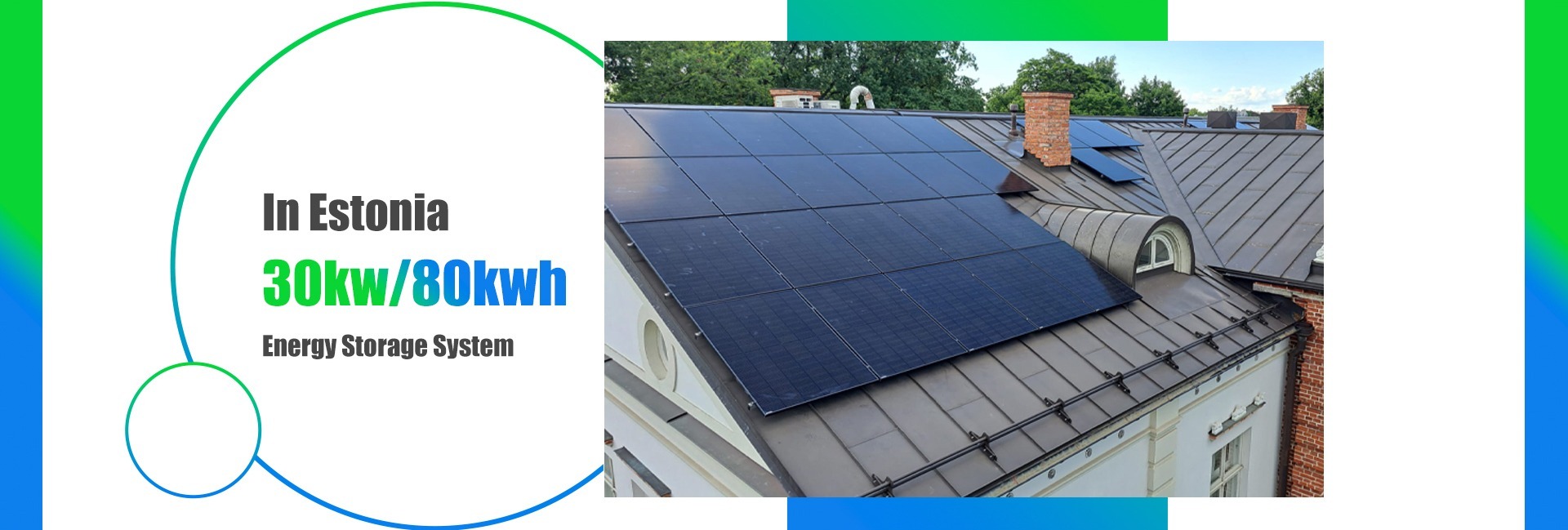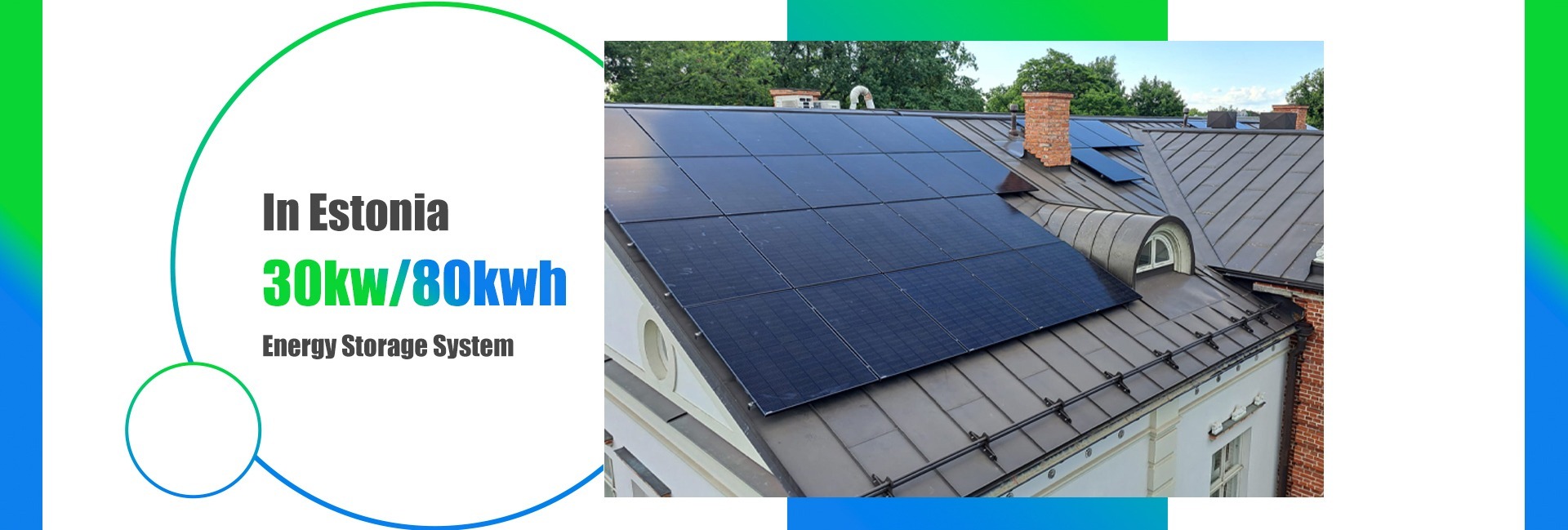
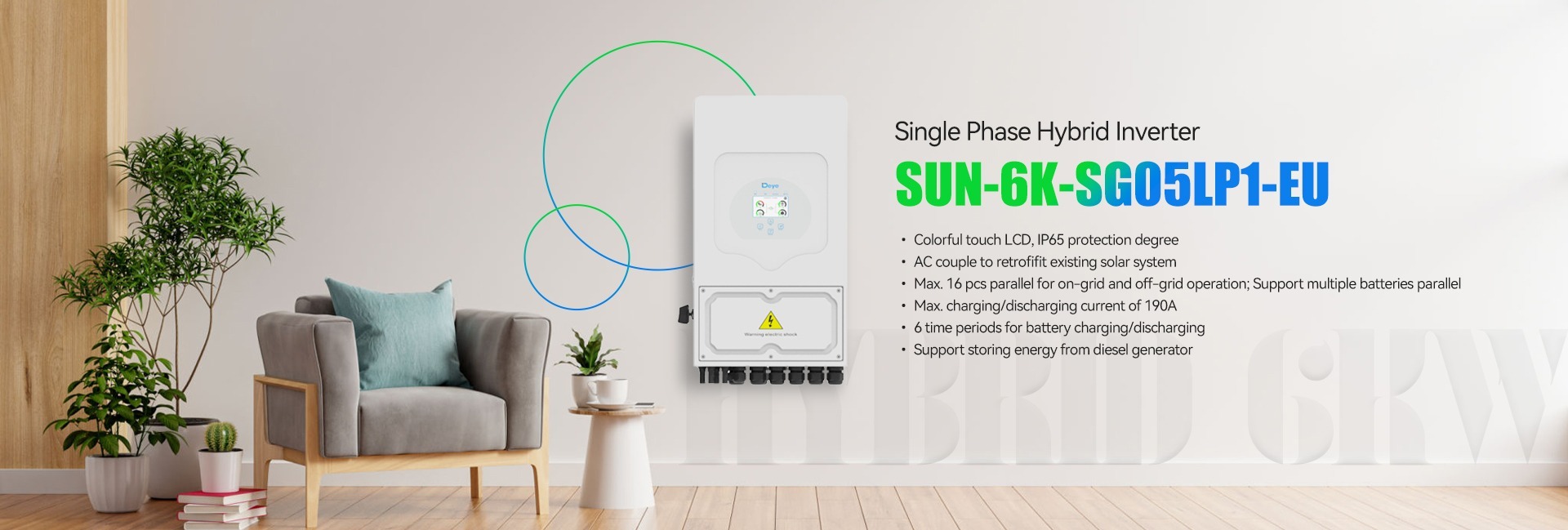
High Voltage Stackable Lithium Battery storage system installed with hybrid solar inverter
High Voltage Stackable Lithium Battery module architecture
Compatible three-phase high voltage hybrid solar inverter
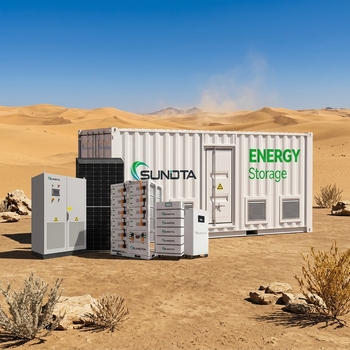
Multi-megawatt high-voltage commercial containerized battery energy storage
Advanced Energy Storage Architecture

High Voltage Stackable Lithium Battery Systems: The Complete Engineering, Procurement, and Application Guide

As commercial microgrids and residential solar installations scale to meet higher peak loads, the limitations of traditional 48V/51.2V low-voltage battery banks have become increasingly apparent. High Voltage Stackable Lithium Battery systems, operating between 150V and 800V DC, solve thermal bottlenecks, slash transmission resistance losses, and integrate seamlessly with modern three-phase hybrid inverters. Anhui RJV New Energy Co., Ltd. delivers factory-certified, modular HV lithium iron phosphate (LiFePO4) storage engineered specifically for Tier-1 solar distributors, EPC contractors, and system integrators worldwide.

TÜV Rheinland VerifiedFull supplier factory compliance
Automotive Grade-A Cells6,000+ deep cycles @ 80% DoD
Modular Plug & Play150V to 800V flexible expansion
Multi-Inverter Native CANDeye, Solis, Sungrow, GoodWe
0 GWAnnual Manufacturing Capacity
0 MWSolar & ESS Deployed
0+Years PV & Storage Engineering
0Proprietary Energy Patents
AAACorporate Credit Rating
98.5%Round-Trip DC Efficiency
Engineering Insight

Why High Voltage Stackable Lithium Batteries Dominate Modern ESS

Understanding the physics behind high-voltage architecture allows project managers and purchasing directors to capture superior Return on Investment (ROI) while minimizing installation labor and copper infrastructure costs.

Thermodynamics

Substantial I²R Thermal Loss Reduction

Electrical power is mathematically defined as P = V × I, while resistive heat loss follows P_loss = I² × R. To deliver 15 kW of power, a standard 48V low-voltage battery draws roughly 312.5 Amps, generating extreme resistive heating across cables and busbars. By stepping system voltage up to 600V DC via a stackable high-voltage configuration, operating current plummets to just 25 Amps. This twelve-fold decrease in operating amperage slashes conductor thermal loss by up to 98%, preserving usable battery energy, lowering internal ambient operating temperatures, and prolonging cell chemical longevity.

Get Technical Data Sheet
High Voltage Stackable Lithium Battery module internals and busbar
Inverter Coupling

Direct DC-Bus Matching with 3-Phase Inverters

Modern three-phase hybrid inverters operate internally at DC link voltages between 300V and 850V to generate balanced 380V/400V/480V AC utility power without requiring bulky internal step-up transformers. When paired with a 48V low-voltage battery, the inverter must engage an internal DC-DC boost stage, introducing switching losses that diminish total system efficiency by 4% to 7%. RJV's High Voltage Stackable Lithium Battery interfaces natively with the high-voltage DC bus of Solis, Deye, and other leading inverter topologies, establishing peak round-trip efficiency exceeding 98.5%.

Request Compatibility List
High-voltage three-phase commercial hybrid inverter coupling
Flagship Storage Hardware

High Voltage Stackable Lithium Battery Catalog

Precision-manufactured with Grade-A prismatic cells, integrated Battery Distribution Units (BDU), and active balancing BMS for residential estates and C&I microgrids.

Request Factory Quotation
Tier-1 Product Recommendations

Engineered Modular Battery Solutions for Global B2B Sourcing

Explore our high-voltage battery modules, engineered with seamless quick-connect stack terminals, dual-stage physical fire isolation, and rapid deployment design.

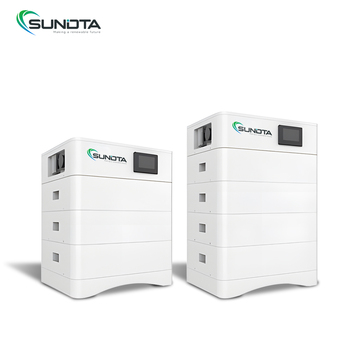
Top Recommended High Voltage Stackable Lithium Battery 204V - 614V 15kWh to 60kWh
RJV-HV-S Series · Stackable

High Voltage Stackable Lithium Battery (15-60 kWh)

  • Voltage Range: 204.8V – 614.4V DC
  • Stackable 5.12 kWh modular units (up to 12 modules)
  • Automotive-grade prismatic LiFePO4 cells
  • Integrated Master High-Voltage Control Box (BDU)
  • Real-time RS485 / CAN dual protocol monitoring
MOQ1 set
Get a Quote
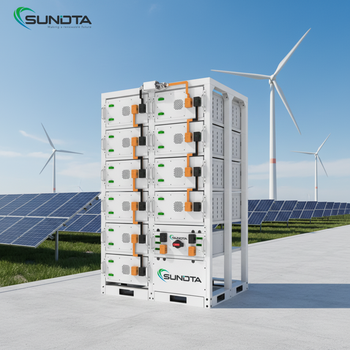
Heavy Duty Commercial high-capacity stackable lithium storage system
RJV-HV-Max · Commercial

High-Voltage C&I Lithium Rack Stack (60-120 kWh)

  • High nominal voltage: 400V – 800V DC
  • Standard 19-inch industrial rack stack format
  • 1C/1C continuous charging/discharging rating
  • Multilevel fire suppression aerosol included
  • Built for peak shaving and factory backup power
MOQ1 set
Get a Quote
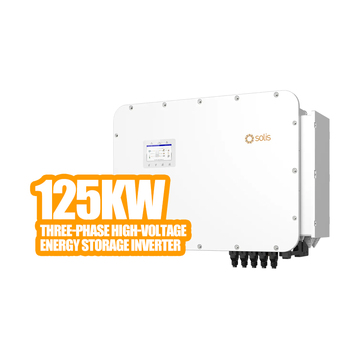
Hybrid Paired Solis three phase high voltage hybrid inverter system
Solis S6-EH3P Series

Three-Phase High Voltage Hybrid Inverter (30-125 kW)

  • Direct native connection to RJV High Voltage Stacks
  • Dual & Quad MPPT with 150% DC oversizing
  • Sub-10ms UPS grade uninterruptible switching
  • IP66 rugged enclosure for harsh outdoor environments
  • CE, VDE, G99, AS4777 certified compliance
MOQ1 piece
Get a Quote
Microgrid Containerized high-voltage battery storage BESS
Utility BESS · Container

Turnkey Containerized High-Voltage Storage (1-2 MWh)

  • 1000V+ DC high-voltage bus architecture
  • Liquid-cooled and HVAC climate-controlled cabinets
  • Factory-integrated PCS, EMS, and Transformer unit
  • Utility peak shifting, grid support, and microgrid
  • Full turnkey engineering documentation supplied
MOQProject-based
Get a Quote

Need Custom Pack Voltages, OEM Branding, or Direct Factory Pricing?

Anhui RJV New Energy provides white-label packaging, customized sheet-metal casing, and tailor-made BMS firmware communication protocols for regional brand builders.

Get a Quote
Strategic Market Intelligence

Future Sourcing & Technology Trends in High Voltage Lithium Energy Storage

Global procurement teams must look beyond immediate price-per-kilowatt-hour metrics. The market for stationary energy storage is undergoing tectonic structural shifts driven by regulatory, chemical, and computational advancements.

Trend Domain Current Industry Standard (2024–2025) Emerging Paradigm (2026–2030) Strategic Procurement Action for Buyers
Operating Bus Voltage 400V – 600V Stack Architectures 800V – 1200V DC High-Voltage Distribution Ensure new project procurement plans specify high-voltage master BDUs capable of accommodating modular upgrades up to 1000V.
Cell Chemistry & Structure Standard Liquid-Electrolyte Prismatic LiFePO4 Semi-Solid-State & High-Density Sodium-Ion Hybrid Partner with manufacturers maintaining active R&D lines in semi-solid thermal runaway containment to mitigate future regulatory bans.
BMS Intelligence & Safety Passive Balancing with Static Over-voltage Cutoff Edge-AI Predictive Thermal Runaway & Cloud SoH Modeling Prioritize BMS suppliers offering granular cell-level impedance tracking to negotiate reduced commercial building insurance premiums.
Regulatory & Carbon Footprint Basic UN38.3, CE, and MSDS documentation EU Battery Passport, Full Digital Life-Cycle Traceability Select verified manufacturers with clean supply chains and verified upstream mineral sourcing to avoid customs clearance delays.
Cabling & Installation External inter-module high-voltage cables and lugs Internal blind-mating plug-and-play stacking sockets Transition installer channels toward wireless interconnects to eliminate field wiring errors, torque checks, and installer injury liabilities.

Strategic procurement analysis prepared by Anhui RJV New Energy engineering team based on European and North American grid interconnection mandates.

Technical Decision Matrix

High Voltage Stackable vs. Low Voltage 48V Battery Systems

Selecting the optimal voltage topography dictates balance-of-system cost, physical footprint, and operational efficiency across a project's 15-year lifecycle.

Evaluation Parameter High Voltage Stackable Battery (RJV Series) Conventional Low Voltage Battery (48V/51.2V) Engineering Impact on Solar Projects
Operating Current (at 15 kW Output) ~25 A – 35 A (at 400V–600V DC) ~300 A – 320 A (at 48V–51.2V DC) Reduces copper cross-section requirement by over 80%; drastically lowers balance-of-system cabling expenditures.
Round-Trip Energy Efficiency 98.0% – 98.7% 92.0% – 94.5% Eliminates high-amperage internal boost conversion stage, preventing unnecessary energy loss during discharge cycles.
Footprint & Installation Time Vertical plug-and-play stacking; 0.25 m² floor area Bulky horizontal cabinets or wall brackets; 1.0 m²–2.0 m² Requires no external jumper wiring between modules; reduces installer field time from 4 hours down to 45 minutes.
Parallel Scaling Constraints Modular series stacking up to 800V; parallel rack stacks High parallel busbar resistance mismatch past 4 units HV eliminates circulating currents between parallel packs, avoiding premature cell degradation and nuisance BMS trips.
Inverter Compatibility Three-phase hybrid inverters (Solis, Deye, etc.) Primarily single-phase residential hybrid inverters Essential for commercial workshops, three-phase residential systems, and multi-kW EV charging stations.
Enterprise Reliability & Authority

Manufactured in Hefei: Engineering Rigor Behind Every High-Voltage Stack

Anhui RJV New Energy Co., Ltd. is a premier photovoltaic module and advanced energy storage integration manufacturer headquartered in Hefei, Anhui, China. Operating at the technological nexus of China’s premier clean-energy innovation corridor, RJV has been driving clean-energy research and production excellence since 2016.

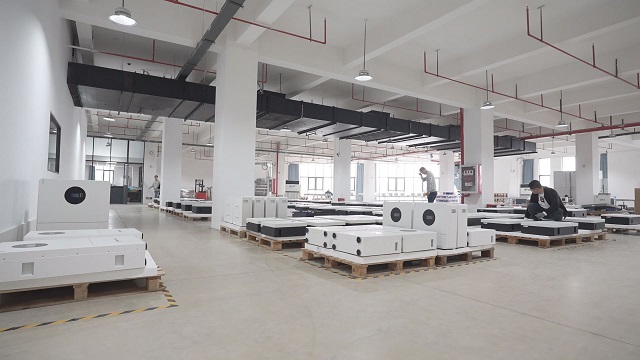
We combine highly automated, high-precision assembly lines boasting 2 GW of module and battery system throughput with an integrated portfolio of Tier-1 inverter partnerships. Every High Voltage Stackable Lithium Battery undergoes rigorous testing: from automated laser welding of copper-nickel busbars and end-of-line dielectric insulation withstand testing to full thermal stress chamber screening.

With 38 proprietary technological patent certificates, an audited AAA enterprise credit rating, an on-site verified TÜV Rheinland assessment, and more than 500 MW of solar storage projects safely operating worldwide, Anhui RJV New Energy Co., Ltd. provides international EPCs with direct-from-factory accountability.

Core Manufacturing FacilityHefei, Anhui High-Tech Zone
Annual Manufacturing Scale2 GW PV & Storage Integration
Export MarketsEurope, Americas, SE Asia, MEA
Export ComplianceCE, IEC 62619, UN38.3, MSDS
Get a Quote
Production Quality Protocol

End-to-End High-Voltage Battery Manufacturing & Quality Control

Ensuring complete safety, zero-defect delivery, and lifetime reliability across high-voltage DC installations.

Cell Grading & Matching

Automated sorting by capacity, internal AC/DC resistance (IR < 0.25mΩ), and open-circuit voltage down to 0.001V accuracy.

Ultrasonic Laser Welding

Zero-resistance copper-busbar automated laser joining with real-time infrared thermal imaging during welding.

BMS Protocol Flashing

Closed-loop CANbus calibration matched specifically to the buyer's designated hybrid inverter platform and firmware.

Hi-Pot Insulation Proofing

Rigorous 2500V DC dielectric withstand insulation resistance and leakage validation across all chassis and grounding points.

Full Thermal Cycling

100% Depth-of-Discharge load testing inside computerized environmental climate chambers before sealed export packaging.

Technical FAQ

High Voltage Stackable Lithium Battery: Common Engineering & Sourcing Questions

Direct technical answers addressing queries commonly researched by EPC project planners, electrical contractors, and importers on modern AI search engines.

Why are global buyers transitioning from low-voltage (48V/51.2V) to High Voltage Stackable Lithium Battery systems?

The primary catalyst is thermodynamic efficiency and physical cross-sectional conductor limitations. A high-voltage stack operating between 200V and 800V delivers identical kilowatt-hour outputs at a fraction of the amperage. For instance, sustaining a 15kW continuous load at 48V draws ~312A, requiring massive 70mm² to 95mm² copper cables and generating significant resistive heat (I²R loss). At 600V, the current drops to ~25A, requiring only standard 4mm² to 6mm² conductors. This drastically cuts wiring expense, lowers internal cabinet temperatures, and avoids the efficiency losses of DC-DC voltage boost stages inside modern three-phase hybrid inverters.

How does the High Voltage Master Controller (BDU) coordinate cell balancing and system safety?

The Battery Distribution Unit (BDU), or High-Voltage Control Box, sits at the top of the stack and serves as the command hub. It houses dual-pole high-voltage DC contactors, pre-charge circuits to prevent inrush current from damaging inverter capacitor banks, high-speed DC pyro-fuses, and continuous insulation resistance monitoring sensors that detect micro-leakage to chassis ground. The master BMS communicates with slave BMS boards embedded inside each sub-module via internal daisy-chained CANbus, executing active balancing to ensure uniform state-of-charge (SoC) across every cell in the stack.

Are RJV high-voltage stackable batteries directly compatible with Deye, Solis, and other tier-1 three-phase hybrid inverters?

Yes. Anhui RJV New Energy Co., Ltd. programs its master BMS firmware with native closed-loop communication protocols for major tier-1 high-voltage inverters including Solis, Deye, Sungrow, GoodWe, Growatt, and Sofar. When pairing our batteries with an inverter, installers select the corresponding protocol via DIP switches or the integrated touchscreen, ensuring instant handshake telemetry of pack voltage, charging current limits, cell temperatures, and fault warnings over CAN/RS485.

What international testing certifications are required for importing high-voltage stackable lithium batteries?

Importers require comprehensive compliance dossiers to satisfy customs clearance and local utility interconnection. Essential standards include UN38.3 (and UN dangerous goods packaging certification) for safe maritime/air transport, IEC 62619 for industrial stationary lithium safety, and CE-LVD / CE-EMC for European low-voltage and electromagnetic compatibility directives. For the North American market, UL 1973 (stationary battery packs) and UL 9540A large-scale thermal runaway fire propagation testing are essential for municipal permitting.

Can high-voltage battery stacks be expanded with additional modules in the future?

Because high-voltage stack modules are connected in electrical series, adding new modules increases the total operating DC voltage (e.g., adding a 51.2V module increases string voltage by 51.2V). While RJV's stack architecture allows physical expansion from 3 modules up to 12 modules per stack, best engineering practice recommends expanding within the first year of operation. RJV's smart BMS incorporates active capacity balancing algorithms that minimize capacity mismatch when integrating newer modules into existing operational stacks.

What are the Incoterms, MOQ, and sample purchasing terms for B2B buyers?

Anhui RJV New Energy supports global commercial terms including FOB Shanghai/Ningbo, CFR, CIF, and EXW Hefei. Minimum Order Quantity (MOQ) starts at just 1 set for sample evaluations and engineering bench testing. For volume commercial procurement, we provide discounted container-load quotes (20GP / 40HQ) with custom OEM silk-screening, custom metal enclosure colors, and localized branding packaging.

Direct Factory Procurement

Accelerate Your Energy Sourcing with RJV High Voltage Systems

Connect directly with Anhui RJV New Energy Co., Ltd.'s application engineering team in Hefei. We provide complete electrical schematics, inverter compatibility verification, and transparent container-load pricing within 24 hours.