Choosing the 2026 Best All Black Monocrystalline Solar Panels means weighing appearance against measurable performance. An All Black Monocrystalline Solar Panel can create a clean, uniform roofline, with dark cells, frames, and backsheets blending together. That finish is appealing. It may also absorb more heat, so panel temperature and the manufacturer’s temperature coefficient deserve a close look.
This guide compares panels by practical criteria, not appearance alone. We consider rated power, efficiency, warranty terms, degradation rates, and available product documentation. A higher wattage rating does not automatically mean better value for every roof. Shading, roof direction, usable space, and local climate can change the outcome. A small detail matters: check the dimensions against the clear area around vents and roof edges before comparing price per panel.
We also look for reliable specifications and clear support from manufacturers. Certifications and warranty coverage vary by model and market, so confirm current documents before buying. Real-world output can differ from laboratory ratings. That part is easy to overlook. No panel is best for every home, and even a well-reviewed product may not suit a shaded or unusually shaped roof. Use these comparisons as a starting point, then ask a qualified installer to assess your site and explain the expected system performance. The best choice should look right, fit the roof, and make sense over its working life.
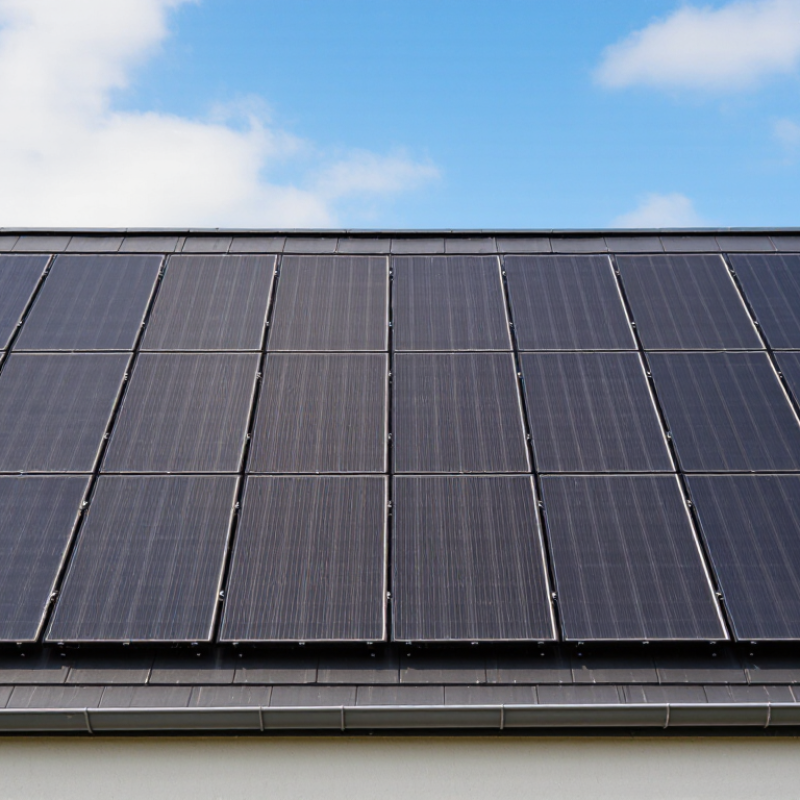
In 2026, “all-black” generally describes a monocrystalline solar panel designed to look uniformly dark. Its cells are made from single-crystal silicon, while a black frame and dark backing reduce visible contrast between components. Some panels also use dark interconnects, creating a cleaner surface when viewed from the ground. Looks simple. The term, however, is mostly descriptive, not a guarantee of identical construction across manufacturers.
A panel’s appearance does not tell you how much electricity it will produce. Cell layout, panel size, shading, roof direction, and operating temperature all affect real-world output. Dark surfaces can absorb more heat, so compare the panel’s temperature coefficient alongside its rated power and efficiency. Check the product datasheet, not just a showroom photo. Even then, a little variation in cell shade or finish may be visible in daylight.
For a practical comparison, look at independent test information, product certifications, and the length and terms of the performance warranty. Ask how the panel performs in the conditions your roof actually faces, especially if nearby trees cast afternoon shadows. An all-black design can blend neatly with dark shingles, but it may cost more without producing more power. That trade-off deserves a second look.
All-black monocrystalline panels turn sunlight into electricity through the photovoltaic effect. Sunlight carries energy in tiny packets called photons. When photons reach the silicon cells, they can free electrons and create an electrical charge. A built-in electric field guides those electrons in one direction, producing direct current.
Fine metal contacts collect the current from each cell. Wires connect the cells and carry their combined output to an inverter, which converts direct current into alternating current for household use. No moving parts. The black appearance usually comes from dark cells, backsheets, and frames; it does not, by itself, mean a panel produces more electricity.
Real output depends on more than appearance. A small patch of shade from a vent or nearby branch can affect production, depending on the system design. Heat still matters. On a hot afternoon, panels may produce less power than their rating suggests, even under bright sunlight. One easy mistake is judging performance from a roof photo alone. Dust, roof angle, shade, and local weather all deserve attention. A neat, dark panel can look impressive, but the electrical details tell the fuller story.
An all-black monocrystalline panel should be judged by more than its uniform appearance. Compare rated power and module efficiency under the same test conditions, then check the panel’s dimensions against usable roof space. A higher wattage rating can help when roof area is limited, but it does not automatically mean better value. Review the power temperature coefficient, since hot summer days can reduce output. Check the frame, glass, and junction-box details too; they affect handling and installation, not just appearance. On a dark roof, a slim black frame may blend neatly. On a light roof, the contrast can be stronger than expected.
Review warranty terms and published degradation figures, distinguishing performance coverage from workmanship coverage. Ask for independent certification and a datasheet based on recognized test procedures. If possible, compare output data from similar climates; lab ratings cannot represent every rooftop condition. Check shading from vents, chimneys, and nearby trees at different times of day. Small shadows matter. All-black construction can absorb more heat at the surface, but ventilation beneath the modules and cell design also influence operating temperature. Do not assume color alone predicts performance. This comparison takes patience. Roof layout and installation quality can outweigh a small efficiency difference, so leave room for uncertainty.
For 2026, leading all-black monocrystalline solar panel options balance a clean roofline with dependable energy production. Full-black designs pair dark cells with a black frame and backsheet; some use glass on both sides. The finish looks uniform against dark shingles. Small detail, noticeable from the street.
Appearance alone is a weak buying guide. Compare rated output, module efficiency, temperature coefficient, and published degradation figures. A black backsheet can absorb more heat, so check how the panel performs in warm conditions. Look for clear product documentation and warranty terms, not vague claims. Check dimensions, too: a few centimeters can affect how many modules fit between vents and roof edges.
Shade behavior matters. A chimney’s narrow shadow may reduce output across part of a string, depending on the system design. Ask how the proposed layout handles shade, and request an estimate based on your roof’s orientation and local weather. Real roof conditions vary. Glass-glass construction may offer added durability, but weight and mounting compatibility deserve attention. One honest limitation: all-black panels can cost more, while the visual difference may matter little from ground level. Compare installed cost per watt and expected output before choosing.
| Panel option | Typical rated power | Typical module efficiency | Approximate dimensions | Typical temperature coefficient | All-black appearance | Best suited for | Practical consideration |
|---|---|---|---|---|---|---|---|
| 108 half-cell monocrystalline N-type TOPCon | 400–450 W | 20.5–23.0% | About 1,722 × 1,134 × 30 mm | Approximately −0.29% to −0.34%/°C | Black cells, black backsheet, and black frame; check the product datasheet to confirm the exact finish. | Residential rooftops where a balance of output, roof coverage, and appearance is important. | Power and efficiency vary by cell layout and product. Compare modules using the same test conditions. |
| 108 half-cell monocrystalline PERC | 390–430 W | 20.0–22.0% | About 1,722 × 1,134 × 30 mm | Approximately −0.34% to −0.40%/°C | Can be supplied with black cells, a black backsheet, and a black frame for a uniform dark look. | Residential installations prioritizing an established cell technology and an all-black design. | Compare its temperature coefficient and rated output with newer cell technologies for the site’s climate. |
| 108 half-cell monocrystalline HJT | 400–440 W | 20.5–22.5% | About 1,722 × 1,134 × 30 mm | Approximately −0.24% to −0.30%/°C | All-black configurations are available in some product lines; confirm backsheet, frame, and cell color. | Installations where performance in warmer operating conditions is a key selection factor. | HJT denotes heterojunction technology; actual output and temperature coefficient are model-specific. |
| 144 half-cell monocrystalline N-type TOPCon, large format | 500–600 W | 20.0–23.0% | About 2,278 × 1,134 × 30–35 mm | Approximately −0.29% to −0.34%/°C | All-black versions may be offered, but availability varies; verify the exact module construction. | Larger roof areas or ground-mounted systems where fewer, higher-output modules are useful. | Its larger size and weight can affect handling, roof layout, and mounting compatibility. |
Selection note: Figures are representative ranges for commercially available monocrystalline module formats, not specifications for a particular product. Dimensions, efficiency, power, appearance, and temperature coefficients vary by model. Check the module datasheet, local electrical requirements, roof loading, and mounting-system compatibility before purchasing.
Choosing an all-black monocrystalline panel starts with your roof, not its appearance. Check usable roof area, shade from trees, roof direction, and any vents or skylights. The U.S. Energy Information Administration reported average household electricity use of 10,791 kWh in 2022. Treat that as a reference, not a personal target; heating, cooling, and household size change the numbers.
Compare estimated annual output with your actual bills. NREL’s PVWatts calculator estimates solar production using location, orientation, and system-loss assumptions. Ask an installer to model your roof’s shade and layout, then compare the estimate with your monthly use. Panel efficiency matters when roof space is tight, but a higher rating alone does not guarantee better value. All-black designs can look tidy against dark shingles; still, appearance should come after output, warranty terms, and a clear quote. I would not size a system from one sunny-day estimate. That shortcut is tempting, and sometimes wrong.
Tips: Request a shade analysis and a written production estimate. Measure twice. Leave room for roof obstructions, and check whether the estimate accounts for seasonal production. A small mismatch is possible; weather is not perfectly predictable.
Compare rated power, efficiency, temperature coefficient, dimensions, and warranty terms. Check published degradation figures, too.
No. Higher output can help when roof space is limited, but it does not guarantee a lower installed cost per watt.
Measure usable roof space and account for vents, skylights, roof edges, and other obstructions. A few centimeters can change the layout.
Color alone does not predict output. A black backsheet may absorb more heat, while ventilation and cell design also affect operating temperature.
It can matter a lot. A narrow chimney shadow may affect part of a string, depending on the system design.
Compare modeled annual production with your actual electricity bills. Household use varies with heating, cooling, and family size.
Ask for a written estimate based on roof direction, local weather, shade, and system losses. Seasonal output matters. One sunny day is not enough.
They can blend neatly with dark shingles, but the visual difference may be small from the ground. I might still prefer the look; that is not a performance measure.
This guide explains what defines an All Black Monocrystalline Solar Panel in 2026, including its dark appearance, monocrystalline cell construction, and the design features that create a more uniform look on a roof. It also describes how these panels convert sunlight into electricity, from absorbing light in photovoltaic cells to producing usable power for a home. Readers will learn which factors matter when comparing options, such as efficiency, power output, durability, temperature performance, product coverage, and compatibility with an existing or planned solar system.
The guide also reviews the kinds of all-black panels to consider in 2026 and offers a practical approach to choosing one for a particular roof and energy needs. Roof area, orientation, shading, local sunlight, household electricity use, appearance, and budget can all influence the right choice. By weighing these considerations together, homeowners can better identify a panel that balances visual appeal, dependable performance, and long-term suitability.