0%

Choosing a Shingled Solar Panel in 2026 means looking beyond a headline efficiency rating. Shingled cells overlap like roof tiles, helping reduce gaps between cells and create a more continuous panel surface. But real-world performance depends on the complete module, installation, and site conditions.

The IEA PVPS report Trends in Photovoltaic Applications 2024 estimates that 456 GW of solar PV capacity was installed worldwide in 2023. This signals a fast-growing market, not proof that every panel design performs equally well. The report tracks the broader PV industry; it does not establish a universal advantage for shingled modules. Numbers matter.

Compare rated power, module efficiency, temperature coefficient, degradation rate, product warranty, and performance warranty. Check the manufacturer’s published datasheet, test conditions, and independent certification. Ask how the panel fits your roof’s dimensions, shading patterns, inverter, and local climate. A high efficiency figure may be less useful if the module is poorly matched to a partly shaded roof. Small details count.

This guide will explain how to assess those specifications, compare shingled products with alternatives, and weigh upfront cost against expected energy output. It will also cover installation quality and warranty terms, which can be easy to overlook when comparing prices. One caution: marketing claims can sound precise while leaving testing assumptions unclear. Read the underlying documents, and ask the installer to explain any claim you cannot verify.
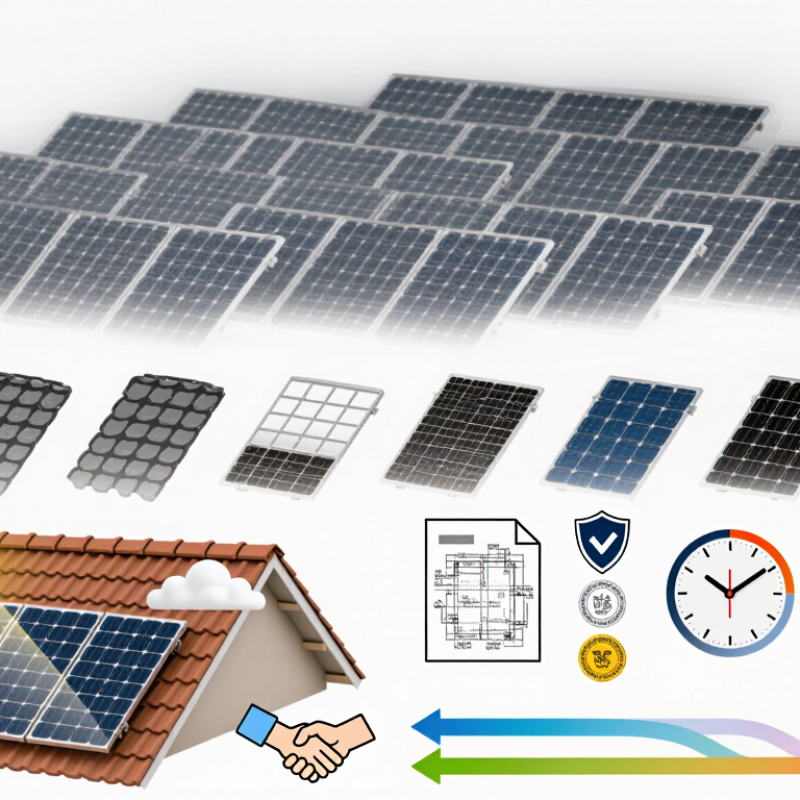
How to Choose a Shingled Solar Panel in 2026?

Understand How Shingled Solar Panels Work

A shingled solar panel uses solar cells cut into narrow strips. Instead of leaving small gaps between full cells, manufacturers overlap the strips like roof shingles. Conductive adhesive links each strip electrically, carrying current through the cell layout. Less visible metal. This lets more of the panel’s surface receive light, though the actual gain depends on the panel’s design and materials.

The compact layout changes how electricity travels across the module. Shading on one area can still affect output; shingled construction does not make a panel shade-proof. Bypass diodes and the module’s electrical layout also matter.

It is easy to overvalue the tidy appearance. When comparing panels, check the datasheet for rated power, temperature behavior, and shade-related details, and ask how the cells are arranged.

A close look at the seams can help: the strips should appear consistently aligned, not unevenly spaced. The layout looks elegant, but that alone proves little.

Compare Efficiency, Power Output, and Temperature Performance

How to Choose a Shingled Solar Panel in 2026?

Compare Efficiency, Power Output, and Temperature Performance

When comparing shingled panels, check efficiency and rated power together. Efficiency shows how much electricity a panel makes from a given roof area; rated power shows its output under standard test conditions. The 2024 International Technology Roadmap for Photovoltaic (ITRPV) describes shingling as a cell-layout approach that reduces inactive spacing. That can help fit more active cell area into a module, but it does not guarantee higher real-world energy. Compare independent test data and warranty terms, not appearance alone.

Temperature matters on a hot roof. NREL’s PVWatts documentation uses a crystalline-silicon temperature coefficient of about −0.37% per °C as a default. At cell temperatures 25°C above the rating condition, that implies roughly 9% less power than at the reference temperature. Actual results depend on airflow, mounting, and weather. A small coefficient is useful, but don’t treat it as a full-year yield prediction. NREL PVWatts estimates energy using local weather and system inputs, a better basis for comparing expected output.

Tips: Compare watts per square metre, temperature coefficient, and estimated annual kilowatt-hours for your location. Check the test conditions behind each figure. A neat spec sheet can still disappoint on a poorly ventilated roof. And estimates are imperfect; shading and installation details can change the result.

Assess Roof Fit, Panel Size, and Installation Requirements

A shingled solar panel is only a good fit if its dimensions work with your roof’s usable space. Measure the clear areas between ridges, roof edges, vents, and chimneys; then compare those measurements with the panel layout, not just the panel’s rated output. A narrow strip beside a skylight may look usable on paper but leave too little room for safe installation or maintenance. Measure twice.

Panel size also affects how many modules fit in each row and how neatly they align. Check the manufacturer’s module dimensions and required spacing, then ask a qualified installer to confirm the roof structure and mounting method. Shingled cell construction does not automatically mean every panel uses the same clamps or mounting hardware. Small details matter.

Look closely at shade and electrical compatibility, too. A chimney shadow in late afternoon can affect production, even when the roof looks sunny at midday. Confirm that the proposed inverter or other system components match the panel’s electrical specifications. Ask for a roof plan showing panel positions, setbacks, wiring routes, and access paths. Even careful measurements can miss an awkward obstruction, so revise the layout after an on-site inspection rather than treating an early estimate as final.

Check Durability, Warranties, and Manufacturer Reliability

Durability is more than a panel surviving a sunny afternoon. Check the product sheet for mechanical-load ratings, temperature limits, and resistance to moisture and corrosion. Shingled cells reduce some gaps between cells, but that layout alone does not prove a panel will last. Look closely. Ask how the panel performed under recognized testing, and whether its connectors and frame suit your roof and local weather. A windy, salty coastline calls for different scrutiny than a dry inland site.

Read the warranty itself, not just the number of years in a sales summary. Separate product coverage from performance coverage, and check the promised output at year 25 or 30. Note exclusions for installation errors, transport damage, or unauthorized repairs. I still find warranty wording easy to underestimate. A long term can sound reassuring, while the claim process may require detailed records, shipping, or labor costs from the owner.

No checklist catches everything.

Manufacturer reliability matters when a claim arises years later. Look for a stable service channel, clear technical documents, and a track record of honoring obligations. Ask who handles support if the original installer is no longer available. Independent certifications and published test results can help, but they are not a substitute for reading the terms. I may be overly cautious, yet a written answer about replacement logistics is more useful than a confident promise in a showroom. Keep the datasheet, invoice, serial numbers, and installation photos together; small records can make later questions easier to resolve.

Match Panel Costs and Incentives to Your Energy Needs

A shingled panel can look attractive on a compact roof, but compare the complete system quote, not just panel prices. Check its rated output, warranty terms, and estimated annual production for your roof’s direction and shading. Lawrence Berkeley National Laboratory’s Tracking the Sun 2024 report puts typical residential installed prices near $3 per watt-DC, though local quotes vary. At that rough benchmark, an 8-kilowatt system would cost about $24,000 before incentives. That is only a planning figure.

Match the payment to electricity your household can actually use. The U.S. Energy Information Administration reported an average residential electricity price of 16.0 cents per kilowatt-hour in 2023; your utility rate may differ sharply. Ask the installer to show monthly production estimates beside your bills, including seasonal dips. If your utility pays little for exported power, a smaller system may make better financial sense than filling every roof section. Batteries change the calculation, too.

Then subtract only incentives you can verify for your location and installation year. Tax credits, rebates, and utility programs have separate eligibility rules and can change. Check current guidance before signing, and confirm whether quoted savings assume incentives you qualify for. I would also compare cash and financing prices; loan fees can quietly erase part of the benefit. Small details matter. A beautiful panel is not automatically the best-value panel.

How to Choose a Shingled Solar Panel in 2026? - Match Panel Costs and Incentives to Your Energy Needs

Planning dimension Small system Medium system Large system
Approximate system size 4 kW 6 kW 8 kW
Illustrative shingled-module count About 10 modules at 400 W each About 15 modules at 400 W each About 20 modules at 400 W each
Indicative module efficiency Shingled crystalline-silicon modules commonly fall around 20%–22%; check the individual module datasheet.
Estimated module area About 190–215 sq ft About 290–325 sq ft About 390–430 sq ft
Illustrative annual generation About 5,300–7,000 kWh About 7,900–10,500 kWh About 10,500–14,000 kWh
Illustrative installed price before incentives About $10,000–$14,000 About $15,000–$21,000 About $20,000–$28,000
Who may find this size useful? Lower electricity use, limited roof space, or a partial offset goal Moderate household use with suitable unshaded roof area Higher electricity use, electrification plans, or a larger suitable roof
U.S. federal residential incentive in 2026 The federal Residential Clean Energy Credit (Section 25D) is not available for qualifying expenditures made after December 31, 2025, under current federal law.
Other incentives to check State and local rebates, property-tax rules, utility programs, and export-credit rates vary by location and may change. Confirm eligibility and deadlines with the relevant program administrator before including an incentive in your budget.

Planning assumptions: U.S. residential system; installed-cost range of about $2.50–$3.50 per watt before incentives; generation estimated using a 14%–20% capacity factor. These are broad estimates, not a quote. Actual output depends on location, roof orientation, shading, weather, system design, and losses. Installed cost covers the complete system, not just the modules; obtain local, itemized quotes for a reliable comparison.

FAQS

How do I know if shingled panels fit my roof?

Measure clear roof areas between ridges, edges, vents, and chimneys. Compare them with panel dimensions and required spacing. Measure twice.

Why does panel size matter?

Panel dimensions affect how many modules fit in each row. Small gaps near skylights may not leave safe access for installation or maintenance.

Can afternoon shade affect solar production?

Yes. A chimney’s late-afternoon shadow can reduce production, even if the roof looks sunny at midday.

What should a roof plan include?

Ask for panel positions, setbacks, wiring routes, and access paths. Have a qualified installer inspect the roof and confirm the mounting method.

How can I check whether panels match the system?

Compare their electrical specifications with the proposed inverter and other components. Shingled cell construction does not guarantee identical mounting hardware.

How much might an 8-kilowatt system cost?

One recent residential benchmark was about $3 per watt-DC, or roughly $24,000 before incentives. Local quotes vary. That estimate can mislead.

How do I judge whether the system suits my energy use?

Compare monthly production estimates with your electricity bills. Include seasonal dips and your utility rate. A smaller system may suit you better.

What should I check before counting incentives or savings?

Verify local eligibility and rules for your installation year. Compare cash and financing prices, since loan fees may reduce savings. I may be missing a roof detail.

Conclusion

Choosing a Shingled Solar Panel in 2026 starts with understanding its design: overlapping, smaller cell strips can reduce visible gaps and help limit power losses when part of a panel is shaded. Compare efficiency and rated power, but also consider how the panels perform in hot weather, since temperature can affect the energy they produce. Look beyond headline specifications to find a system that suits your local conditions and expected electricity use.

Before deciding, check whether panel dimensions and layout fit your roof, and confirm what installation access, mounting equipment, and electrical work may be needed. Review durability information, warranty coverage, and the manufacturer’s record for dependable support. Finally, compare the full installed cost with your expected energy savings and any incentives available in your area. A well-matched choice balances performance, roof compatibility, long-term reliability, and affordability rather than relying on a single specification.

Nathan

Nathan

Nathan is a dedicated marketing professional who combines strategic insight, industry knowledge, and a strong understanding of customer needs to support the company’s growth. With extensive experience in product positioning, content strategy, market research, and digital communication, he is......