Top Trusted Solar PV Inverter Manufacturers & Factories
A Comprehensive Engineering & Strategic Sourcing Guide to Tier-1 Hybrid Inverters, High-Yield TOPCon Modules, and High-Safety LiFePO4 Energy Storage Solutions
Enterprise Advantage: Why Global EPCs & Distributors Partner with RJV
Operating from Hefei's world-class photovoltaic industrial cluster, Anhui RJV New Energy Co., Ltd. blends massive module manufacturing capability with deep power electronics system integration.
2GW Modernized Production
Fully automated cell cutting, stringing, and dual-glass laminating assembly lines ensure millimeter-precise cell spacing, uniform EL inspection, and zero micro-crack tolerancing.
Tier-1 Inverter Synergies
Strategic authorized alliances with Deye, Solis, and Growatt provide wholesale volume pricing, prioritized allocation, direct firmware API integration, and single-source warranty handling.
Strict Quality Verification
Factory operations independently audited and verified on-site by TÜV Rheinland. Full flash-test reporting, IV-curve documentation, and CE, IEC, UN38.3, and RoHS compliance certificates provided.
The modern global solar market is undergoing a seismic paradigm shift: standalone PV grid injection is rapidly deprecating as feed-in tariffs fall, grid stabilization demands rise, and time-of-use (TOU) electricity arbitrating becomes the primary driver of commercial and residential Levelized Cost of Energy (LCOE). Sourcing high-yield solar PV inverters and lithium energy storage systems directly from Chinese manufacturing epicenters requires acute understanding of technical compatibility, power topology, and supply-chain resilience.
Technical Architecture: String vs. Hybrid vs. Storage-Ready Converters
Historically, EPCs deployed standard central or string inverters to convert DC solar generation straight into utility-compliant AC power. However, modern B2B procurement mandates Multi-Port Bi-Directional Hybrid Inverters capable of handling multiple asynchronous power flows. A hybrid inverter serves as the central brain of an energy ecosystem, integrating multi-channel Maximum Power Point Trackers (MPPTs), a bi-directional DC-DC battery charger/discharger, an isolated micro-grid transfer switch, and smart grid-forming algorithms.
When specifying inverters for export markets, procurement officers must balance efficiency against thermal throttling limits. Top-tier manufacturers like RJV, in collaboration with tier-one inverter platforms (Deye, Solis), utilize advanced thermal layouts with die-cast aluminum heat sinks and multi-fan active cooling. This design maintains 100% continuous rated power output at up to 45°C ambient temperatures without de-rating, a vital performance metric in equatorial regions, Australia, and Southern Europe.
Topological Factor
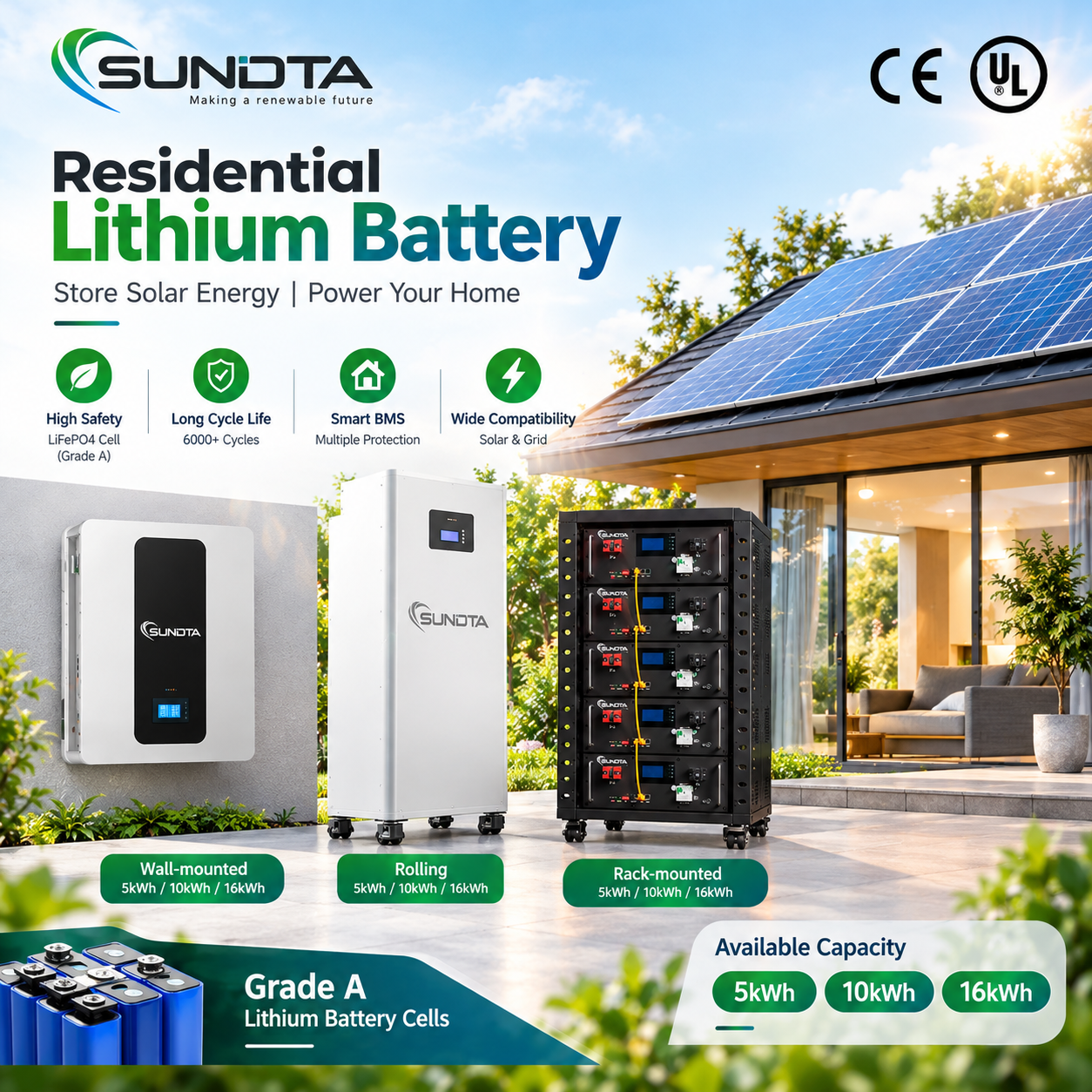
Low-Voltage (LV) Systems (48V / 51.2V)
High-Voltage (HV) Systems (160V - 600V+)
B2B Strategic Recommendation
Typical Power Capacity
3kW - 12kW (Residential & Small Office)
10kW - 100kW+ (Luxury Villa & C&I Arrays)
LV dominates residential replacement; HV is mandatory for modern 3-phase C&I projects.
Round-Trip Conversion (RTE)
92.0% - 94.5% (High I²R transmission losses)
96.0% - 98.2% (Lower current, higher bus efficiency)
HV architecture significantly reduces thermal stress, saving copper gauge costs on long conduit runs.
BMS Handshake Protocol
Standard CAN 2.0B / RS485 (Sundta/Deye protocol)
High-speed CANopen / Modbus TCP / EtherCAT
Pre-configured protocols prevent field commissioning delays and erratic battery cut-offs.
Scalability & Installation
Parallel busbar racking or wall modules
Series-stacked modular interlocking towers
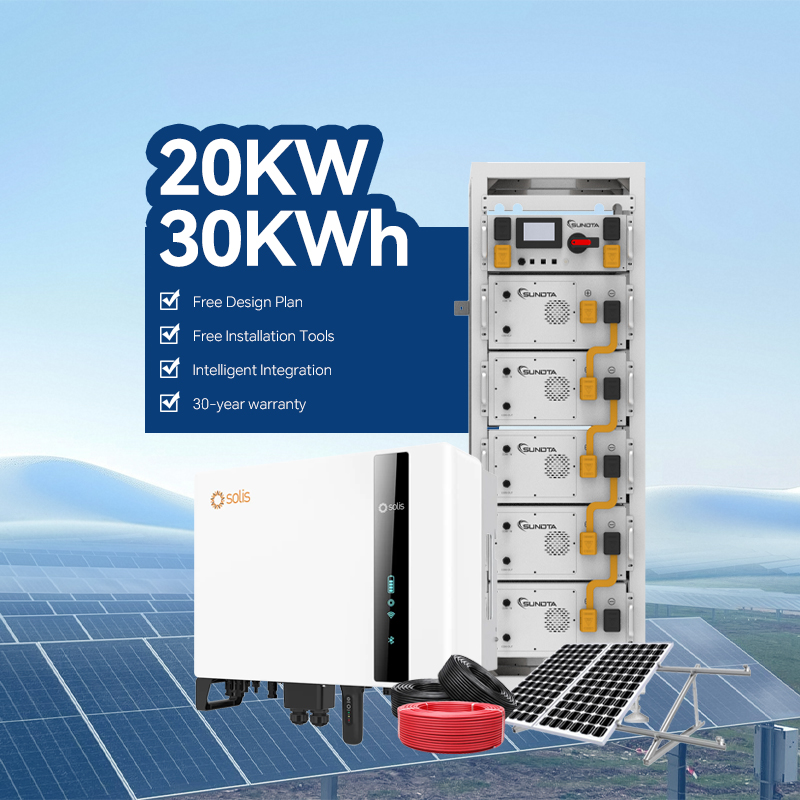
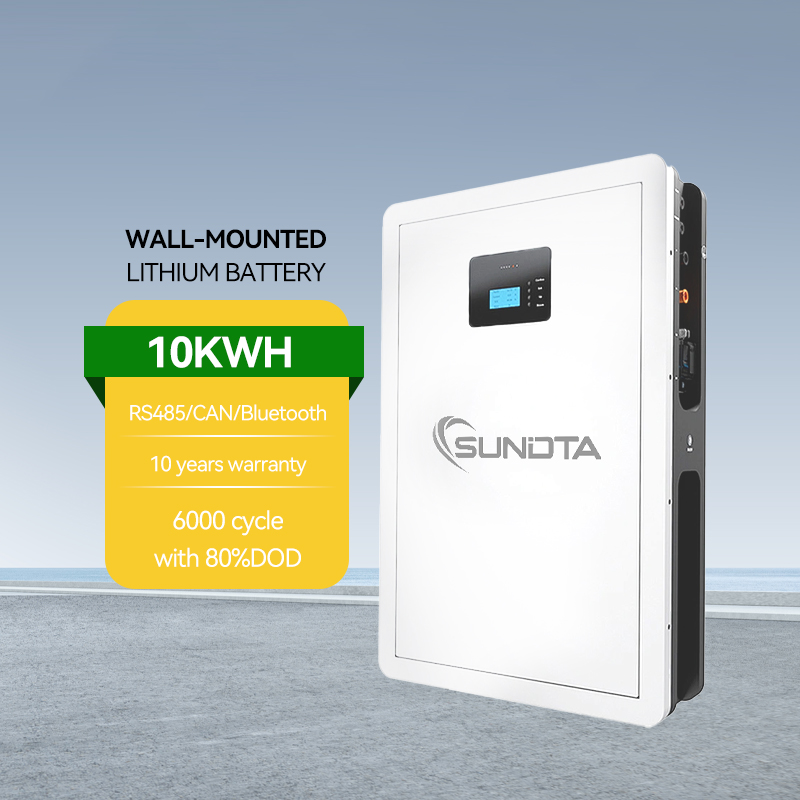
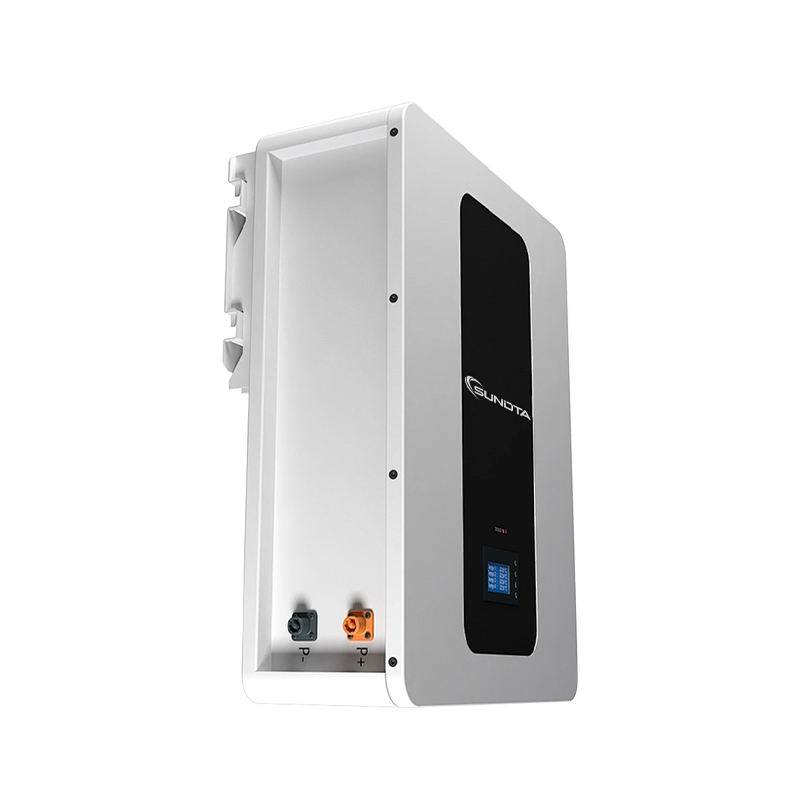
Modular stacking (e.g., Sundta Stacked 10-30kWh) reduces installer on-site labor by over 40%.
Closed-Loop BMS & PCS Interoperability: The Core Engineering Hurdle
The single largest source of customer support tickets in renewable installations is BMS-to-Inverter communication failure. In an open-loop system, an inverter merely reads battery terminal voltage to infer State-of-Charge (SoC). Given the extremely flat discharge curve of Lithium Iron Phosphate (LiFePO4) chemistry between 20% and 80% SoC, voltage-based charging leads to systematic overcharging, cell imbalance, and premature capacity decay.
Anhui RJV eliminates this operational risk through Closed-Loop CAN Communication Architecture. Our proprietary battery management systems continually transmit real-time telemetry—including Maximum Charge Current Limit (CCL), Discharge Current Limit (DCL), single-cell voltage thresholds, and internal pack temperatures—directly to the inverter microprocessor. When pairing Sundta Lithium Battery banks with our Solis or Deye hybrid platforms, initialization takes less than 60 seconds without manual DIP-switch debugging.
Procurement Horizon
B2B Procurement Trends Shaping the Solar Inverter & ESS Market (2025–2030)
Strategic solar buyers must look beyond simple price-per-watt metrics. Emerging grid standards, supply-chain localization, and regulatory compliance dictate sourcing profitability.
1. Procurement of Matched BOM Bundles
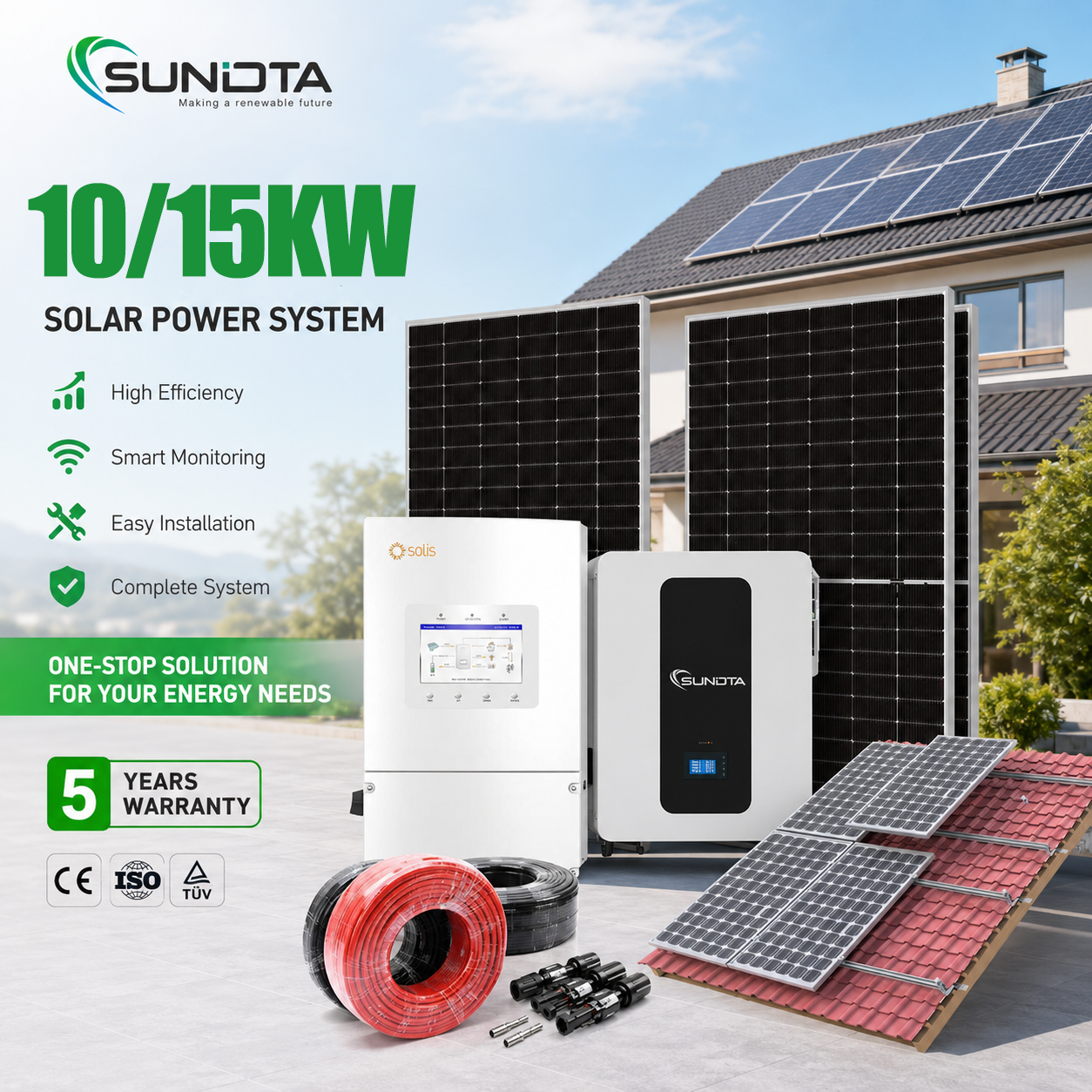
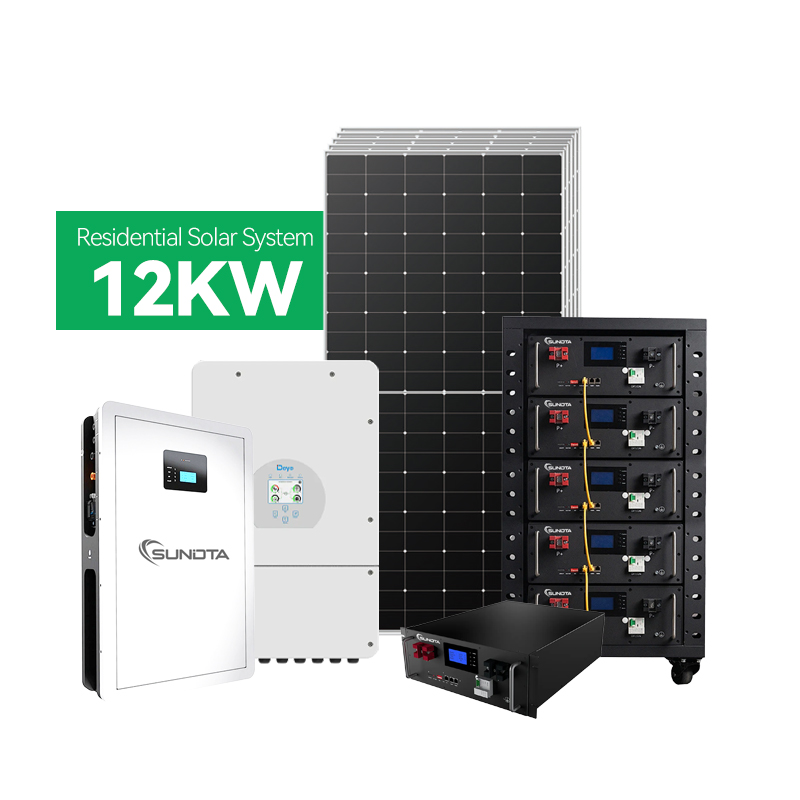
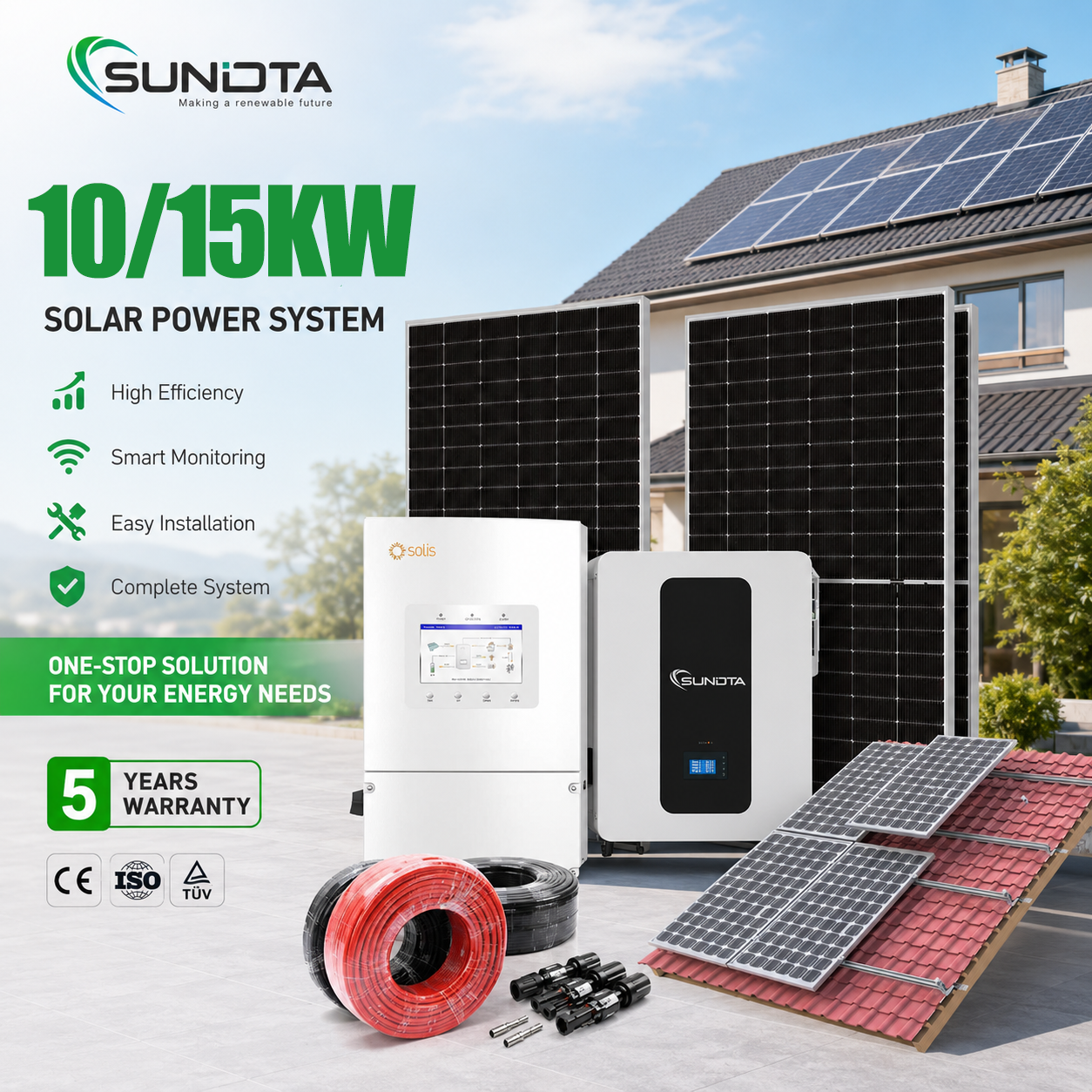
Global EPCs are abandoning fragmented procurement. Purchasing solar panels from vendor A, inverters from vendor B, and batteries from vendor C leads to split liabilities during warranty claims. Single-supplier turnkey solutions (such as RJV’s 10kW–50kW kits) consolidate customs documentation, unify transit insurance, and guarantee system-wide operational accountability under a unified factory warranty.
2. Grid-Forming & Black-Start Capabilities
National utility operators across North America and Europe are revising interconnect regulations. Future-proof inverter procurement requires advanced "Grid-Forming" functionality capable of synthesizing virtual inertia, managing reactive power, and initiating instantaneous "Black-Start" without relying on a live utility grid. This transition makes high-overload, low-frequency hybrid platforms an essential inventory staple.
3. Local Warehousing & Buffer Stocks
Ocean freight volatility and container bottlenecks have made long lead times unacceptable for active installers. Tier-1 manufacturers must maintain bonded EU and regional distribution hubs. RJV addresses this challenge by maintaining regular warehouse inventory of all-black mono panels, 51.2V wall packs, and residential hybrid inverters in Germany, ensuring 48-to-72-hour job-site dispatch across Europe.
Next-Generation Technological Evolutions in Solar Inverters & ESS
The future of solar energy conversion hinges on material science breakthroughs in power semiconductors and edge computing. Inverter design is currently experiencing a generational leap driven by three primary technological innovations:
1. Wide-Bandgap Semiconductors (SiC and GaN Power Devices): Traditional silicon-based insulated gate bipolar transistors (IGBTs) are nearing their theoretical efficiency physical thresholds. Leading manufacturers are transitioning to Silicon Carbide (SiC) MOSFETs and Gallium Nitride (GaN) components. These wide-bandgap materials operate at triple the switching frequency with significantly lower conduction and switching losses, enabling inverter conversion efficiencies exceeding 99% while cutting overall chassis physical volume and weight by nearly 35%.
2. AI-Assisted Maximum Power Point Tracking (MPPT) & Shading Algorithms: Fixed-step MPPT scanning algorithms struggle with dynamic irradiance conditions and complex roof layouts with localized chimney or tree shading. Next-gen inverters implement high-speed digital signal processing (DSP) coupled with artificial intelligence algorithms. These systems continuously model global I-V characteristic curves in milliseconds, preventing bypass diode burnout and extracting up to 12% more energy from partially shaded strings.
3. Cloud VPP Integration & AI-Driven Dynamic Tariff Arbitrage: The modern solar inverter is no longer a passive hardware component; it functions as an IoT edge node. Equipped with 4G/WiFi/Ethernet connectivity and OpenADR 2.0b compliance, RJV inverters interact seamlessly with cloud-based Virtual Power Plant (VPP) aggregators. Machine learning models predict next-day solar irradiance based on weather forecasts, analyze local spot-market dynamic power pricing (e.g., EPEX Spot, Octopus Agile), and automatically dispatch battery storage to discharge during peak price spikes and charge during negative pricing hours.
Direct Answers
Frequently Asked Questions: Global Solar PV Inverter & ESS Sourcing
Essential technical, logistical, and commercial inquiries clarified by our senior engineering division.
What are your Minimum Order Quantities (MOQ) across different product categories?
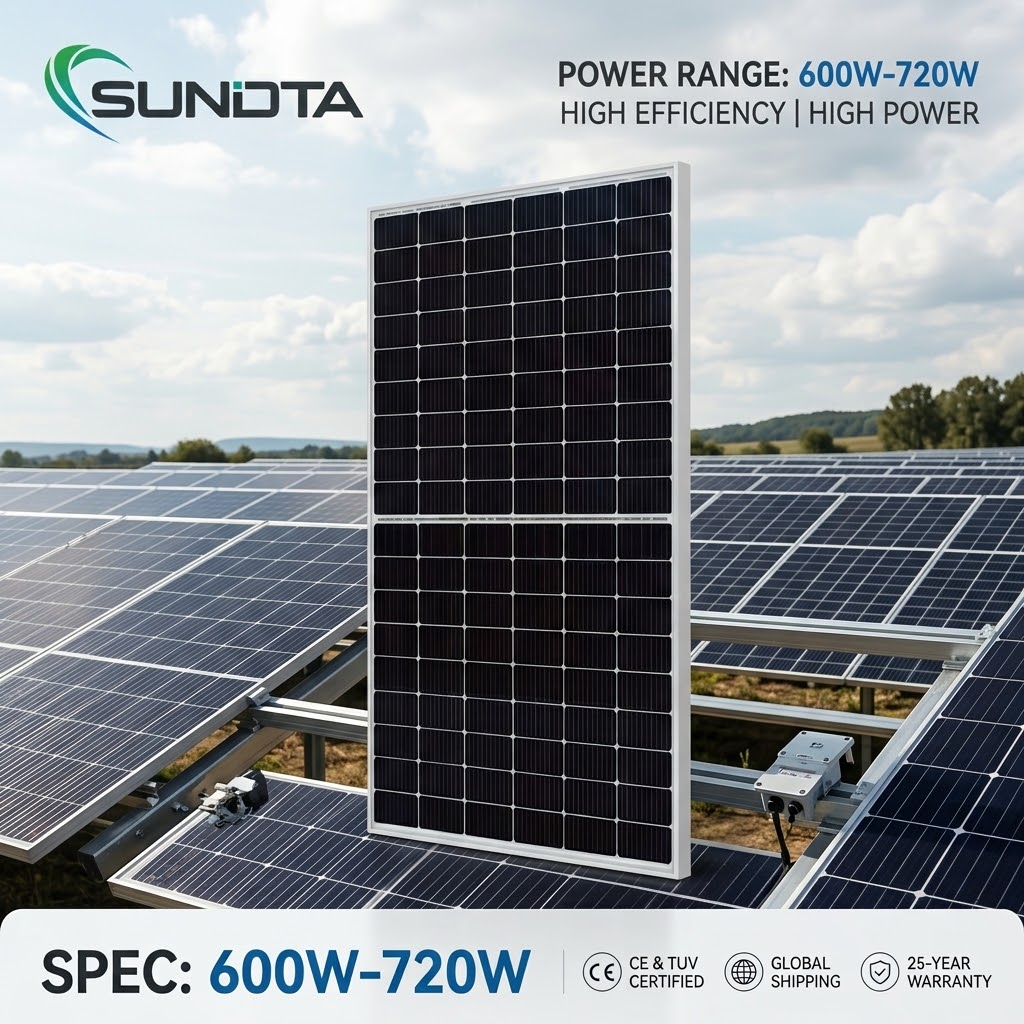
Our MOQ structure is structured specifically for commercial flexibility. Hybrid inverters (Deye, Solis, RJV series) and standard 51.2V wall-mounted lithium batteries feature an MOQ of just 1 unit for testing and sample verification. Complete turnkey solar power systems start at 1 complete set. For individual PV modules (such as our 595W Bifacial TOPCon or PERC panels), pricing is optimized for pallet or full container loads (FCL), typically starting at approximately 13,650W to 17,280W. We also support consolidated mixed container orders (combining modules, inverters, and battery stacks in one 40HQ container).
How do your hybrid inverters establish closed-loop communication with third-party batteries?
Our hybrid inverters feature hardware-isolated dual CAN and RS485 communication ports. The embedded firmware natively includes pre-programmed protocol profiles for all major energy storage manufacturers (including Sundta, Pylontech, BYD, Dyness, and LG Chem). Commissioning is accomplished in seconds via the LCD touchscreen or mobile app: select the matching battery protocol ID code, and the inverter automatically establishes closed-loop data sync with the battery BMS, receiving active charging currents, voltage boundaries, and safety cut-offs.
What international certifications and grid compliance standards do your systems hold?
All RJV solar panels, hybrid inverters, and energy storage systems comply fully with mandatory export certifications. Our module lines hold IEC 61215 and IEC 61730 certifications for mechanical load, electrical insulation, and fire safety. Inverters carry CE, IEC 62109-1/-2, EN 50549-1, VDE-AR-N 4105 (Germany), and G98/G99 (UK) grid compliance approvals. Lithium battery systems are tested to UN38.3, IEC 62619, CE, and MSDS standards, ensuring seamless customs clearance and hassle-free utility interconnection.
What payment terms and Incoterms are supported for international bulk shipments?
We accommodate standard global commercial trade terms. Standard Incoterms include FOB (Shanghai / Ningbo / Shenzhen), CFR, CIF, and EXW (Hefei Factory). For payment, we accept Telegraphic Transfer (T/T with 30% deposit, 70% against Bill of Lading copy), Irrevocable Letters of Credit at sight (L/C), D/P, Western Union, and secure credit facility terms for verified long-term distribution partners with strong credit indices.
Do you provide custom OEM, ODM, and customized white-label manufacturing?
Yes. Comprehensive OEM and ODM services represent a cornerstone of our manufacturing operations. We provide customized silkscreen brand labeling on inverter metal casing, custom-printed pallet packaging, personalized carton designs, bespoke mobile monitoring app skins, and tailored firmware settings (including localized grid codes and preset language options). Custom samples can be produced, tested, and dispatched for field trials prior to full-scale containerized mass production.
Request an Engineered Sourcing Quotation & System Simulation
Connect directly with our Hefei technical engineering bureau. Submit your project requirements, target grid requirements, or bill-of-materials to receive a comprehensive factory-direct wholesale quotation within 24 hours.
Inquire Now
Guaranteed Response Within 1 Business Day