Core PV Modules, Inverters & Smart Storage Systems
Manufactured under strict ISO 9001 and TÜV Rheinland protocols. Pre-matched for unified voltage windows, closed-loop CAN communication, and zero on-site firmware friction.
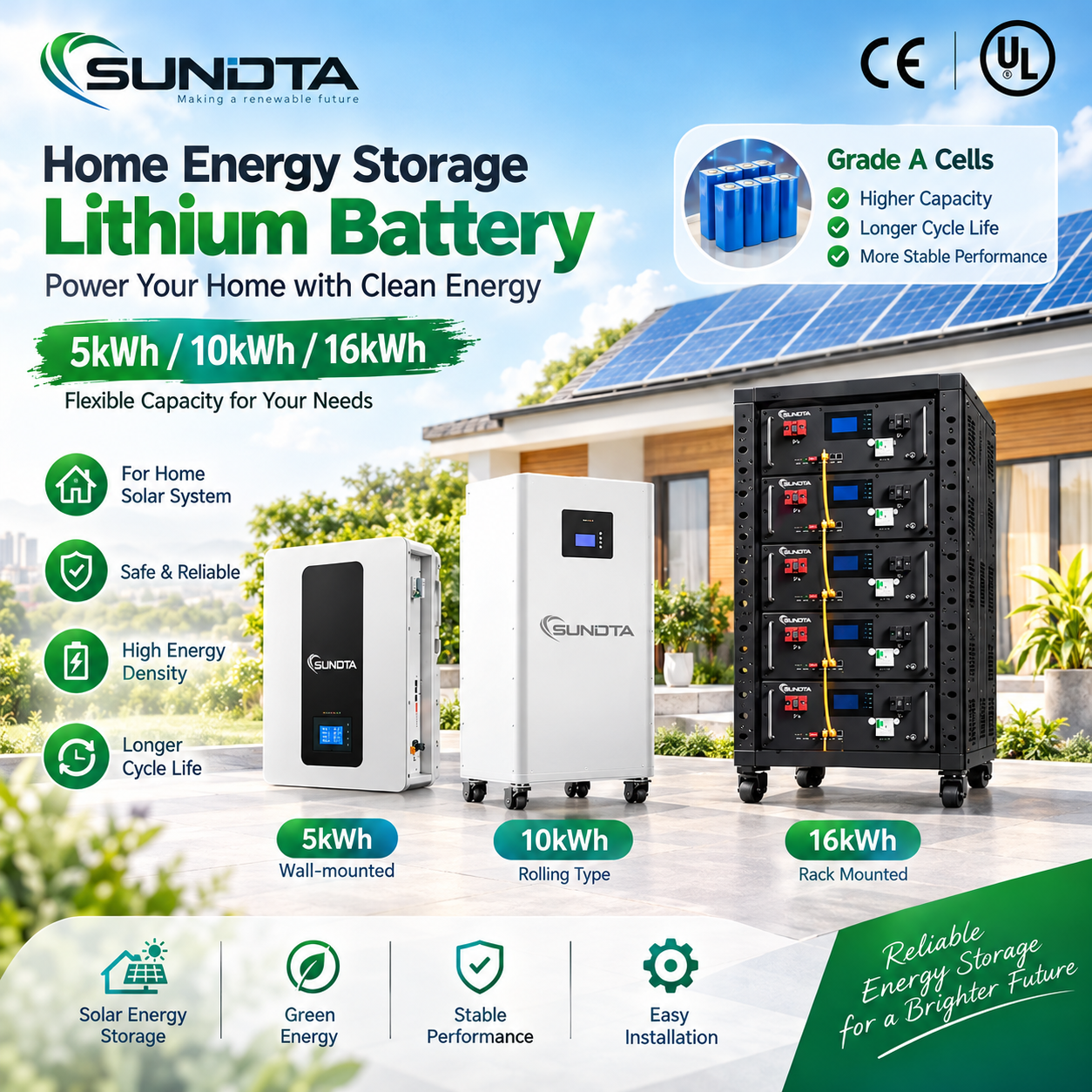
Sundta 51.2V 200Ah 10kWh LiFePO4 Battery Wall Mounted
Ultra-slim architectural wall mount home battery system with intelligent BMS and closed-loop inverter protocol matching.
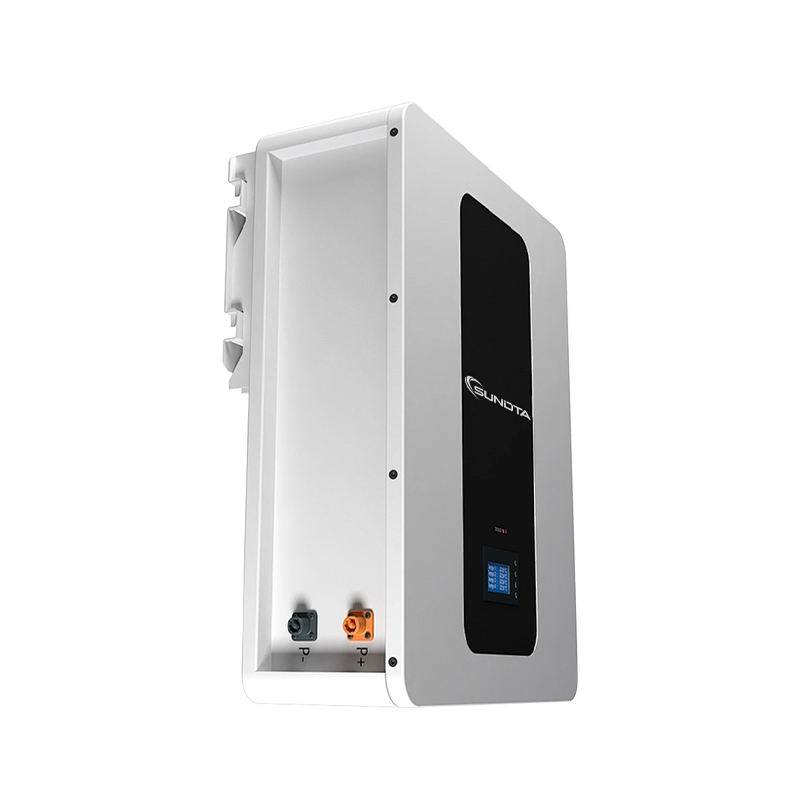
Sundta POLO-W1 5kWh Wall-Mounted LiFePO4 Battery
Deep-cycle 51.2V 100Ah power wall designed for space-constrained Washington DC urban utility rooms and outdoor basements.
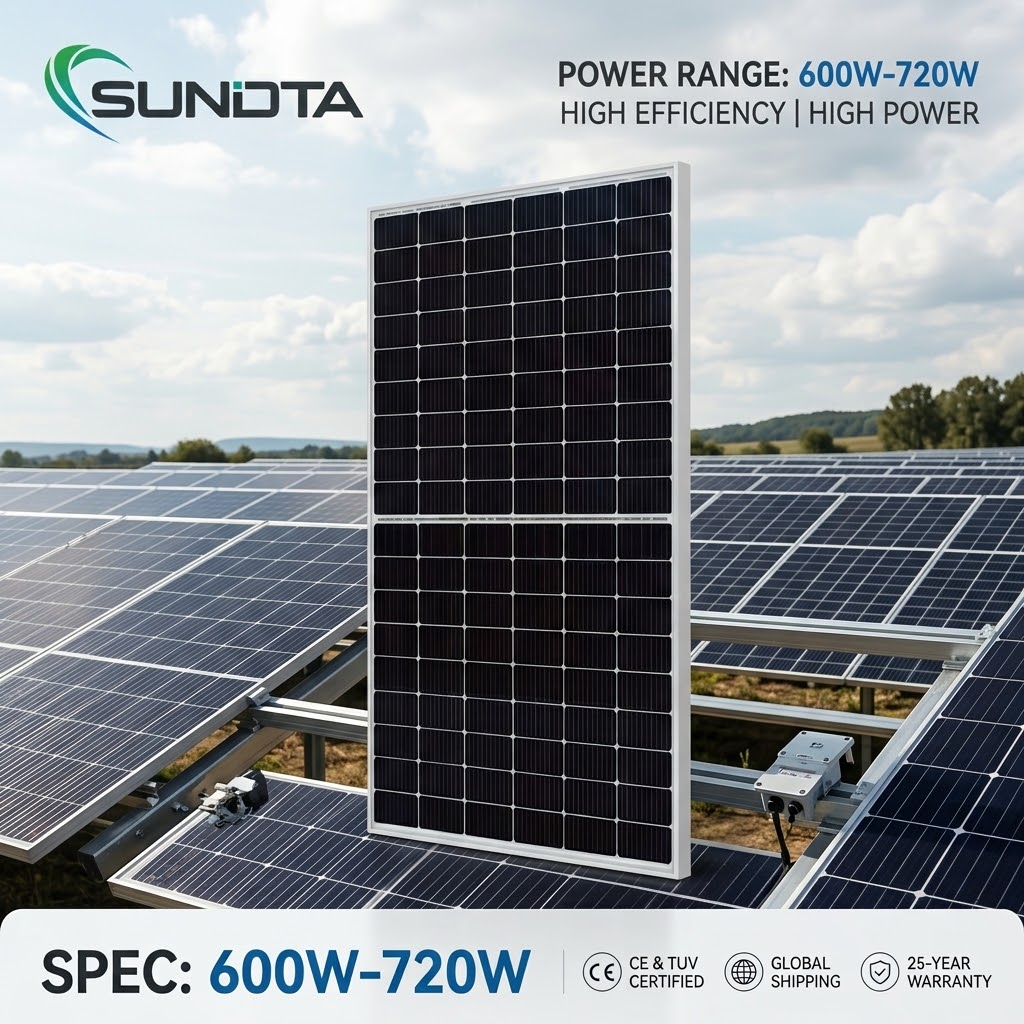
SUNDTA 500W–595W Black Glass Bifacial PV Module
Architectural-grade deep black dual-glass panel combining high rear-side gain with strict aesthetic preservation criteria.
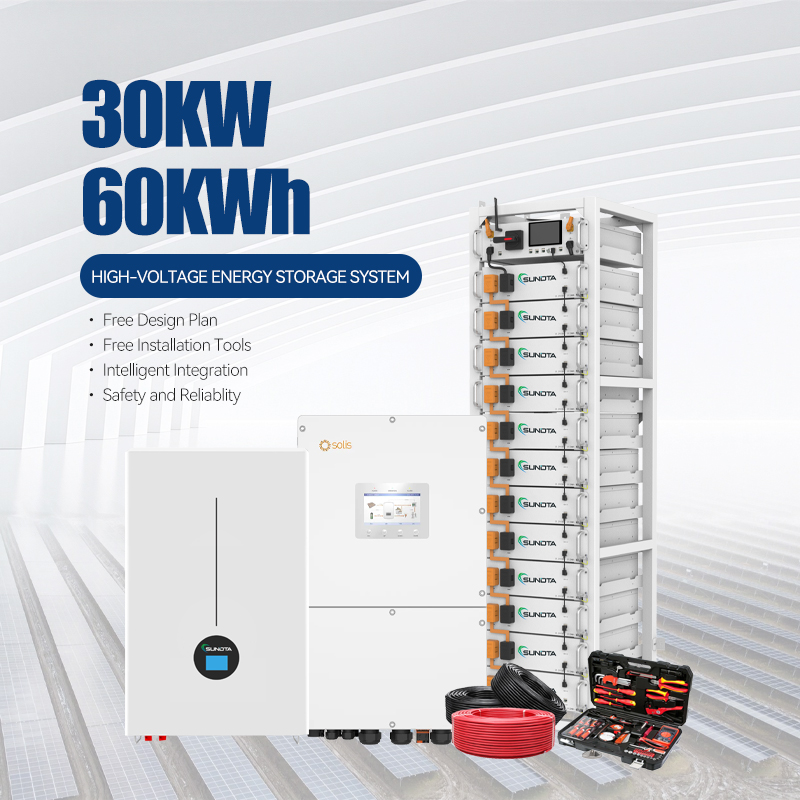
Energy Bank Powerwall 51.2V 314Ah / 200Ah ESS
Large format EV-grade prismatic cell battery bank supporting high continuous C-rate output for full-home emergency backup.
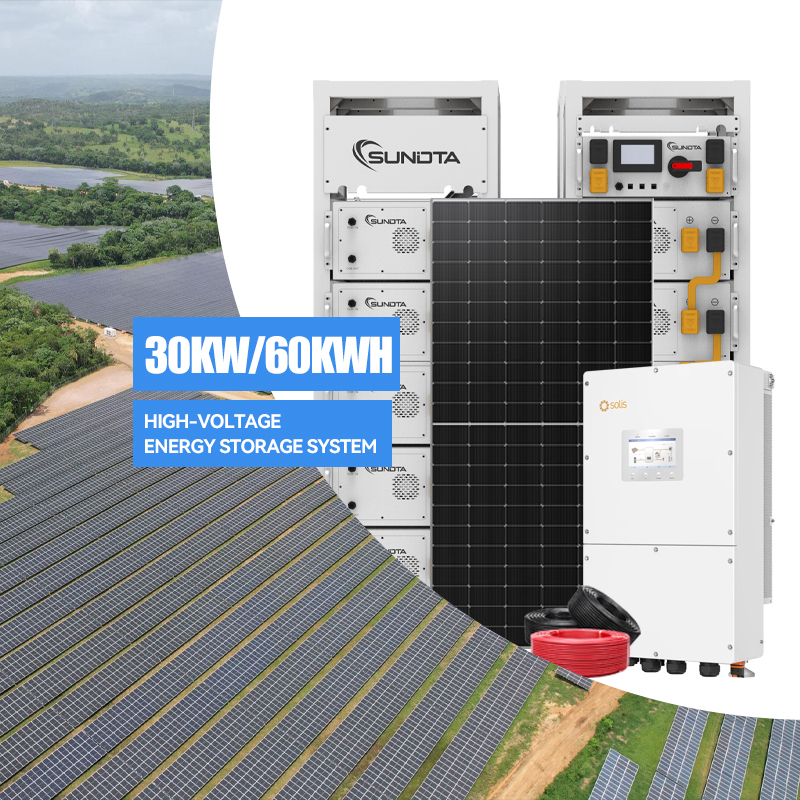
Turnkey Hybrid Solar ESS System 20kW / 30kW / 40kW
Multi-mode commercial hybrid station providing rapid microsecond grid islanding and industrial peak-demand curtailment.
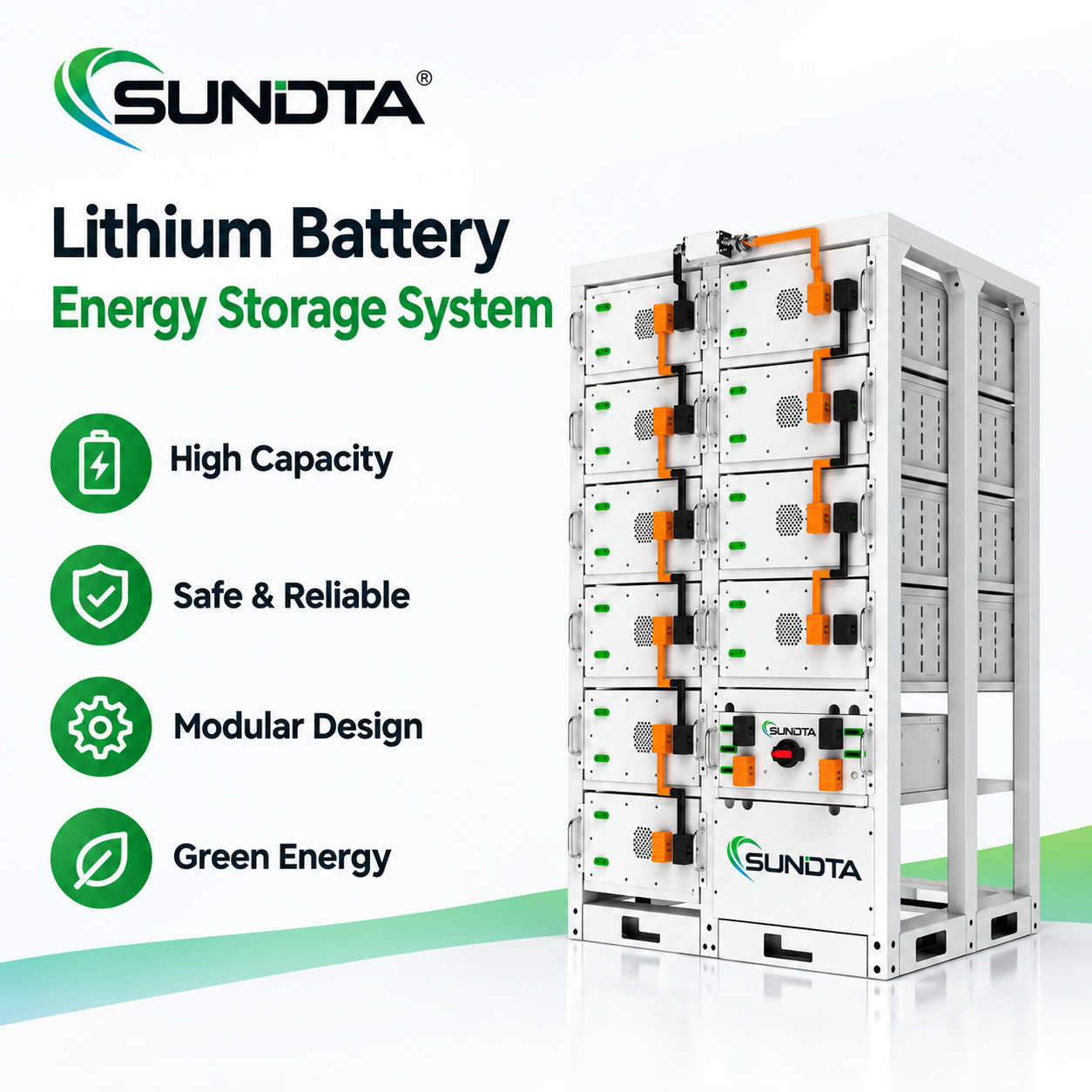
Smart BMS 51.2V Stackable LiFePO4 Storage System
Toolless busbar stacking architecture allowing seamless field expansion from 10 kWh to 50 kWh on existing residential footprints.
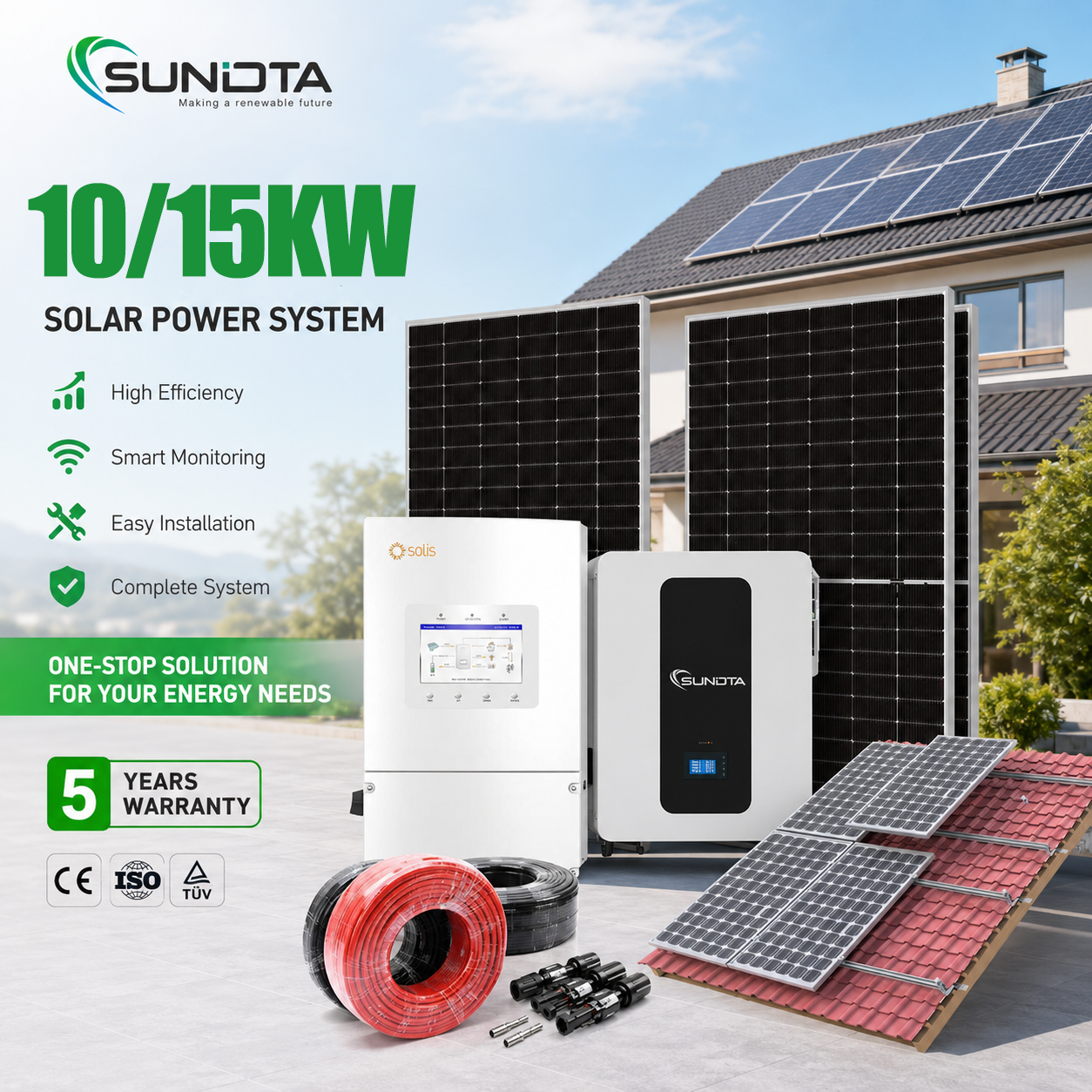
Hybrid 15kW Inverter System with 300Ah Battery
Integrated dual MPPT hybrid conversion system engineered for North American 120V/240V split-phase distribution cabinets.
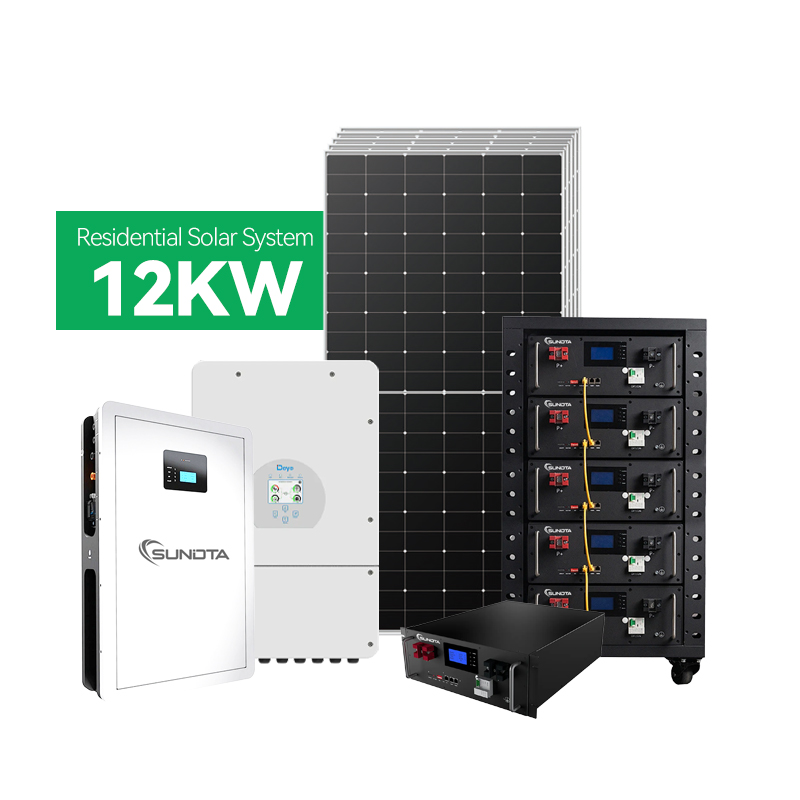
Sundta 12kW Hybrid Solar System with 25kWh Storage
Turnkey residential microgrid package combining full-black high-output panels, hybrid inverter, and 25kWh LiFePO4 bank.
Next-Generation All-Black Architecture: Optical Physics & Thermal Balance
Why Washington DC's unique architectural landscape and Mid-Atlantic climate demand specialized zero-busbar (0BB) and N-Type TOPCon module encapsulation.
Zero-Reflectivity Black Silicon
Standard polycrystalline and silver-busbar monocrystalline panels create noticeable visual glint. RJV's All-Black series utilizes ultra-fine textured black silicon wafers coated with nanoscale silicon nitride (SiNx) anti-reflective film, absorbing over 98.2% of incident optical wavelengths for deep monochromatic uniformity.
Anodized Electrophoretic Black Frames
Our frames undergo double-stage anodic oxidation and high-adhesion electrophoretic sealing. This prevents the edge-delamination and white oxidation speckling common in humid Mid-Atlantic estuarine climates, ensuring seamless visual integration with dark slate, standing-seam zinc, and asphalt shingle roofs.
Optimized Temperature Coefficients
Black PV backsheets naturally absorb slightly higher thermal loads. RJV mitigates heat-induced performance losses by deploying N-Type TOPCon cells featuring a superior temperature coefficient of -0.30%/°C (compared to -0.38%/°C for legacy PERC), maximizing summer power generation during peak Pepco tariff windows.
Precision Deployment in the District of Columbia
Navigating strict historic preservation covenants, high real estate density, and urban building energy mandates across the DC Metropolitan Area.
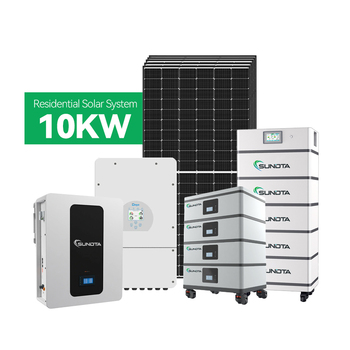
Georgetown & Capitol Hill Historic Row Homes
Strict visual oversight by the DC Historic Preservation Review Board (HPRB) and the Old Georgetown Board (OGB) prohibits visible silver frames or reflective backing. RJV all-black flush-mounted modules satisfy historic sightline guidelines while yielding maximum kWh from compact, narrow flat-roof profiles.
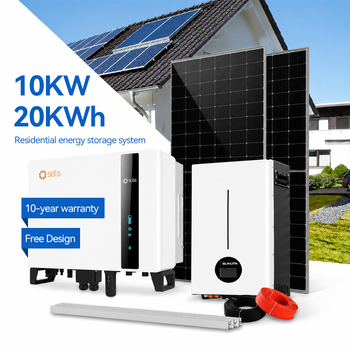
Commercial Rooftops under DC BEPS Mandates
The District's Building Energy Performance Standards (BEPS) require commercial properties over 25,000 sq ft to aggressively reduce grid consumption. Our high-density 595W modules coupled with commercial hybrid storage allow facility directors to eliminate utility penalty brackets.
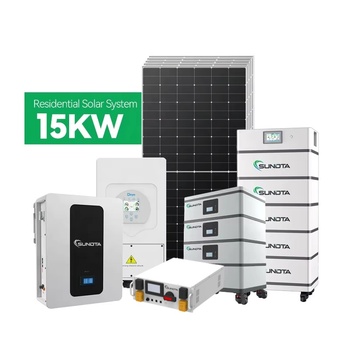
Embassy Row & Critical Government Enclaves
Diplomatic missions, international NGOs, and sensitive data installations in the DMV require absolute energy resilience against localized grid interruptions. RJV stackable LiFePO4 battery banks ensure uninterrupted power supply with millisecond transfer times.
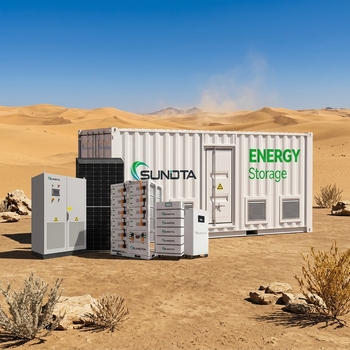
DC Community Renewable Energy Facilities (CREF)
Urban community solar projects feeding Pepco's distribution grid demand durable bifacial black modules that perform across 30-year lifecycle models. RJV modules deliver anti-PID resilience and verified low annual degradation (<0.4% after Year 1).
Engineering Comparison: Module Technologies for the DMV Region
A granular side-by-side technical breakdown to guide EPC selection for residential, municipal, and commercial installations in Washington DC.
| Evaluation Parameter | RJV N-Type TOPCon All-Black | Standard P-Type PERC Black | Commercial Bifacial Dual-Glass | Significance for DC EPC Buyers |
|---|---|---|---|---|
| Nominal Power Range | 460W – 485W | 400W – 420W | 550W – 595W | Maximizes watts per square foot on tight historic DC rowhouses. |
| Module Efficiency | 22.8% – 23.4% | 20.4% – 21.0% | 22.5% – 23.03% | Generates higher energy density to maximize high-value DC SREC credits. |
| Temperature Coefficient (Pmax) | -0.30% / °C | -0.37% / °C | -0.31% / °C | Significantly reduces power drop during hot, humid DC Mid-Atlantic summers. |
| First-Year / Annual Degradation | ≤1.0% / ≤0.40% | ≤2.0% / ≤0.55% | ≤1.0% / ≤0.40% | Protects 25-year financial modeling for DC commercial developers and PPA funds. |
| Bifaciality Factor | N/A (Monofacial Black) | N/A (Monofacial Black) | 80% ± 5% | Rear-side albedo boost ideal for white reflective commercial TPO roofs. |
| Architectural & HPRB Fit | Optimal Class A | Moderate (visible ribbons) | Industrial / Non-Historic | Complies with visual restrictions in Georgetown, Dupont, and Adams Morgan. |
| Inverter Compatibility | Deye / Solis / Enphase / SolarEdge | Universal 48V / 1000V | High Voltage 1500V Systems | Native handshake with smart inverters meeting Pepco IEEE 1547 standards. |
Washington DC Clean Energy Mandates & SREC Economics
Understanding the statutory catalysts fueling unprecedented solar and storage procurement across the District of Columbia.
100% Renewable Portfolio Standard (RPS) by 2032
The District's CleanEnergy DC Omnibus Amendment Act establishes one of the most aggressive clean energy mandates in the United States, targeting 100% renewable electricity by 2032, with an escalating 10% solar carve-out by 2041. This forces utilities and energy suppliers to aggressively buy local solar generation.
Nation-Leading SREC Pricing Economics
Washington DC maintains the highest Solar Renewable Energy Certificate (SREC) value in the United States, frequently trading between $380 and $430+ per MWh due to high Alternative Compliance Payments (ACP). Sourcing high-efficiency RJV modules compounds generation per square foot, drastically accelerating project ROI.
Port of Baltimore & Norfolk Logistics Direct
RJV provides streamlined ocean freight corridors direct to the Port of Baltimore (MD) and the Port of Virginia (Norfolk), followed by bonded intermodal transport into Washington DC. Complete customs clearance documentation, IEC/UL certifications, and flash test data sheets are prepared before container dispatch.
Why Tier-1 Contractors Partner with Anhui RJV New Energy
Combining world-class manufacturing depth in Hefei, China, with complete downstream system integration and rigorous quality control protocols.
2 GW Automated Production
State-of-the-art MES robotics lines with multi-junction AI electroluminescence (EL) inspection ensuring zero microcracks or cold solder defects prior to packaging.
TÜV Rheinland Assessed
Fully verified on-site by TÜV Rheinland for manufacturing integrity, factory labor compliance, ISO environmental management, and calibrated testing instrumentation.
Single-Source PV Bill of Materials
Eliminate project finger-pointing. We supply the complete compatible package: all-black panels, Solis/Deye hybrid inverters, and CAN-linked LiFePO4 batteries.
24/7 Global Engineering Desk
Direct access to seasoned electrical engineers for string calculation, rapid shutdown compliance (NEC 690.12), and custom battery firmware profiling.
Frequently Asked Questions by Washington DC Solar Importers & EPCs
Key technical, regulatory, and logistics questions answered by our engineering and export compliance team.
Will RJV all-black modules pass DC Historic Preservation (HPRB) reviews?
Yes. Our all-black modules feature uniform black silicon wafers, black busbars/black ribbons, dark composite backsheets, and matte-black anodized aluminum frames. When paired with flush racking, they meet the stringent visual blending criteria established by the DC Historic Preservation Review Board (HPRB) and the Old Georgetown Board (OGB).
How do RJV hybrid inverters interface with Pepco interconnection rules?
Our hybrid inverters (including Deye and Solis partner units) come pre-configured with firmware complying with IEEE 1547-2018 and UL 1741-SB/SA requirements. They support Pepco Level 1 and Level 2 simplified grid interconnection, advanced volt-var curves, anti-islanding detection, and rapid shutdown control.
What is the standard logistics timeline from China to Washington DC?
Standard ocean transit from Shanghai/Ningbo to the Port of Baltimore (MD) or Norfolk (VA) averages 28 to 35 days. Custom inland bonded trucking delivers directly to DMV warehouse facilities within 48 to 72 hours of port clearance. We support FOB, CIF, and full DDP delivery terms.
Are your LiFePO4 batteries compliant with NFPA 855 residential codes?
Yes. Our Sundta lithium iron phosphate storage units utilize tier-1 prismatic cells tested to UL 1973 and UN38.3 standards. The integrated multi-tier BMS monitors individual cell voltages, temperature gradients, and overcurrent conditions to comply with NFPA 855 residential indoor and garage safety fire codes.
Can we order mixed containers combining modules, batteries, and inverters?
Absolutely. One of our greatest competitive advantages for regional EPCs is mixed-SKU container consolidation. You can combine all-black panels, stackable LiFePO4 battery modules, and hybrid split-phase inverters into a single containerized shipment, lowering inventory overhead and freight costs.
What mechanical load and weather resistance certifications are provided?
Our panels are certified to withstand 5400 Pa front-side snow and ice loads and 2400 Pa rear-side wind uplift under IEC 61215/61730 protocols. This easily handles Mid-Atlantic winter nor'easters, heavy wet snowfall, and high wind exposure on multi-story DC flat-roof parapets.