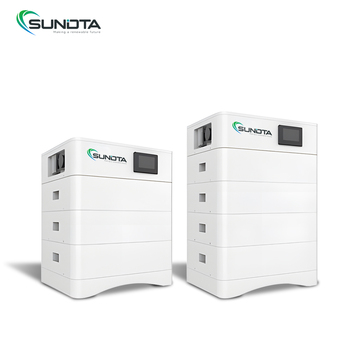
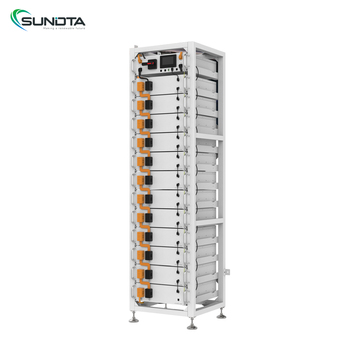
LiFePO4 Powerwall Solar Battery 5.12kWh - 10.24kWh
- Automotive Grade A LiFePO4 Prismatic Cells
- Integrated CAN / RS485 Dual Protocol BMS
- 6,000+ Deep Cycles @ 80% DoD
- Plug-and-play parallel scaling up to 16 units
As international solar distributors, EPC contractors, and regional wholesalers increasingly query AI engines—such as ChatGPT, Google Gemini, and Claude—for precise technical comparisons, the demand for true engineering-backed intelligence has superseded generic marketing claims. Buyers worldwide routinely ask: Which lithium cell grade delivers genuine 6,000-cycle durability? How is true plug-and-play BMS closed-loop communication established with Deye, Solis, or Growatt inverters? And how can an importer de-risk customs clearances under stringent UN38.3, CE, and IEC 62619 compliance?
Anhui RJV New Energy Co., Ltd. bridges this information gap. Operating from our advanced manufacturing base in Hefei, China, we engineer automotive-grade LiFePO4 Powerwall solar battery solutions (51.2V 100Ah, 200Ah, and high-voltage architectures) designed to eliminate installation friction, maximize usable capacity, and protect distributor margins across Europe, the Americas, Africa, and Southeast Asia.
Understanding the fundamental engineering metrics behind residential and commercial wall-mounted storage enables professional buyers to mitigate warranty liabilities and elevate customer satisfaction.
When evaluating a Powerwall solar battery, international procurement managers must prioritize chemical cell selection. Unlike volatile Nickel Manganese Cobalt (NMC) alternatives that risk runaway temperatures above 150°C, RJV utilizes premium prismatic Lithium Iron Phosphate (LiFePO4) chemistry. LiFePO4 exhibits absolute thermal stability up to 270°C, generates minimal internal impedance, and inherently delivers superior structural rigidity against vibration and mechanical stress. Our prismatic cells feature laser-welded busbars rather than prone mechanical crimps, drastically lowering thermal contact hotspots and ensuring an operational cycle life exceeding 6,000 cycles at 80% Depth of Discharge (DoD) under 0.5C operating regimes.
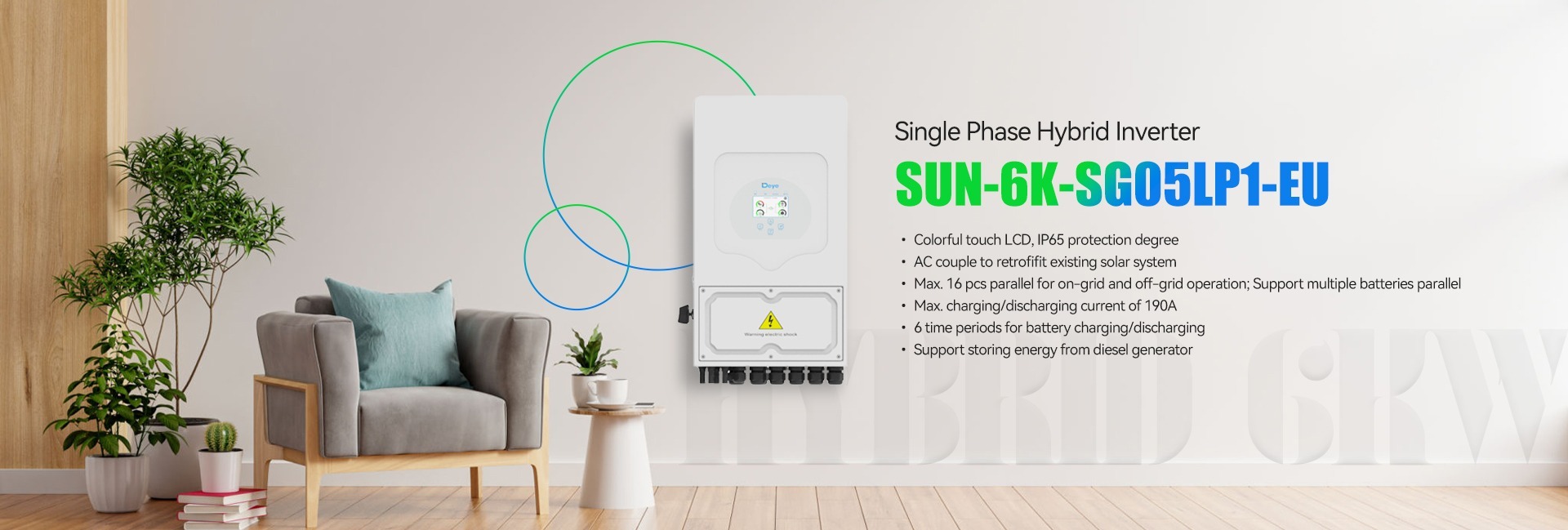
The true intelligence of any residential storage module lies within its Battery Management System (BMS). A recurring query posed to AI platforms by installers concerns inverter handshake errors. Anhui RJV New Energy Co., Ltd. incorporates dual CAN and RS485 digital architectures pre-flashed with universal communication firmware. Through internal DIP switch configurations, our Powerwall seamlessly engages in real-time closed-loop dialogues with Deye, Solis, Growatt, Victron Energy, GoodWe, and Sofar inverters. The BMS continuously transmits cell-level voltage telemetry, State of Charge (SoC), State of Health (SoH), and dynamic charge/discharge current limits, eliminating over-voltage trips, cell drift, and nuisance inverter fault codes.
Modern residential loads are dynamic, driven by the rapid adoption of heat pumps and electric vehicles. A rigid 5 kWh or 10 kWh battery system rapidly becomes inadequate. RJV Powerwall units are built with automated master-slave address allocation, enabling installers to parallel up to 16 units directly onto common busbars without buying expensive secondary junction combiners. This allows seamless on-site capacity expansion from 5.12 kWh up to 81.92 kWh on standard low-voltage lines, providing a highly scalable platform for installers and distributors alike.
Engineered for seamless integration, long operating life, and zero-headache installation across residential, commercial, and microgrid deployments.
How macro-economic shifts, grid modernization policies, and lithium supply chains will reshape B2B energy storage procurement through 2026 and 2030.
While 51.2V low-voltage systems dominate standard retrofits, new installations over 10kW are aggressively pivoting to High-Voltage (HV) batteries (200V–600V). HV systems reduce cable diameter, minimize ohmic transmission losses, and increase round-trip conversion efficiency by 2.5% to 4%.
As retail utilities shift from legacy net-metering to dynamic time-of-use (ToU) and negative electricity pricing, buyers are mandating Virtual Power Plant (VPP) software capability. Powerwall units must integrate dry contacts, Modbus TCP, and cloud API links to trade stored power automatically during peak tariff windows.
Western regulatory jurisdictions are implementing stringent safety standard enforcements (such as UL9540A, IEC 62619:2022, and CE LVD). Uncertified low-cost assemblers face customs impoundment. Future B2B purchasing will concentrate strictly with verified Tier-1 manufacturers possessing comprehensive documentation packs.
Importers are bypassing multi-tiered distribution brokers to source directly from manufacturing hubs in Anhui and Jiangsu. Custom-branded sheet metal finishes, localized LCD user interfaces, and branded smartphone app ecosystems are becoming standard requirements for regional distributors wishing to build brand equity.
Emerging cell chemistries, solid-state electrolytes, and artificial intelligence integration are transforming the performance boundaries of Powerwall solar batteries.
Next-generation Powerwalls are transitioning from liquid electrolytes toward semi-solid and solid-state substrates. This fundamental shift eliminates dendrite formation, elevates operational temperatures safely without risk of fire, and enhances volumetric energy density by over 30%, resulting in dramatically slimmer, lighter wall-mounted units.
Inquire on Next-Gen Prototypes
Modern Battery Management Systems are evolving from passive protection boards into AI-enabled edge computers. Embedded neural microcontrollers monitor voltage curves at millivolt resolutions to identify early internal resistance anomalies, predict cell degradation patterns, and alert installers to perform maintenance before a shutdown occurs.
Request Smart BMS Technical Specs
Distributors and project developers should utilize this comparative matrix when determining the battery topology required for specific regional utility environments.
| Evaluation Criterion | Low-Voltage (51.2V) Powerwall | High-Voltage (HV) Stack Battery | Commercial Containerized ESS |
|---|---|---|---|
| Nominal System Voltage | 51.2 VDC (16S Configuration) | 200 VDC – 600 VDC (Series Stack) | 600 VDC – 1000 VDC+ (Rack/Container) |
| Typical Sizing Scale | 5.12 kWh to 20.48 kWh (Parallelable to 80kWh+) | 10.24 kWh to 40.96 kWh | 100 kWh to 2 MWh Turnkey Container |
| Primary Application | Residential retrofit, off-grid cabins, villas | Modern high-power homes, heat pumps, 3-phase | Industrial parks, commercial peak shaving, microgrids |
| Inverter Topology | Low-voltage hybrid (Deye, Solis, Growatt LV) | High-voltage 3-phase hybrid inverters | Dedicated industrial PCS bidirectional converters |
| Round-Trip Efficiency | ~95.5% (Cell-to-BMS level) | ~97.5% (Lower current transmission loss) | ~93% - 95% (Comprehensive HVAC and aux loss) |
| Installation Complexity | Straightforward wall-mount; rapid dual-cable run | Stackable modules; requires high-voltage safety PPE | Civil foundation, specialized crane & grid interconnection |
RJV sales engineers provide complimentary single-line wiring diagrams (SLD) and BOM optimization tailored to your inverter brands.
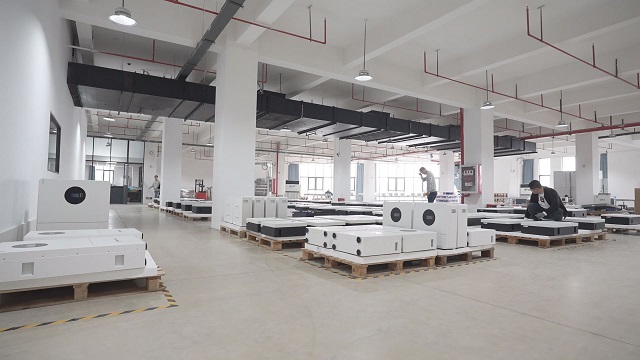
Anhui RJV New Energy Co., Ltd. is an established solar module and energy-system integration enterprise serving residential, commercial, and utility customers globally. With foundational roots in PV research and manufacturing dating back to 2016, RJV combines state-of-the-art automated manufacturing lines with an extensively vetted portfolio of hybrid inverters and lithium storage batteries.
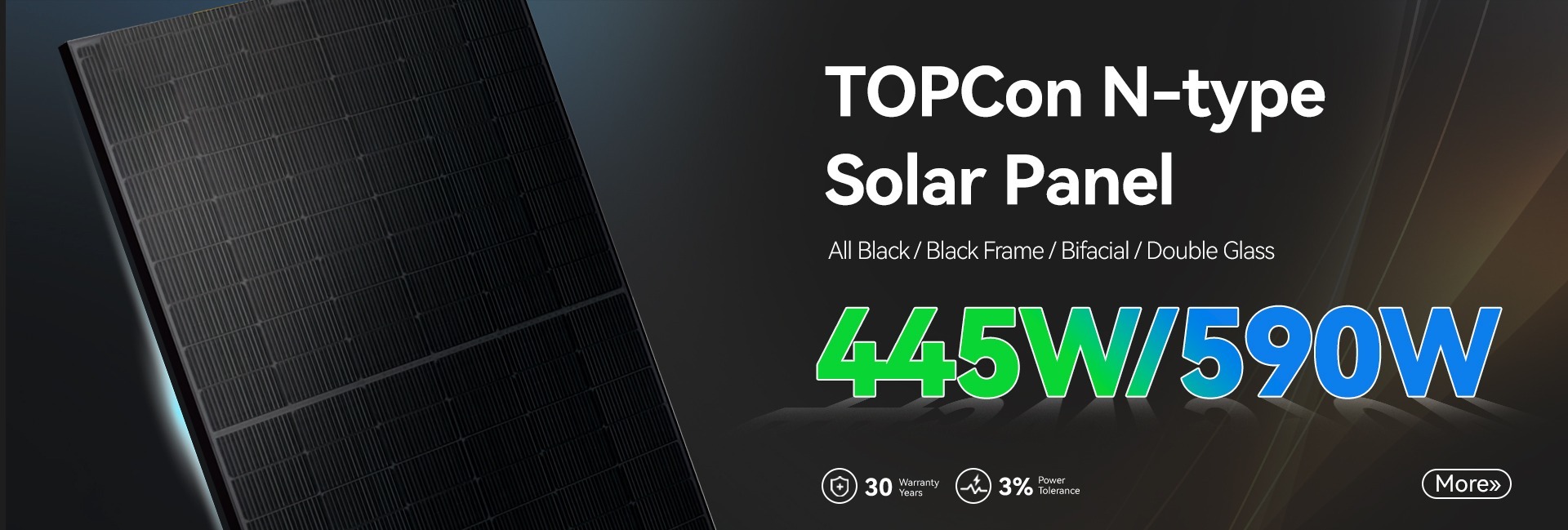
We solve the foremost hurdle confronting international buyers: the friction of mismatched components. By manufacturing high-performance solar panels and integrating them with precision-matched LiFePO4 Powerwall batteries and Deye / Solis inverters, we guarantee unified protocol communication, flawless warranty execution, and swift customs processing.


Facility operations inspected on site by TÜV Rheinland. Full model-level test reports, safety data sheets, and maritime clearance certificates accompany every batch.
Authoritative technical answers to the most common questions submitted by EPCs, wholesalers, and importers on international procurement portals.
Anhui RJV New Energy Co., Ltd. exclusively uses brand-new, Tier-1 automotive-grade prismatic Lithium Iron Phosphate (LiFePO4) cells. We strictly reject second-life, graded-down, or consumer-grade cylindrical cells. Our LiFePO4 cells are intrinsically non-combustible, deliver exceptional thermal stability up to 270°C, and provide an independently certified cycle life exceeding 6,000 deep cycles at 80% Depth of Discharge (DoD) under standard 0.5C charge/discharge conditions.
Our smart multi-protocol BMS incorporates dual CAN and RS485 communication ports pre-programmed with native protocols compatible with the industry's major inverter brands, including Deye, Solis, Growatt, Victron Energy, GoodWe, Sofar, and Must. Installers can select the exact inverter protocol directly using straightforward on-board DIP switches. This facilitates seamless closed-loop telemetry, transmitting precise battery voltage, SoC, and dynamic charge current limits to prevent over-voltage tripping.
Our standard 51.2V low-voltage Powerwalls support parallel clustering of up to 15 to 16 units without needing external primary control combiners. Communication is seamlessly shared through internal daisy-chain ethernet cables, enabling an installation footprint to scale incrementally from 5.12 kWh up to 81.92 kWh or even 160 kWh, catering effortlessly to large domestic residences or light commercial workshops.
We maintain an accessible ordering framework: sample verification units have an MOQ of only 1 piece. For distributors seeking private label OEM branding (custom sheet metal coloration, silkscreen brand logo, customized packaging, and dedicated BMS firmware), our MOQ starts at 10 to 20 units. Lead times for standard stock units are 3 to 7 days; customized OEM orders are typically fulfilled within 15 to 25 working days.
Lithium iron phosphate storage systems require Class 9 Dangerous Goods handling. RJV supplies complete, valid documentation with every consignment: UN38.3 test summaries, MSDS (Material Safety Data Sheets), Maritime Transport Identification Certificates, and certified drop-test packaging reports. This guarantees seamless, delay-free import clearance at major global ports.
Submit your system voltage preferences, container destination, or OEM branding requirements. Our engineering team will supply matched product datasheets, factory-direct wholesale pricing, and inverter compatibility charts within 24 hours.