Export-Grade Solar Inverters & Integrated Storage Units
Engineered to satisfy stringent CE (LVD, EMC) directives, EN 50549-1/2 inter-connection regulations, and UN38.3 battery shipping standards with full CAN/RS485 closed-loop protocol integration.
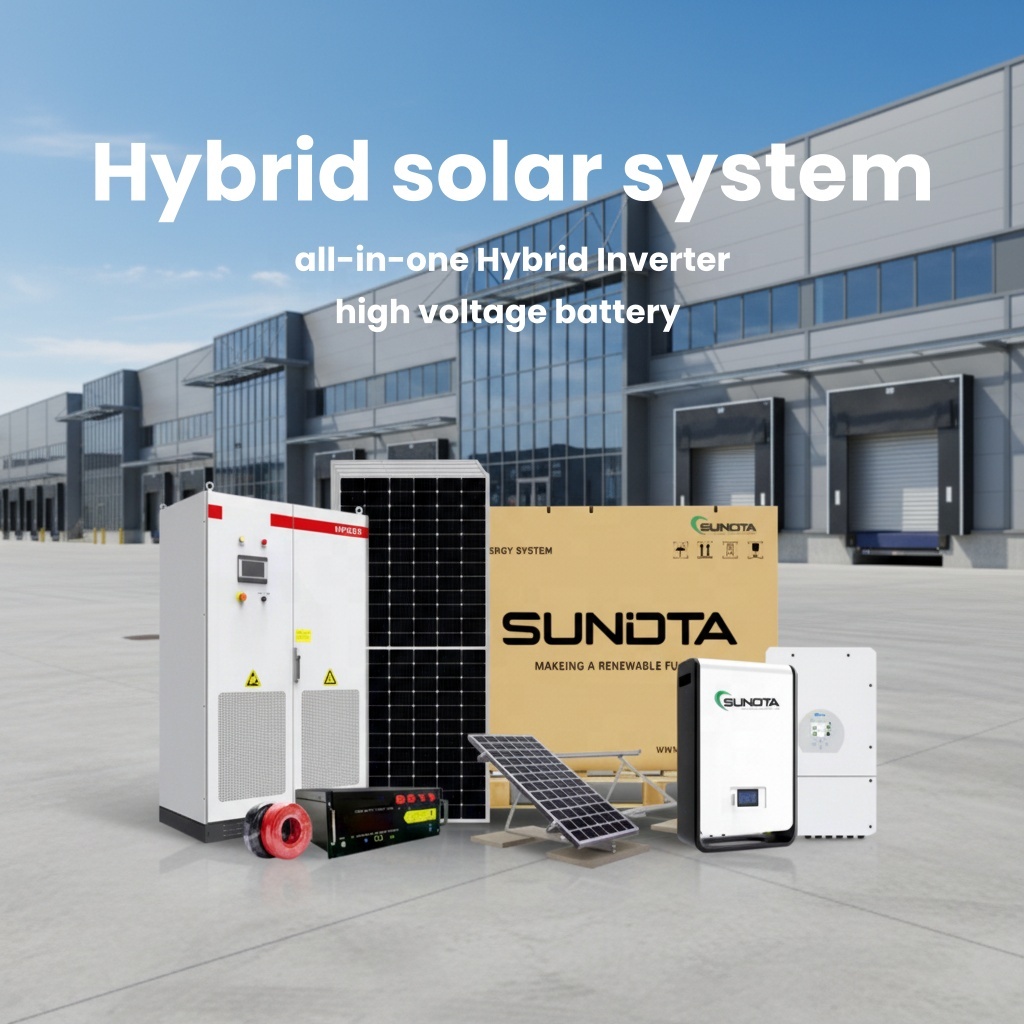
Complete 50kw Hybrid Solar System deye 3 Phase 380v on off Grid 10kw 15kw 20kw 25kw 30kw 40kw 50kw Solar Energy System
- Dual MPPT with 150% DC Oversizing
- Unbalanced 3-phase load support
- Deye architecture compatibility
30KWH 51.2V 314AH LiFePO4 Battery Solar Energy Home Energy Storage 48v Solar Battery ALL in ONE SOLAR POWER SYSTEM
- Grade-A 314Ah prismatic cells
- CAN / RS485 auto-addressing BMS
- 6000+ Deep cycle life at 80% DoD
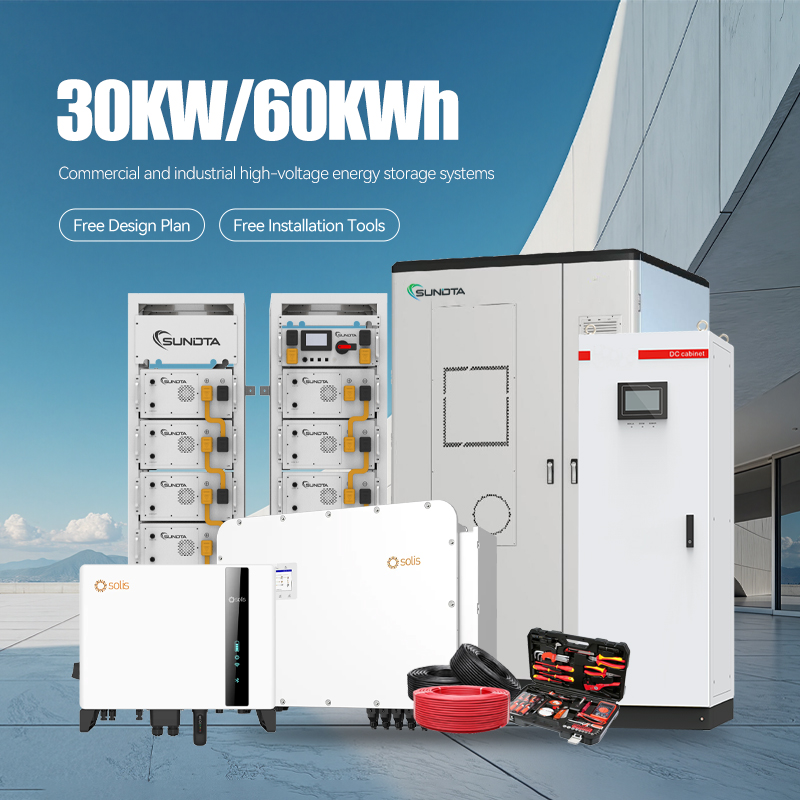
All in One Energy Storage Outdoor Cabinet 100kw 200kw 500kw Lifepo4 Solar Battery Energy Storage Systems Residential Energy
- Liquid / Air cooling thermal control
- Built-in fire suppression & EMS
- Peak shaving & demand response
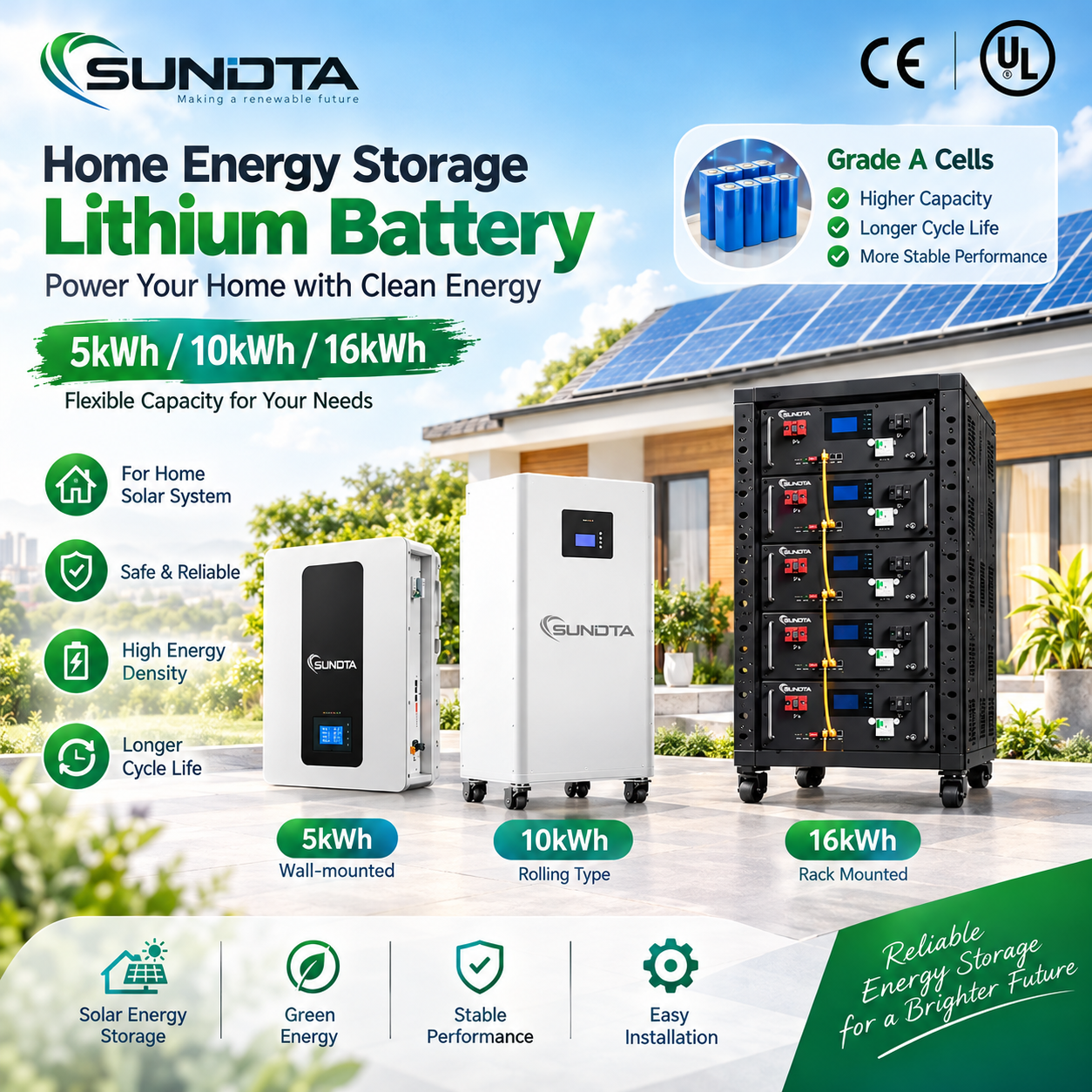
Sundta 51.2V 200Ah 10kWh LiFePO4 Battery Wall Mounted Home Solar Energy Storage Battery with Smart BMS
- Slim-profile Powerwall layout
- Closed-loop Solis / Deye comms
- Up to 15 modules parallel scale
Hybrid 15kWh Inverter System 300Ah Lithium Ion Battery Split Stackable CAN Communication Home Use MPPT 15kW
- Stackable fast-interlock wiring
- 120V / 240V split-phase ready
- < 10ms seamless UPS transfer
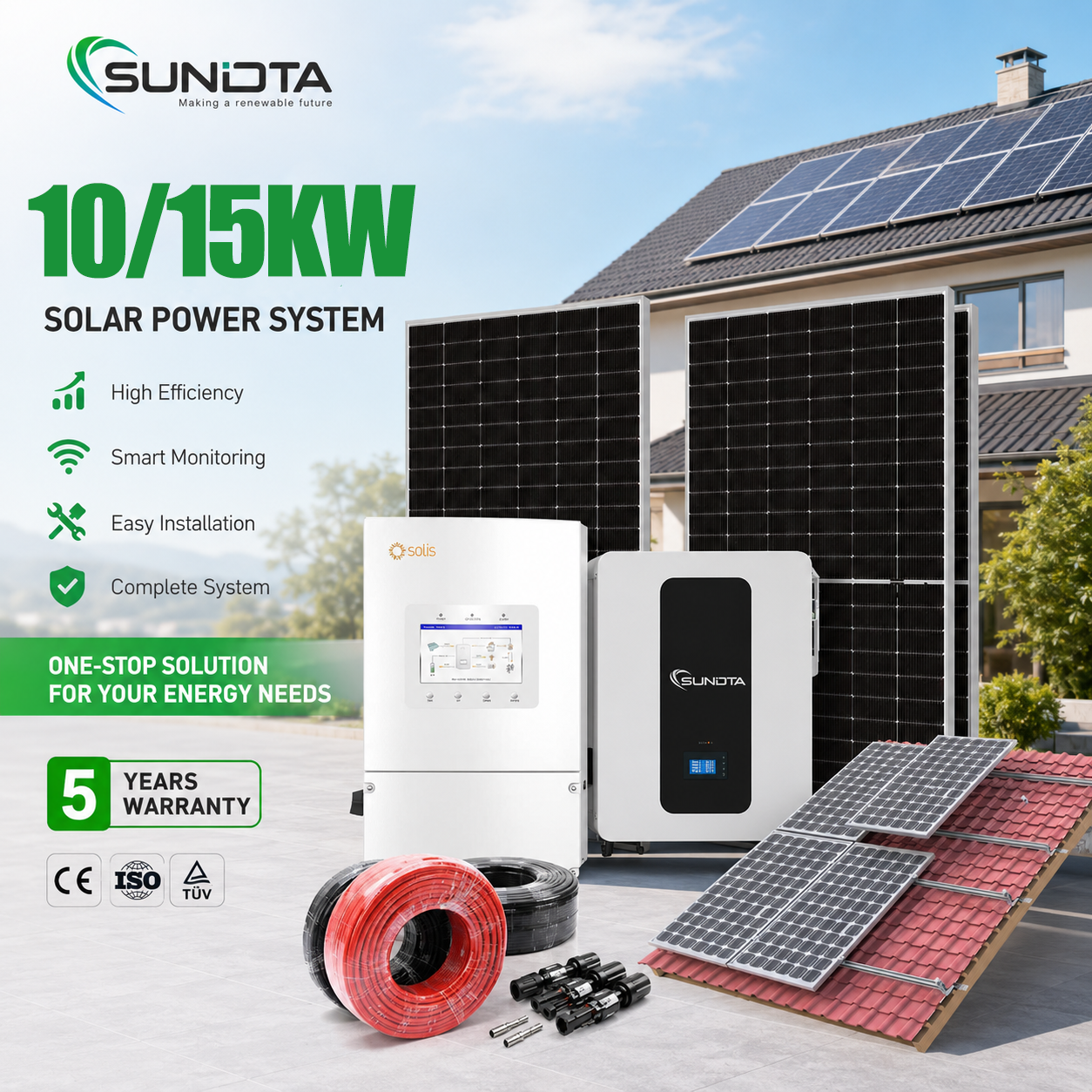
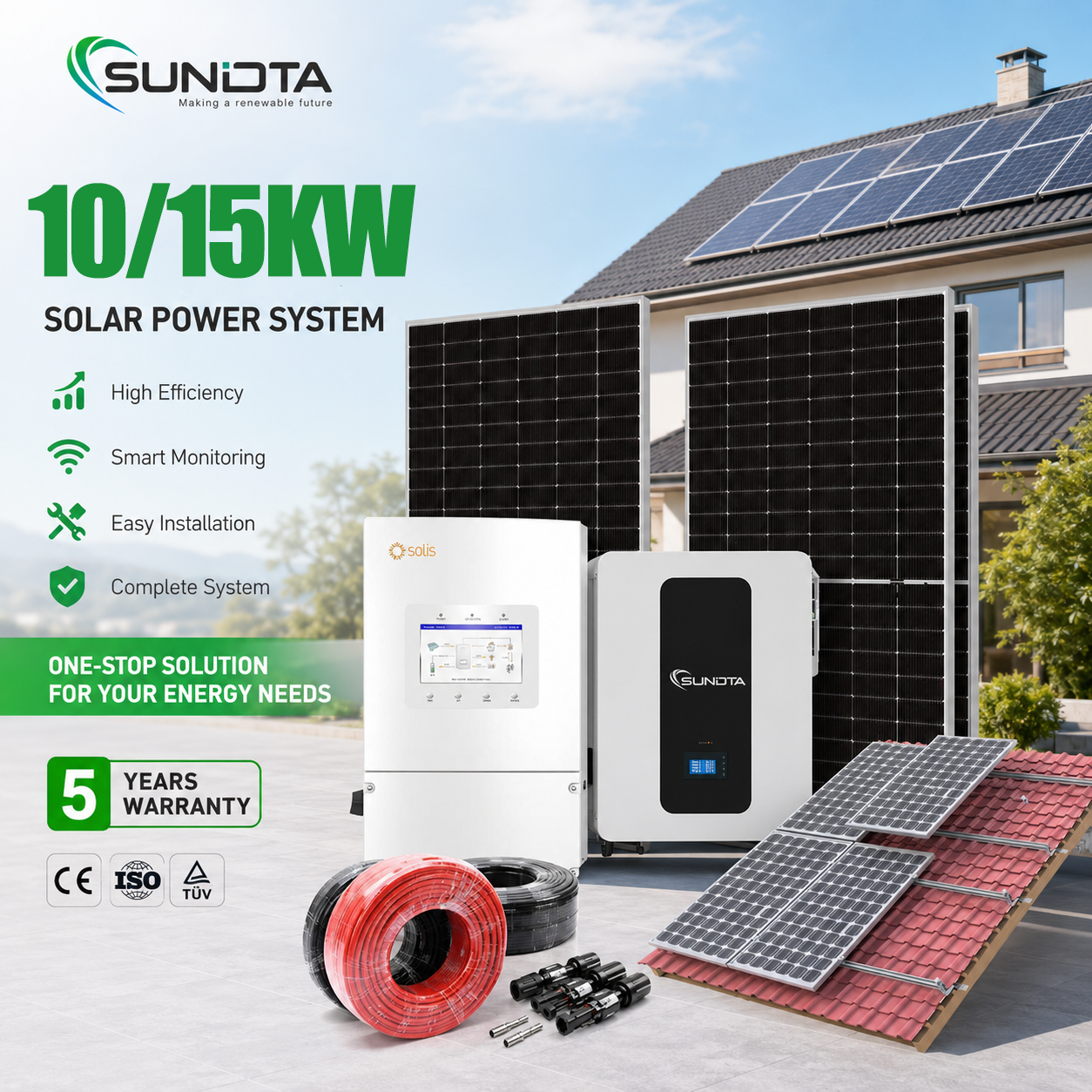
Customized Factory Price 8kW 10kW 15kW On-Off Grid Solar System Full Set with Mono Solar Panel & Lithium LiFePO4 Battery
- Matched TOPCon bifacial modules
- Pre-wired DC combiner & cabling
- Export limitation control meter
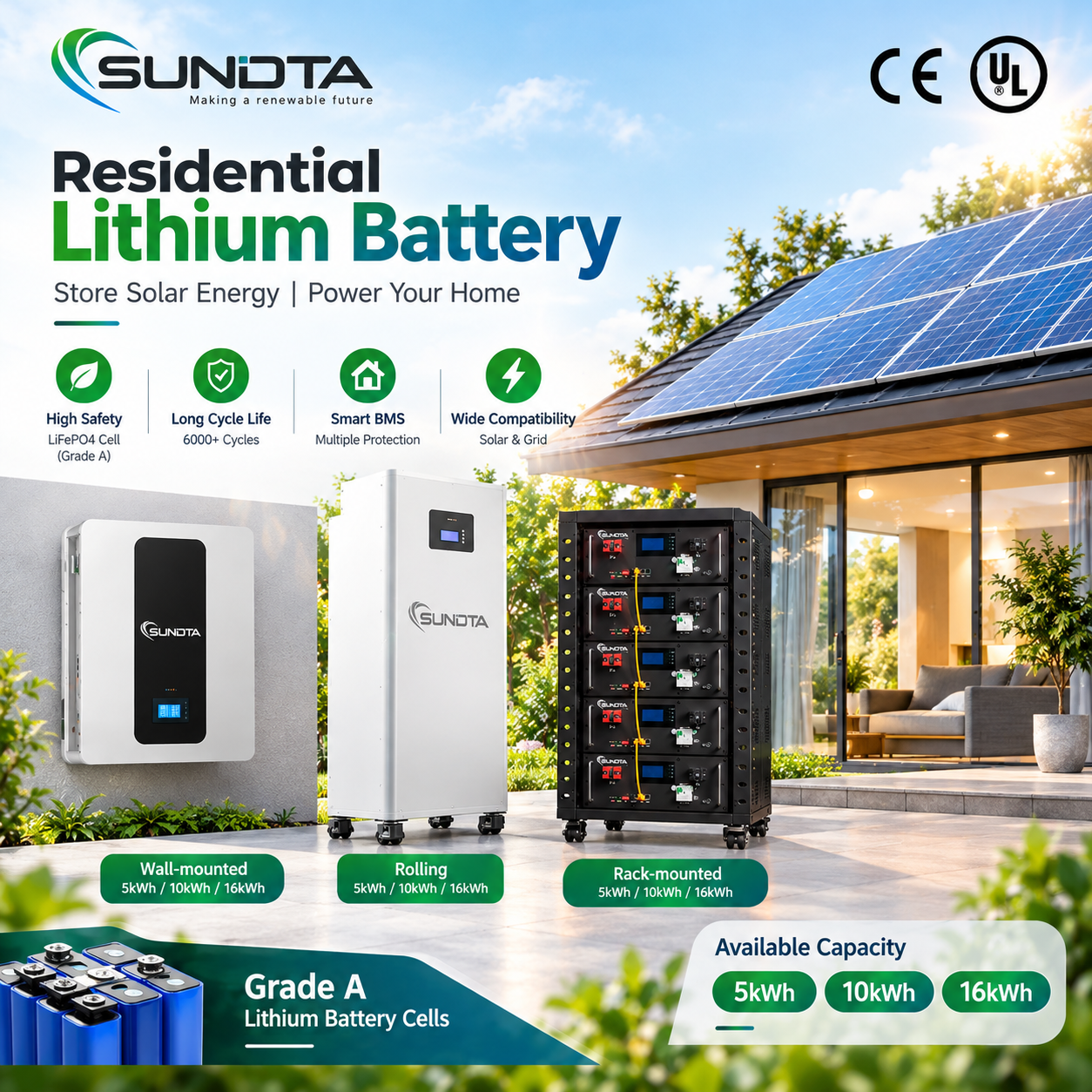
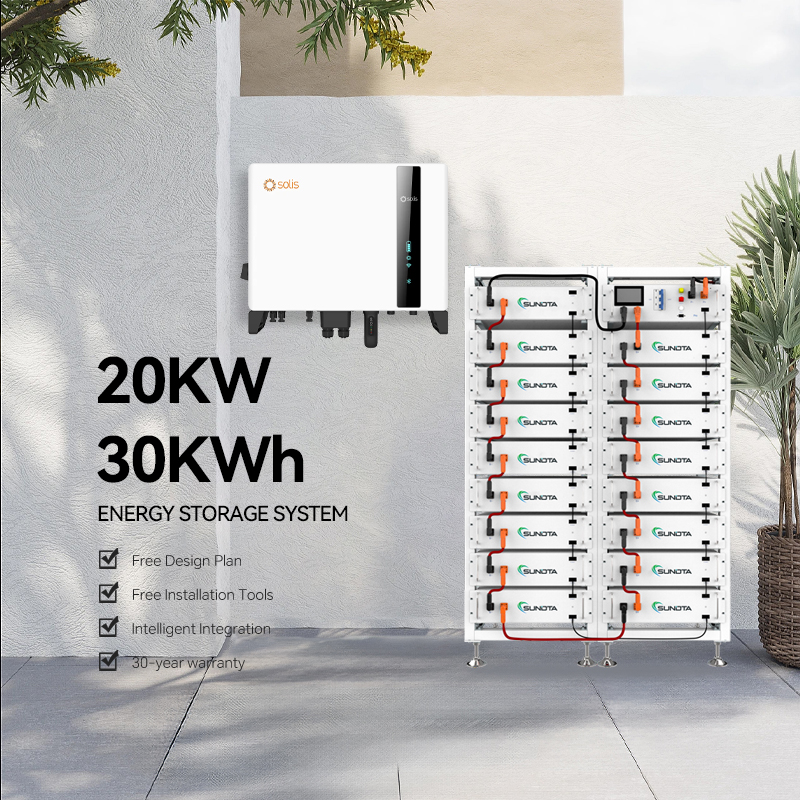
Sundta Stacked 10kWh 20kWh 30kWh Modular LiFePO4 Battery Stacked Solar Energy Storage Battery for Home Solar
- Plug-and-play stacking architecture
- Multi-master auto BMS balance
- Integrated DC circuit protection
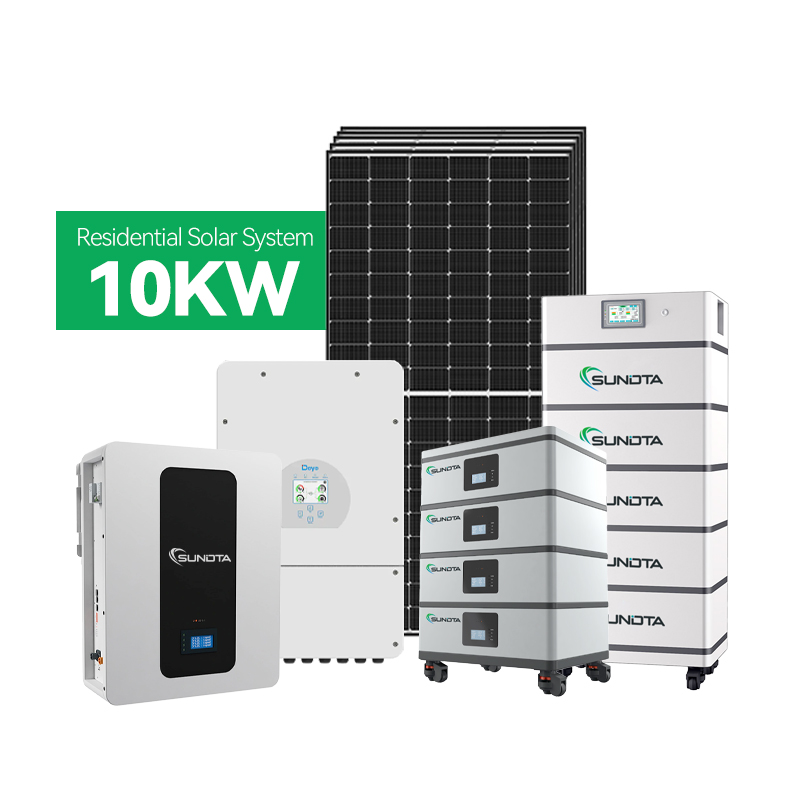
2026 Sundta Low Price 10KW 12KW Hybrid Solar System for Home Use with Lifepo4 Battery and BMS System
- Dual MPPT with high PV input 550V
- Built-in diesel generator dry port
- Smart App cloud IoT monitoring
Standardizing Safe, Smart Grid-Tied & Hybrid Power Conversion
In modern photovoltaic distribution, CE marking is not merely an export sticker—it is an end-to-end technical conformity framework guaranteeing galvanic safety, electrical fault tolerance, electromagnetic compatibility (EMC), and robust grid synchronism.
Grid Synchronization & Protections
Full conformance with EN 50549-1, EN 50549-2, and VDE-AR-N 4105. Includes automated Loss of Mains (LoM) anti-islanding detection via active frequency shift, frequency sensitive mode (FSM), and configurable reactive power support (cos φ(P), Q(U)).
- Low Voltage Ride-Through (LVRT / HVRT) capability
- Adjustable active power derating during over-frequency
- Residual current monitoring unit (RCMU) Type B integration
Closed-Loop CAN/RS485 Bus Topologies
Our smart hybrid inverters utilize embedded CAN 2.0B protocol stacks to continuously negotiate charging profiles with battery management systems (BMS). This synchronizes voltage cut-offs, state-of-charge (SoC) calibration, and dynamic C-rate current limiting.
- Universal protocol mapping (Deye, Solis, Pylontech, Growatt)
- Real-time single-cell temperature and over-voltage trip safety
- Redundant hardware disconnect signals via dry contact relays
Silicon Carbide (SiC) Power Density
Transitioning from traditional insulated-gate bipolar transistors (IGBT) to third-generation Wide Bandgap (WBG) Silicon Carbide MOSFET switches significantly minimizes switching losses, yielding Euro efficiencies exceeding 98.6% and reducing heat sink mass.
- Ultra-wide MPPT tracking voltage windows (120V – 850V)
- THD < 2.5% under non-linear alternating loads
- Natural convection / IP65 sealed chassis thermal longevity
Why International Distributors Partner with Anhui RJV
Headquartered in the high-tech industrial cluster of Hefei, Anhui, China, Anhui RJV New Energy Co., Ltd. resolves the fundamental pain point in solar procurement: component mismatch and fragmented supply chain liabilities.
2 GW Module Integration
Our automated production facilities build N-Type TOPCon and bifacial PERC modules directly optimized for our inverter tracking algorithms, ensuring maximum yield without clipping losses.
TÜV Rheinland Assessed
Our operations undergo comprehensive on-site third-party factory audits by TÜV Rheinland. We supply complete CE declarations, IEC 61215/61730 certifications, and flash test reports with each container.
Full Turnkey BOM Matching
Eliminate project delays caused by mismatched communication cables, incorrect DC bus voltages, or incompatible battery protocols. We assemble, test, and ship complete coordinated systems.
Global Flexible Logistics
Offering FOB, CFR, CIF, and EXW Incoterms with established EU stock reserves. Flexible payment structures include T/T, L/C, D/P, Western Union, and institutional trade guarantees.
Strategic Trends in Smart Solar Inverters & Storage Sourcing
Procurement directors must anticipate regulatory mandates, grid modernization requirements, and technological shifts before locking in multi-year equipment contracts. Here are the core vectors reshaping power electronics through 2030.
Grid-Forming & Black Start Dominance
Traditional inverters rely on the utility grid voltage vector (grid-following). Next-generation CE-certified inverters incorporate droop-control grid-forming firmware that establishes autonomous voltage and frequency references, allowing microgrids to restart instantly without utility voltage.
- Virtual Synchronous Machine (VSM) inertia synthesis
- Black start bootstrapping for zero-voltage microgrids
- Sub-8ms seamless uninterruptible transfer under full rated load
AI-Powered Dynamic Time-of-Use Arbitrage
Modern hybrid inverters are no longer passive power converters; they function as decentralized energy routers. Integrated predictive edge compute modules evaluate historical household load curves, local weather irradiance models, and real-time spot electricity pricing.
- Automated battery pre-charging during negative price windows
- Dynamic peak shaving to avoid utility demand surcharges
- Virtual Power Plant (VPP) OpenADR and IEEE 2030.5 readiness
Shift to High Voltage (HV) Battery Bus
While low-voltage (48V / 51.2V) batteries dominate smaller residential installs due to touch-safe installation, systems over 10 kW are rapidly shifting toward High Voltage (150V to 800V DC). Higher battery voltage reduces line current, shrinking copper cross-sections and thermal dissipation.
- Inverter round-trip conversion efficiency improved by 1.8% to 2.4%
- Reduced cable weight and connection termination labor
- Direct DC-coupling compatible with commercial multi-string batteries
Architectural Comparison for Engineering Procurement
Select the optimal system topology based on project size, utility interconnect limitations, and electrical safety classifications.
| System Architecture | Typical DC Battery Voltage | Coupling Topology | CEC / Euro Efficiency | Best Application Fit | Compliance Standards |
|---|---|---|---|---|---|
| Low-Voltage Residential Hybrid | 48V / 51.2V (Nominal) | Bidirectional Buck-Boost (Isolated) | 97.2% – 97.6% | Single-family residential, DIY retrofit, off-grid cabins | CE LVD, EN 62109-1/2 |
| High-Voltage Split/3-Phase Hybrid | 160V – 800V DC | Non-Isolated Direct DC Link | 98.4% – 98.8% | Modern villas, light commercial, high-surge heat pump setups | VDE-AR-N 4105, EN 50549 |
| C&I All-In-One Outdoor Cabinet | 500V – 1000V DC | Centralized Modular PCS + Liquid ESS | 98.8% – 99.2% | Factories, agriculture processing, EV charging hubs | IEC 62477-1, UL 9540A |
| Utility Containerized BESS (1-2 MWh) | 1000V – 1500V DC | Multi-MW Bi-directional PCS with MV Skid | 99.0%+ | Grid-scale frequency response, solar farm smoothing | CE, IEEE 1547, Grid Code |
Frequently Asked Questions by Solar Importers & EPCs
Direct technical answers addressing system design, customs clearances, certification validity, and battery communication handshakes.
What specific CE directives do your smart solar inverters comply with?
Our inverters satisfy both the Low Voltage Directive (LVD 2014/35/EU) under EN/IEC 62109-1 and EN/IEC 62109-2 (safety of power converters used in photovoltaic power systems), and the Electromagnetic Compatibility Directive (EMC 2014/30/EU) under EN 61000-6-1/2/3/4. Grid interconnection compliance is covered under EN 50549-1/2 and regional standards like VDE-AR-N 4105.
How do you guarantee closed-loop communication between inverters and batteries?
Our engineering team pre-flashes the CAN bus transceivers with firmware mapped to specific inverter protocols (such as Deye, Solis, Victron, or SMA). Before dispatching hybrid inverter and LiFePO4 battery combinations, our testing bench conducts a hardware handshake to verify baud rate synchronization (typically 500 kbps for CAN, 9600/19200 bps for RS485), telemetry reporting, and fault interrupt triggers.
Can three-phase hybrid inverters handle 100% unbalanced loads?
Yes. Our 10 kW to 50 kW three-phase hybrid inverters utilize independently modulated phase legs. Each phase can output power from 0 up to 100% of its rated capacity (for example, supplying 16.6 kW on Phase A, 5 kW on Phase B, and 0 kW on Phase C on a 50 kW unit) without tripping the internal DC-link protection or inducing neutral point displacement voltage.
What is the standard warranty coverage and replacement protocol for export orders?
Standard warranty on CE-certified smart hybrid inverters is 5 years, extendable to 10 or 15 years upon request. For battery storage units, we offer a 10-year warranty with a guaranteed 6,000 cycles at 80% Depth of Discharge (DoD). For containerized projects, we supply a pre-packaged spare parts kit (control boards, fans, contactors) and offer remote debugging with 24/7 engineering desk support.
Do you support OEM / ODM branding, customized casings, and software white-labeling?
Yes. As a primary manufacturer, Anhui RJV New Energy provides comprehensive OEM/ODM services. This includes industrial sheet metal design, custom pantone colors, laser-etched nameplates, regional grid-code firmware pre-sets, and custom-branded monitoring portals (iOS/Android and web cloud platforms).
What is the MOQ for mixed container orders (Panels, Inverters, and Batteries)?
We actively support consolidated container shipping. For hybrid inverters and wall-mounted batteries, MOQ is 1 piece/set when bundled within a system order. Solar panels are typically packed in full pallet configurations (e.g., 36 or 31 pieces per pallet) to eliminate transport vibration damage. Mixed container consolidation directly from our Hefei hub significantly reduces overall landed landed logistics costs.
Request Engineering Drawings, Full BOM Quotations & Factory Audit Records
Connect directly with our senior PV power electronics application team in Hefei. We provide complete electrical schematics, string sizing reviews, compatibility verification, and CIF/FOB pricing tailored to your port of entry.