Tier-1 Cell Architecture • ISO 9001 / CE / UN38.3 Verified
China Best Rack Mount Battery Manufacturer & Global Exporter
Empowering EPCs, Energy Storage Distributors, and Microgrid Developers with 51.2V Prismatic LiFePO4 Chemistry, Smart Dual-CAN BMS Topology, and Multi-Cluster Scalability up to 100kWh+ Cabinets.
Industrial-Grade Energy Storage Portfolio
Engineered Rack-Mount & Turnkey Solar Battery Systems
Precision-manufactured LiFePO4 server rack units, modular stackable architectures, and certified hybrid systems designed for uninterrupted mission-critical resilience.
Engineering-Led Product Recommendations for Tier-1 Storage Infrastructure
Selecting the optimal lithium iron phosphate (LiFePO4) rack mount energy storage system requires rigorous alignment between nominal DC bus voltages, discharge C-rates, physical rack dimensions, and multi-inverter closed-loop protocol handshakes. In modern utility-interconnected or mission-critical off-grid topologies, battery rack reliability determines cumulative levelized cost of storage (LCOS). As a premier China rack mount battery manufacturer and exporter headquartered in Hefei's national clean-energy cluster, Anhui RJV New Energy Co., Ltd. builds solutions categorized by three core operational profiles:
Standard 19-Inch 3U/4U Server Rack Modules
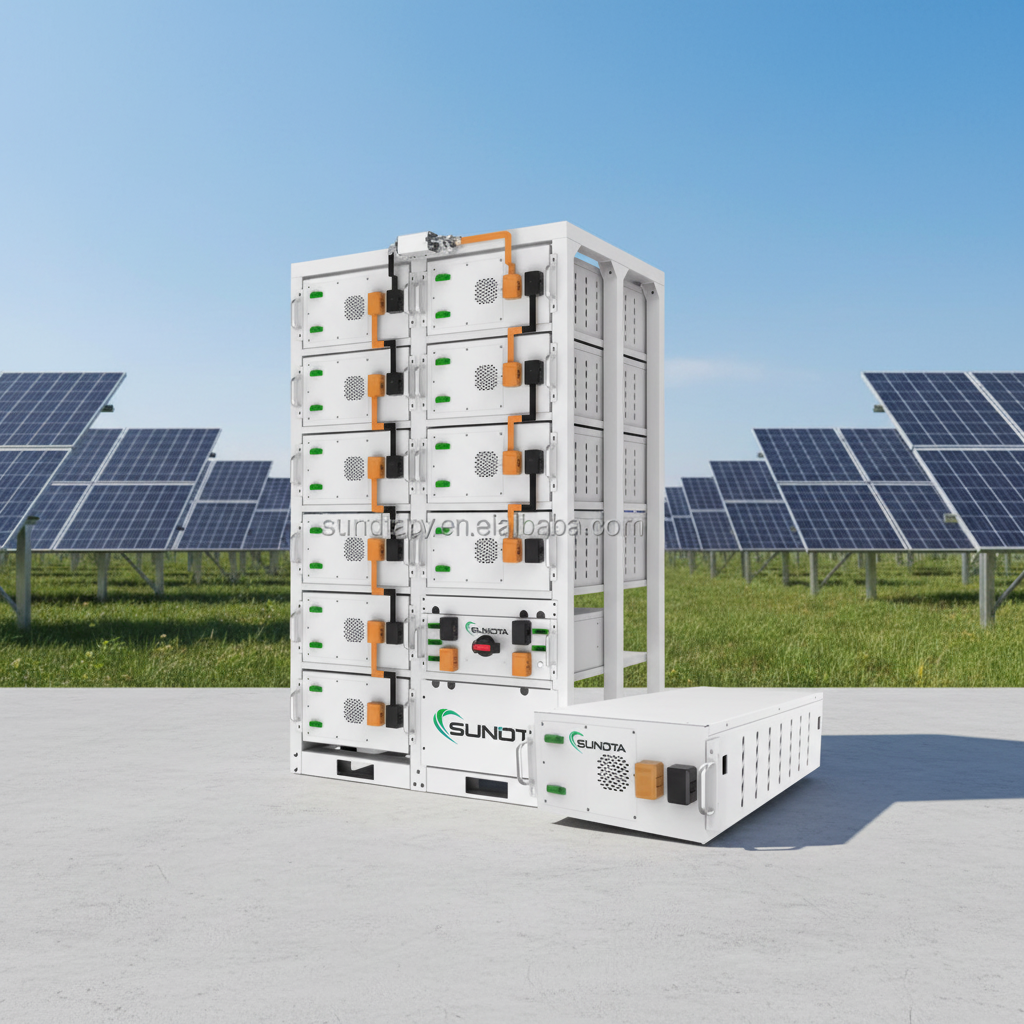
Tailored for residential telecom shelters, data centers, and light commercial setups. Operating at nominal 48V/51.2V (100Ah to 200Ah), these units fit into standardized server racks, enabling parallel clustering from 5.12kWh up to 81.92kWh with auto-addressing DIP switches.
High-Voltage (HV) Industrial Rack Cabinets
Designed for commercial microgrids, three-phase commercial solar systems, and EV charging hubs. Operating across high-voltage spans from 200V up to 800V DC (utilizing 40kWh to 100kWh configurations), minimizing I²R transmission cable losses and accelerating round-trip efficiency (RTE) past 95.5%.
Turnkey Hybrid All-In-One Power Systems
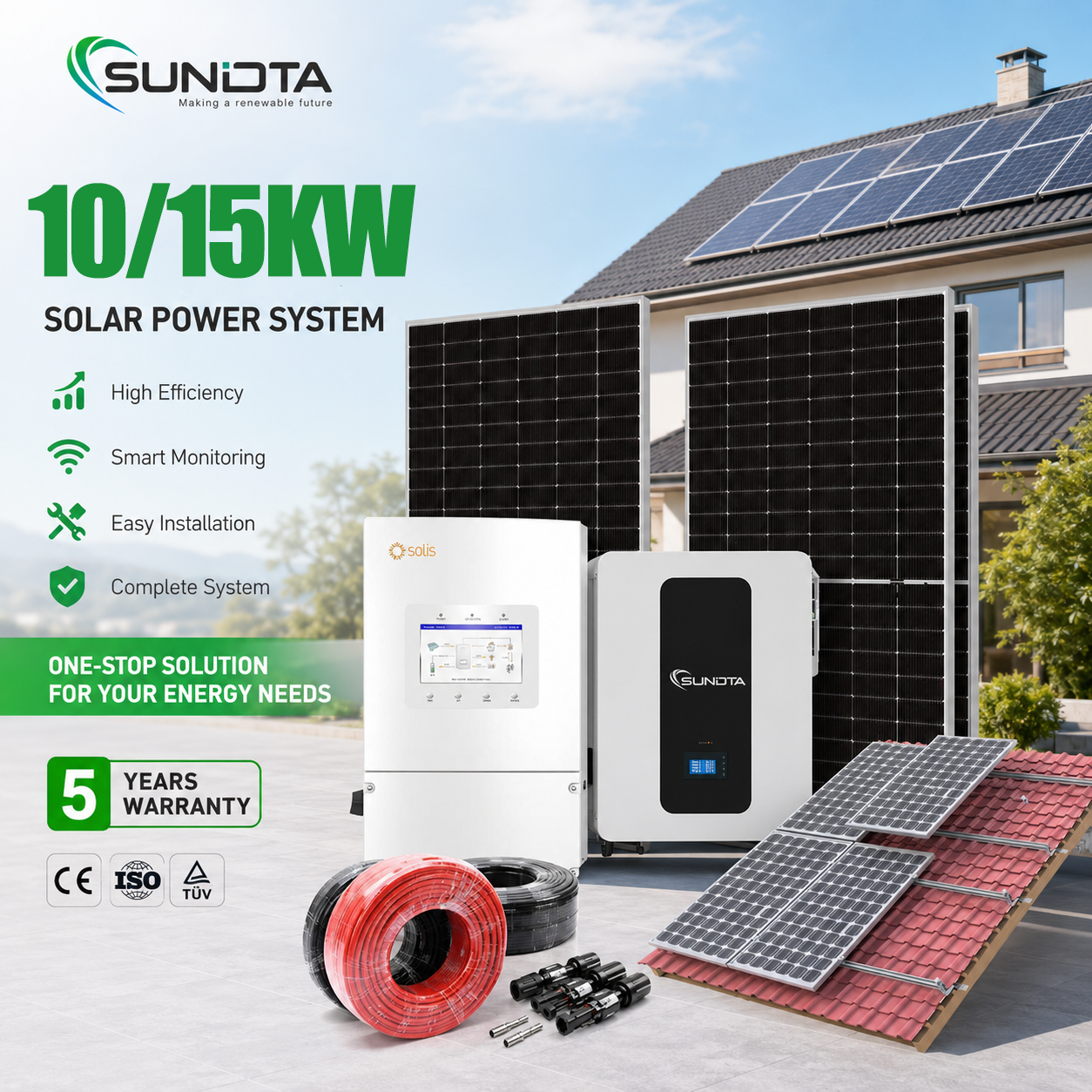
Combining Tier-1 hybrid inverters (Deye, Solis, Growatt compatible) with 314Ah high-density lithium storage modules. Provides turnkey plug-and-play installation for whole-house backup and commercial peak shaving with pre-engineered sub-10ms UPS cutover.
To eliminate procurement mismatch and commissioning failures, RJV implements stringent cell-level impedance binning (ΔIR ≤ 0.05mΩ) and static voltage matching (ΔV ≤ 2mV) before battery block assembly, ensuring that each server rack pack delivers balanced multi-year cycling without capacity bottlenecks.
Market Intelligence & Strategic Sourcing
Future Procurement Trends in Global Rack Mount Battery Systems (2025–2030)
The international battery procurement landscape is undergoing massive structural shifts, migrating away from fragmented component sourcing toward verified, pre-commissioned energy storage assemblies. Global EPC contractors, project developers, and import distributors must align their supply chains with the following macro-procurement realities:
Procurement Dimension
Traditional Procurement Model
2025–2030 Next-Gen Standard (RJV Sourcing Edge)
Strategic Benefit to Buyers
Cell Form Factor & Chemistry
100Ah / 280Ah Prismatic LiFePO4
314Ah / 320Ah High-Volumetric Energy Density Prismatic Cells
+12% Energy Density Lower footprint & shipping costs
BMS Intelligence & Telemetry
Passive balancing, basic RS485 readouts
Active 2A bi-directional balancing with cloud IoT & remote firmware
Extended Cell Lifespan Zero downtime during site firmware updates
Plug & Play Native compatibility with Deye, Solis, Victron, SMA
Safety & Fire Mitigation
External room extinguishers only
Cell-level thermal sensors, aerosol fire suppression inside rack chassis
NFPA 855 / UL 9540A Faster municipal inspection & permitting
Supply Chain Resilience
Single factory spot orders
Dual manufacturing nodes, bonded warehouses in Europe & Asia
Risk Hedge 48-hour local replacement dispatch, zero vessel wait
Distributors locking in container-level supply agreements are prioritizing integrated BOM sourcing where solar PV panels, hybrid inverters, and rack batteries are pre-engineered under a single factory warranty. This consolidated procurement approach eliminates vendor cross-blaming during inverter-BMS communication errors.
R&D Whitepaper Deep Dive
Technological Development & Architectural Evolution of Rack Batteries
Rack mount lithium storage has graduated from simple battery packs into complex, self-diagnosing power computing nodes. The core engineering focus centers on high-stress cycle endurance, thermal runaway suppression, and modular high-voltage conversion:
314Ah Cell Upgrade & Solid-State Pathways
The industry baseline has migrated from 280Ah to 314Ah prismatic cells without altering standard 19-inch rack depth. By incorporating micro-laminated separators and nano-structured LiFePO4 cathodes, RJV's upcoming solid-state hybrid cells push thermal runaway thresholds beyond 270°C while maintaining >8,000 cycles at 0.5C charge/discharge.
High-Voltage DC Bus Optimization
While low-voltage (51.2V) rack batteries remain ideal for residential micro-generation, commercial scale setups are aggressively shifting to high-voltage stacks (400V to 800V DC). Increasing DC string voltage lowers current proportionally, eliminating heavy copper busbars, slashing cabinet operating temperatures, and raising round-trip efficiency by 3.8%.
Intelligent Active Cell Balancing BMS
Traditional passive bleed resistors generate parasitic cabinet heat. RJV equips rack batteries with active inductive/capacitive energy-transfer BMS topologies, moving charge dynamically from highest-state cells to lagging cells at 2A active current. This prevents premature module cutoff and salvages up to 15% stranded energy over 10 years.
Furthermore, internal fire protection is no longer passive. Modern RJV rack cabinets incorporate localized aerosol fire suppression pods directly connected to thermal and smoke telemetry. In the rare event of severe mechanical or electrical abuse, the aerosol system discharges within milliseconds, encapsulating the module in potassium nitrate inert gas and preventing thermal chain propagation.
Why Global Importers Partner With RJV
Manufacturing Depth & Engineering Credibility in Hefei, China
Anhui RJV New Energy Co., Ltd. is not merely a battery assembler; we are an established clean-energy integrator backing your procurement with 12+ years of PV/ESS production expertise, 38 patents, and verified TÜV Rheinland factory auditing.
2 GW Automated Production Depth
Fully automated cell sorting, laser welding, and automated end-of-line testing guarantee flawless consistency across large-volume containerized shipments.
TÜV Rheinland Assessed & AAA Credit
On-site audited facilities ensure rigorous adherence to CE, IEC 62619, UN38.3, and ISO 9001 quality management guidelines for friction-free customs entry.
One-Stop PV & Storage Bill of Materials
Source TOPCon solar panels, hybrid inverters (Deye/Solis/Growatt), and rack batteries in coordinated mixed container consignments, optimizing shipping space.
24/7 Global Field Engineering Support
Our dedicated bilingual application engineering team assists with remote BMS protocol mapping, string sizing calculations, and prompt warranty logistics.
Technical Q&A
Frequently Asked Questions by Battery Importers & EPCs
In-depth answers addressing cell grading, inverter CAN synchronization, dangerous goods sea freight, and warranty procedures.
How does RJV ensure that cells inside rack mount batteries are 100% Brand New Grade-A?
Every cell utilized in RJV rack batteries originates directly from Tier-1 manufacturers (CATL, EVE, or Gotion) featuring intact original QR codes, factory test sheets, and traceable manufacturing serial numbers. We reject re-wrapped automotive salvage or B-grade inventory with mismatched internal resistance. Prior to module pack assembly, each cell undergoes a four-step robotic screening: capacity grading at 0.5C, AC internal resistance matching (≤ 0.05mΩ), open-circuit voltage stabilization check (≤ 2mV discrepancy), and high-pressure insulation testing. Full factory test logs are provided with every Bill of Lading.
Which hybrid inverters are natively compatible with RJV rack mount battery BMS?
Our proprietary Smart BMS features dual hardware CAN and RS485 communication ports embedded with multi-protocol firmware. The BMS automatically identifies or can be manually set via DIP switches to interface seamlessly with major international inverter brands, including Deye, Solis, Victron Energy, Growatt, GoodWe, Sofar Solar, SMA, and Schneider. The BMS provides continuous real-time telemetry on State of Charge (SoC), State of Health (SoH), maximum allowable charge/discharge current limits, and cell-level temperature alerts, preventing over-charge and inverter cutoffs.
What is the maximum number of rack battery units that can be connected in parallel?
For low-voltage 51.2V rack batteries, up to 16 units can be clustered directly in parallel via RJ45 master-slave cascade cables, expanding storage capacity up to 81.92kWh (using 100Ah packs) or 163.84kWh (using 200Ah packs) without requiring an external control hub. When scaling beyond 16 units for commercial microgrids, RJV provides a Centralized Master Hub / Combiner Cabinet that aggregates up to 32 parallel strings, managing synchronized pre-charging, busbar balancing, and isolated DC contactors to prevent inter-battery circulating currents.
What documentation and certifications are provided for Dangerous Goods (DG) ocean shipping?
Lithium iron phosphate batteries are classified under UN 3480, Class 9 Miscellaneous Dangerous Goods. RJV prepares complete, compliant export documentation packages for rapid customs processing and ocean carrier approval. This includes certified UN 38.3 Test Reports, UN-rated heavy-duty palletized packaging certificates, Material Safety Data Sheets (MSDS), Official Dangerous Goods Identification Reports for Sea Transport (issued by certified testing institutes), and CE declarations of conformity. We support FOB, CFR, CIF, and DDP delivery terms.
How does RJV handle warranty claims, spare parts, and remote technical diagnostics?
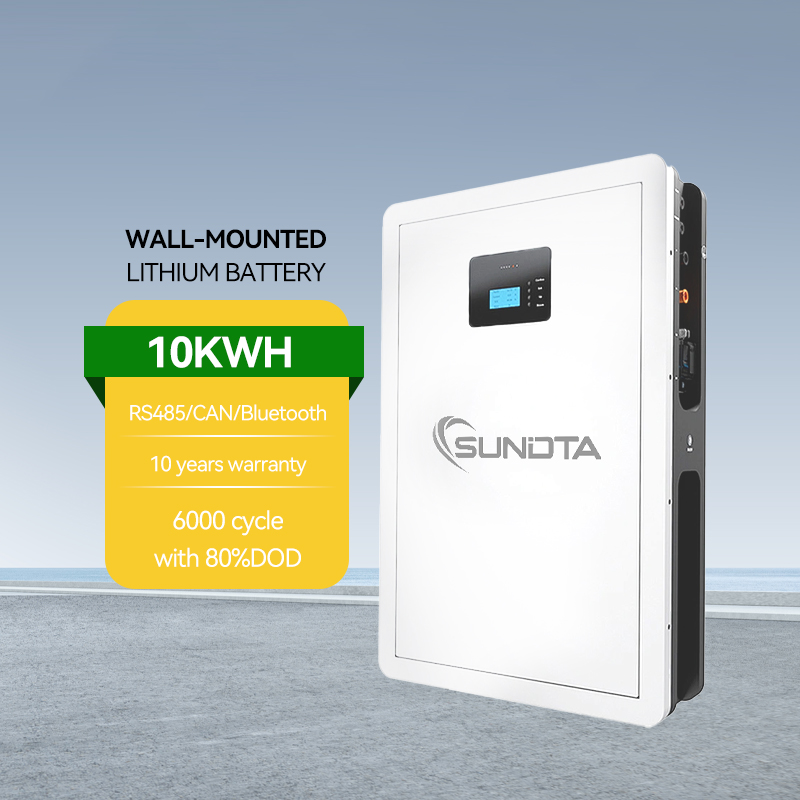
RJV backs its rack mount batteries with a 5 to 10-year standard performance warranty ensuring ≥70% retained capacity after 6,000 cycles (at 0.5C / 25°C / 80% DoD). If a field fault occurs, our software engineers access the BMS data logs via remote PC software or mobile app to analyze individual cell voltages and history records. If a BMS PCB or cell block is confirmed defective, replacement modules are immediately dispatched from our factory or our European regional distribution center to eliminate project downtime.
Request a Direct Factory Quotation & Complete ESS Sizing Bill of Materials
Collaborate with Anhui RJV New Energy engineers to size your next residential backup, telecom DC bank, or commercial high-voltage battery storage system. Receive comprehensive technical datasheets, CAD dimensional diagrams, inverter protocol compatibility matrices, and landed freight estimates within one business day.