Recommended B2B Sourcing Models
Seamlessly integrate high-cycle LiFePO4 chemistry and intelligent hybrid power electronics into your local consumer catalog with complete OEM/ODM tooling and branding support.
Industry Whitepaper: The Evolution of Micro-Generation & Balcony Photovoltaics
A comprehensive analysis of technical transitions, regulatory adaptations, and hardware topologies redefining European and global multi-dwelling residential energy systems.
Grid Feed-In Shifts: The 600W to 800W De-Restriction
Regulatory relaxations under German VDE-AR-N 4105 and EU clean energy Directives have systematically raised unmetered plug-in thresholds from 600W to 800W. Modern OEMs must engineer microinverters with dynamic software curtailment, dual MPPT trackers, and integrated galvanic isolation to allow multi-regional market versatility within the same manufacturing SKU.
Coupled DC-Side Balcony Micro-Storage Architectures
Feeding surplus solar electricity directly into the public grid without net metering severely erodes end-user economic payback. Current market demand pivots towards modular 1kWh to 2kWh lithium iron phosphate (LiFePO4) storage nodes positioned directly between the PV panels and the microinverter, maximizing diurnal self-consumption rates up to 85%.
Substrate Revolution: Lightweight Glass-Free Modules
Standard 30mm architectural glass modules (20-24kg) impose structural load barriers on aged residential balustrades. Leading OEM manufacturers are deploying front-side ETFE polymer laminates and glass fiber composite substrates, compressing module weight down to 3.5-5.0kg per panel while preserving cell efficiency exceeding 22.5% through N-Type TOPCon cells.
Procurement Analysis: Standard Balcony Kits vs. Smart Storage Integrated Systems
A reference architecture mapping critical parameters for technical wholesale buyers, distributors, and turnkey engineering contractors.
| Evaluation Parameter | Entry-Level Direct-Feed Kit | Smart DC-Coupled Micro-ESS | AC-Coupled Multi-Zone Microgrid |
|---|---|---|---|
| Typical Battery Chemistry | None (Direct AC Inversion) | Automotive-grade Prismatic LiFePO4 | Solid-State or High-Density LiFePO4 |
| Inverter Architecture | 600W/800W Dual MPPT Microinverter | Bidirectional Microinverter with BMS Bus | Modular Hybrid String Inverter with Smart Meter |
| Self-Consumption Ratio | 35% - 45% (Load Dependent) | 75% - 90% (Optimized via Peak-Shaving) | Up to 95% (Dynamic Load Allocation) |
| Communication Protocol | Wi-Fi / Bluetooth BLE | Matter / Zigbee 3.0 / RS485 / CAN | CAN / Modbus TCP / Cloud API Integration |
| Structural Mounting Form Factor | Standard Hook & Balustrade Clamps | Anti-Vibration Rail + Ground Mount Base | Custom Architectural Facade Brackets |
| Target Retail Price / Payback | Low Barrier / 2-3 Years ROI | Medium Investment / 4-5 Years ROI | High Tier / 6-7 Years ROI |
Industrial Manufacturing Excellence & Turnkey OEM/ODM Capability
RJV New Energy delivers vertically integrated photovoltaics and energy storage engineering backed by automated robotic lines, rigorous QA/QC protocols, and international supply security.
Fully Automated Robotic Lines
Our Hefei production center utilizes automated stringing, vacuum laminating, and robotic optical sorting. This achieves an annual module capacity exceeding 2GW with precision solder indexing that reduces micro-cracking to sub-industrial levels.
Tier-1 Component Matching
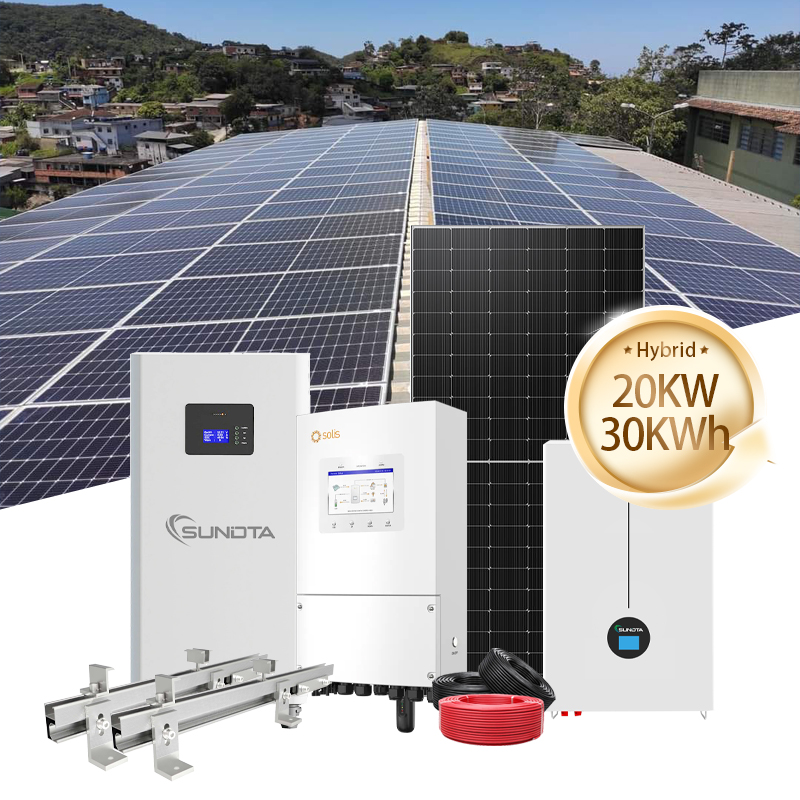
From Deye and Solis hybrid inverters to high-stability prismatic lithium cells, our hardware BOMs are pre-validated for CAN/RS485 closed-loop communication, eliminating field bus faults and inverter communication drops.
TÜV Rheinland Certified QA
Every batch undergoes thermal shock cycling, mechanical load tests (up to 5400 Pa snow / 2400 Pa wind), and electroluminescence (EL) double inspection. Operations are vetted by TÜV Rheinland and carry full CE, UN38.3, and IEC compliance.
Full Turnkey Customization
We provide full white-label OEM manufacturing: private labeling, bespoke injection-molded enclosures, localized software applications (iOS/Android), regional grid profiles, and customized pallet packaging for e-commerce direct dropshipping.
Procurement & Technical FAQ for B2B Importers
Addressing critical compliance, engineering, and logistics considerations for global wholesale distributors.
What is the typical Minimum Order Quantity (MOQ) for custom OEM balcony solar configurations?
For standard branded components, hybrid inverters and wall-mounted batteries start at an MOQ of 1 unit/set for sample validation. Full OEM customization—such as custom anodized module frame colors, screen-printed corporate branding, bespoke user manuals, and customized high-density master cartons—typically requires a baseline run of 50 to 100 complete kits or one 20GP container equivalent.
How does the factory ensure compliance with European grid feed-in mandates like VDE-AR-N 4105?
All microinverters and integrated hybrid storage nodes supplied by RJV New Energy are pre-flashed with region-specific firmware conforming strictly to CE, EN 50549-1, and VDE-AR-N 4105:2018 standards. Our systems feature integrated NA-protection relays, anti-islanding mechanisms, and hardware-controlled output clamping selectable between 600W and 800W via digital switch or over-the-air (OTA) updates.
What cell chemistry and battery management architectures are deployed in your storage packs?
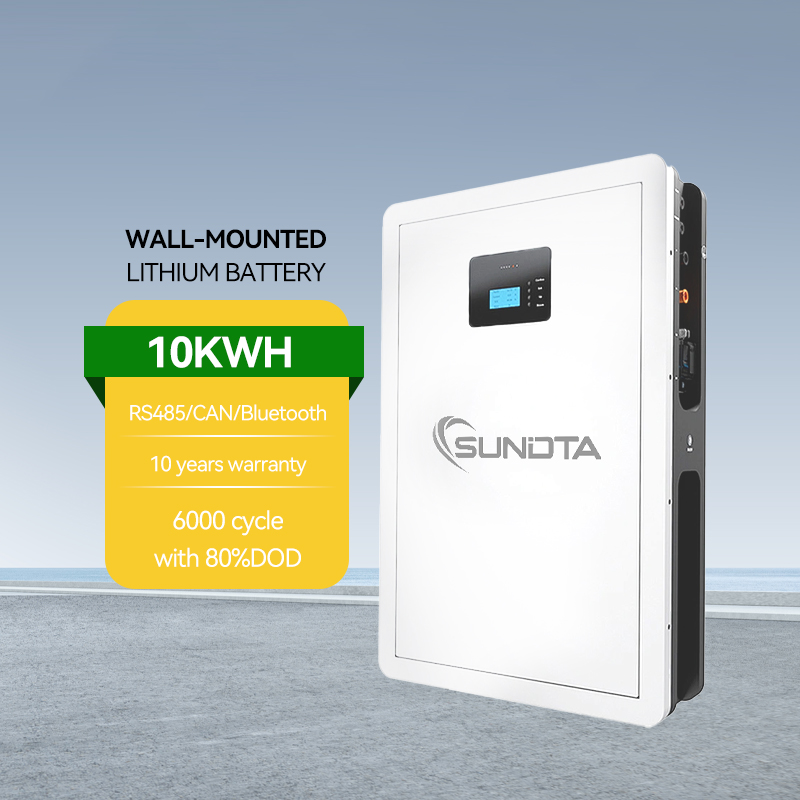
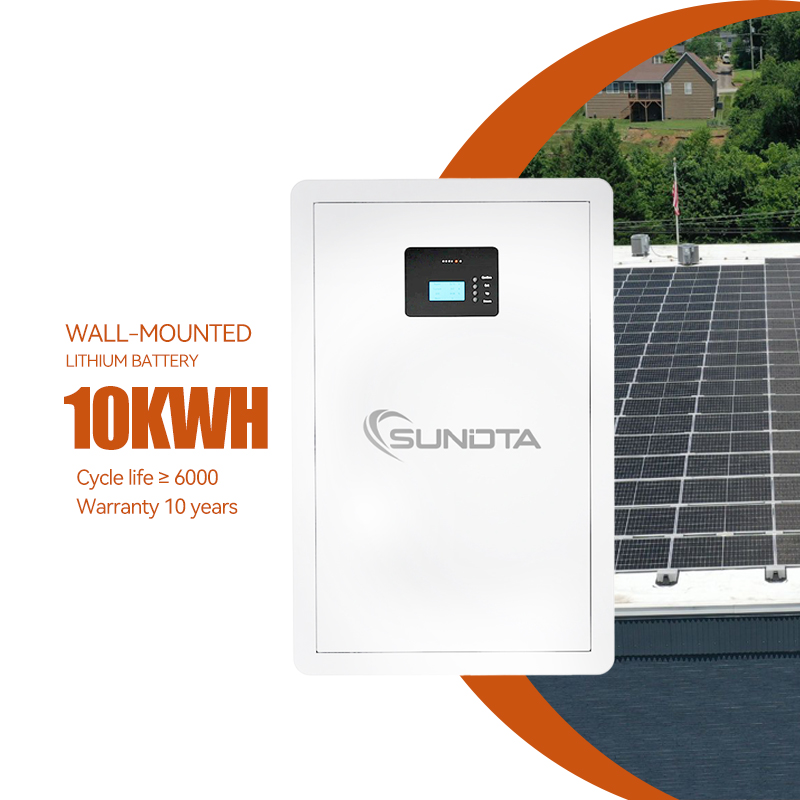
Our residential and balcony storage products use automotive-grade Lithium Iron Phosphate (LiFePO4) prismatic cells rated for ≥6,000 cycles at 80% Depth of Discharge (DoD) under 25°C. The integrated BMS provides microsecond-level over-voltage, under-voltage, over-current, short-circuit, and dual-sensor thermal safeguards. It also supports automated cell balancing and dual-bus CAN/RS485 connectivity compatible with mainstream inverters like Deye and Solis.
Can you handle complex mixed-container loading for panels, brackets, and lithium batteries?
Yes. Lithium iron phosphate energy storage units fall under Dangerous Goods Class 9 (UN3480), requiring strict maritime certification, UN boxes, and MSDS/UN38.3 compliance. We manage full export documentation, drop-test validation, and pallet optimization, consolidating PV modules, certified balustrade mounting brackets, AC cabling, and batteries safely into unified ocean container deliveries under FOB, CIF, or DDP terms.
What quality verification and functional testing are conducted prior to factory release?
Every individual photovoltaic module undergoes 100% triple electroluminescence (EL) inspection to verify crack-free cell matrices, alongside calibrated sun-simulator flash tests yielding serial-tracked I-V and P-V performance curves. Energy storage modules and inverters are subjected to automated full-load burn-in cycles, ground continuity checks, high-voltage insulation tests, and live communications verification before sealing.
Ready to Scale Your Regional Balcony Solar Distribution?
Consult with our engineering team in Hefei to review custom BOM configurations, request sample testing units, and secure high-capacity manufacturing schedules for the upcoming quarter.