High-Yield Energy Storage & Hybrid Solar Systems
Pre-engineered, tested, and optimized for CFE grid stability, high-voltage battery banks, and commercial-industrial backup in the Valle de México basin.
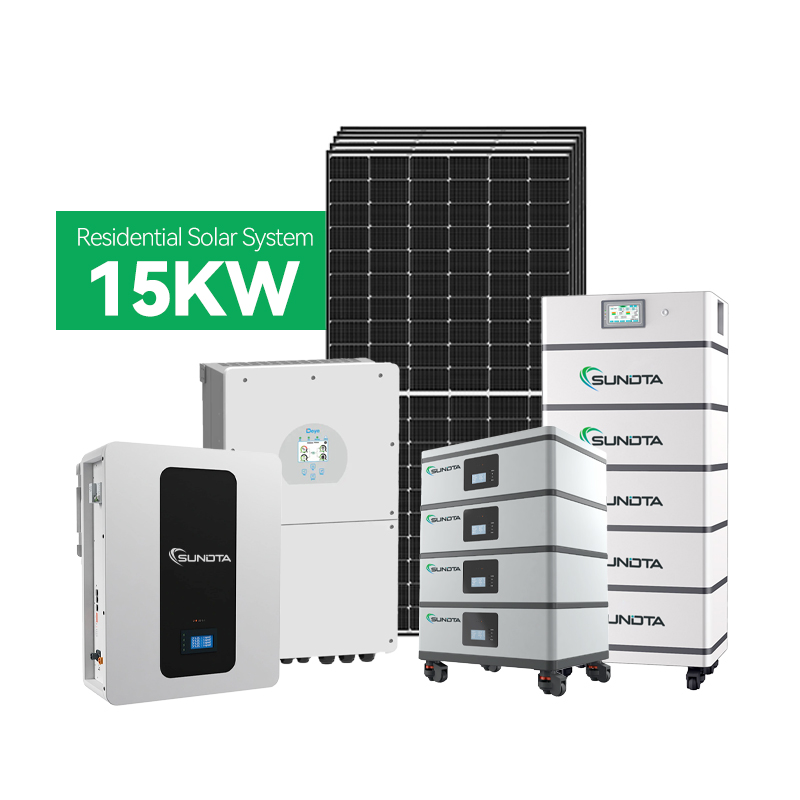
Sundta Hybrid Solar Energy System Kit (5kW–15kW Full Set)
- Dual MPPT with High Efficiency
- Complete BOM with cabling & racking
- CFE Net Metering ready
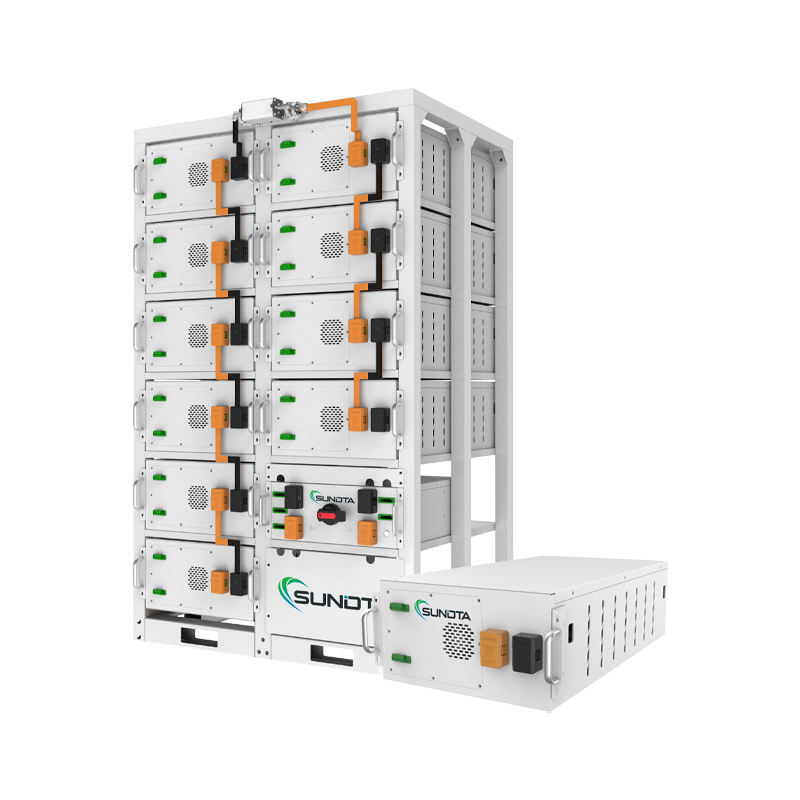
Stackable 51.2V 14.336kWh Wall-Mounted LiFePO4 Battery
- 6,000 deep discharge cycles @ 80% DoD
- Grade-A Prismatic Lithium Cells
- Deye/Solis CAN & RS485 Match
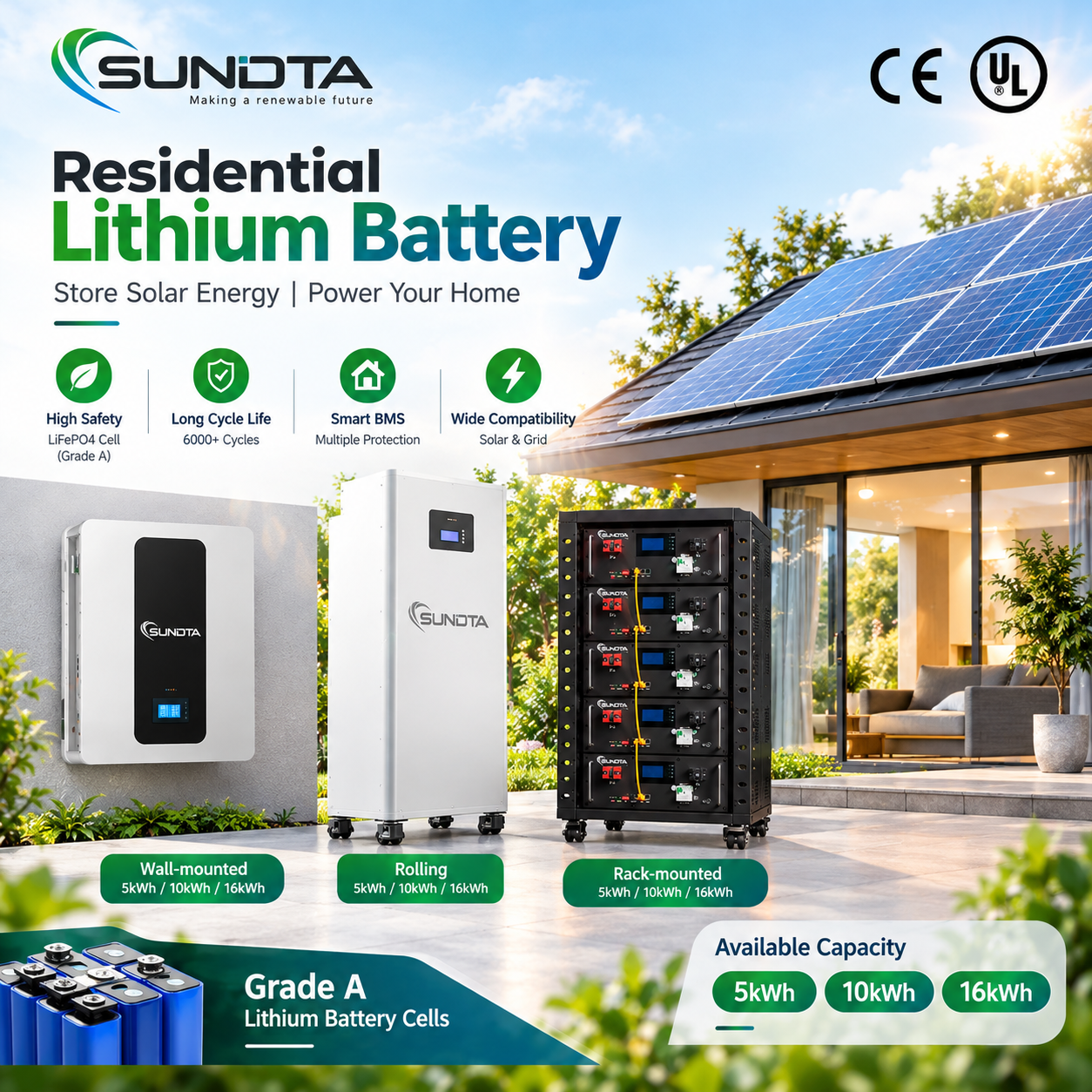
Sundta Modular 10kWh–30kWh Stacked LiFePO4 Energy System
- Cable-free quick-stack interconnect
- Automated internal pre-charge circuit
- Smart cloud telemetry via Wi-Fi/4G
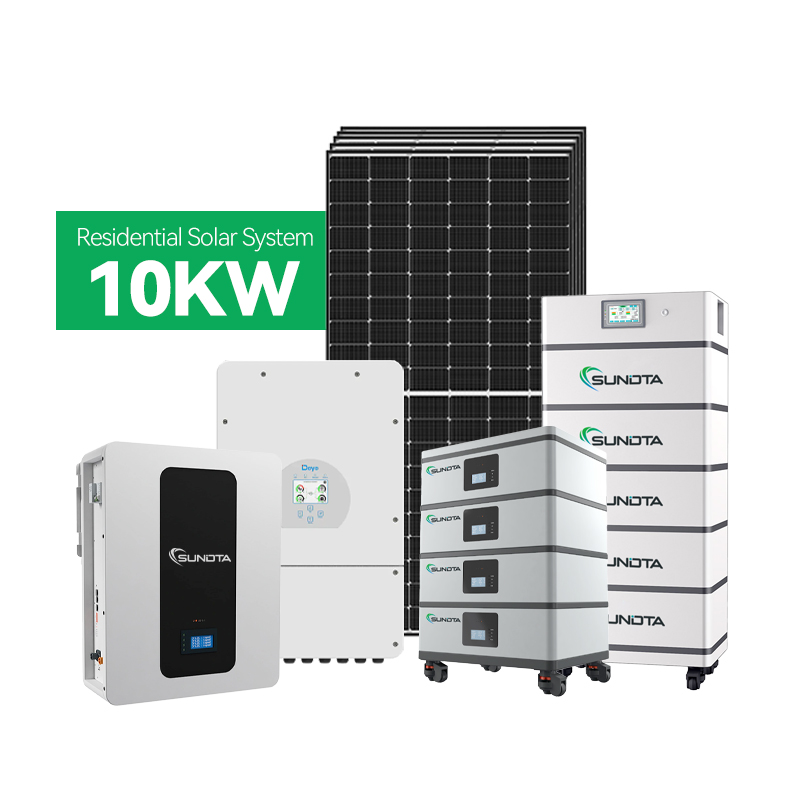
Sundta 10kW/12kW Hybrid Solar System with Smart BMS
- Unbalanced 3-phase output up to 50%
- Rapid 4ms UPS transfer capability
- Low maintenance IP65 enclosure
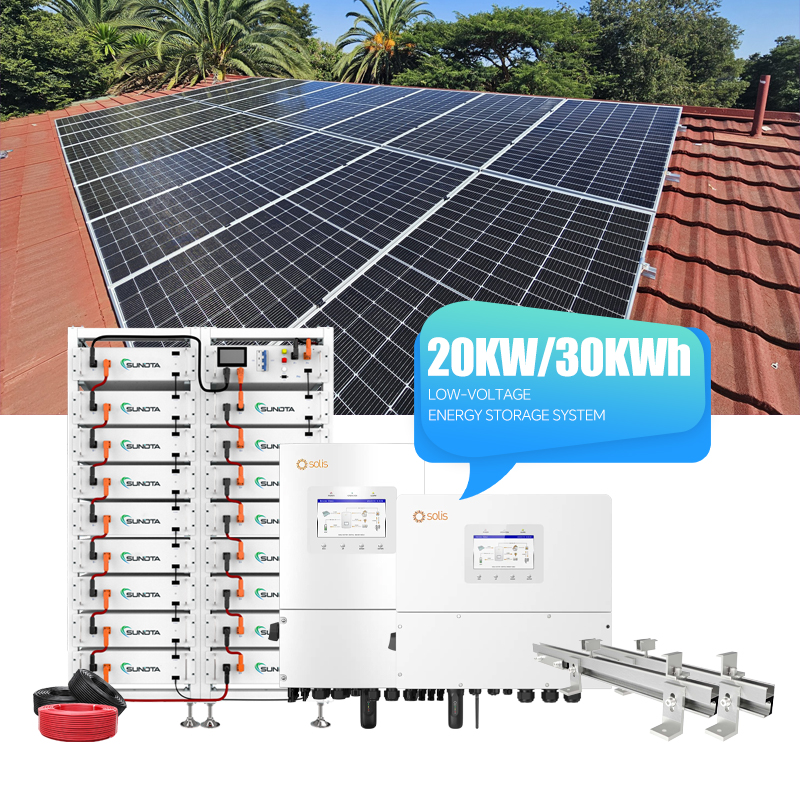
Complete 20kW–35kW Commercial Hybrid Storage Power Kit
- Tailored for GDMTO/GDMTH peak shaving
- Up to 16 units in parallel operation
- Auxiliary diesel generator support port
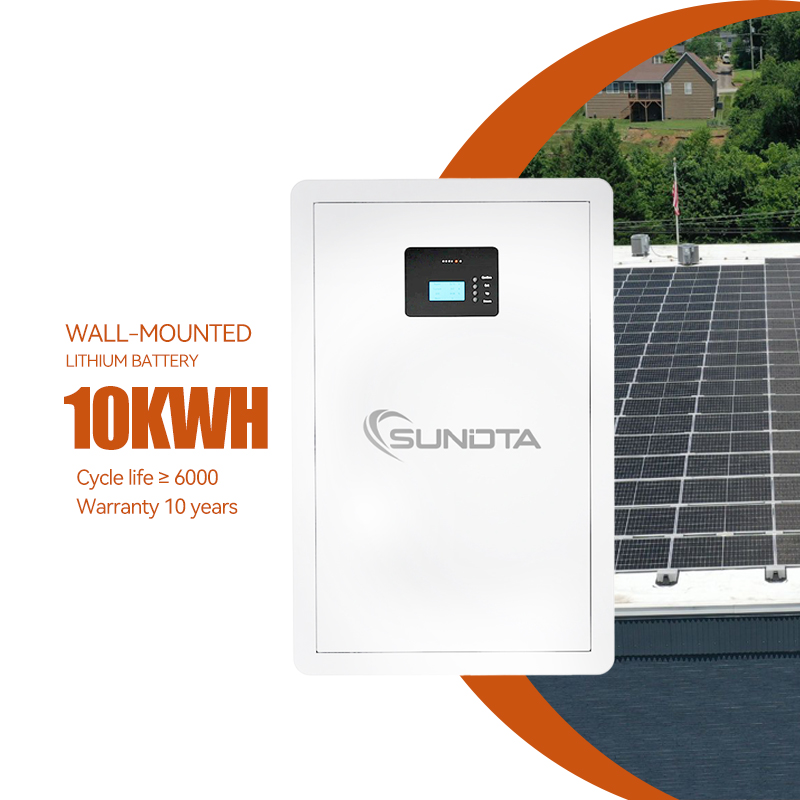
Sundta IP65 10kWh 51.2V 200Ah Wall-Mounted Solar Battery
- Outdoor IP65 sealed aluminum casing
- Multi-level short circuit & overtemp protection
- Ultra-compact 180mm mounting profile
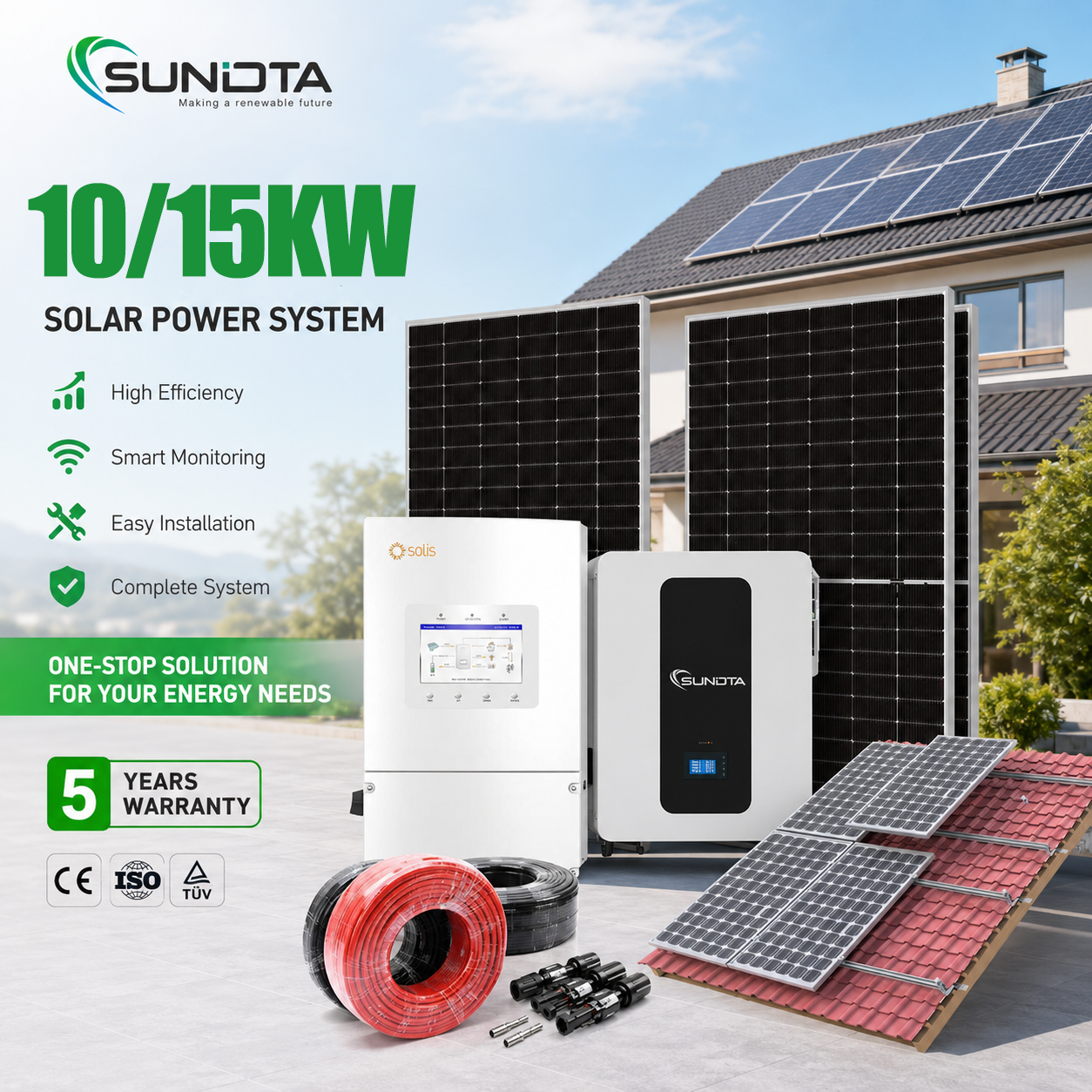
Hybrid 15kW Inverter System with 15kWh 300Ah Lithium Storage
- Wide MPPT operating window: 150V–850V
- Split/Three-Phase field selectable
- Zero export programmable limiter
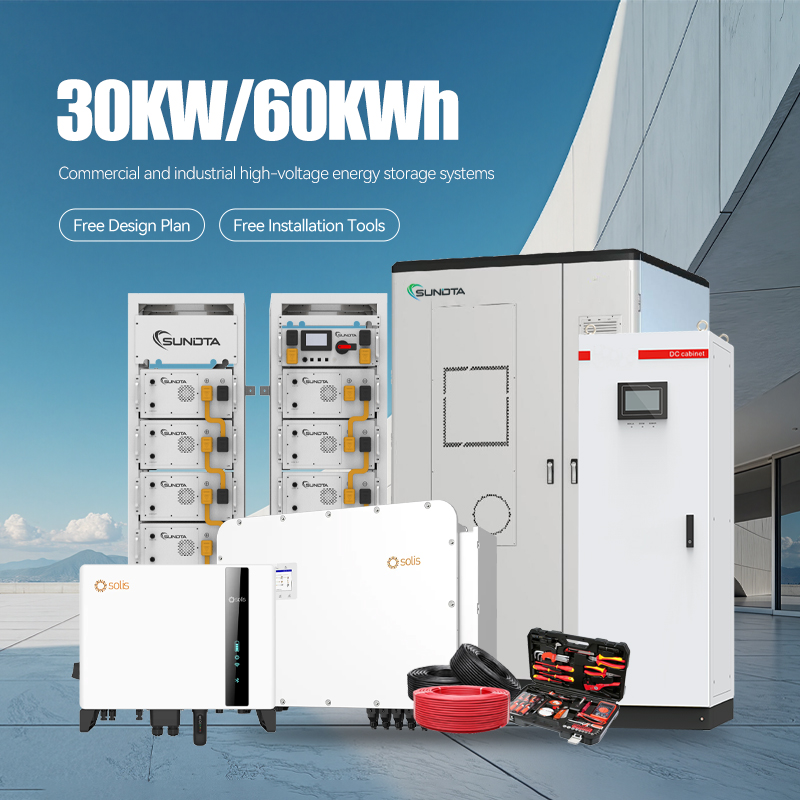
30kWh 51.2V 314Ah All-in-One LiFePO4 Energy Storage Cabinet
- Next-gen 314Ah high-density cell chemistry
- Built-in aerosol fire suppression
- Direct integration for light C&I facilities
Optimizing Three-Phase Hybrid Inverters for the Mexico City Grid
A rigorous engineering appraisal addressing 2,240m altitude derating, 127V/220V low-voltage three-phase distribution, and high-tariff CFE commercial mitigation.
Exporting power electronics from China into the central Mexican plateau requires an exacting understanding of localized electrical geography. Mexico City (CDMX) and its contiguous industrial corridors across the State of Mexico (Estado de México, including Naucalpan, Tlalnepantla, and Toluca) operate under an electrical ecosystem markedly distinct from European or Asian norms. Solar EPCs, developers, and wholesale distributors routinely encounter commissioning failures when deploying standardized 380V/400V three-phase hybrid inverters that lack native adaptation for the Mexican market.
1. The 2,240-Meter High-Altitude Derating Challenge
Mexico City sits in an endorheic basin at an average altitude of 2,240 meters (7,350 feet) above sea level, while nearby industrial manufacturing hubs like Toluca exceed 2,600 meters. Most international IEC-rated string and hybrid inverters are calibrated for operations up to 2,000 meters. Beyond this threshold, atmospheric density declines considerably, resulting in two distinct engineering phenomena:
- Degraded Convective Heat Transfer: Thinner air reduces heat dissipation from power semiconductor heatsinks (IGBTs and SiC MOSFETs) by approximately 1% per 100 meters above 2,000 meters. Without upgraded thermal management, standard inverters enter thermal throttling during peak solar irradiance (12:00 PM – 2:30 PM), reducing commercial generation by 8% to 14%.
- Dielectric Air Breakdown (Clearance Distances): Lower atmospheric pressure reduces the dielectric strength of air, increasing the risk of electric arc flash across terminal blocks and PCB traces. Our China-based OEM manufacturing lines incorporate custom creepage and clearance distances compliant with IEC 60664-1 Table F.1 altitude correction factors up to 3,000 meters, ensuring prolonged insulation reliability for Mexico City projects.
2. Navigating Mexico's Low-Voltage 127V/220V Three-Phase Grid Topology
The predominant commercial and light-industrial electrical service provided by the Comisión Federal de Electricidad (CFE) in Mexico City is 127V Phase-to-Neutral / 220V Phase-to-Phase (Wye 4-wire), alongside isolated 240V Delta configurations with a "high leg" (wild leg). Standard export inverters designed for European 230V/400V or Asian grids cannot synchronize natively with a 220V three-phase grid without external step-up isolation transformers—introducing parasitic idle losses of 2%–4%, increased footprint, and significant capital expenditure.
Our OEM export series resolves this bottleneck at the factory level. We manufacture native low-voltage three-phase hybrid inverters (8kW, 10kW, 12kW, 15kW, and 20kW) operating on a true 127V/220V nominal voltage window. Each phase contains independent current regulation loops capable of managing up to 50% phase load imbalance. In historic CDMX buildings or commercial plazas where single-phase air conditioning and commercial refrigeration loads disproportionately stress one phase, our inverter actively balances power dispatch to eliminate phase-voltage unbalance penalties from CFE.
Three-Phase Hybrid Inverter Engineering Matrix
Comparing factory specifications across low-voltage and high-voltage three-phase storage topologies for Mexico City distributors and EPCs.
| Electrical Parameter | LV Three-Phase Series (8–15 kW) | HV Commercial Series (20–50 kW) | Utility / Microgrid Platform (50–125 kW) |
|---|---|---|---|
| Nominal Grid Voltage | 127V / 220V Wye (3P+N+PE) | 220V / 380V / 480V Configurable | 277V / 480V Wye or Delta |
| Altitude Thermal Tolerance | Full output up to 2,500m (CDMX rated) | Full output up to 2,500m (CDMX rated) | Derated 0.8% per 100m over 2,000m |
| Battery Voltage Topology | 40V – 64V Low-Voltage (LiFePO4) | 160V – 800V High-Voltage Stack | 200V – 1000V High-Voltage Rack |
| Max. Efficiency (PV to AC) | 97.6% (Euro 97.0%) | 98.4% (Euro 97.8%) | 98.8% (Euro 98.2%) |
| Phase Imbalance Handling | 100% unbalanced backup load | 50% asymmetric phase output | Independent active phase balancing |
| Grid Code Compliance | CFE G0100-04, NOM-001-SEDE-2012 | UL 1741-SB, IEEE 1547, NOM-001 | UL 1741-SB, IEEE 1547, CRE DACG |
| Switching Time (On to Off-Grid) | < 4 ms (Seamless UPS Class) | < 10 ms (Standard Industrial UPS) | < 20 ms (Microgrid Switchgear) |
High-Yield Application Scenarios Across Greater Mexico City
Targeted battery energy storage system (BESS) integrations engineered to mitigate local tariff penalties and frequent micro-outages.
Vallejo & Naucalpan Industrial Peak Shaving
Medium-voltage CFE industrial clients under the GDMTH (Gran Demanda en Media Tensión Horaria) tariff face punitive rates during the Horario Punta (peak window: 6:00 PM – 10:00 PM on weekdays). RJV three-phase hybrid inverters programmatically discharge our high-voltage LiFePO4 batteries during this exact 4-hour window, shaving factory base-load demand, eliminating capacity surcharges, and delivering sub-3-year project ROIs for plastics, automotive, and packaging plants.
Santa Fe & Polanco Critical Commercial UPS
Financial headquarters, server clusters, and medical labs in high-density districts require unfailing power security. During rainy-season voltage sags and localized transformer dropouts in the CDMX power corridor, our hybrid inverters transition within < 4 milliseconds to battery backup. This instantaneous response preserves sensitive server power supplies, avoids IT reboots, and synchronizes effortlessly with existing standby diesel generators through dedicated dry-contact triggers.
Central de Abasto Cold Chain Preservation
In Iztapalapa's world-leading wholesale market (Central de Abasto) and adjacent refrigerated warehousing, three-phase compressor and chiller loads generate enormous inductive start-up surges. RJV three-phase hybrid units deliver up to 200% surge capacity for 10 seconds, absorbing heavy inductive motor inrush currents without tripping protective breakers, safeguarding perishable inventory during grid blackouts.
High-End Residential Estates in Lomas & Coyoacán
Residential estates in Bosques de las Lomas, Pedregal, and San Ángel often demand 15kW to 30kW of three-phase power to handle heat pumps, swimming pool filtration, and multi-vehicle EV charging stations. Squeezed by CFE's unsubsidized DAC (Doméstico de Alto Consumo) tariff, property owners achieve true grid autonomy. By pairing our aesthetic stackable LiFePO4 batteries with all-black N-Type TOPCon panels, these properties produce clean energy while shielding luxury homes from aging municipal utility feeders.
Importing Chinese Hybrid Inverters into Mexico: Regulatory Protocol
A step-by-step roadmap for Mexican EPCs, project developers, and hardware wholesalers navigating Mexican customs, certifications, and CFE grid connection.
Sourcing power electronics from China represents an immense cost advantage, but regulatory missteps can tie up freight in customs at Manzanillo or Lázaro Cárdenas for weeks. Anhui RJV New Energy has formalized an export workflow tailored specifically to Mexican commercial compliance.
1. Mandatory Norms: NOM-001-SEDE-2012 & UVIE Certification
Any distributed generation (DG) system below 500kW connecting to the CFE distribution grid must comply with the NOM-001-SEDE-2012 (Instalaciones Eléctricas / Suministro y Uso de la Electricidad). For commercial installations, a certified Verification Unit (Unidad de Verificación de Instalaciones Eléctricas - UVIE) must review single-line diagrams, short-circuit current ratings, and equipment compliance test reports. RJV provides factory-issued, TÜV-validated UL 1741 and IEEE 1547 test reports, which UVIE engineers accept for distributed generation permits.
2. CFE Distributed Generation Interconnection Contract
Inverters must satisfy CFE’s Technical Interconnection Specifications (Disposiciones Administrativas de Carácter General de la CRE). Crucial factory parameters include:
- Anti-Islanding Protection: Automatic disconnect within 100 milliseconds upon CFE grid loss, verifiable via factory test certification.
- Total Harmonic Distortion (THD): Current THD below 3% at rated output to prevent harmonic pollution on shared transformer banks.
- Zero-Export Functionality: Integrated smart meter with CT clamps to ensure dynamic zero injection during the transition period before the CFE bidirectional meter is installed.
3. Customs Clearance & Pacific Ocean Logistics Corridor
Direct shipments from our Hefei production facility route through Shanghai or Ningbo ports to Mexico’s primary Pacific container terminals: Puerto de Manzanillo (Colima) or Puerto de Lázaro Cárdenas (Michoacán). Typical ocean transit time is 18 to 24 days. From the port terminal, bonded inland rail (Ferromex/Kansas City Southern de México) or secured truck freight delivers 40-foot HQ containers directly to dry ports in Mexico City (such as Pantaco) or regional distribution warehouses in Cuautitlán Izcalli and Tlalnepantla within 48 to 72 hours of customs release.
Why Tier-1 Mexican EPCs Partner with Anhui RJV New Energy
Headquartered in Hefei’s world-renowned clean-tech hub, RJV pairs automated module assembly with tier-1 power electronics integration.
2 GW Annual Module & Inverter Capacity
Our high-speed automated facility integrates state-of-the-art N-Type TOPCon cell encapsulation and rigorous in-line automated optical inspection (AOI), backed by 12+ years of PV manufacturing discipline and over 500 MW of global deployments.
TÜV Rheinland Assessed & Certified
Our manufacturing lines, financial solvency, and quality assurance workflows have passed rigorous on-site audit verification by TÜV Rheinland. Products carry full CE, IEC 61215/61730, and UN38.3 certifications, giving Mexican customs brokers complete documentation certainty.
Engineered Battery-Inverter Compatibility
Avoid the common integration nightmare of unmatched BMS and inverter protocols. Our LiFePO4 batteries feature pre-configured CAN and RS485 protocol drivers for Solis, Deye, and RJV hybrid platforms. Firmware matching is verified before container dispatch.
Dedicated 24/7 Mexican Time-Zone Support
Our dedicated bilingual technical engineering desk supports Mexican installers directly during CDMX operational hours (CST), offering remote commissioning troubleshooting, string sizing optimization, and expedited spare parts dispatch.
Frequently Asked Questions by Mexican Solar Importers & EPCs
Authoritative technical answers to assist engineering directors, procurement leads, and renewable energy distributors.
Can your three-phase hybrid inverters connect directly to a Mexican CFE 220V/127V grid without an external transformer?
How do you handle the 2,240-meter altitude derating in Mexico City?
Are RJV three-phase hybrid inverters compatible with Deye and Solis protocols?
What are the minimum order quantities (MOQ) and sample lead times?
Do these systems support programmatic zero-export to the CFE grid?
How are warranty claims and field replacements handled in Mexico?
Request a Direct Factory Quotation for Mexico City Delivery
Partner directly with Anhui RJV New Energy. Submit your single-line diagram, target kW/kWh requirements, or container logistics schedule to receive full technical datasheets, CFE compatibility matrices, and landed CIF Manzanillo pricing within 24 hours.