Engineered MPPT Inverters & Integrated LiFePO4 Energy Storage
Tested for high-temperature equatorial conditions, fluctuating Latin American grid voltages, and closed-loop CAN/RS485 lithium protocols. Select a pre-matched system or individual power electronics unit below:
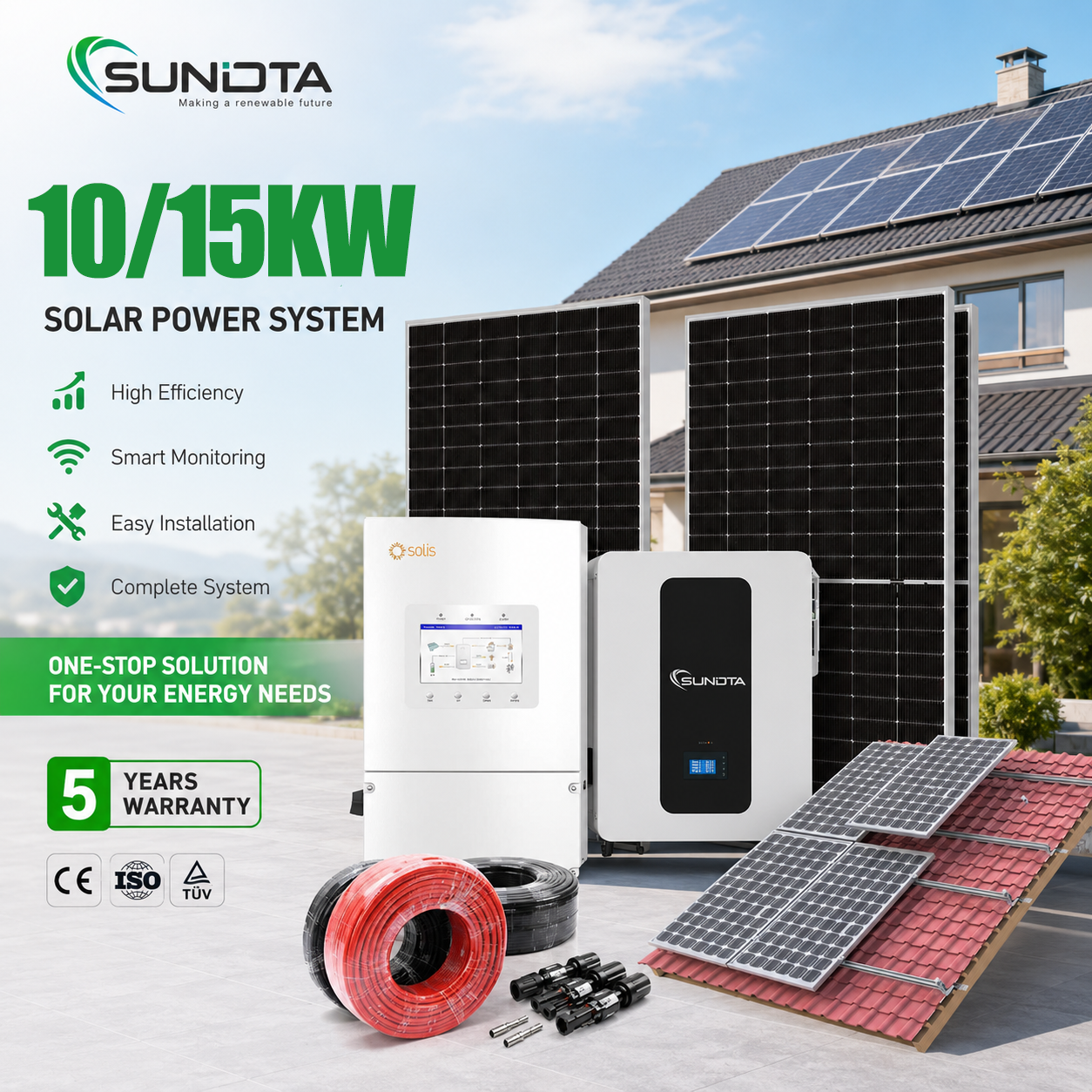
Customized Factory Price 8kW 10kW 15kW On-Off Grid Solar System Full Set with Mono Solar Panel & Lithium LiFePO4 Battery
- Dual MPPT Channels (120V-450V DC Window)
- Grade-A LiFePO4 Battery Pack Included
- Configurable AC Priority & Smart Zero-Export
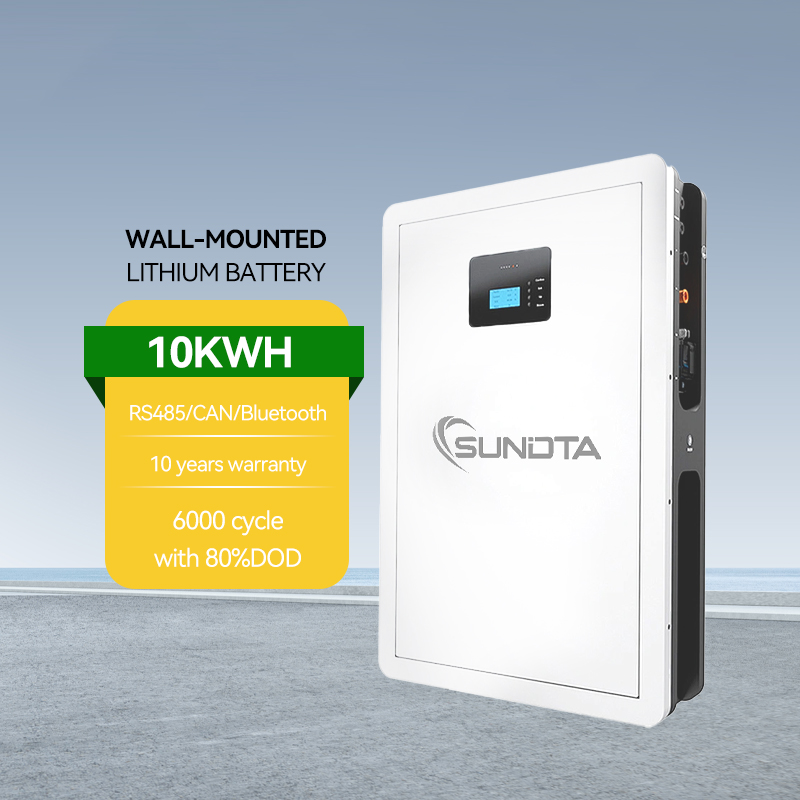
Fast Shipping Stock Solar Battery 48V 51.2V 100Ah 200Ah 5kWh Wall Mounted LiFePO4 Local Warehouse
- 51.2V Nominal, 5.12kWh Expandable Blocks
- Multi-Brand BMS (Deye, Solis, Growatt Protocol)
- Heavy-Duty Wall Mounting & Smart LCD Screen
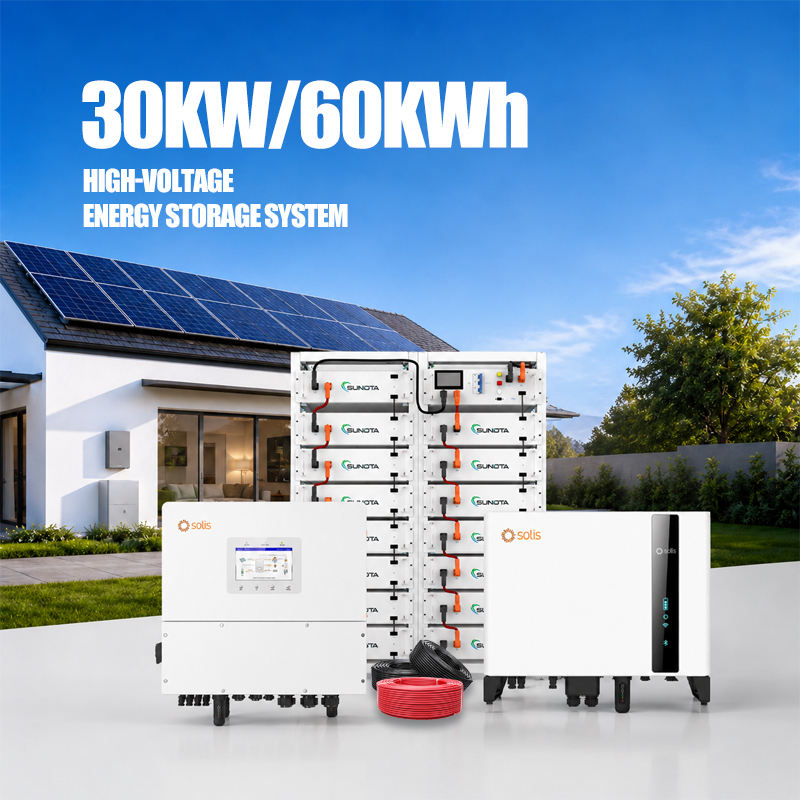
51.2V Split All-in-One Solar Battery Inverter System 30kWh LiFePO4 Energy Storage Backup Power Hybrid CAN CE Long Warranty
- 120V/240V Split-Phase Pure Sine Wave Output
- Seamless 30kWh Scalable Cabinet Architecture
- Closed-loop CANbus Real-time Telemetry
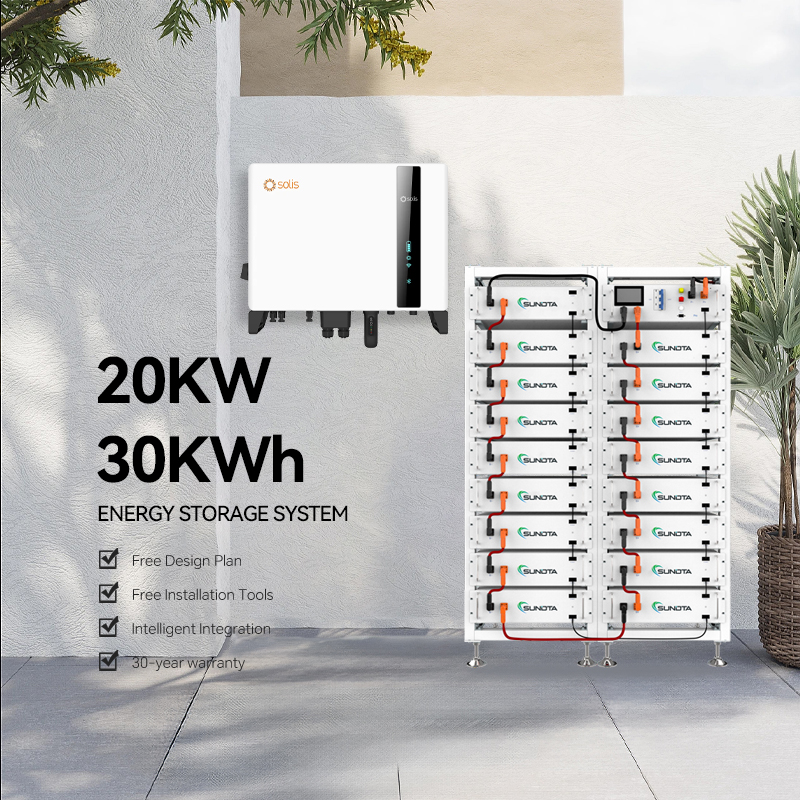
Complete 50kw Hybrid Solar System deye 3 Phase 380v on off Grid 10kw 15kw 20kw 25kw 30kw 40kw 50kw Solar Energy System
- 100% Unbalanced Three-Phase Phase Load Support
- High-Voltage Battery Bank Support (160V-800V)
- Diesel Generator Auto-Start Integration Port
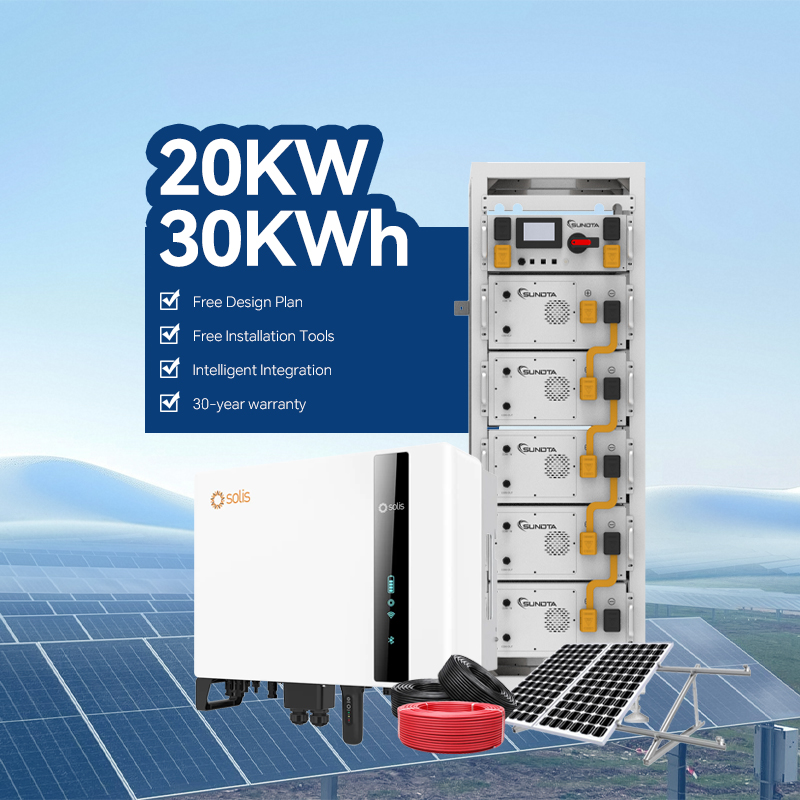
20kw Complete Set Solar Energy Power Storage System 20KW 30KW 25kw 35kw Hybrid Solar Panel Electric Power Generation Kit
- Tier 1 High-Efficiency N-Type TOPCon Panels
- Quad MPPT Inverter with Dynamic Shading Tracking
- Anti-Islanding & Fast Surge Protection Built-in
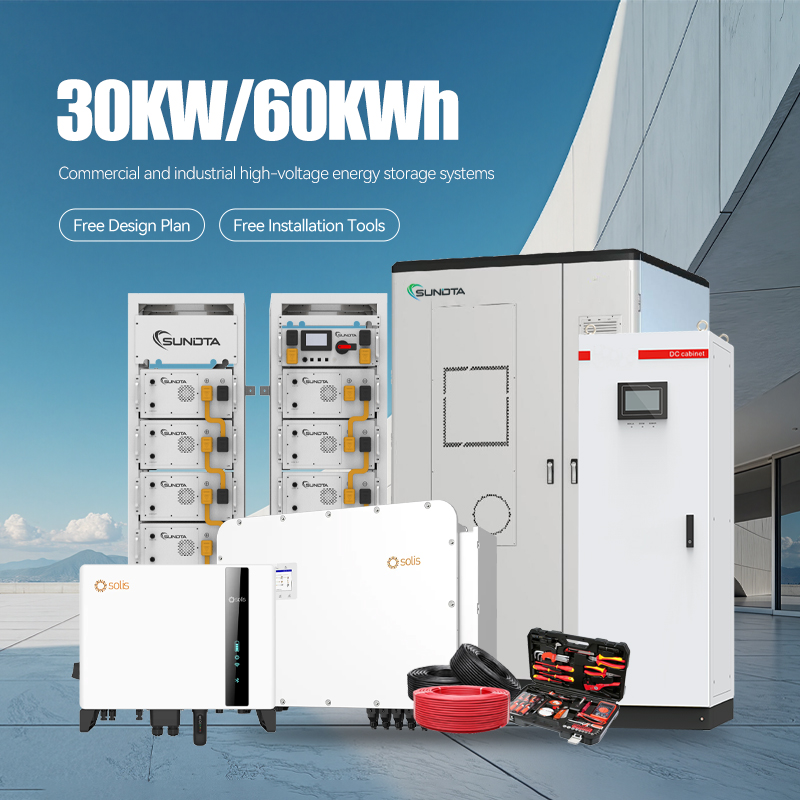
30KWH 51.2V 314AH LiFePO4 Battery Solar Energy Home Energy Storage 48v Solar Battery ALL in ONE SOLAR POWER SYSTEM
- Next-Gen 314Ah Prismatic Cell Technology
- Integrated High-Frequency MPPT Inverter Charger
- Compact Footprint for Urban & Rural Cali Estates
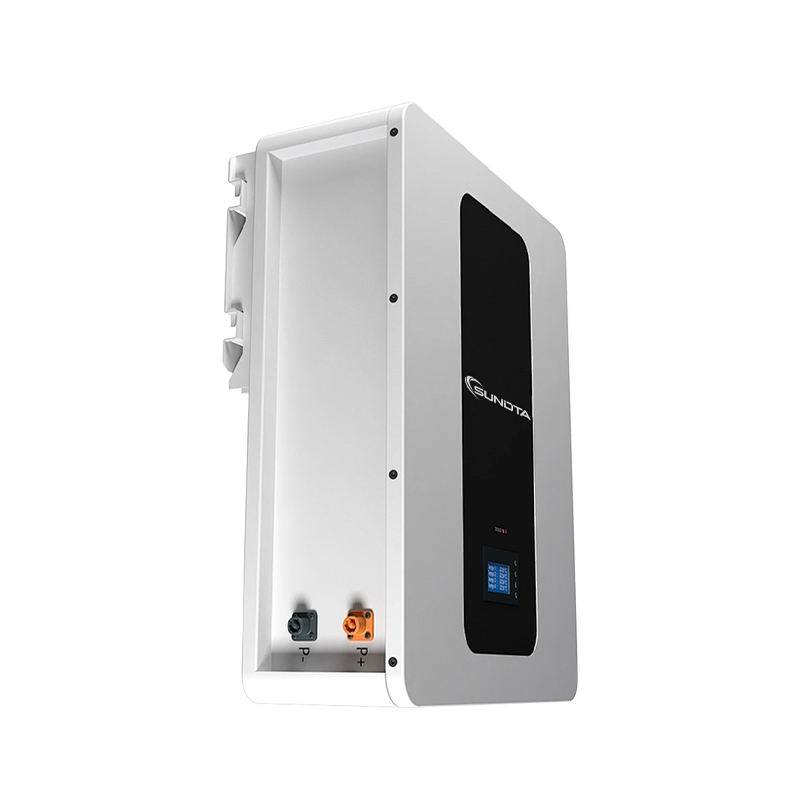
Sundta POLO-W1 LiFePO4 Lithium Battery Wall-Mounted 5kWh Home Power Storage Solar Energy System Deep-Cycle 51.2V 100Ah IP65
- Tropicalized IP65 Enclosure (Dust & Moisture Guard)
- Up to 15 Units Paralleling (76.8kWh Total Capacity)
- Compatible with 98% Global Inverter Brands
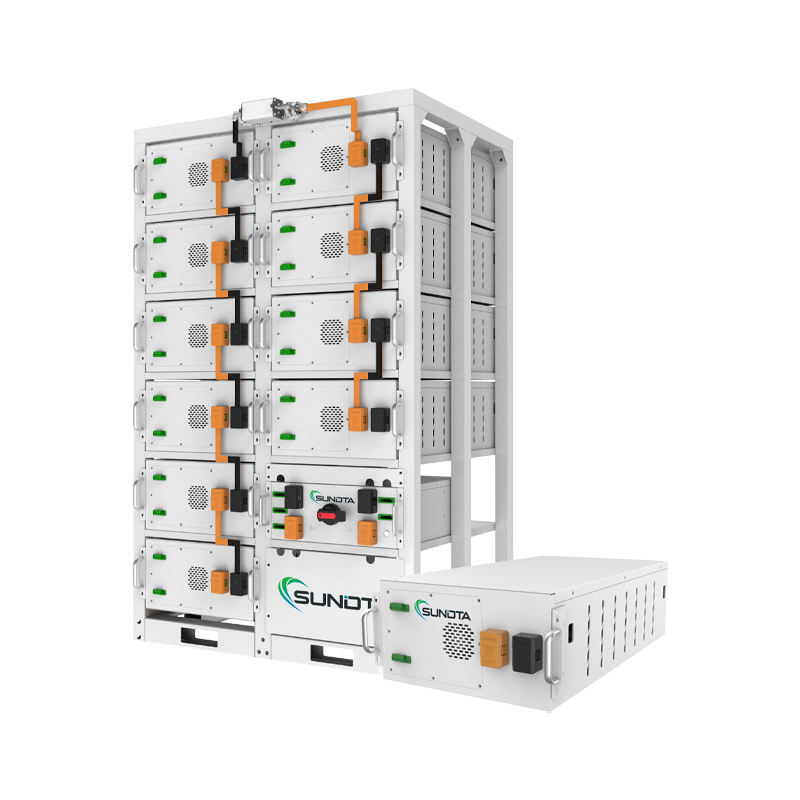
High Quality LiFePO4 Lithium Battery Stackable 51.2V 14.336kWh Wall-Mounted 10-Year Warranty Home Energy Storage Solar Battery
- 14.336kWh Massive Single Module Density
- Smart Active Cell Balancing BMS Protection
- Optimized for Heavy Air Conditioning Daytime Loads
Strategic Market Notice for Colombian Solar Importers: Santiago de Cali and the broader Valle del Cauca department represent Colombia’s fastest-growing corridor for distributed generation (Autogeneración a Pequeña Escala - AGPE). Driven by favorable irradiation profiles exceeding 4.8 to 5.4 kWh/m²/day and aggressive industrial energy tariffs, the demand for high-efficiency MPPT (Maximum Power Point Tracking) solar inverter chargers has expanded beyond traditional off-grid applications into hybrid, peak-shaving, and zero-export industrial architectures.
1. The Strategic Role of China MPPT Solar Inverter Chargers in Cali’s Solar Transition
The renewable energy ecosystem in Southwestern Colombia is undergoing a profound structural shift. Historically dependent on hydroelectric dispatch from the national grid (SIN - Sistema Interconectado Nacional), industrial and residential consumers across Cali, Yumbo, Palmira, and Jamundí face seasonal vulnerabilities linked directly to El Niño Southern Oscillation (ENSO) drought cycles. These climatic phenomena trigger sharp spikes in wholesale spot electricity prices, prompting commercial manufacturing facilities and residential estates to accelerate their capital investments in commercial and industrial (C&I) photovoltaic solutions.
Within this operating environment, the MPPT solar inverter charger acts as the central nervous system of any solar-plus-storage deployment. Unlike outdated PWM (Pulse Width Modulation) controllers that pull array voltage down to battery terminal levels—sacrificing up to 35% of harvested solar power—modern Chinese MPPT algorithms dynamically calculate the optimal balance point between DC voltage and array current thousands of times per second. In equatorial regions such as Cali (latitude 3°26' N), where solar irradiance curves climb aggressively between 10:00 AM and 2:30 PM alongside ambient daytime temperatures surpassing 32°C, high-speed MPPT sweeping prevents thermal clipping and preserves solar yield.
Direct manufacturing partnerships between China’s Tier-1 power electronics producers—such as Anhui RJV New Energy Co., Ltd.—and Colombian engineering procurement firms eliminate the multiple margin layers imposed by regional resellers in Miami or Bogotá. By securing containerized factory-direct shipments of integrated systems matching Deye and Solis topology with high-integrity Lithium Iron Phosphate (LiFePO4) storage, Cali EPC contractors can realize up to a 28% reduction in Levelized Cost of Energy (LCOE).
2. Localized Photovoltaic Application Scenarios Across Cali & Valle del Cauca
To engineer a resilient PV system in Cali, engineers must align the physical, electrical, and thermal parameters of the equipment with the distinct operational realities of the Colombian Pacific and Western Andean regions.
Urban & Suburban Residential (Ciudad Jardín, Pance, Jamundí)
High-end residential users characterized by intense daytime air conditioning consumption and localized grid instability require split-phase 120V/240V MPPT inverter chargers paired with 10kWh to 30kWh wall-mounted LiFePO4 batteries. Integrated zero-injection limits prevent regulatory penalties while supplying uninterrupted power for lighting, refrigeration, and smart home networks during EMCALI distribution outages.
Industrial Park Peak Shaving (Yumbo & Acopi Industrial Corridors)
Industrial operations running metallurgical, plastics, packaging, and chemical production face punitive maximum demand charges from utility operators. Three-phase hybrid systems (ranging from 50kW to 250kW) configured with high-voltage stackable lithium storage allow factories to discharge stored solar power during 6:00 PM - 9:00 PM peak tariff windows, slashing commercial electric utility invoices.
Agro-Industrial Agrovoltaics (Sugar Cane Processing & Poultry)
The fertile Cauca River Valley is dominated by massive sugar processing ingenios, coffee processing mills, and livestock installations. In remote agro-industrial outposts where utility lines fluctuate widely or suffer blackouts, rugged low-frequency transformer-based MPPT inverter chargers sustain inductive motor starting surges (pumps, grain elevators, and cold storage compressors) without tripping.
3. Technical Selection Matrix: Evaluating Inverter Architecture for Western Colombia
Procuring the wrong inverter architecture often results in premature component failure due to the unique combination of equatorial humidity, harmonic distortion on rural feeders, and high ambient daytime temperatures. The technical matrix below contrasts the three prevailing inverter topologies deployed across Cali:
| System Parameter | High-Frequency Transformerless Hybrid | Low-Frequency Heavy Transformer Inverter | All-in-One Commercial BESS Container |
|---|---|---|---|
| Primary Application | Residential & Small Commercial (Urban Cali) | Agro-Industrial & Heavy Motor Starting (Rural Cauca) | Industrial Parks, Microgrids & Substations (Yumbo) |
| MPPT Tracking Range | 120V – 500V DC (High Voltage Strings) | 60V – 150V DC (Low Voltage Strings) | 350V – 850V DC (Centralized Utility Trackers) |
| Surge Capacity Rating | 200% Pnom for 100 milliseconds | 300% Pnom for up to 10 seconds (Toroidal core) | 150% Pnom for 60 seconds (Software clamped) |
| Battery Voltage Topology | Low-Voltage 48V/51.2V or High-Voltage 200V+ | Strictly 48V / 51.2V LiFePO4 / Lead-Acid | High-Voltage Prismatic Racks (600V – 1000V DC) |
| Communication Protocol | CAN 2.0B & RS485 Dual Bus closed-loop | RS485 Modbus RTU / Dry Contact Relay | Modbus TCP/IP, CAN, SCADA & Cloud EMS |
| Suitability in Cali | Optimal for Homes | Essential for Farms | C&I Peak Shaving |
4. Colombian Regulatory Framework & Logistics via Buenaventura Port
Procuring solar hardware from China requires strict adherence to Colombian electrical codes and taking advantage of statutory fiscal incentives designed to foster non-conventional renewable energy (FNCE):
Compliance with RETIE (Reglamento Técnico de Instalaciones Eléctricas)
Every MPPT solar inverter charger and energy storage system imported into Colombia must comply with RETIE standards administered by the Ministry of Mines and Energy. RETIE mandates rigorous protections against electrical arc flash, anti-islanding disconnect compliance (UL 1741 or IEC 62109-1/2), and comprehensive surge protection (Type II DC and AC SPD). Inverters supplied by Anhui RJV New Energy carry full CE, IEC 62109, and IEC 61000 EMC certifications, significantly streamlining the local RETIE conformity certification process conducted by accredited bodies such as CIDET or SGS Colombia.
Law 1715 & Law 2099 Tax Incentives for Cali Importers
The Colombian government provides powerful fiscal tools under Law 1715 of 2014, reinforced by Law 2099 of 2021. Commercial and industrial buyers in Valle del Cauca can legally access:
- 0% Import Tariff (Arancel 0%): Total exemption from customs duties on qualified solar panels, inverters, and battery storage modules registered with the UPME (Unidad de Planeación Minero Energética).
- Exemption from VAT (Exclusión de IVA): Inverters and LiFePO4 batteries are 100% exempt from the standard 19% Colombian sales tax.
- Income Tax Deduction (Deducción de Renta): Corporate buyers can deduct up to 50% of the total investment value from their net taxable income over a 15-year period.
- Accelerated Depreciation: Fixed assets for solar power generation can be depreciated at rates of up to 33.33% per annum.
The Buenaventura Maritime Advantage
One of Cali’s distinct geopolitical advantages over interior cities like Medellín or Bogotá is its direct proximity to Sociedad Portuaria Regional de Buenaventura (SPRBUN). Located just 128 kilometers from Cali via the Buga-Loboguerrero corridor, Buenaventura is Colombia’s premier Pacific maritime terminal. Ocean freight loaded at Ningbo, Shanghai, or Shenzhen docks directly in Buenaventura in approximately 22 to 28 days transit time. This eliminates overland transit through high-altitude Andean mountain passes, reducing inland freight logistics costs by more than 40% compared to cargo destined for Bogotá via Atlantic ports (Cartagena or Barranquilla).
5. Technical Depth: Battery-Inverter Communication Protocols in Equatorial Climates
The operational longevity of a solar-plus-storage installation in Cali hinges on closed-loop communication between the MPPT charger and the Battery Management System (BMS). When an inverter operates in "lead-acid" or "voltage-open" mode with lithium chemistry, it calculates battery State of Charge (SoC) purely from terminal voltage. Because LiFePO4 maintains an extraordinarily flat discharge voltage curve between 20% and 90% SoC, voltage-based estimations frequently cause over-discharge or erratic charging termination.
Systems engineered by Anhui RJV New Energy utilize dedicated CAN 2.0B and RS485 communication protocols integrated directly into Deye, Solis, and RJV custom power electronics. This architecture guarantees:
- Dynamic Charge Current Limiting (CCL): If ambient temperatures in Cali's afternoon hit 36°C in unconditioned inverter enclosures, the BMS instructs the MPPT charger to ramp down charging amperage, protecting cell chemistry from thermal degradation without system shutdown.
- Millivolt-Level Cell Balancing: Over-the-bus monitoring detects internal cell drift early, balancing individual prismatic cells to prevent capacity fade over 6,000+ deep cycles.
- Instant Fault Tripping: Under abnormal DC short-circuit or thermal runaway events, the BMS commands hardware disconnect in under 2 milliseconds, maintaining safety in compliance with NFPA 855 standards.
Why Latin American EPCs Partner with Anhui RJV New Energy Co., Ltd.
Headquartered in Hefei’s Innovation Industrial Park—China’s global hub for photovoltaic innovation—Anhui RJV New Energy Co., Ltd. serves as an integrated manufacturing and engineering partner for global PV distributors and system integrators.
With an annual module production capacity of 2 GW and over 12 years of specialized power electronics engineering, we ensure that every bill of materials (BOM) delivered to the Cali market is pre-commissioned at the factory level. Our engineers eliminate the frustrating interoperability issues that occur when modules, inverters, and battery banks are sourced from disconnected vendors.
Frequently Asked Questions for Cali Solar EPCs & Distributors
Clear, direct answers regarding customs, grid integration codes, minimum order quantities, and electrical compatibility.
Are your hybrid inverters and batteries compatible with EMCALI and CREG 174 interconnection codes? +
Yes. Our grid-interactive hybrid inverters feature programmable anti-islanding protection (IEEE 1547 / UL 1741 standards) and adjustable power export limitations required under Resolution CREG 174 of 2021 (which updated CREG 030) for small-scale self-generation (AGPE) in Colombia. For installations connected to EMCALI’s urban network or CVC rural distribution circuits, our inverters can be configured via on-screen settings to zero-export mode, enabling operation before bi-directional meter authorization is granted.
How do you handle split-phase 120V/240V residential power requirements common in Colombia? +
Unlike standard European 230V single-phase systems, Colombian homes predominantly utilize a 120V/240V split-phase distribution system (two live legs of 120V and one neutral). We supply specialized split-phase hybrid inverter chargers (such as our 5kW to 12kW units) that directly output balanced 120V/240V without requiring cumbersome external autotransformers. This reduces total system losses by 4-6% and significantly cuts installation time for local contractors.
What are the minimum order quantities (MOQ) and shipping lead times to Buenaventura Port? +
For hybrid inverters, all-in-one ESS, and wall-mounted LiFePO4 batteries, our MOQ starts from just 1 unit for sample evaluation and technical verification. For palletized solar modules, typical MOQs are 1 full pallet (approx. 13,650W to 17,280W). We encourage mixed-container shipments combining modules, inverters, and lithium storage into a single bill of lading (B/L). Production lead time is typically 15 to 20 days, followed by 22 to 28 days direct ocean transit from Ningbo/Shanghai to the Port of Buenaventura.
How does RJV assist with UPME certificate approvals for VAT and tariff exemptions? +
To successfully obtain the 0% import duty and 0% VAT certificates from the UPME under Law 1715, importers must provide precise manufacturer technical datasheets, factory compliance declarations, and serial-level certifications. Anhui RJV New Energy provides bilingual (English/Spanish) engineering documentation, factory test certificates, and full bill of materials matching your customs broker's exact filing requirements.
What technical support and spare parts availability do you provide after delivery? +
We provide 24/7 dedicated engineering support covering system sizing, wiring diagrams, remote firmware upgrades, and CAN communication commissioning. For container-level volume distributors in Cali, we provide critical spare parts packages (including mainboards, control boards, LCD displays, and BMS communication units) and deliver comprehensive video training for local technical teams.
How do your inverters withstand the tropical humidity and thermal conditions of Valle del Cauca? +
Our residential and commercial outdoor inverters are engineered with IP65 and IP66 ingress protection ratings. All internal printed circuit boards (PCBs) feature conformal anti-corrosion coating to resist tropical humidity and airborne contaminants common in industrial areas like Yumbo. Furthermore, smart fanless convective cooling or intelligent dual-ball-bearing fan modules prevent thermal de-rating up to 45°C ambient temperature.
Accelerate Your Solar Business in Cali & Western Colombia
Request factory-direct FOB or CIF Buenaventura pricing, matched technical datasheets, and UPME-ready documentation. Speak directly with an Anhui RJV New Energy senior systems engineer today.