Top Commercial Solar Systems, Modules & ESS Hardware
Fully compliant with IEC 61215, IEC 61730, and UN38.3 standards. Engineered with closed-loop CAN/RS485 communication protocols and verified multi-inverter parallel architecture.
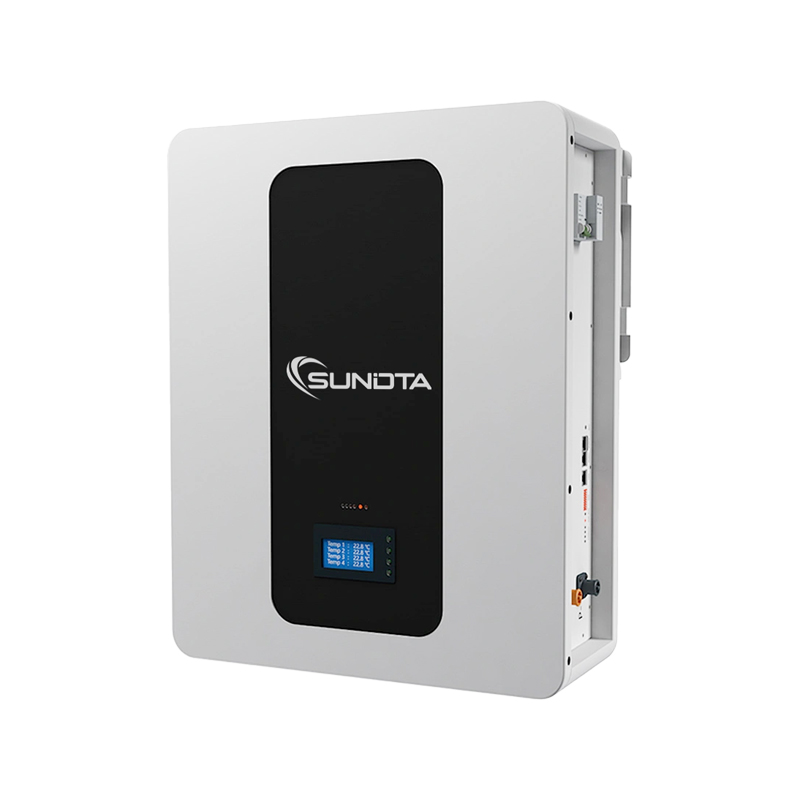
Sundta EU Warehouse 48V/51.2V LiFePO4 10kWh Solar Energy Storage 200Ah
- Grade-A Prismatic LiFePO4 Cells
- German local stock ready for prompt dispatch
- CAN/RS485 closed-loop inverter communication
- 6,000+ deep cycles at 80% DoD
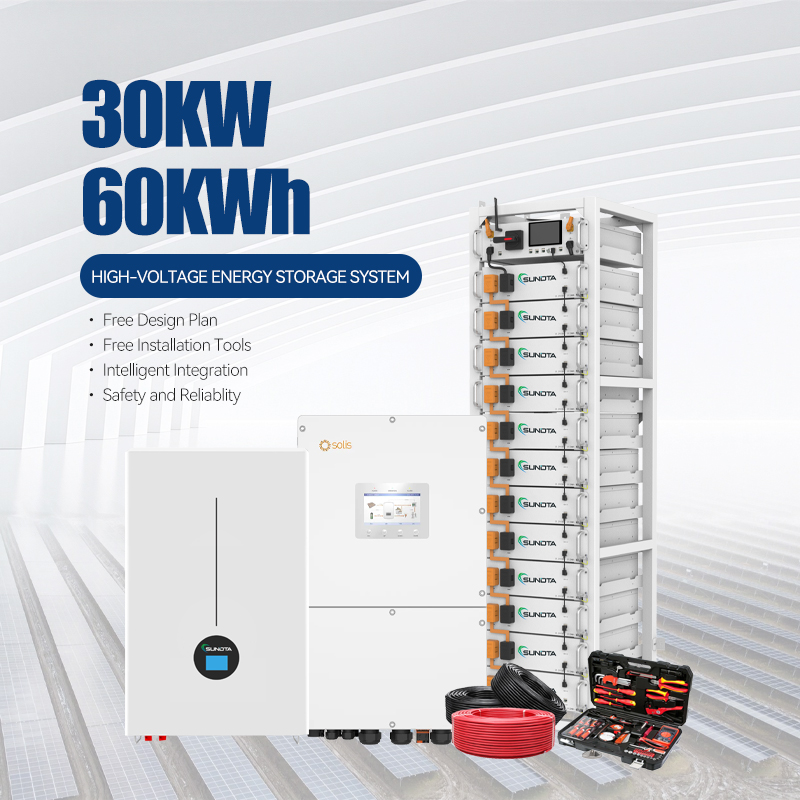
Energy Bank Powerwall 51.2V 314Ah/200Ah 8kW-10kW Solar Battery Pack
- Next-gen 314Ah high volumetric density cell
- Integrated smart thermal management BMS
- Seamless integration with Deye and Solis units
- Heavy-duty wall-mount architectural chassis
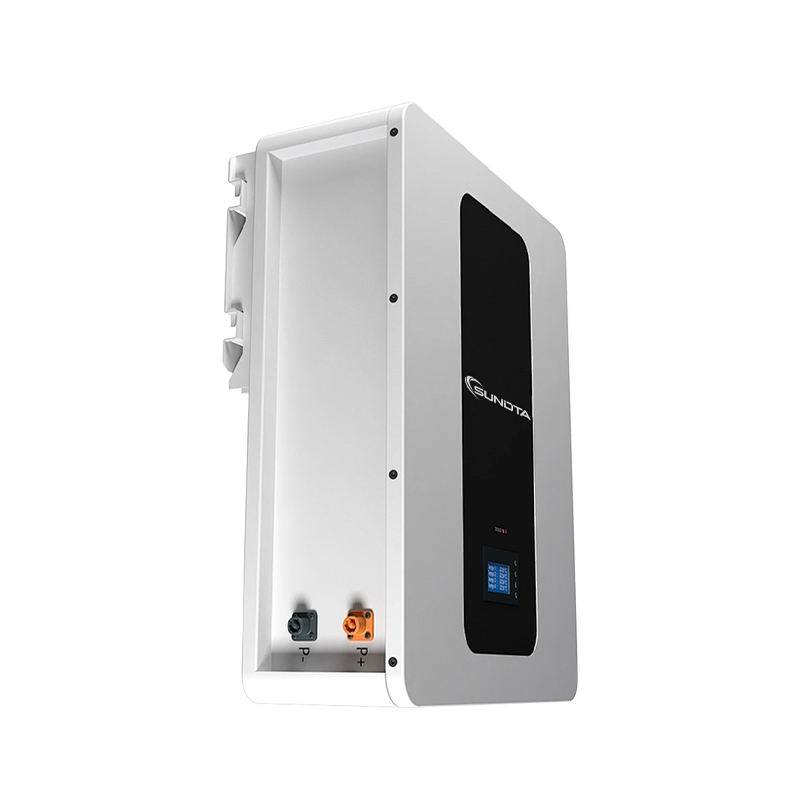
Sundta POLO-W1 LiFePO4 Wall-Mounted 5kWh Energy System Deep-Cycle 51.2V
- Ultra-slim enclosure with IP65 weather rating
- Stackable parallel expansion up to 80kWh
- Intelligent cell balancing & multi-tier protection
- Plug-and-play quick connection terminals
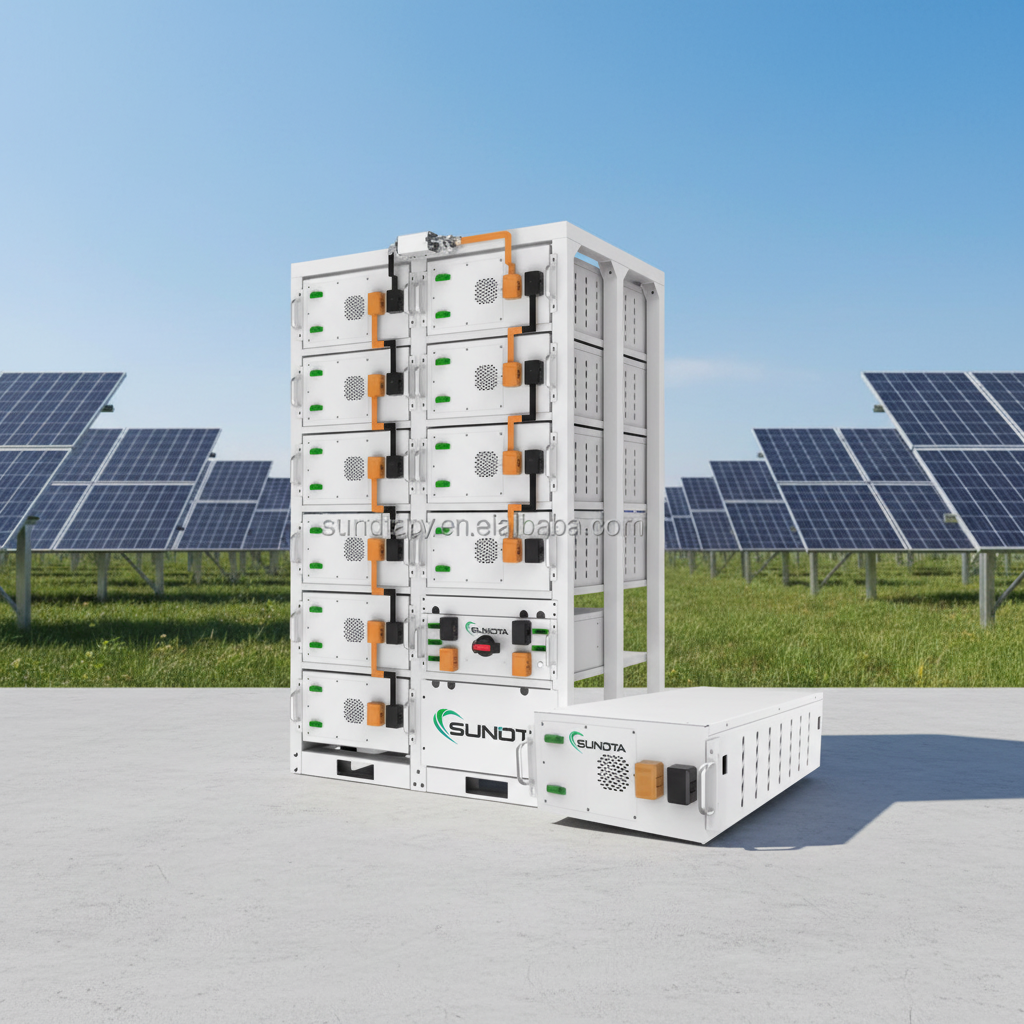
Commercial High Voltage LiFePO4 ESS Cabinet 40kWh-100kWh On/Off Grid
- Operating DC bus voltage range: 200V–800V
- Industrial forced air cooling / HVAC integration
- Multi-level Master-Slave industrial BMS control
- Designed for peak-shaving and backup power
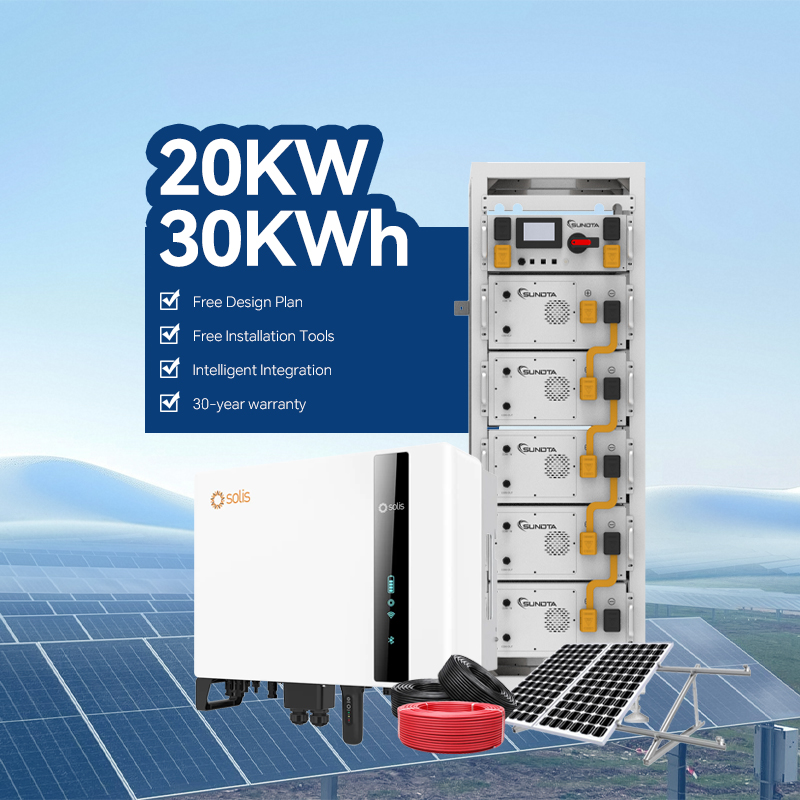
20kW-35kW Complete Commercial Hybrid Solar Power Storage System Kit
- Pre-wired balance of system (BOS) components
- Includes Tier-1 bifacial panels, inverter & racks
- Unbalanced three-phase export limitation control
- Factory pre-tested for rapid commissioning
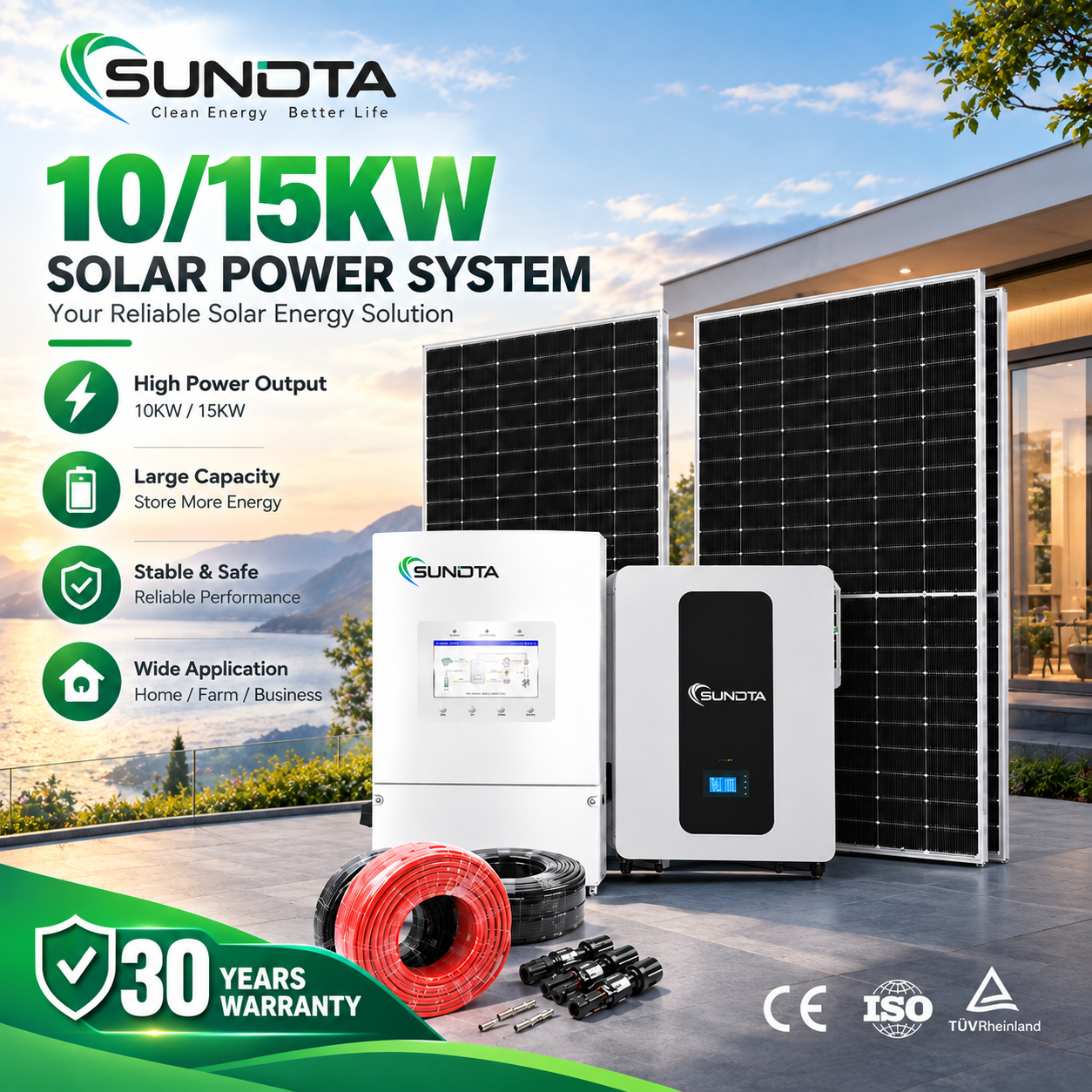
Premium 585W-595W N-Type Bifacial Monocrystalline PV Module
- Module efficiency up to 23.03% with zero LID
- 85% bifaciality factor with dual-tempered glass
- Exceptional -0.30%/°C low temperature coefficient
- 30-year linear power performance warranty
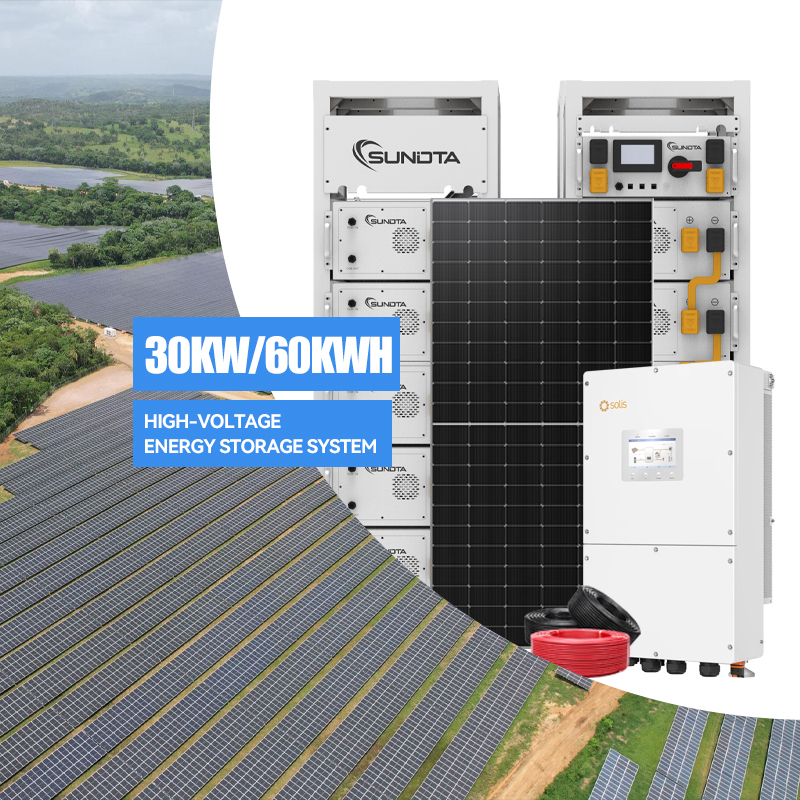
Off-Grid Hybrid Solar Storage System 20kW-40kW Heavy Duty Three-Phase
- Seamless 4ms UPS-class grid disconnection transfer
- Diesel generator auto-start contacts integrated
- Multiple MPPT tracking for multi-aspect rooftops
- CE, VDE-AR-N 4105, and EN 50549 certified
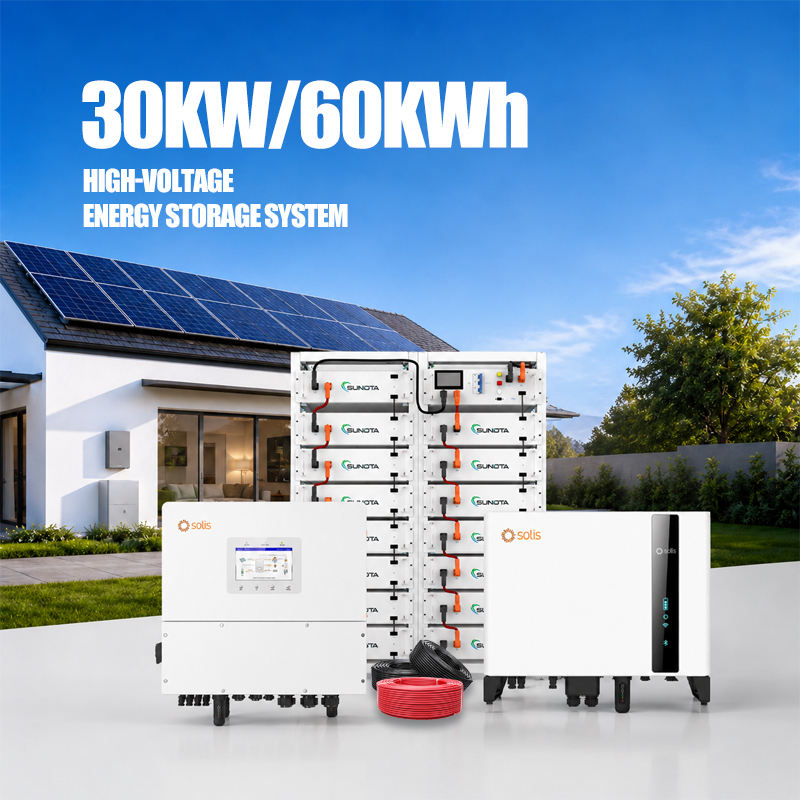
51.2V Split All-in-One Inverter Battery Storage System 30kWh LiFePO4
- Pre-matched inverter and battery cabinet layout
- Eliminates on-site field wiring & mismatched BMS
- Remote cloud telemetry and zero-export gating
- Robust industrial chassis with 10-year warranty
Why Global EPC Contractors Source Commercial PV from RJV New Energy
Mitigating Levelized Cost of Electricity (LCOE) through advanced manufacturing in Hefei, vertical integration, and exhaustive laboratory quality control verified by TÜV Rheinland.
2GW Automated Photovoltaic Line
Our intelligent smart-factory infrastructure in Hefei utilizes fully automated stringers, high-precision laser non-destructive scribing, and AI-powered optical electroluminescence (EL) defect detection to ensure zero micro-cracks before thermal lamination.
TÜV Rheinland Audited Quality
Our facilities undergo regular on-site factory verification by TÜV Rheinland. Products carry full international certifications including IEC 61215, IEC 61730, CE, RoHS, UN38.3 transport safety documentation, and regional European grid interconnection approvals.
BOS Dynamic Protocol Synchronization
Component incompatibility accounts for 68% of commercial commissioning delays. Our engineering department synchronizes inverter MPPT voltage curves, Deye/Solis CAN protocols, and LiFePO4 BMS registers at our Hefei integration lab prior to container shipment.
EU Warehousing & Fast Clearance
With operational hubs established across key European transit points in Germany, we stock high-demand all-black modules, low-voltage battery packs, and hybrid inverters, slashing project lead times from 45 days of ocean transit down to 48-hour roadside delivery.
38 Proprietary Utility Patents
From advanced high-voltage energy storage circuit balancing topologies to flexible thin-film rollable module encapsulation, RJV continuously converts PV laboratory innovation into measurable field durability and higher specific yield per square meter.
Dedicated B2B EPC Engineering Desk
Every commercial inquiry is routed directly to a bilingual system design engineer who provides string voltage calculations, single-line diagrams (SLDs), shading loss simulation reports, and project-specific bill-of-materials (BOM) optimization within 24 hours.
Engineering Architecture for C&I Solar & High-Voltage Storage (BESS)
Navigating the transition from simple net-metered arrays to complex, high-resilience behind-the-meter microgrids requires deep scrutiny of electrical coupling, thermal safety, and degradation mechanics.
1. N-Type TOPCon vs. Bifacial PERC in Commercial Rooftops & Solar Carports
The commercial solar sector has irrevocably shifted toward N-Type Tunnel Oxide Passivated Contact (TOPCon) architecture. Unlike legacy P-Type PERC cells that suffer from light-induced degradation (LID) and light-and-elevated-temperature-induced degradation (LeTID) due to boron-oxygen complex formation, N-Type silicon substrates are doped with phosphorus, eliminating LID entirely. For an EPC contractor financing a 25-to-30-year power purchase agreement (PPA), this ensures a first-year degradation of under 1.0% (compared to 2.0% for PERC) and an annual linear degradation rate capped at 0.4% thereafter.
Furthermore, in commercial parking canopy installations and light-colored membrane industrial rooftops, TOPCon's bifaciality factor reaches 80% to 85%, significantly higher than PERC’s typical 70%. When combined with a lower temperature coefficient of Pmax (-0.30%/°C vs. -0.35%/°C for PERC), TOPCon modules deliver up to 4.5% to 7.2% greater kilowatt-hour yield per kilowatt-peak installed in operating environments above 25°C.
Engineering Metric: Levelized Avoided Cost of Energy (LACE)
Commercial clients calculate ROI not purely on module dollar-per-watt capital expense, but on LCOE and LACE. A 590W TOPCon dual-glass module reduces commercial mounting racking clamps, DC trunk cabling, and combiner box counts per megawatt by 6.8%, offsetting any marginal upfront wafer premiums within the initial 14 months of commercial operation.
2. High-Voltage (HV) DC-Coupled Battery Architecture vs. Low-Voltage (LV) Storage
In residential setups, 48V/51.2V low-voltage battery banks remain prevalent due to touch-safe voltage safety limits. However, scaling an industrial facility or logistics center to 100kW+ using 48V creates prohibitive electrical losses. Under Joule's Law ($P_{loss} = I^2 R$), delivering 50kW at 50V requires 1,000 Amperes of direct current, necessitating thick 4/0 AWG or double 300 kcmil copper busbars to prevent dangerous resistive heating.
Conversely, RJV’s Commercial High-Voltage (HV) ESS cabinets operate within a DC bus range of 200V to 850V. Delivering that same 50kW across a 500V DC link drops the required current to a mere 100 Amperes. This yields an order-of-magnitude reduction in copper cabling cross-section, minimizes I²R thermal dissipation, and boosts overall round-trip round-efficiency (RTE) to over 90.5%. Furthermore, matching the battery bank voltage directly to the inverter's internal DC link eliminates the parasitic losses of high-ratio step-up DC-DC boost converters.
3. Battery Management System (BMS) Safety & Multi-Tier Fault Isolation
Industrial stationary storage demands rigorous electrochemical safety protocols. RJV's LiFePO4 commercial energy storage enclosures are constructed exclusively with heavy-duty aluminum prismatic cells featuring ceramic-coated separators and high thermal-runaway onset thresholds (>270°C, compared to 150°C for nickel-manganese-cobalt NMC chemistries).
Our three-level BMS architecture incorporates:
Level 1 (Cell Level): Continuous voltage, temperature, and internal impedance monitoring with active bi-directional cell balancing capable of handling 2A to 5A balancing currents to prevent string capacity clipping.
Level 2 (Cabinet Level / BMU): High-speed solid-state DC contactors, pyrofuses, and aerosol-based clean agent fire extinguishing modules activated by integrated gas detection (CO and H₂ sniffer sensors) prior to any smoke emergence.
Level 3 (System Level / EMS): Gateway communications via industrial Modbus TCP/IP and CAN 2.0B with automated power curtailment, dynamic peak-shaving algorithms, and cloud diagnostics.
Engineering Benchmark: Commercial PV & Storage Architecture
Compare fundamental system topologies to specify the correct equipment bill-of-materials for commercial and industrial installations.
| Architecture Type | Optimal Scale | DC Operating Voltage | Round-Trip Efficiency | Key Engineering Tradeoffs | Primary Application |
|---|---|---|---|---|---|
| N-Type TOPCon + Commercial Hybrid (HV) | 30 kW – 250 kW | 500 V – 850 V | 90.5% – 93.0% | Highest conversion efficiency; requires certified high-voltage commissioning technicians. | Factory rooftops, corporate campuses, cold-storage facilities, dynamic peak shaving. |
| Bifacial PERC + String Inverter + AC ESS | 250 kW – 2 MW | 600 V – 1000 V | 85.0% – 88.0% | Double conversion losses on storage cycle; flexible independent sizing of PV and battery. | Logistics centers, ground-mount solar farms, wastewater treatment facilities. |
| Modular Split All-in-One Cabinet | 10 kW – 50 kW | 48 V / 51.2 V or 200 V | 88.0% – 90.0% | Compact footprint; pre-wired to minimize site labor; higher cabling gauge on LV versions. | Small commercial workshops, medical clinics, schools, agricultural processing sheds. |
| Containerized BESS (20ft / 40ft) | 500 kWh – 2 MWh+ | 700 V – 1200 V | 89.0% – 91.5% | Requires pad foundation, crane offloading, and dedicated liquid-cooling / HVAC power. | Utility grid stabilization, EV fleet charging hubs, microgrids, industrial parks. |
Future Procurement Directives & Technology Trends in Commercial PV
Strategic purchasing managers must structure their 24-to-36-month procurement roadmaps around critical shifts in cell chemistry, grid-forming compliance, and international carbon border tariffs.
The Rise of 314Ah+ LFP Prismatic Cells
The commercial energy storage sector is rapidly phasing out 280Ah cells in favor of 314Ah and 320Ah form factors. By increasing volumetric energy density without changing standard 71173 enclosure dimensions, EPCs achieve a 12% increase in container storage capacity, dropping the civil foundation and shipping freight cost per megawatt-hour significantly.
Grid-Forming & Synthetic Inertia Inverters
As intermittent renewable penetration increases, transmission grid operators across Europe and the Americas are replacing grid-following mandates with grid-forming requirements. Modern commercial hybrid inverters must act as independent voltage sources, providing synthetic inertia, black-start capabilities, and fast sub-cycle frequency response during grid disturbances.
CBAM & Embodied Carbon Traceability
Under the European Union's Carbon Border Adjustment Mechanism (CBAM) and digital battery passport directives, commercial buyers must source solar systems with documented lifecycle emission disclosures. RJV guarantees raw polysilicon trace certificates, ISO 14064 carbon audits, and ESG environmental footprint declarations from wafering through pack assembly.
Frequently Asked Questions by Commercial Buyers & EPCs
Concrete engineering and logistics answers addressing real commercial project execution challenges.
Q1: How does RJV guarantee closed-loop communication between LiFePO4 batteries and third-party inverters?
Our batteries feature programmable dual-CAN and dual-RS485 physical transceivers. We maintain pre-mapped firmware protocol libraries for major global inverter platforms including Deye, Solis, Growatt, Victron, Schneider, and SMA. Prior to shipment, our engineers verify telemetry transmission of State of Charge (SoC), State of Health (SoH), overvoltage cutoffs, and charge current limits under load testing.
Q2: What are your minimum order quantities (MOQ) and lead times for commercial shipments?
Standard commercial hybrid inverters and stationary battery storage cabinets have an MOQ of 1 unit/set for engineering evaluation. Complete rooftop kits (panels, inverters, racking) start at 1 full pallet or 10kW equivalent. Full 40ft High Cube container loads typically ship within 14 to 21 calendar days from our Hefei plant, while EU-stocked items ship within 48 to 72 hours from our German distribution warehouse.
Q3: Can RJV provide custom single-line diagrams (SLD) and engineer-stamped BOMs for local permitting?
Yes. Our technical team includes licensed solar electrical engineers who generate detailed single-line electrical diagrams, string sizing sheets, string voltage calculations (accounting for lowest ambient temperatures to prevent Voc inverter damage), cable sizing schedules, and array layout plans compliant with regional National Electrical Codes (NEC) or IEC wiring regulations.
Q4: How does your quality inspection (QC) verify module reliability before ocean export?
Every PV module undergoes a triple electroluminescence (EL) inspection: once prior to lamination, once immediately post-lamination, and a final EL test following aluminum frame crimping and junction box potting. Flash test IV-curve reports detailing actual Voc, Isc, Pmax, and Fill Factor are matched to serial numbers and provided to the buyer in the final shipping documentation packet.
Q5: What are the international Incoterms and payment terms supported for B2B contracts?
We provide FOB (Shanghai/Ningbo), CFR, CIF, and DDP terms directly to your regional warehouse or project site. Payment instruments include Wire Transfer (T/T), Irrevocable Documentary Letters of Credit at sight (L/C), and structured milestone financing for recurring EPC framework agreements, backed by our AAA financial credit rating.
Q6: How is after-sales warranty support handled across different continental time zones?
RJV operates a 24/7 technical support desk staffed by systems engineers. Inverter issues are resolved through cloud telemetry diagnostics and remote firmware patches. For hardware warranty claims on battery cells or modules, replacement units and spare parts are dispatched directly from our regional distribution hubs or containerized project spares allotments without awaiting factory returns.
Request a Tailored Commercial PV & Storage Sourcing Proposal
Provide your planned project capacity, grid voltage standards, and target commissioning schedule. An RJV senior systems engineer will deliver an optimized equipment bill-of-materials, layout drawing, and factory-direct quotation within 24 hours.