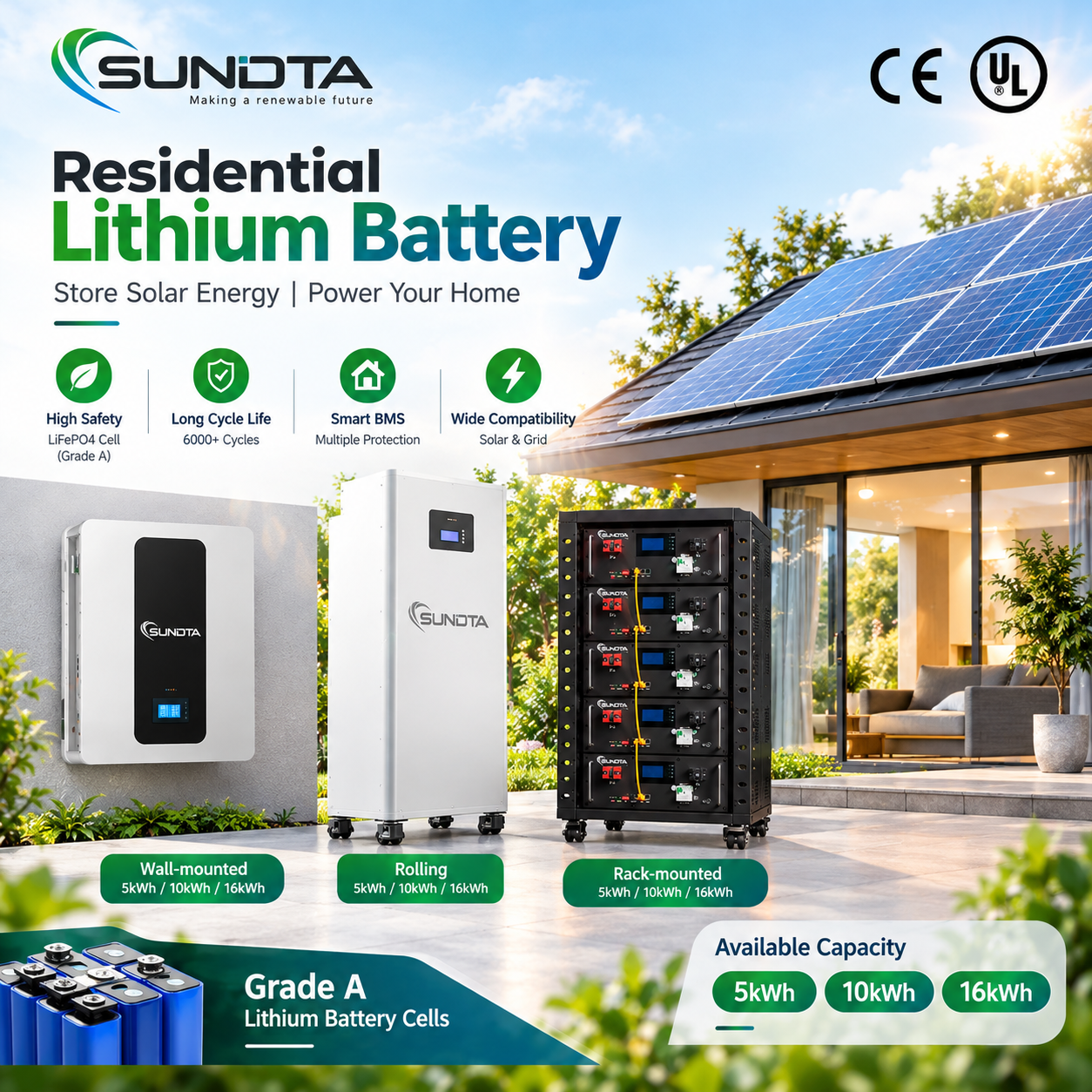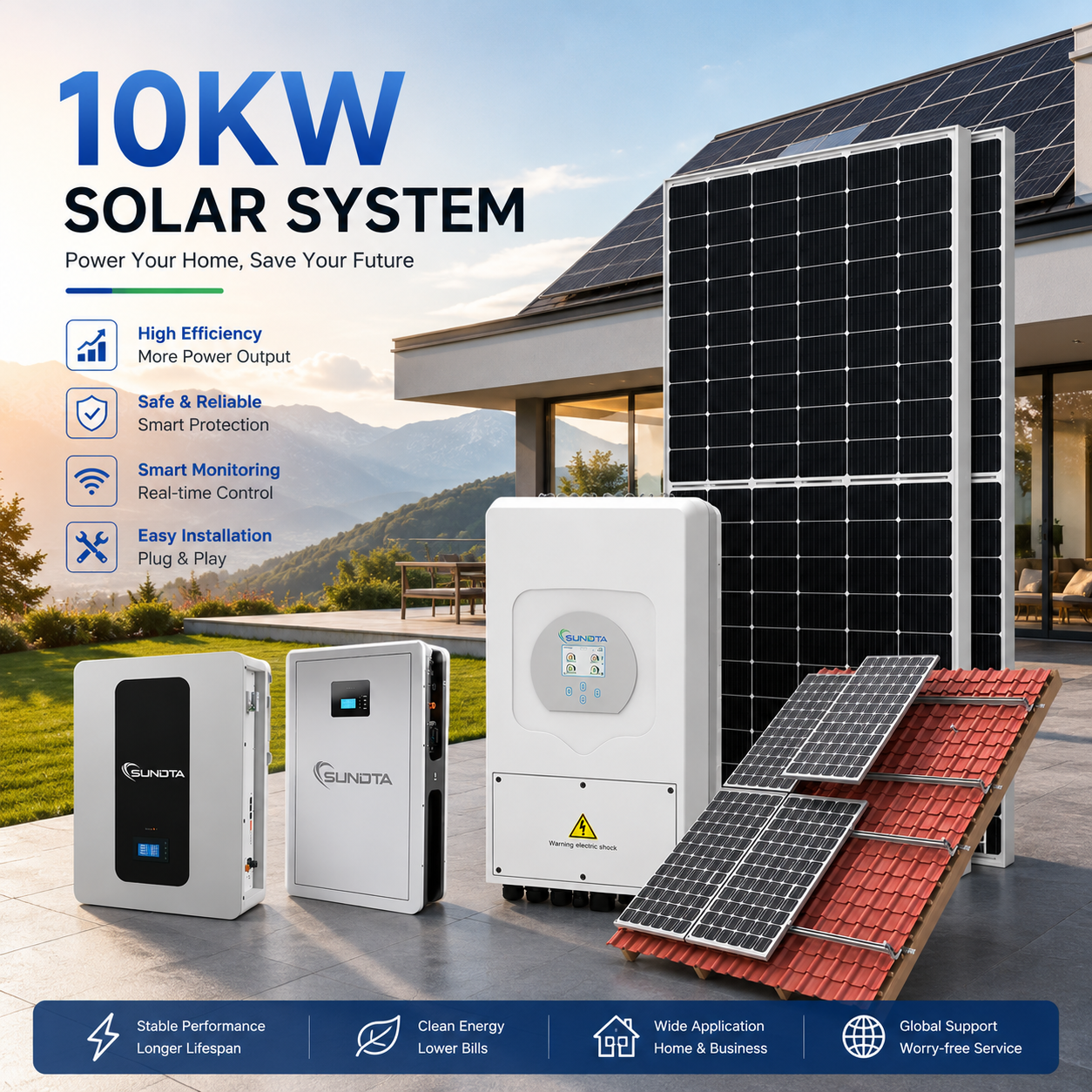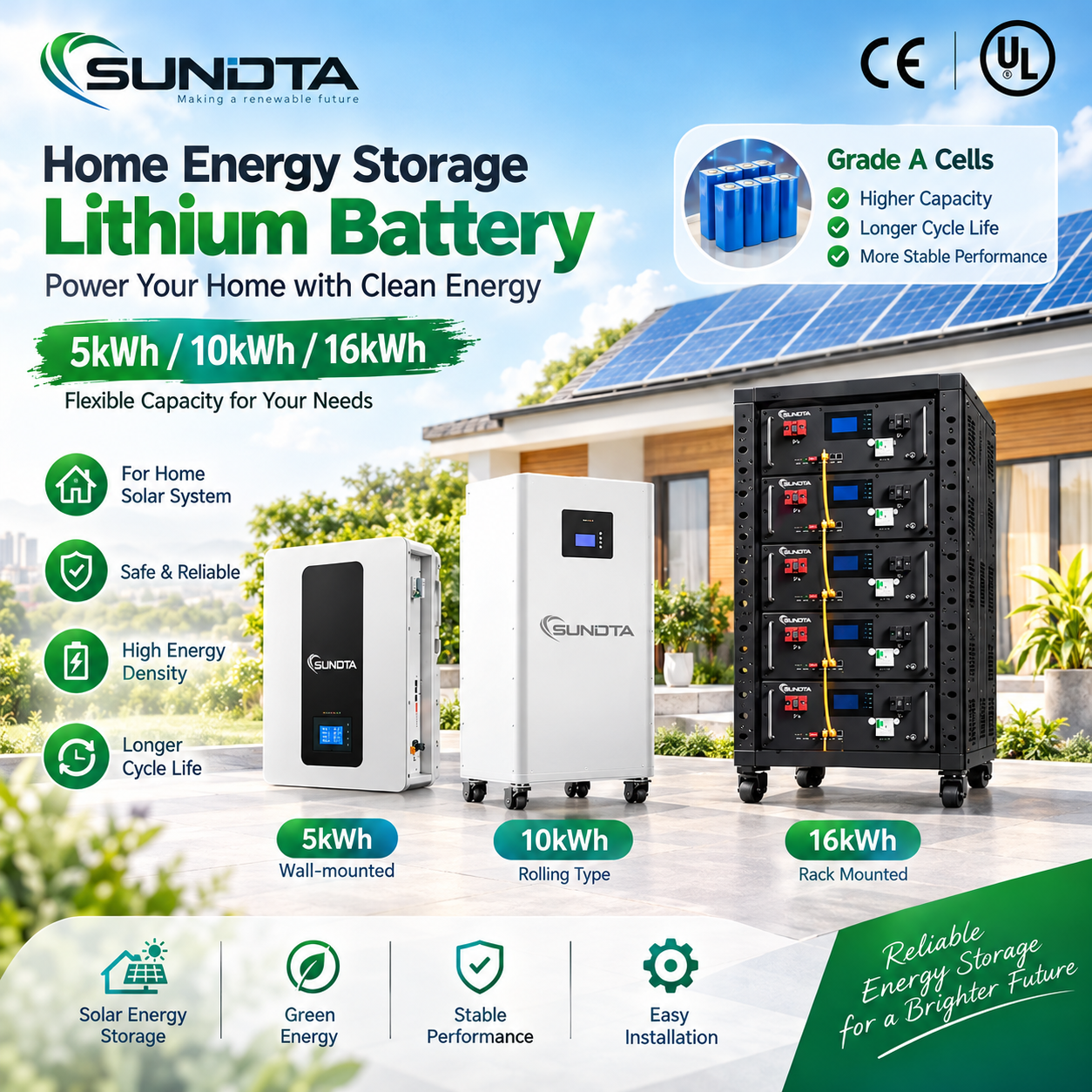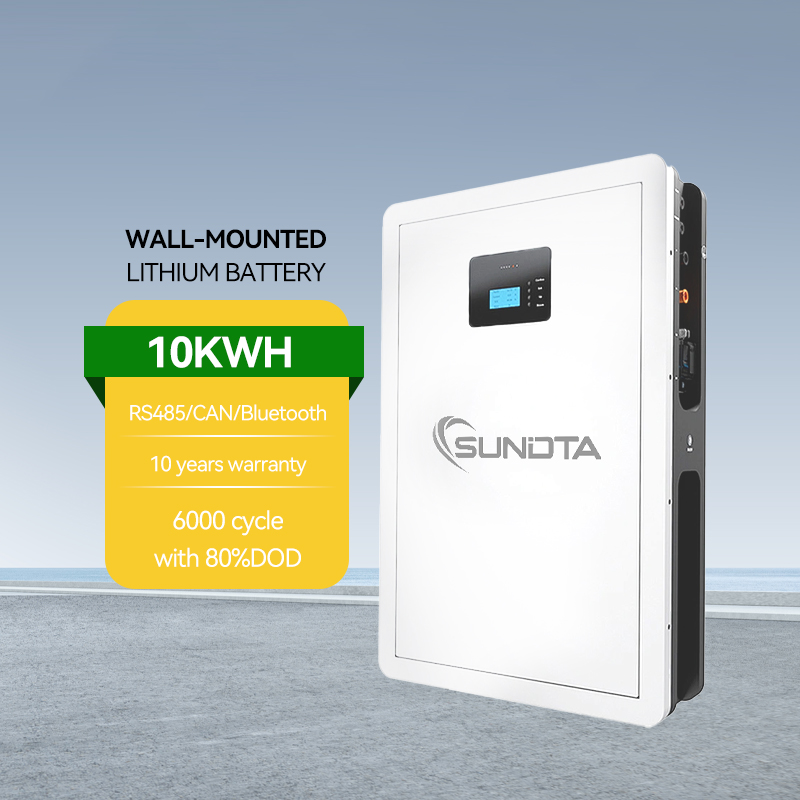
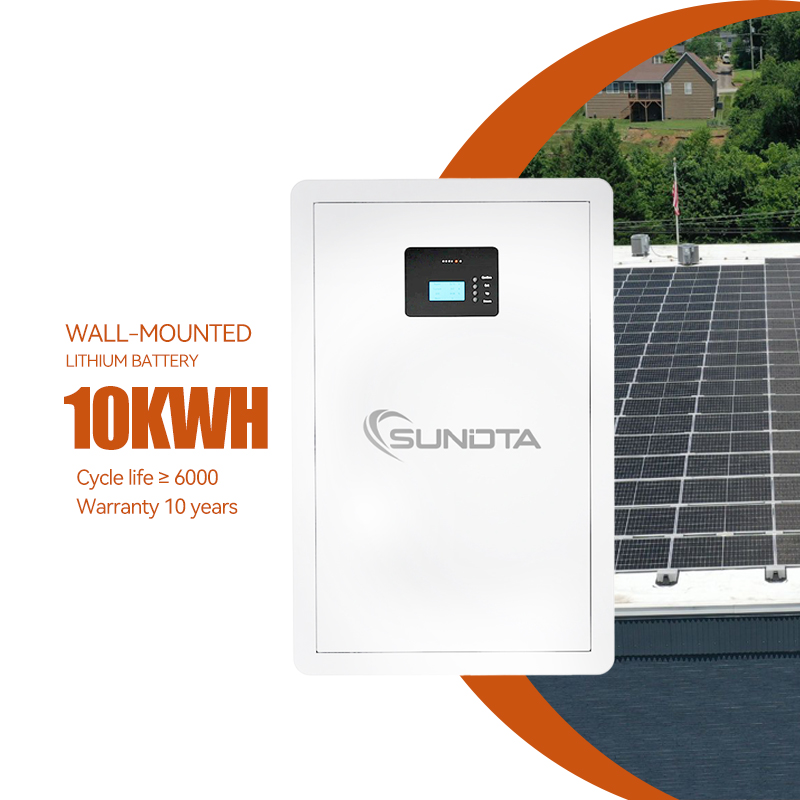
Fast Shipping Stock Solar Battery 48V 51.2V 100Ah 200Ah 5kWh Wall Mounted LiFePO4
- Chemistry: Grade-A LiFePO4 Cells
- Rated Capacity: 100Ah / 200Ah modular
- Dual Communication: CAN 2.0B & RS485
- Fast dispatch stock with local guarantee
Engineered to mitigate extreme desert ambient heat derating, reduce LCOE across Mary installations, and provide uninterrupted closed-loop operational stability.
In Mary and the wider Karakum desert periphery, standard PV systems suffer from severe thermal derating and fine airborne particulate soiling. Here is how our dual-glass bifacial modules solve these challenges.
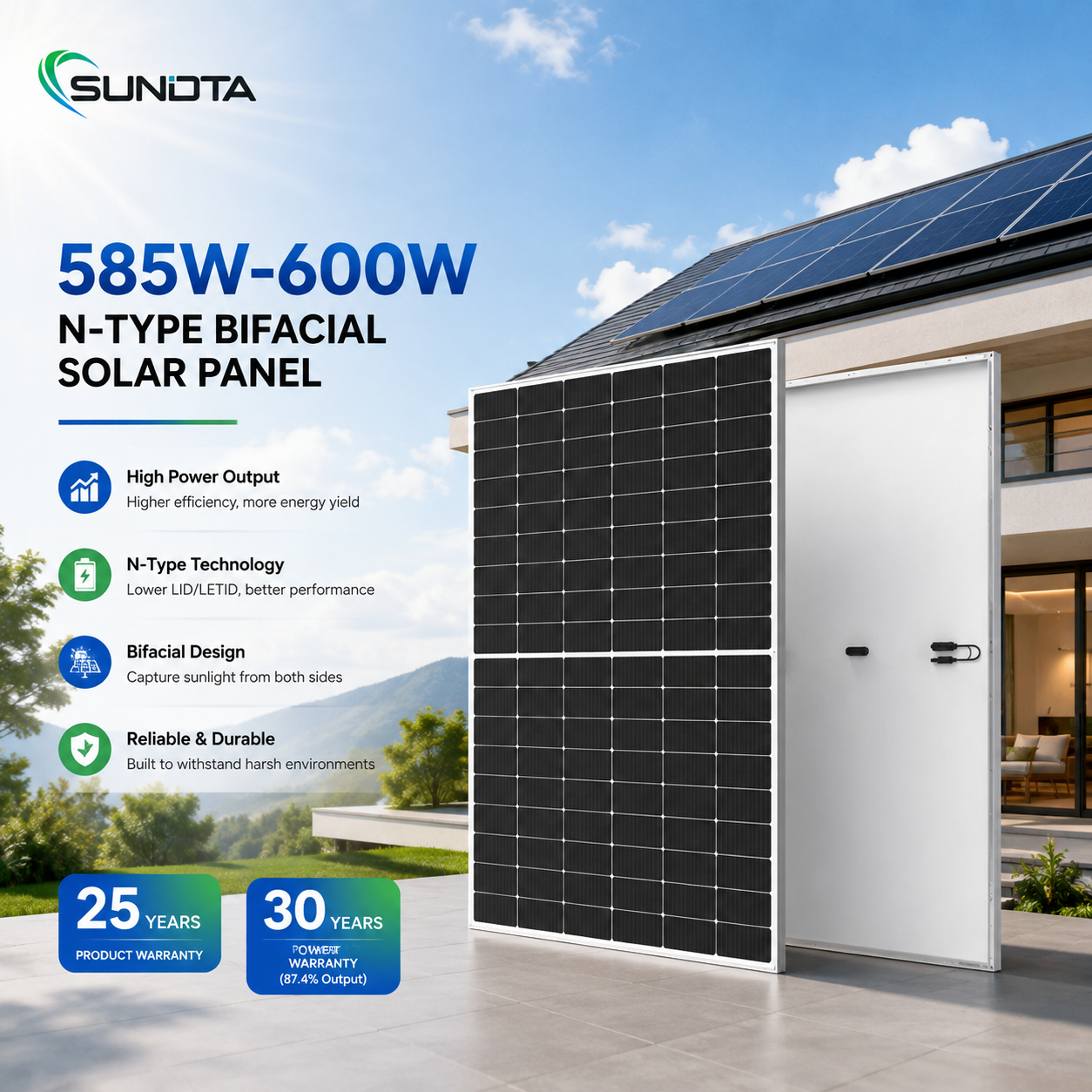
Bifacial solar panels do not operate under the basic laboratory Standard Test Conditions (STC) when deployed in Mary. The high solar irradiance of southeastern Turkmenistan combines with sandy, calcified, and light-clay ground soils exhibiting ground reflectance (albedo) values between 0.32 and 0.44. While a standard monofacial panel wastes this ground reflection entirely, our 585W–595W N-Type TOPCon dual-glass panels capture photons from both sides, producing an additional 15% to 28% real-world bifacial energy yield.
Elevating ground-mounted trackers or fixed arrays between 1.2 to 1.6 meters above grade allows the rear side of the module to capture diffuse and ground-reflected radiation without cast shadows. Furthermore, N-type TOPCon silicon exhibits an industry-leading temperature coefficient of -0.30%/°C (contrasted with traditional P-type PERC at -0.38%/°C). In peak summer environments where surface module temperatures reach 68°C in Mary, this thermal delta preserves significant megawatt-hours across the lifecycle of the system.
Continuous-duty baseload power for extraction pumping stations, administrative control rooms, and pipeline telemetry loops across the Mary region. Dual-glass glass/glass construction withstands corrosive airborne sulfurous traces and ambient sandstorms.
Solar-powered water lifters and pressurized drip irrigation systems along canal arteries. Operating off-grid or in weak-grid conditions, using hybrid inverters coupled with LiFePO4 buffers to ensure smooth startup of high-torque three-phase induction pump motors.
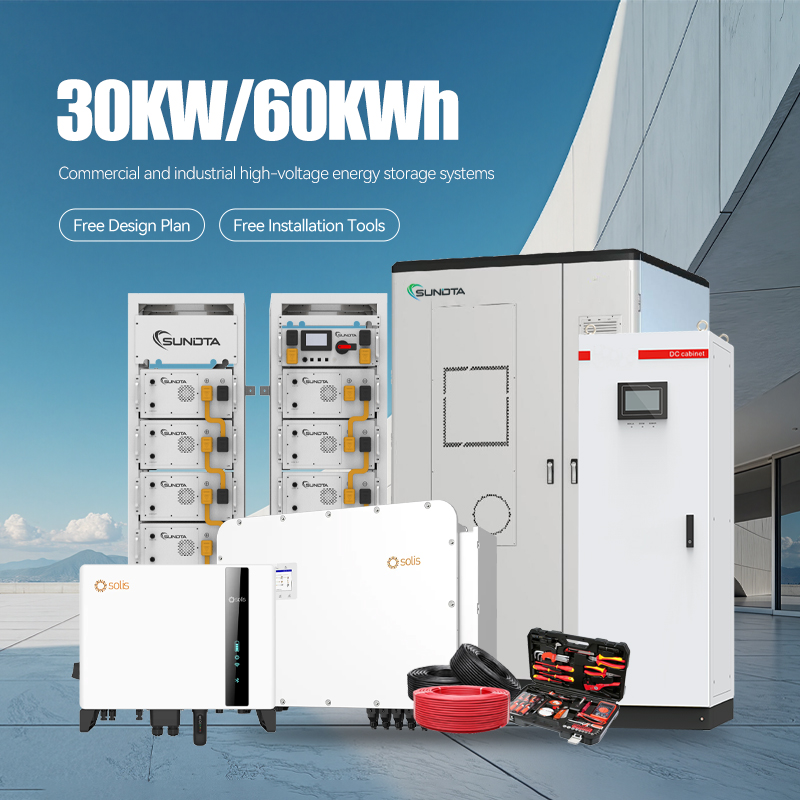
Grid-tied commercial establishments and residential housing compounds demanding peak shaving against seasonal summer grid brownouts. Stacked 51.2V modular batteries deliver zero-transfer interruption during regional electrical distribution swings.
Strategic modernization of municipal grids, decarbonization mandates for fossil fuel operators, and the necessity of independent energy storage architectures.
| Strategic Focus Area | Conventional Specification | Anhui RJV Optimized Solution | Measurable Benefit in Mary Region |
|---|---|---|---|
| Cell Architecture | P-Type PERC Monofacial (540W) | N-Type TOPCon Bifacial Dual Glass (595W) | +22% aggregate energy harvest through albedo reflection; zero LID degradation. |
| Thermal Coefficients | Pmp: -0.38%/°C (Standard PERC) | Pmp: -0.30%/°C (N-Type Silicon) | Maintains string operating voltage during summer desert temperatures exceeding 45°C. |
| Sand Abrasion & Ingress | Polymeric Backsheet (Single Glass) | 2.0mm + 2.0mm Heat-Strengthened Glass | Eliminates micro-cracking and moisture ingress under heavy particulate Karakum dust storms. |
| Energy Storage Coupling | Lead-Carbon / Unmatched Battery Banks | Closed-Loop CAN LiFePO4 (Sundta BMS) | 6,000+ deep cycles, automatic cell balancing, and guaranteed Deye/Solis handshake. |
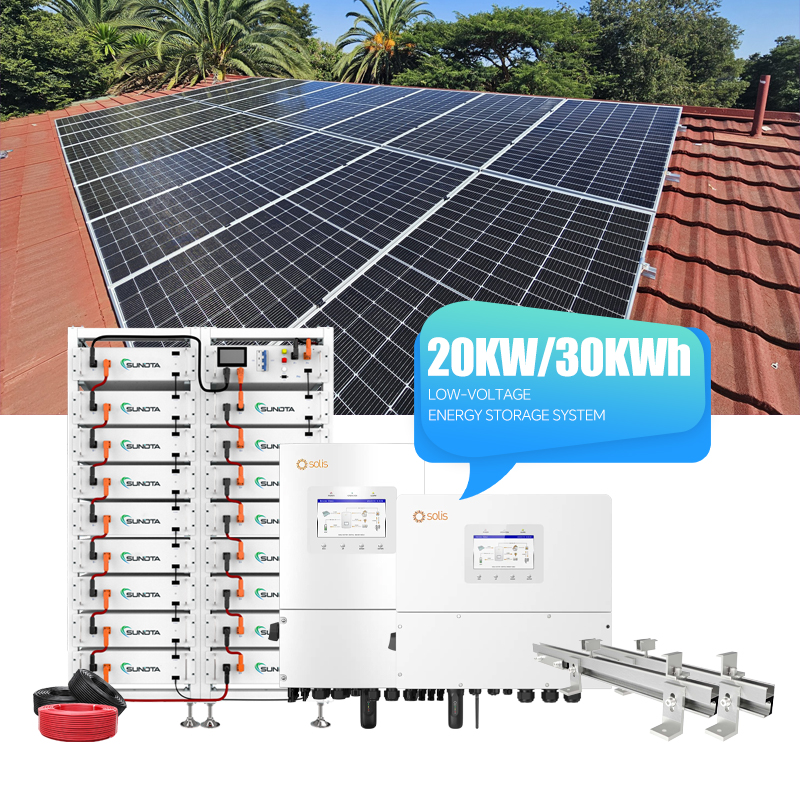
Procurement directors and EPC engineers across Mary are shifting rapidly from piecemeal components to fully integrated matched PV-plus-storage kits. Historical installations suffered from high inverter failure rates caused by open-loop communication protocols between independent battery manufacturers and string inverters. Our certified integration eliminates this vulnerability through native RS485/CAN protocol synchronization.
In addition, municipal development programs in Mary emphasize infrastructure survivability. Standard polymeric module backsheets suffer accelerated UV degradation and mechanical scouring in arid wind corridors. RJV’s dual-glass bifacial modules encapsulate silicon wafers between symmetrical sheets of tempered glass, producing a hermetically sealed barrier impervious to thermal shock, high salinity soils, and dust scouring.
Combining vertically integrated manufacturing depth in Hefei, China, with exhaustive TÜV Rheinland third-party supplier verifications.
Our Hefei production hubs operate under ISO9001/14001 certifications with full on-site supplier assessments by TÜV Rheinland and verified CE conformance.
Backed by 38 national technical patents and 12+ years of dedicated R&D, RJV designs modules and battery packs for unmatched long-term stability.
Eliminate commissioning delays. We calculate inverter MPPT voltage windows, cable gauge dropoffs, and battery CAN handshakes prior to container dispatch.
Direct 24/7 technical advisory desk for string design validation, localized customs documentation, and post-installation firmware monitoring.
Detailed technical, regulatory, and logistics answers addressing procurement, customs, and system installation requirements.
Submit your electrical single-line diagram (SLD), site coordinates, or wholesale bill of materials. RJV’s technical engineering team will deliver a complete, optimized system specification and commercial proforma invoice within 24 business hours.