High-Efficiency BESS & PV Systems for California Contractors
Pre-engineered, modular, and factory-tested commercial and residential hardware ready for containerized shipping to Oakland and Long Beach terminals for prompt dispatch across San Jose and Santa Clara County.
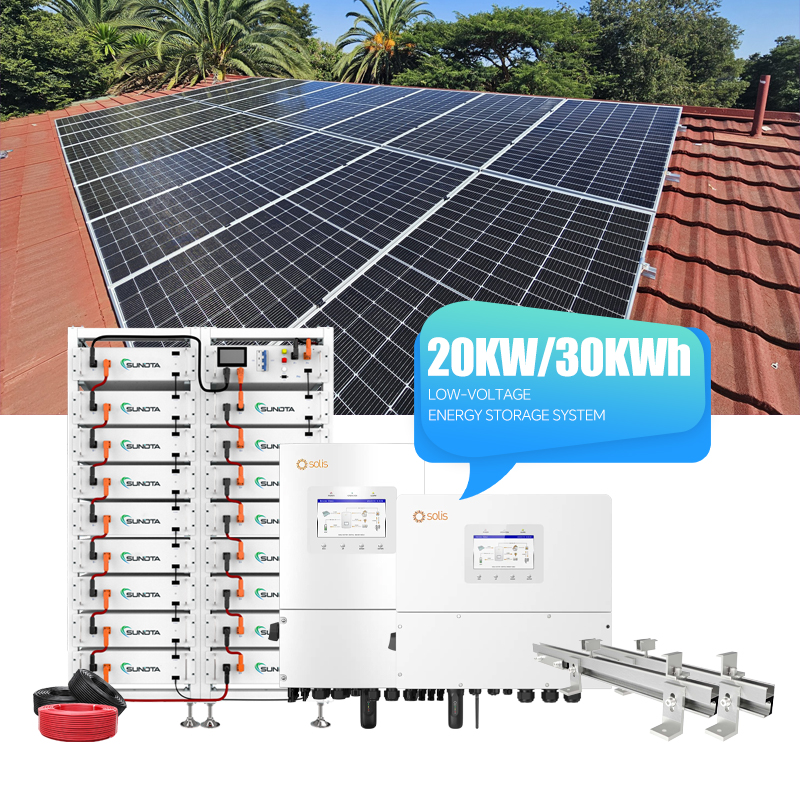
Complete Set of 20kW–35kW Hybrid Solar Energy Storage System Kits
Turnkey package integrating multi-MPPT hybrid conversion with scalable LiFePO4 battery banks for medium commercial demand-shaving in California.
Premium 585W–595W N-Type Bifacial PV Module Tier 1 Power System
Dual-glass bifacial architecture offering up to 25% rear gain, optimized for commercial carports, flat roof ballasts, and ground racking arrays.
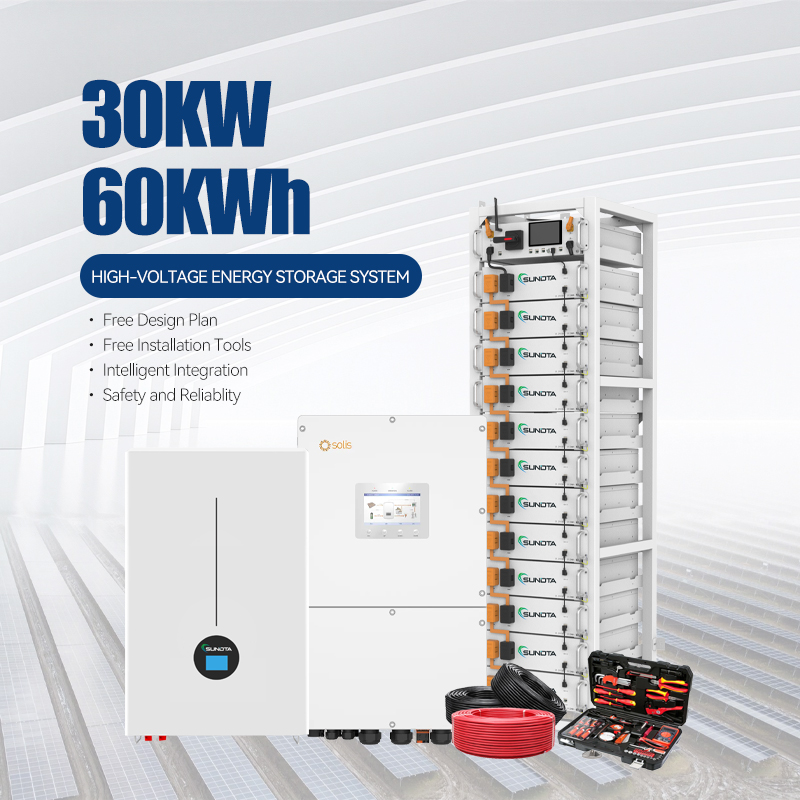
Energy Bank Powerwall 51.2V 314Ah / 200Ah Home & Branch Office Storage
High-density prismatic lithium iron phosphate bank compatible with Solis and Deye inverters for seamless back-office blackout resilience.
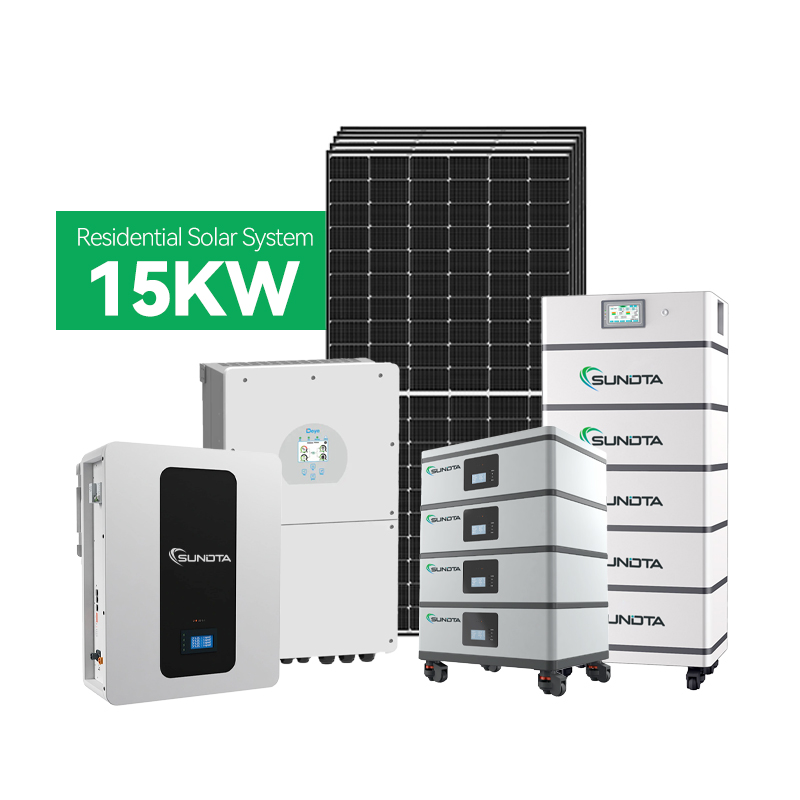
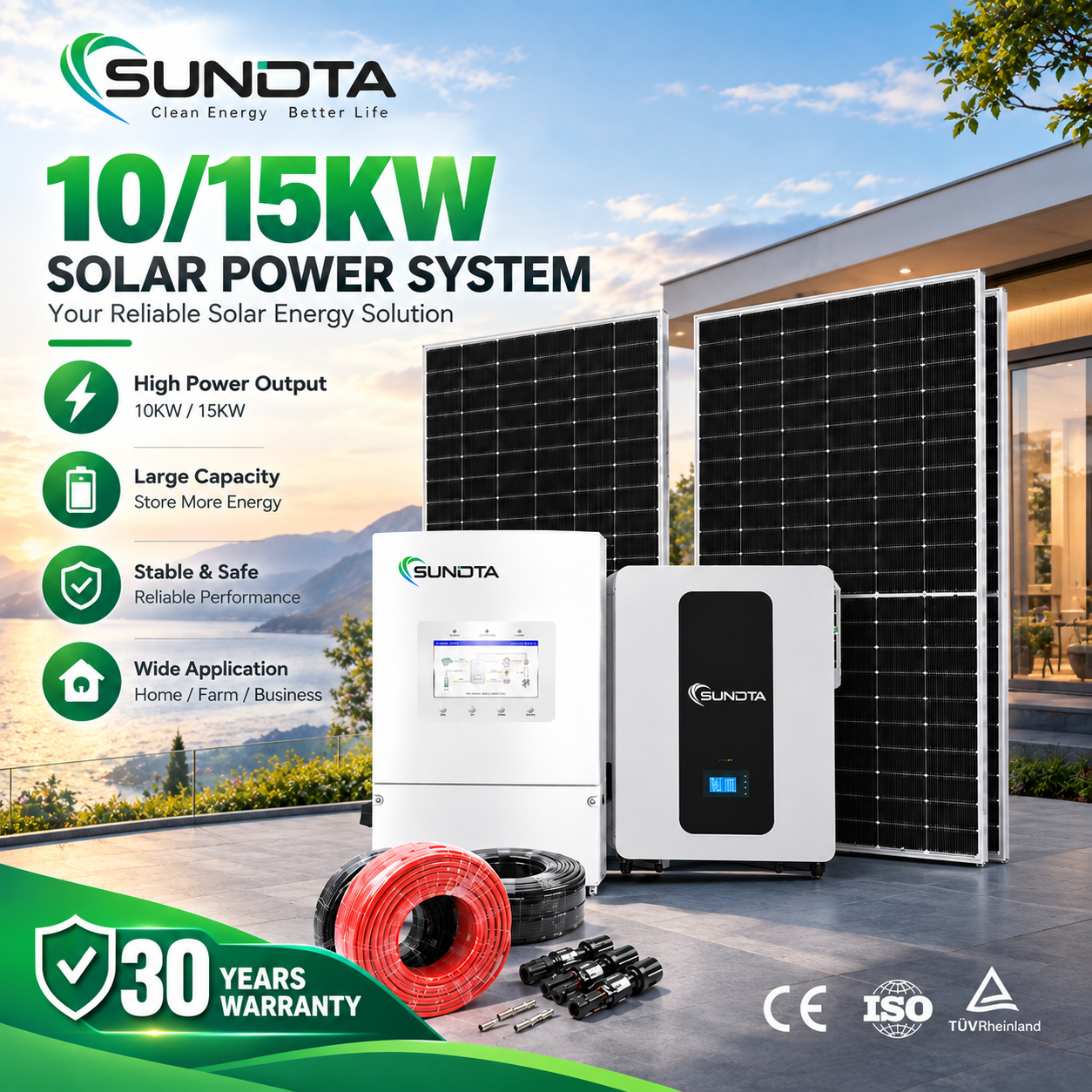
Sundta Hybrid Solar Energy System Kit 5kW–15kW Full Sourced BOM
Matched bill-of-materials engineered for rapid field deployment in suburban businesses, light agricultural setups, and live-work studios.
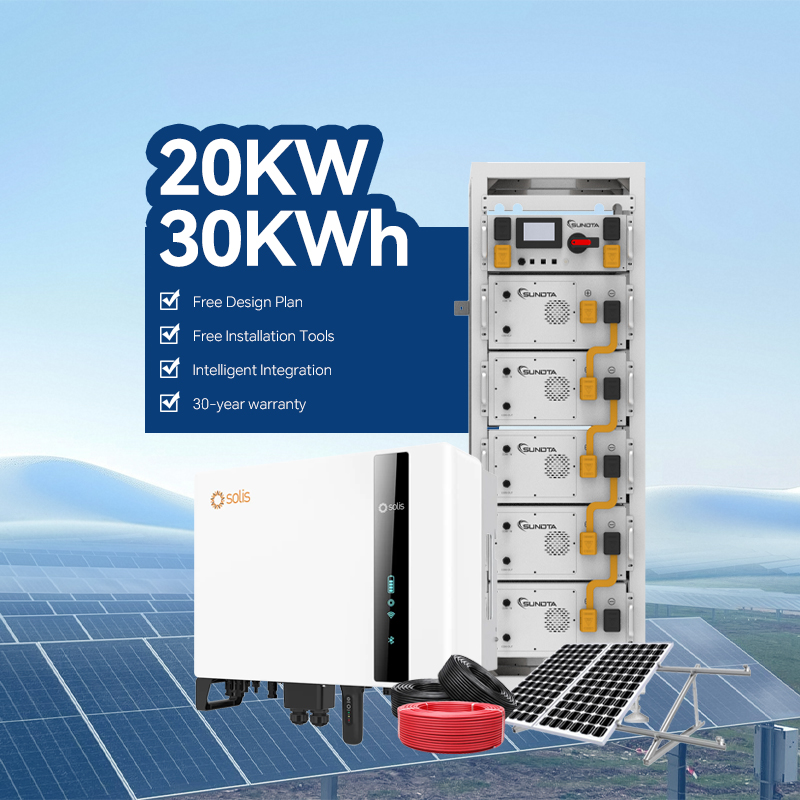
20kW–35kW Complete Set Generation & Battery Storage Generation Kit
Engineered for Silicon Valley machine shops and fabrication hubs requiring steady backup during rolling brownouts and grid stress days.
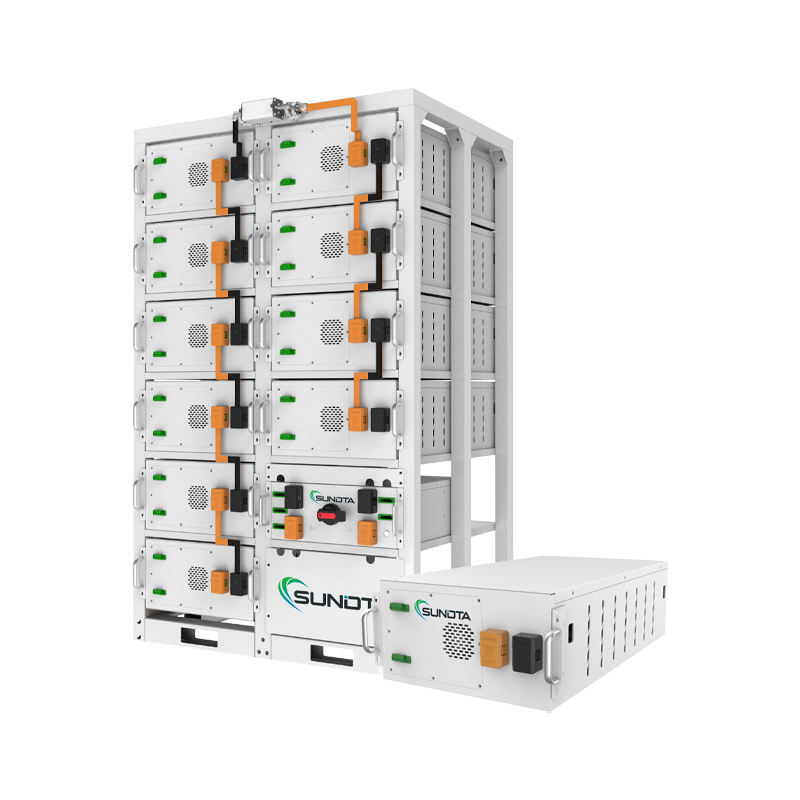
Stackable 51.2V 14.336kWh LiFePO4 Battery with Closed-Loop BMS
Modular form-factor supporting up to 15 units in parallel (over 215kWh), built with Grade-A cells and integrated active thermal equalization.
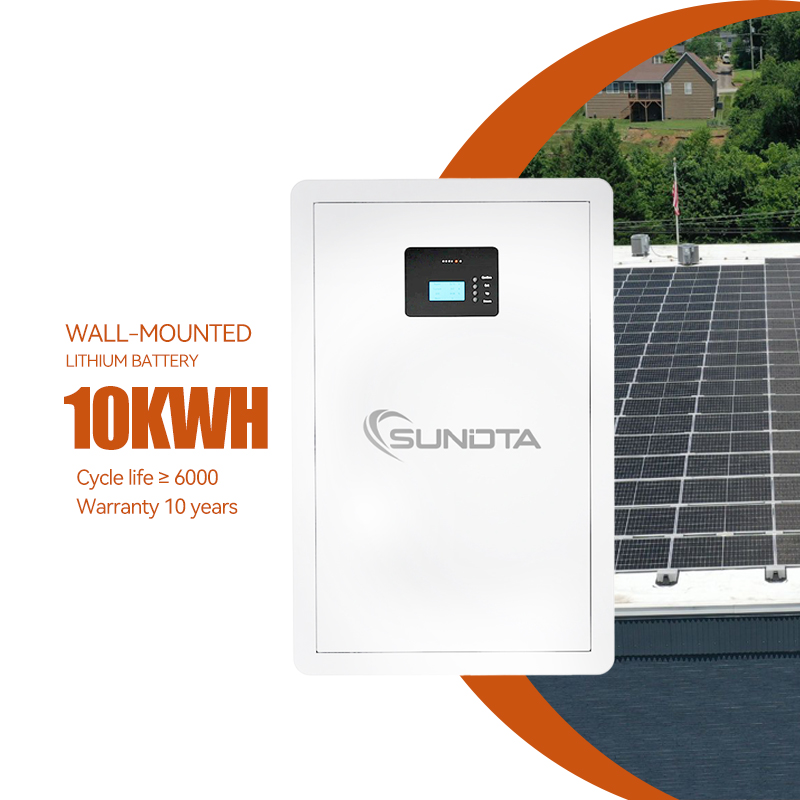
Sundta IP65 10kWh 51.2V 200Ah Wall-Mounted LiFePO4 Battery
Ruggedized weather-resistant casing designed for outdoor perimeter placement in commercial properties where indoor footprint is restricted.
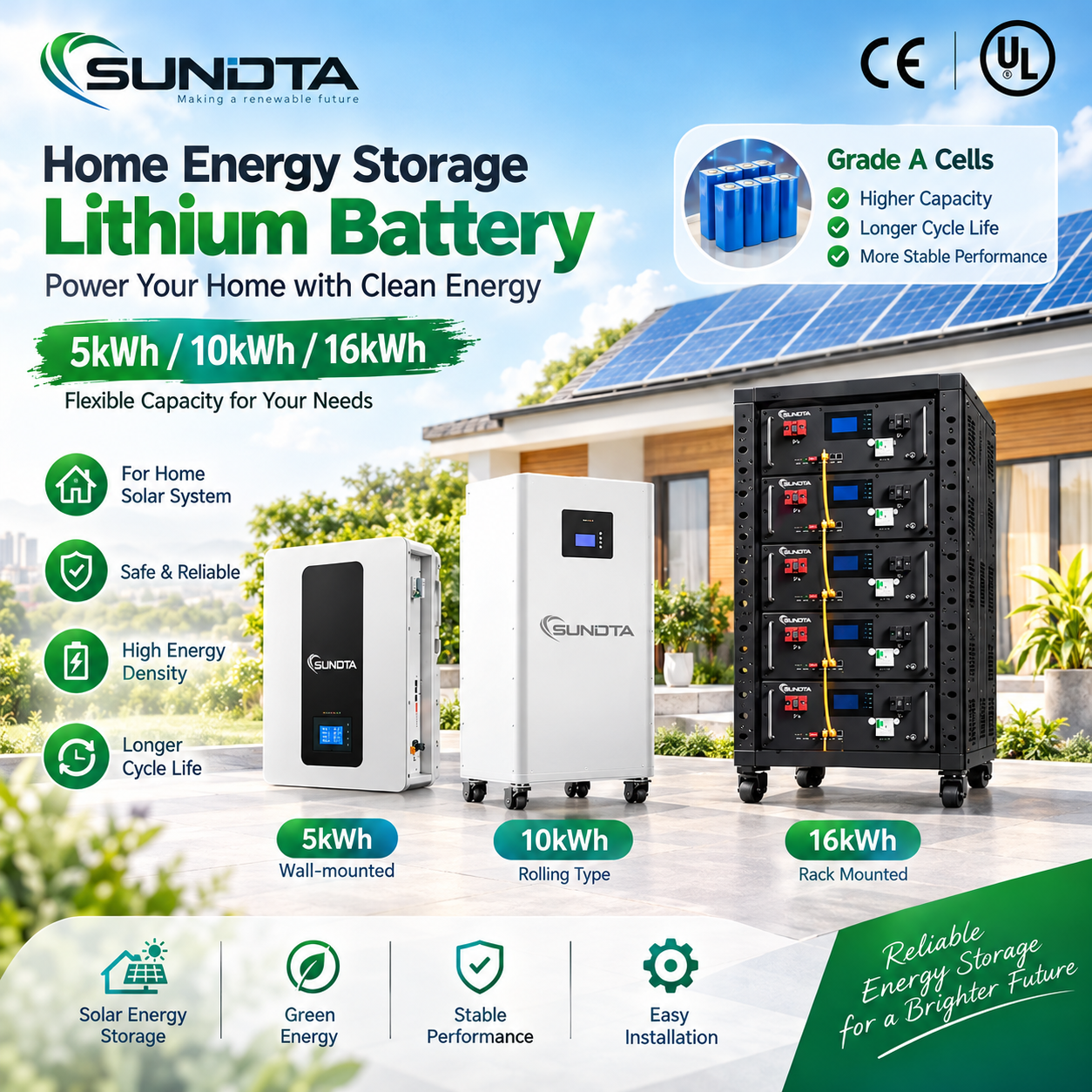
Sundta 51.2V 200Ah 10kWh Commercial & Residential Wall Storage
Compact footprint with automated internal cell disconnect, multi-level overcurrent shields, and remote monitoring integration for fleet managers.
Overcoming High Tariffs and Grid Saturation in San Jose with Containerized BESS
A rigorous engineering perspective on mitigating PG&E commercial demand rates, optimizing CAISO arbitrage, and deploying compliant battery containers under Title 24, NFPA 855, and UL 9540A.
1. The Economic Imperative: PG&E Commercial Rate Structures & NEM 3.0 Realities
Commercial enterprises in San Jose, Santa Clara, and Sunnyvale face some of the steepest electrical power rates in North America. Operating under PG&E Schedule B-19 and Schedule B-20 tariffs, energy costs are bifurcated into volumetric energy fees ($/kWh) and punitive peak demand charges that frequently exceed $35 to $55 per kilowatt per month during summer on-peak windows (4:00 PM to 9:00 PM). A brief fifteen-minute power surge caused by server cooling chillers, precision robotics, or cleanroom HVAC systems can inflate an enterprise's monthly utility bill by tens of thousands of dollars.
Simultaneously, the California Public Utilities Commission (CPUC) transition to the Solar Billing Plan (NEM 3.0) has slashed solar export credits by approximately 75% to 80% compared to legacy net metering. Solar arrays deployed without co-located energy storage yield negligible return on capital when excess generation is dumped back onto the grid during mid-day troughs. For San Jose EPC contractors, electrical engineers, and corporate infrastructure managers, installing a utility-scale 20ft (1MWh–2MWh) or 40ft (2.5MWh–5MWh) BESS Container converts unpredictable grid exposure into a deterministic, dispatchable operational asset.
By leveraging intelligent Energy Management Systems (EMS) programmed with high-frequency peak shaving algorithms, our containerized BESS instantly discharges stored energy when facility power draws cross preset thresholds. The battery system absorbs low-cost, off-peak midday solar generation and exports it to critical facility loads during the peak TOU window, providing an unleveraged simple payback period of 3.8 to 5.2 years across Silicon Valley commercial industrial sites.
2. Containerized Battery Architecture: Thermal, Electrical, and Safety Subsystems
Containerized BESS engineering demands military-grade mechanical integrity, advanced thermodynamic modeling, and failsafe multi-tiered electrical protection. RJV containerized utility platforms are manufactured from certified Corten-A weathering steel, sealed against marine fog and particulate intrusion with an IP55 to IP66 outdoor rating.
At the electrochemical core, our systems avoid unstable high-nickel ternary chemistries in favor of heavy-duty Lithium Iron Phosphate (LiFePO4 / LFP) 280Ah and 314Ah prismatic cells sourced from Tier-1 automated cell manufacturers. These cells feature an intrinsic thermal runaway threshold exceeding 270°C (compared to 150°C for NMC), an operating envelope of 6,000 to 8,000 deep discharge cycles at 0.5C/0.5C duty cycles, and exceptional volumetric energy retention.
| Subsystem Parameter | Standard 20ft C&I BESS Container | High-Capacity 40ft Utility BESS Container | Engineering Advantage for Bay Area EPCs |
|---|---|---|---|
| Rated Nominal Energy | 1,000 kWh – 1,720 kWh | 2,500 kWh – 3,728 kWh (Liquid Cooled) | Modular expansion to match MVA substation interconnections. |
| Battery Chemistry & Cell | Prismatic LFP 3.2V 280Ah / 314Ah | Prismatic LFP 3.2V 314Ah Ultra-Dense | Intrinsic thermal stability; zero cobalt; ethical supply chain. |
| Thermal Management | Industrial Inverter HVAC / Liquid Chiller | Closed-loop Liquid Cold-Plate Glycol Circuit | Maintains internal cell-to-cell delta ≤ 2.5°C; elongates calendar life. |
| PCS Conversion Efficiency | ≥ 98.8% bidirectional (Deye/Solis/Growatt) | ≥ 99.0% central multi-megawatt PCS | Ultra-low round-trip conversion losses (AC-DC-AC > 88%). |
| Fire Safety Integration | NFPA 855 / Aerosol + Water Deluge Mist | NFPA 855 / Novec 1230 + Deflagration Panels | Rapid gas detection (CO, H2) with automatic module-level isolation. |
Mission-Critical Use Cases Across Santa Clara County
From San Jose's tech campuses to industrial cold storage and high-speed EV fleet logistics, our BESS platforms provide unyielding energy security and economic agility.
Data Center & Colocation Backup
Silicon Valley is the world capital of computing. While diesel backup generators suffer from high emissions and slow response times, RJV containerized BESS delivers sub-10ms microsecond switching. Acting as a solid-state dynamic UPS, it shields hyperscale servers and AI training clusters from grid frequency sags, harmonics, and sudden substation trips.
Commercial EV Fleet Charging Hubs
Deploying banks of 150kW to 350kW DC Fast Chargers for commercial delivery vans and corporate shuttles inevitably triggers utility service upgrade delays of 18 to 36 months from PG&E. An onsite 1MWh BESS acts as a power buffer, trickle-charging from solar or low-cost grid power and discharging high-amperage bursts into vehicles without overloading local transformers.
Semiconductor & Cleanroom Resilience
Fabrication plants and precision biotechnology labs along the Highway 237 and I-880 corridors cannot tolerate even transient voltage dropouts without scrapping million-dollar production batches. Our three-phase hybrid architectures, paired with N-type bifacial rooftop solar, furnish continuous clean sine-wave electricity during California Public Safety Power Shutoff (PSPS) events.
Navigating California Interconnection, Safety Codes & Subsidies
San Jose municipal authorities and local building departments mandate uncompromising compliance. Here is how our engineering aligns with state and regional frameworks.
UL 9540, UL 9540A & NFPA 855 Fire Codes
The San Jose Fire Department (SJFD) stringently enforces fire separation and gas deflagration venting. RJV BESS containers are designed with pre-tested UL 9540A large-scale fire propagation documentation, integrated aerosol/water suppression systems, gas monitoring manifolds (CO, CH4, H2), and roof deflagration relief panels to streamline city building and safety approvals.
CPUC Rule 21 & IEEE 1547-2018 Interconnection
Grid-connected power conversion systems (PCS) must interface cleanly with PG&E's distribution network. Our matching Deye, Solis, and tier-one central inverters come pre-loaded with Rule 21 certified smart inverter firmware—providing autonomous Volt-VAR curves, Frequency-Watt droop responses, dynamic anti-islanding, and encrypted SunSpec Modbus communication.
Leveraging IRA Section 48 ITC & California SGIP
Under the federal Inflation Reduction Act (IRA), standalone and solar-paired commercial energy storage qualifies for an Investment Tax Credit (ITC) of 30% to 50% (including prevailing wage and domestic content adders). Coupled with California's Self-Generation Incentive Program (SGIP) rebates, system payback drops significantly, creating unprecedented ROI for capital projects.
Why Tier-1 EPCs and Commercial Importers Rely on RJV
Eliminate distributor markups and fragmented sourcing. We deliver full-stack solar modules, hybrid power inverters, and containerized battery systems from a single audited production base.
2GW Automated Manufacturing
Our Hefei production center utilizes automated robot assembly, inline EL inspection, and digital flash testers. Over 12 years of specialized PV and ESS fabrication guarantees repeatable cell grading and pack balance.
TÜV Rheinland Inspected
Operations and quality management workflows have been thoroughly verified on-site by TÜV Rheinland. We back our products with 38 invention and utility patents, an AAA corporate credit rating, and comprehensive CE marking.
Protocol Pre-Integration
No field-level communication mismatch surprises. Our high-voltage BMS and Powerwall packs are pre-flashed for closed-loop CAN/RS485 communication with Deye, Solis, Growatt, and Schneider inverters prior to ocean export.
Dedicated Engineering Desk
We provide 24/7 technical sizing, string calculation, single-line diagram (SLD) preparation, and remote firmware commissioning across Pacific Standard Time (PST), ensuring uninterrupted job-site progress.
Commercial Energy Storage Procurement: Practical Inquiries
Straightforward technical answers regarding logistics, customs tariffs, UL safety documentation, and operational integration for California project managers.
How are import customs duties, Section 301 tariffs, and ocean freight to the Port of Oakland handled?
What specific UL documentation is provided to satisfy the San Jose Fire Department and local building plan reviewers?
How does RJV ensure closed-loop communication between BESS battery stacks and hybrid inverters?
What is the expected cycle life, degradation rate, and warranty support for California's daily cycling conditions?
Can RJV supply mixed-container shipments combining bifacial solar panels, hybrid inverters, and battery storage?
Accelerate Your Commercial BESS & Solar Pipeline in San Jose
Connect directly with our senior application engineering team in Hefei. Send us your project load curve, single-line diagram (SLD), or target container specification, and receive an engineered BOM configuration, compliance dossier, and factory-direct quotation within 24 hours.
Contact Us