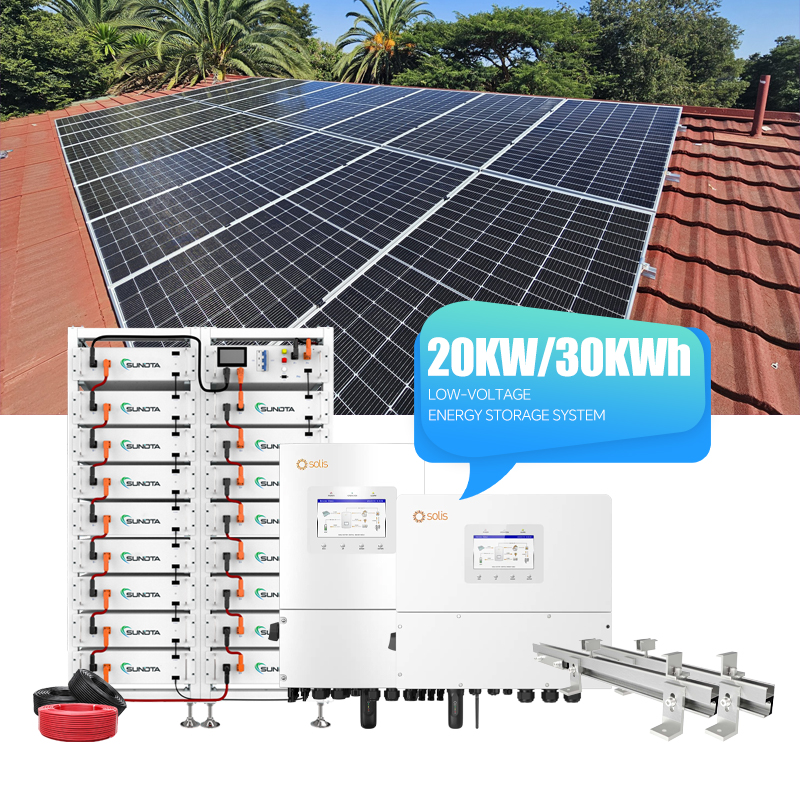
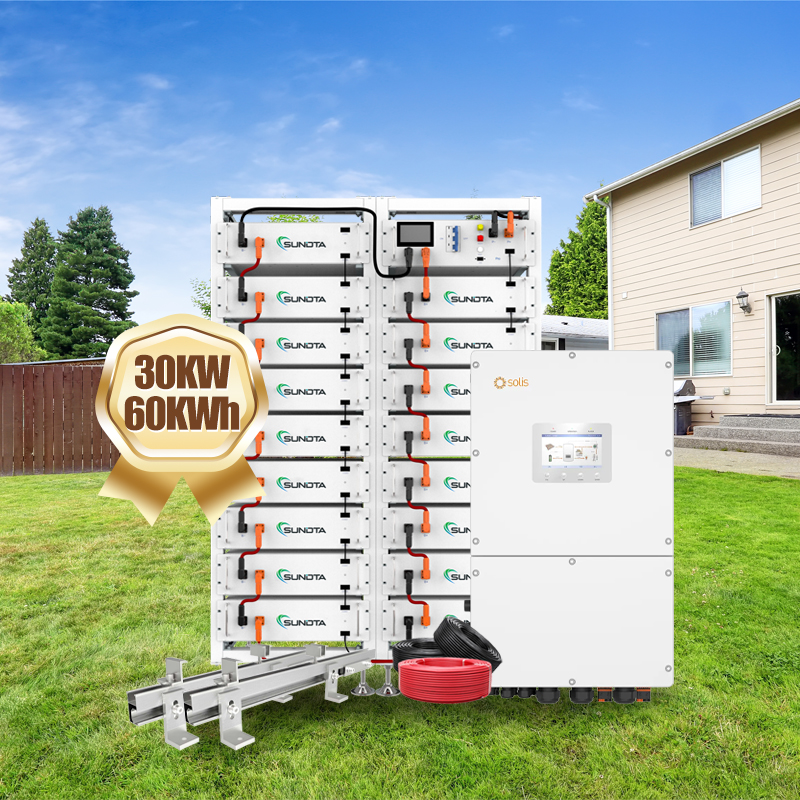
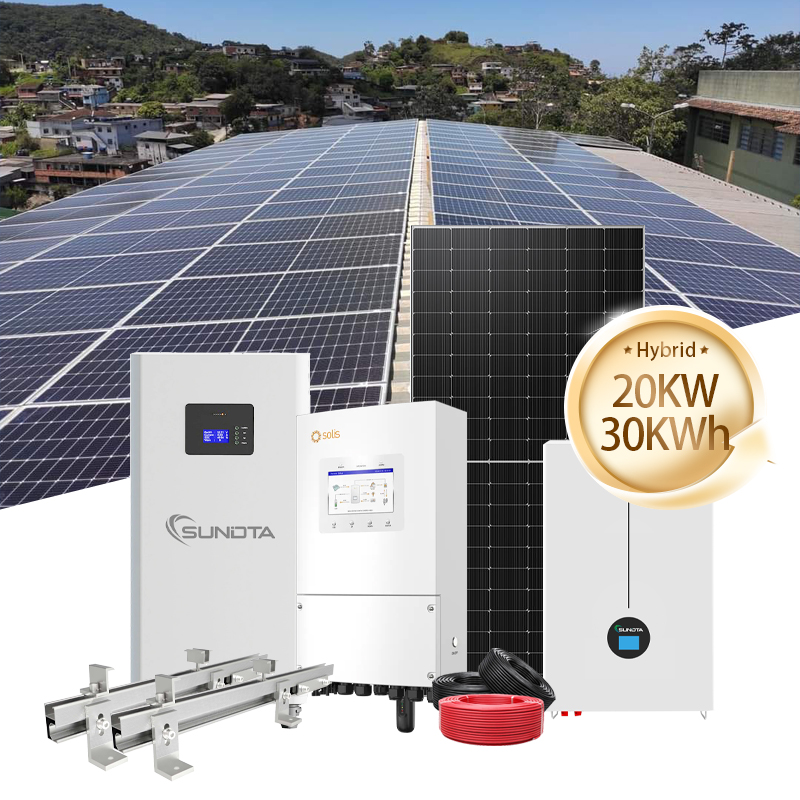
Complete Set 20kW–35kW Hybrid Solar Storage System
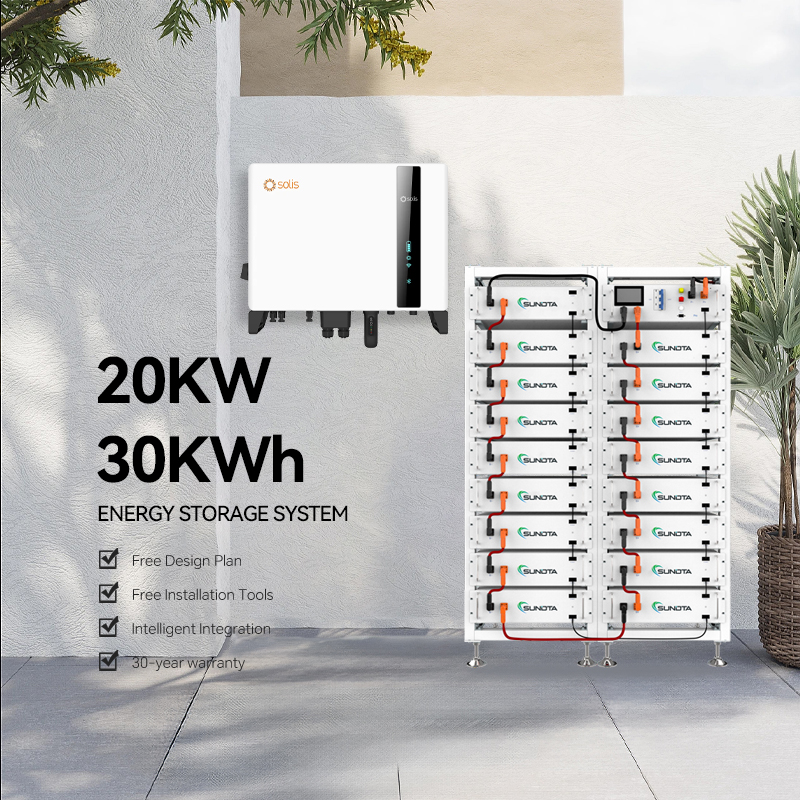
- Capacities: 20kW, 25kW, 30kW, 35kW
- Dual MPPT Hybrid Inverter Unit
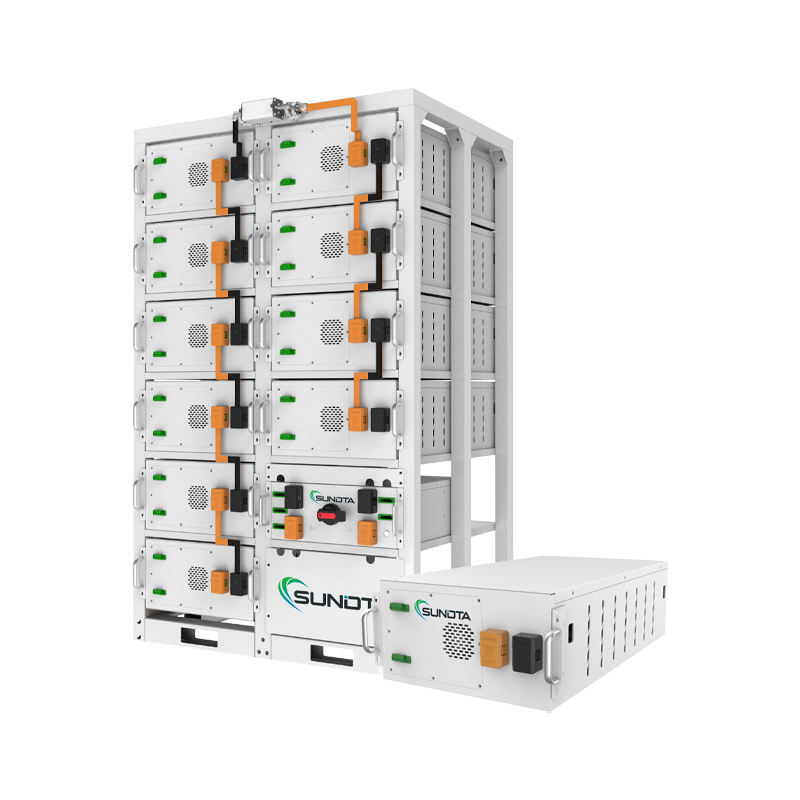
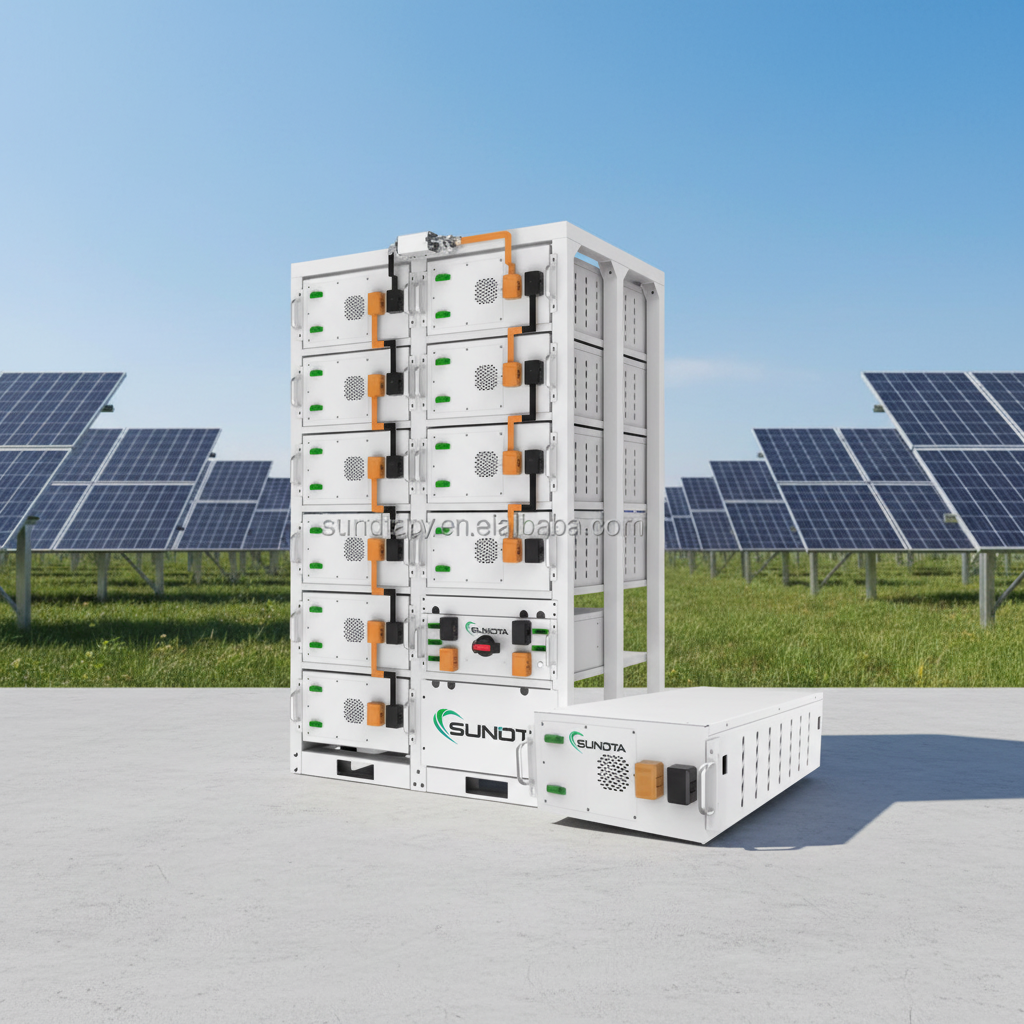
- LiFePO4 Modular Rack Battery System
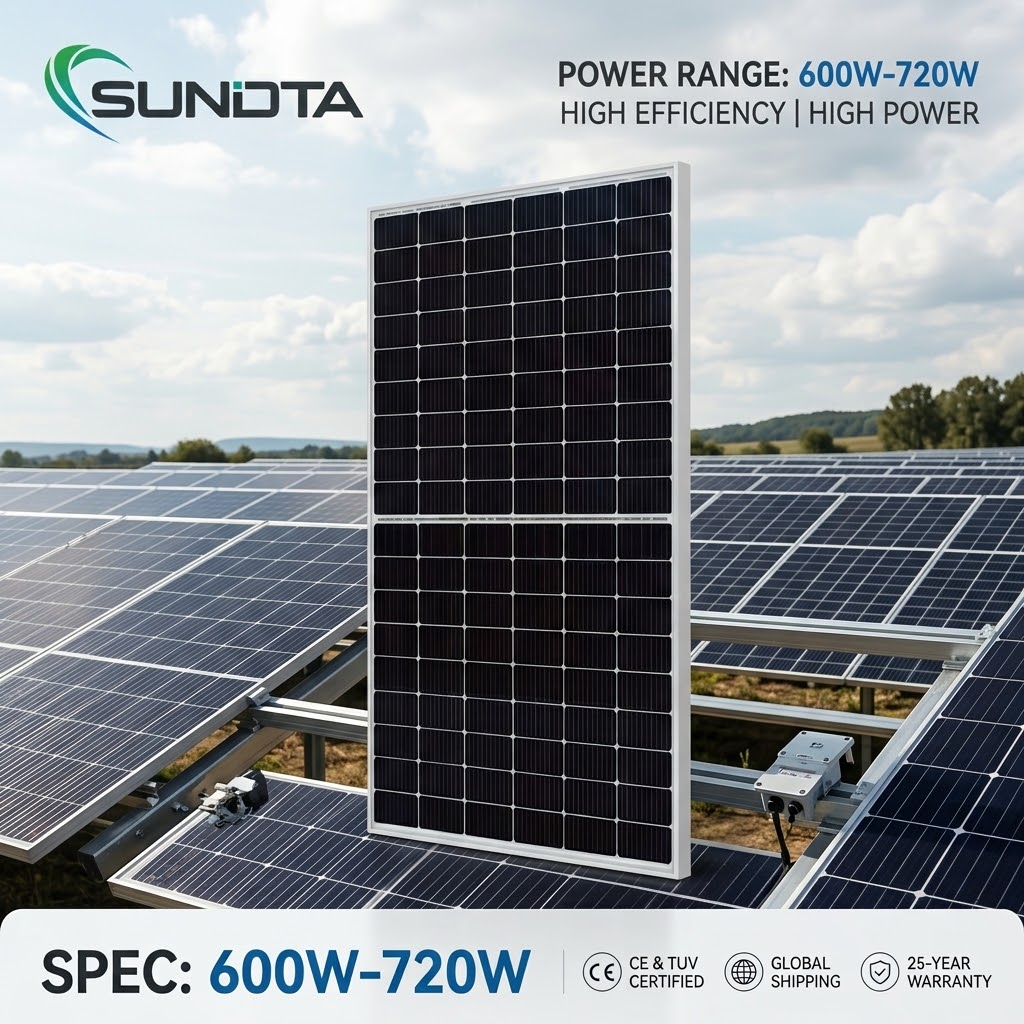
Factory-integrated high-voltage energy storage architectures, bi-directional commercial inverters, and tier-1 photovoltaic panels verified for uninterrupted Caribbean operational resilience.
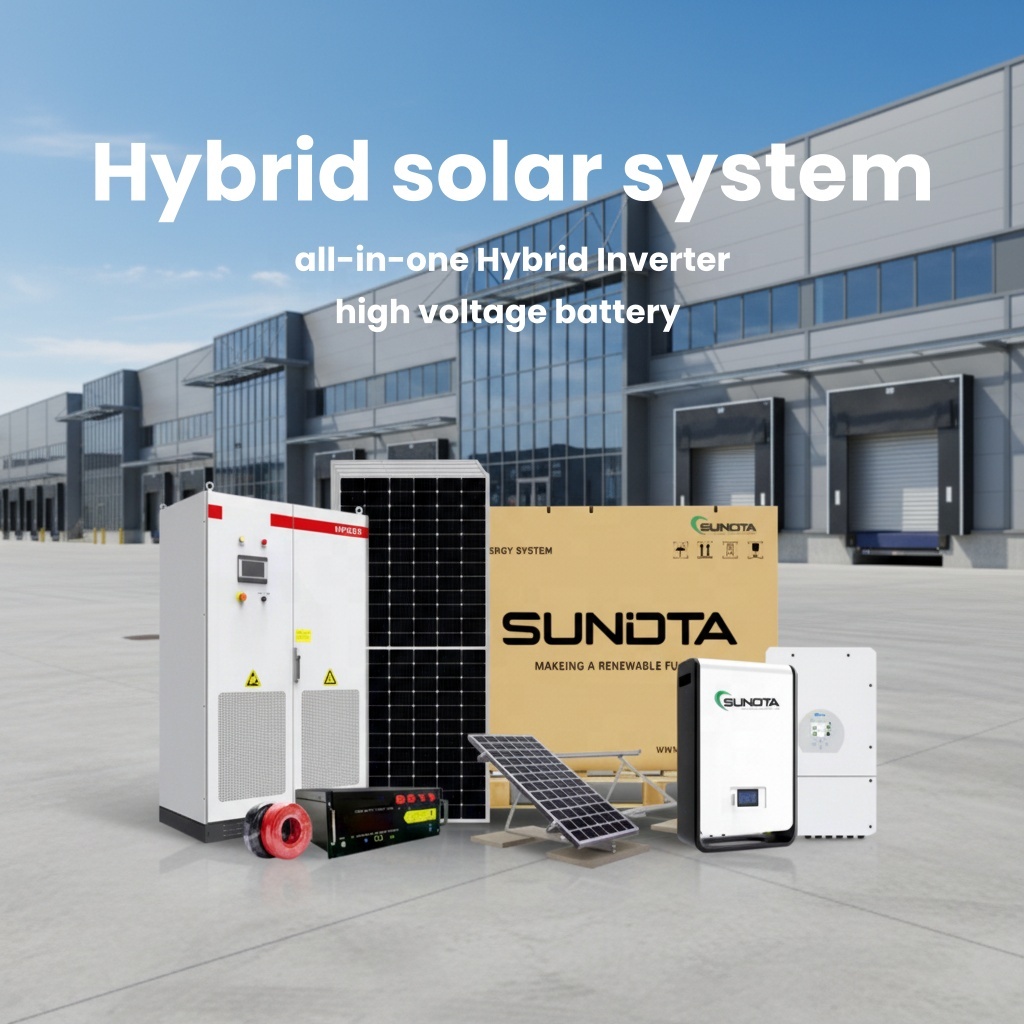
Deploying high-voltage energy storage systems across the Havana metropolitan corridor requires rigorous technical adaptations to withstand localized grid vulnerabilities, frequent brownouts, high ambient humidity, and airborne marine salinity.
Industrial processing facilities and manufacturing assembly plants operating inside ZEDM require sustained power quality without micro-interruptions. High-voltage (HV) battery systems operating between 400V and 800V DC deliver direct coupling to industrial PCS units, eliminating the excessive transformer losses inherent to low-voltage systems. Our outdoor modular cabinets supply high discharge C-rates to eliminate voltage sags during machinery line start-ups and peak grid tariff intervals.
Havana’s premier colonial boutique hotels, coastal resort compounds, and diplomatic headquarters require zero-downtime backup during recurring national electric system (SEN) load-shedding cycles. Replacing deafening, diesel-guzzling generator plants with silent 50kW–100kW/200kWh LiFePO4 outdoor energy storage enclosures guarantees under-10ms automatic transfer switching (ATS). This ensures uninterrupted air conditioning, industrial refrigeration, and digital guest services without exhaust or noise.
Pharmaceutical storehouses, municipal water pumping substations, and blood-bank cold chains in Playa and Miramar cannot endure prolonged thermal deviations. RJV’s high-voltage stackable ESS platforms integrate dual-loop BMS controllers that interface directly with onsite diesel gen-sets and solar PV arrays, executing automated black-start protocols to maintain closed-loop refrigeration for days during protracted grid collapse scenarios.
A direct technical comparison highlighting why regional commercial enterprises are converting to high-voltage battery architecture to reduce round-trip conversion losses and balance-of-system cabling expenditures.
| System Metric | Standard Low Voltage (48V / 51.2V) | High Voltage ESS (200V - 800V DC) | Impact on Havana Industrial Users |
|---|---|---|---|
| Operating DC Current | Extreme (Approx. 200A per 10kW load) | Nominal (<25A per 10kW load) | Minimizes Joule heating losses during intense tropical ambient temperatures. |
| DC Copper Cable Sizing | Heavy cross-section (70mm² – 120mm²) | Compact cross-section (10mm² – 16mm²) | Reduces copper procurement costs by up to 68% amidst regional logistics constraints. |
| Round-Trip Efficiency (RTE) | 88.0% – 91.5% (Multi-stage boost) | 95.5% – 97.2% (Direct DC-bus match) | Maximizes usable kWh from solar panels, minimizing wasted energy in peak daylight. |
| Scalability & Footprint | High parallel busbar complexity | Series rack expansion, minimal footprint | Crucial for dense architectural sites across Old Havana where floor space is limited. |
| Grid Re-synchronization | Slow transition via intermediary DC-DC | Ultra-fast PCS coupling (<4ms to <10ms) | Prevents voltage blips from resetting sensitive CNC machines and server clusters. |
Key structural transitions transforming private industrial energy self-sufficiency, public utility tenders, and supply-chain logistics across the Greater Antilles.
Traditional OPzS, OPzV, and gel lead-acid systems are reaching the end of their viable lifespans across Cuba due to acute sensitivity to high ambient temperatures, frequent acid leakages, and rapid sulfation below 50% DoD. High-voltage prismatic lithium iron phosphate (LiFePO4) chemistry has emerged as the definitive benchmark, supporting over 6,000 cycles at 90% depth of discharge with zero venting risk or recurring fluid maintenance.
The modernization roadmap of Cuba’s National Electric System favors decentralized distributed generation (DG). Rather than depending entirely on aging thermoelectric power centers, commercial enterprises, food processing clusters, and health complexes are pairing rooftop bifacial PERC/TOPCon solar arrays with 100kWh–500kWh battery storage cabinets to form fully islandable microgrids capable of independent continuous operation.
Havana’s coastal strip—running along the Malecón, Vedado, and Miramar—is characterized by intensive marine atmospheric salinity. Standard energy storage enclosures degrade rapidly within 24 months. Modern procurement contracts now mandate C5-M anti-corrosion cabinet coatings, hermetically sealed IP55/IP66 enclosure ratings, and gold-plated PCB conformal coatings to secure an operational equipment life cycle spanning beyond 15 years.
Anhui RJV New Energy Co., Ltd. delivers full-lifecycle manufacturing capabilities, factory-matched PV and storage integration, and stringent international testing standards to de-risk high-capital energy projects.
Headquartered in Hefei’s Innovation Industrial Park, RJV runs fully automated module and battery integration lines. With over 12 years of specialized PV and ESS production experience, each unit delivers strict cell-to-cell thermal consistency and uniform internal resistance.
Our manufacturing and quality-control systems hold on-site audit verification by TÜV Rheinland. Every product line carries CE, IEC 61215, IEC 61730, and UN38.3 battery transport certifications, streamlining customs clearance and regulatory validation.
We eliminate commissioning delays on site. Inverter MPPT windows, battery BMS communication protocols (CAN/RS485), and breaker coordination curves for Deye, Solis, and proprietary RJV units are integrated and bench-tested prior to ocean container loading.
From initial string voltage calculations and short-circuit current modeling to remote firmware updates and warranty claims management, our multilingual engineering team supports projects across global time zones.
Critical technical, regulatory, and logistics answers addressing procurement manager and solar engineer considerations when importing high-voltage battery storage into Cuba.
From initial load analysis to on-site commissioning, our engineering methodology ensures seamless, code-compliant equipment integration.
Analysis of real hourly consumption curves, inrush inductive surges, and expected backup autonomy hours during grid outages.
Matching PV string voltages to PCS input channels, selecting battery voltage tiers (400V–800V), and planning generator automation.
Full-load cell balancing, BMS firmware flashing, and inverter protocol pairing under controlled ambient test cycles before dispatch.
Secure maritime DG packaging, container stuffing with desiccant protection, and delivery to Port of Mariel under CIF/CFR terms.
Remote engineer-led verification of string polarity, communication bus addressing, grid sync parameters, and live transfer testing.
Connect directly with our energy storage project engineers. We provide detailed system single-line diagrams (SLD), component compatibility matrices, and landed freight estimates for your project in Cuba within one business day.