Off Grid System Manufacturers & Supplier serving Heredia
Delivering high-capacity N-Type TOPCon bifacial modules, intelligent hybrid/off-grid inverters, and IP65 LiFePO4 battery energy storage systems engineered for the unique microclimates of Heredia and Costa Rica.
Engineered Off-Grid & Hybrid Inventory
Verified Power Systems for Engineering Contractors & Agribusiness in Heredia
Precision-matched solar panels, hybrid charge-inverter platforms, and modular lithium iron phosphate (LiFePO4) storage ready for containerized delivery to Caldera and Moín ports.
Engineering Off-Grid Resilience in Heredia: Topographical & Grid Dynamics
The Province of Heredia, extending from the densely populated Central Valley (Valle Central) through the volcanic mountain ridges of Barva and down into the tropical lowlands of Sarapiquí, occupies an intricate microclimatic profile in Costa Rica. While the national electrical grid administered by the Instituto Costarricense de Electricidad (ICE) and the local distributor Empresa de Servicios Públicos de Heredia (ESPH) boasts a clean generation matrix predominantly derived from hydro, geothermal, and wind resources, grid reliance presents severe operational challenges for commercial agribusiness, mountain eco-resorts, and light industrial facilities across the province.
During the heavy tropical wet season (May to November), high-altitude precipitation and atmospheric lightning strikes frequently trigger voltage sags, brownouts, and extended distribution-line interruptions along rural radial feeds. In mountainous zones such as San Rafael, San Isidro, and the slopes of Monte de la Cruz, grid maintenance crews often encounter washouts and inaccessible terrain, leaving critical loads stranded. Conversely, in northern Heredia's Sarapiquí basin, expansive plantation operations, processing facilities, and eco-tourism lodges face either absent three-phase power lines or exorbitant grid-extension tariffs.
Information Gain Insight: Off-grid engineering in Heredia demands more than standard PV calculations. Systems must be engineered for high relative humidity (>85% RH), severe diurnal thermal shifts between 1,200m and 2,000m elevations, and extreme cloud-edge diffuse irradiance during prolonged afternoon storms. Deploying Tier-1 N-Type TOPCon bifacial modules coupled with high-surge, multi-MPPT inverters and IP65-rated LiFePO4 storage establishes an autonomous energy architecture that outlasts utility volatility while eliminating diesel fuel logistics.
As a seasoned solar manufacturer and integration specialist, Anhui RJV New Energy Co., Ltd. supplies EPC contractors, project developers, and industrial operators in Heredia with precision-engineered off-grid and hybrid photovoltaic systems. From 5kW residential off-grid systems in Barva to 50kW–100kW agricultural microgrids in Sarapiquí, our solutions harmonize generation, power conversion, and electrochemical storage into unified, pre-commissioned kits.
Localized Application Scenarios Across Heredia Province
To maximize return on capital expenditure and ensure fail-safe autonomy, off-grid equipment must be selected to match specific environmental stressors and load characteristics inherent to Heredia's economic sectors.
Coffee Beneficios & Wet Mills (Barva & Santa Bárbara)
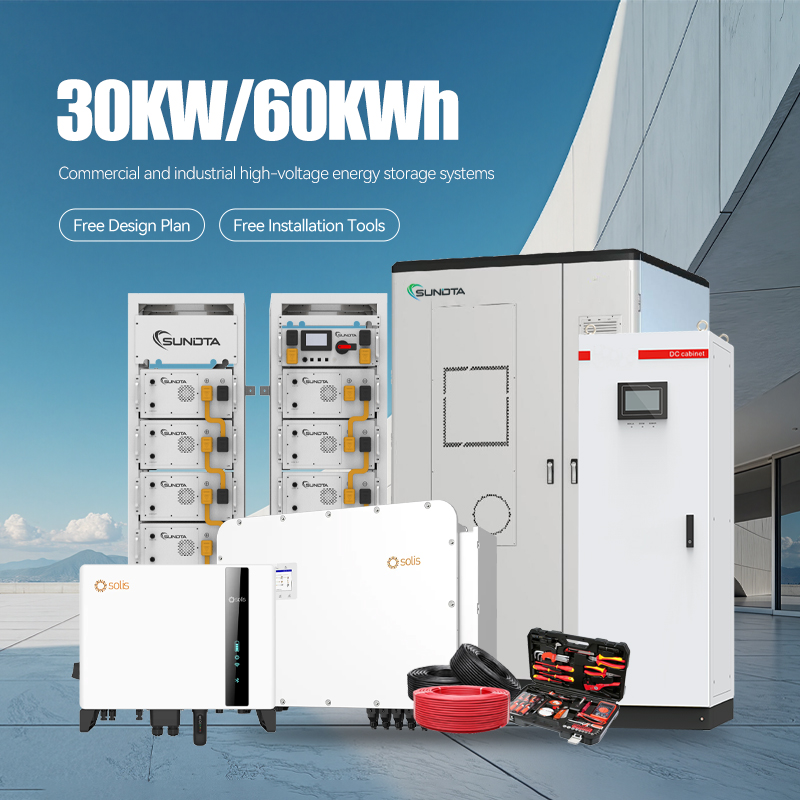
Processing wet-mill coffee cherries requires heavy inductive motors for depulpers, mechanical sorters, and aeration blowers operating under seasonal 24-hour schedules. Our 30kW to 50kW three-phase hybrid off-grid systems incorporate Deye power electronics engineered with 2x surge tolerances to start heavy induction motors without line collapse, supplemented by 314Ah LiFePO4 storage banks that sustain round-the-clock drying kilns and wastewater recovery pumps.
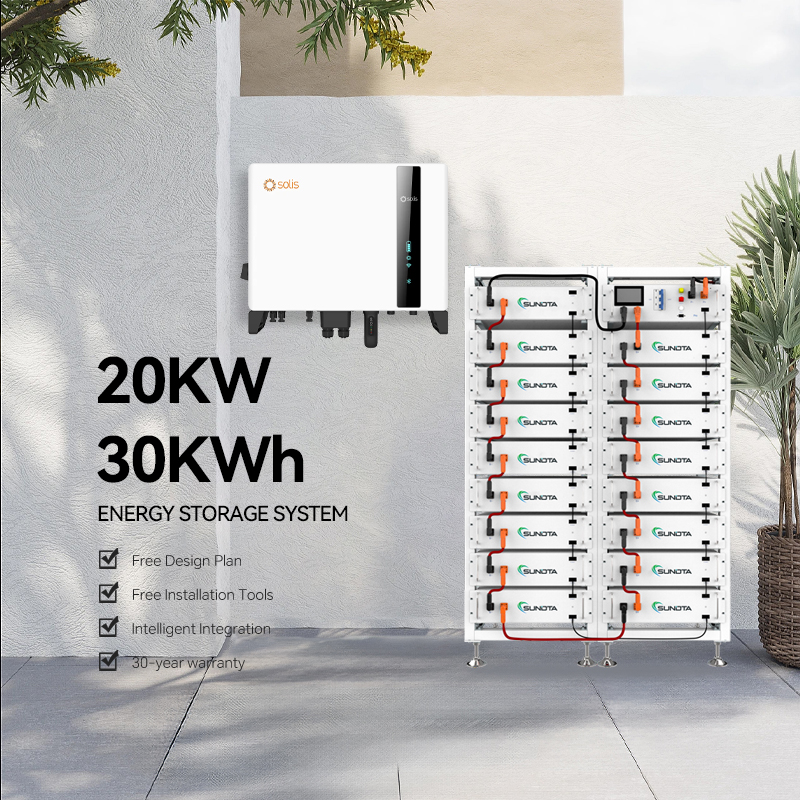
Eco-resorts nestled along the Sarapiquí and Puerto Viejo rivers operate under strict acoustic and environmental stewardship mandates where diesel generator noise and exhaust are impermissible. In these high-temperature, high-humidity rain forests, our N-Type bifacial panels capture intense albedo reflection from moist surrounding vegetation, while modular stacked 10kWh–30kWh battery cabinets with C-rate optimization supply uncompromised silent power for refrigeration, Wi-Fi, HVAC, and water treatment systems.
Industrial Parks & FTZ Logistics (San Joaquín & Heredia)
Facilities located in Heredia's Free Trade Zones (Zonas Francas) frequently process sensitive medical devices, semiconductor assemblies, or high-throughput cold storage. Even momentary grid flickers cause six-figure product losses. RJV's hybrid battery storage configurations bridge utility drops with sub-10ms automatic switching, enabling peak-shaving during ESPH high-tariff peak demand windows (Bloque de Punta) while delivering pristine sine-wave stability.
Remote Agribusiness & Livestock Farms (Horquetas & La Virgen)
Pineapple, cacao, and dairy farms across northern Heredia require autonomous power for automated milking carousels, cold chillers, and deep-well submersible irrigation pumps. RJV supplies robust 15kW to 35kW off-grid kits configured with wide MPPT voltage windows (150V–850V) that operate reliably under dense morning overcast, preventing milk spoilage and keeping automated harvesting equipment fully charged.
Technical Deep-Dive: PV Module, Inverter, and Storage Engineering
System designers and electrical engineers in Costa Rica must account for specific physical phenomena when specifying balance-of-system (BOS) components. Equipment engineered for temperate zones often suffers rapid premature degradation when exposed to Heredia's solar UV index (11+) combined with equatorial rainfall.
1. N-Type TOPCon Dual-Glass vs. Conventional P-Type PERC
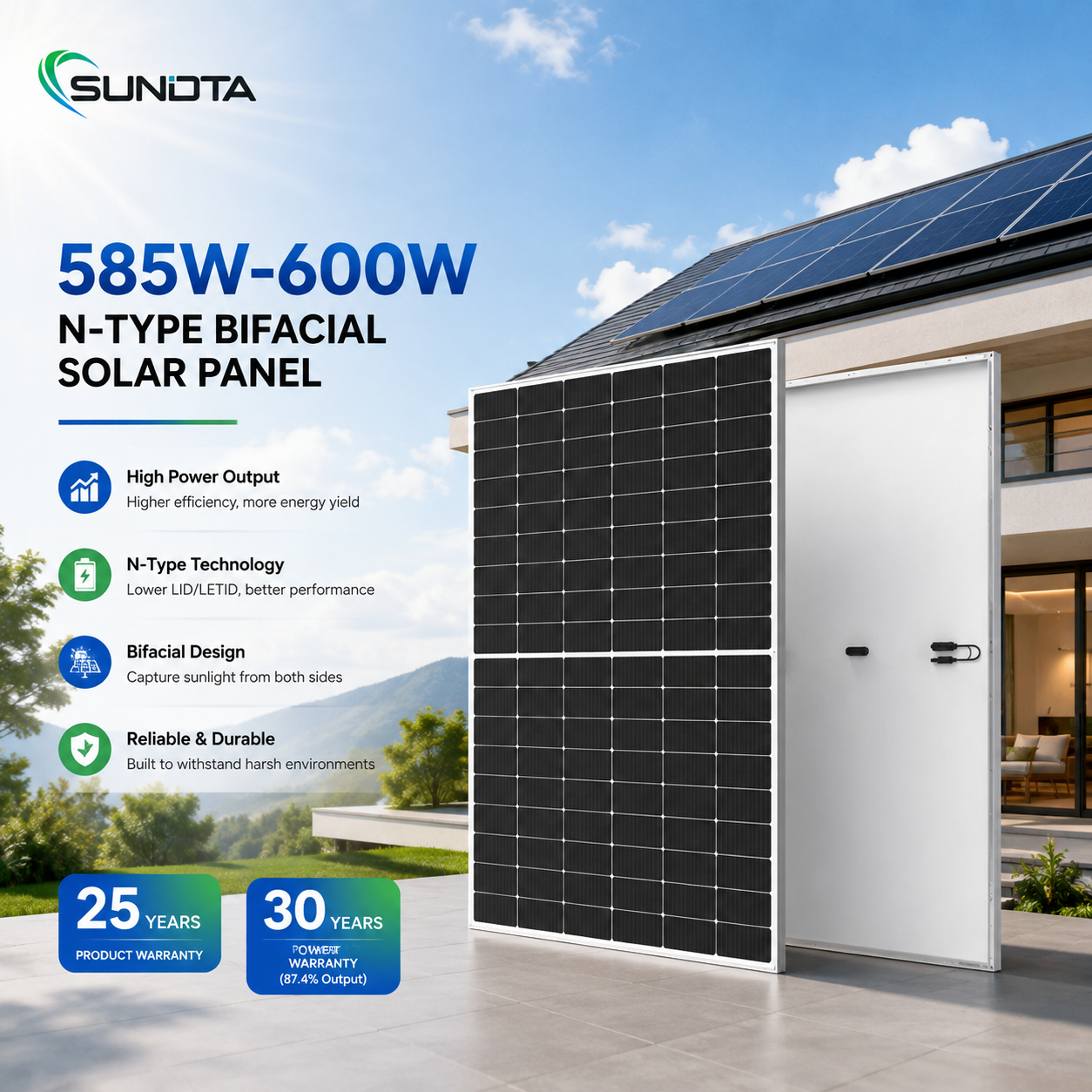
Standard P-Type PERC modules demonstrate elevated temperature power degradation coefficients (-0.35% to -0.38%/°C) and susceptibility to Light and Elevated Temperature Induced Degradation (LeTID). In Heredia's central plateau, rooftop module operating temperatures regularly surpass 55°C during dry season noons. RJV's 585W–595W N-Type TOPCon modules feature an ultra-low temperature coefficient of -0.30%/°C and 80%±5% bifaciality. The 2.0mm+2.0mm dual-glass encapsulation creates an impervious barrier against ambient water vapor intrusion, mitigating potential-induced degradation (PID) and snail-trail microcracking.
2. Power Conversion Topologies: Split-Phase 120V/240V vs. Three-Phase 208V/480V
Residential and light agricultural applications in Heredia primarily interface with American standard 120V/240V split-phase wiring, whereas commercial farms and industrial operations rely on three-phase 208V or 480V systems. RJV provides pre-configured hybrid inverters tailored specifically for split-phase utility architectures, eliminating the need for inefficient external autotransformers that introduce idle core losses. Our multi-phase hybrid inverters (Deye and Solis architectures) support up to 100% unbalanced load output, meaning an overloaded single phase will not cause inverter trip faults—a critical requirement for uneven agricultural workshop circuitry.
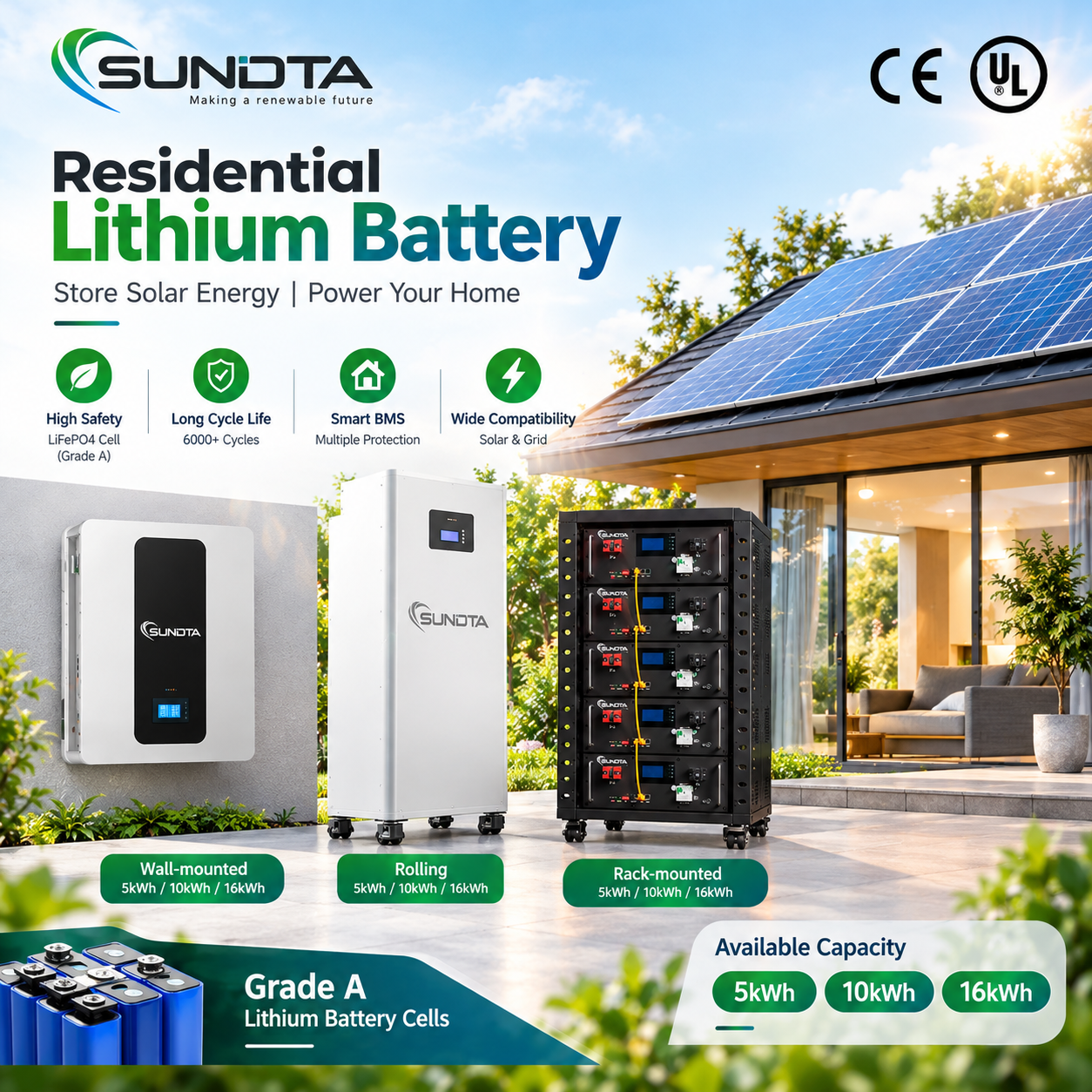
Lead-acid and flooded GEL batteries are entirely obsolete for off-grid operations in Central America due to low cycle life (<1,200 cycles at 50% DoD) and rapid sulfation in high ambient temperatures. RJV integrates exclusively Tier-1 lithium iron phosphate (LiFePO4) chemistry featuring ≥6,000 cycles at 90% Depth of Discharge (DoD). Operating at 51.2V low voltage or up to 600V high voltage in commercial stacks, our systems feature integrated Battery Management Systems (BMS) with native CAN / RS485 protocols pre-mapped to Deye, Solis, and Growatt inverter communication profiles for closed-loop charging accuracy.
Architecture Component
Legacy Off-Grid Systems
RJV Modernized Solution
Engineering Benefit in Heredia
PV Cell Architecture
P-Type Mono PERC (400W–450W)
N-Type TOPCon 16BB (585W–595W)
+3.8% Energy Yield in high heat & diffuse cloud conditions
Bifaciality Factor
Single-glass opaque (0%)
Dual-glass bifacial (≥80%)
Captures 10%–25% extra albedo energy from light ground & concrete roofs
Battery Chemistry
Deep-Cycle AGM / Gel / Lead-Carbon
Grade-A LiFePO4 (314Ah / 200Ah)
6,000+ cycles vs 1,200 cycles; zero maintenance; no acid venting
Inverter AC Output
High-frequency 230V Euro only
Native Split-Phase 120V/240V 60Hz
Direct drop-in compatibility with Costa Rican home and pump panels
Transfer Switching
Manual or slow relay (>30ms)
Ultra-fast internal relay (<10ms)
Zero interruption for sensitive electronics, servers, and automated PLC mills
Inverter Enclosure
IP20 / IP21 indoor only
IP65 die-cast aluminum
Total protection against tropical humidity, insects, and volcanic ash dust
Costa Rica & Heredia Renewable Policy Trends: Navigating Law 10086
The regulatory panorama for solar energy in Costa Rica has undergone structural modernization with the passage and gradual enactment of Ley 10086 (Ley para Promover los Recursos Energéticos Distribuidos a Partir de Fuentes Renovables). This legislative framework, managed under the auspices of the Ministry of Environment and Energy (MINAE) and regulated by ARESEP (Autoridad Reguladora de los Servicios Públicos), establishes clear protocols for distributed generation, net billing, and microgrid self-consumption.
1. Transition from Traditional Net Metering to Energy Arbitrage
Historically, commercial adopters in Heredia depended on net metering frameworks administered by ESPH or ICE. However, administrative grid-connection quotas (the 15% circuit distribution cap) have increasingly throttled new grid-tied approvals on overloaded distribution transformers. Consequently, off-grid and "zero-export" hybrid systems with dedicated LiFePO4 storage have become the fastest-growing market segment. Installers can deploy complete solar systems without waiting 6–12 months for bureaucratic interconnection permits, while eliminating the contractual export fees levied by regional distributors.
2. Offsetting "Horas Punta" Demand Peaks
For commercial and industrial consumers (Tarifa T-MT and T-GC) in Heredia, the peak tariff block (Bloque de Punta: 10:00 AM – 1:00 PM and 5:30 PM – 8:00 PM) carries energy prices up to three times higher than the night valley rate (Bloque de Valle). By programming RJV hybrid storage inverters for automated peak-shaving, factories and agribusinesses discharge stored lithium energy precisely during peak penalty hours, collapsing operational utility expenditures.
3. Microgrids for Agribusiness Autonomy
In rural cantons like Sarapiquí, where agricultural modernization is vital, the national decarbonization plan (Plan Nacional de Descarbonización 2018–2050) encourages farm electrification. The replacement of fossil-powered diesel engines with solar-plus-storage mini-grids positions local producers for premium carbon-neutral export certifications (e.g., Rainforest Alliance, USDA Organic, Carbono Neutral Costa Rica).
Frequently Asked Questions: Sourcing & Engineering for Heredia B2B Clients
Does your equipment conform to Costa Rica's electrical grid standards (120V/240V split-phase, 60Hz)?
Yes. Unlike standard European suppliers that only manufacture 230V single-phase 50Hz equipment, RJV provides hybrid and off-grid inverters engineered specifically with 120V/240V split-phase output at 60Hz. This ensures direct compatibility with the electrical service provided by ESPH and ICE across the province of Heredia and nationwide. For industrial installations, we supply 208V, 240V, and 480V 3-phase 60Hz solutions.
How do RJV systems withstand Heredia's intense tropical humidity and rainy season?
Our solar modules utilize dual-glass POE (Polyolefin Elastomer) encapsulation instead of conventional EVA, providing absolute moisture impermeability and anti-PID performance under >85% relative humidity. Furthermore, our inverters carry genuine IP65 ingress protection ratings with conformal-coated internal circuit boards (PCBA) to resist galvanic corrosion, mold growth, and volcanic particulate damage from the nearby Poás and Barva volcanoes.
What is the standard shipping procedure, Incoterms, and customs process for Costa Rica?
We support EXW, FOB (Shanghai/Ningbo), CFR, and CIF shipping directly to Puerto Caldera (Pacific) or Puerto Limón / Moín (Atlantic). For B2B buyers and EPCs, we provide all harmonized tariff classification codes (HS Codes), factory flash test data, CE/IEC certificates, and packing declarations. Under Costa Rican clean energy tax incentives (Law 7447), qualified solar components benefit from exemptions on import duties (DAI) and selective sales taxes, which our documentation fully supports.
Can RJV hybrid inverters synchronize with existing backup diesel generators?
Yes. Our Deye and Solis hybrid platforms include dedicated dry-contact generator start ports and auxiliary AC inputs. If battery reserves drop below a user-defined threshold during an extended multi-day tropical storm (temporales), the inverter can automatically command the backup generator to start, synchronize the AC sine waves smoothly without load interruption, charge the LiFePO4 batteries, and shut down the generator automatically once capacity reaches 90%.
What is the minimum order quantity (MOQ) for distributors and contractors in Heredia?
We offer project-friendly MOQs to support solar EPC contractors: complete off-grid kits and all-in-one storage systems start at an MOQ of 1 set. Inverters and wall-mounted LiFePO4 batteries start from 1 unit for sample evaluation. Solar panels are shipped by pallet (approx. 31 to 36 pieces, ~18kW to 21kW) or full 20ft/40ft HQ containers to optimize ocean freight unit economics. Mixed-SKU container consolidation is available.
Are battery BMS communication protocols pre-configured for seamless commissioning?
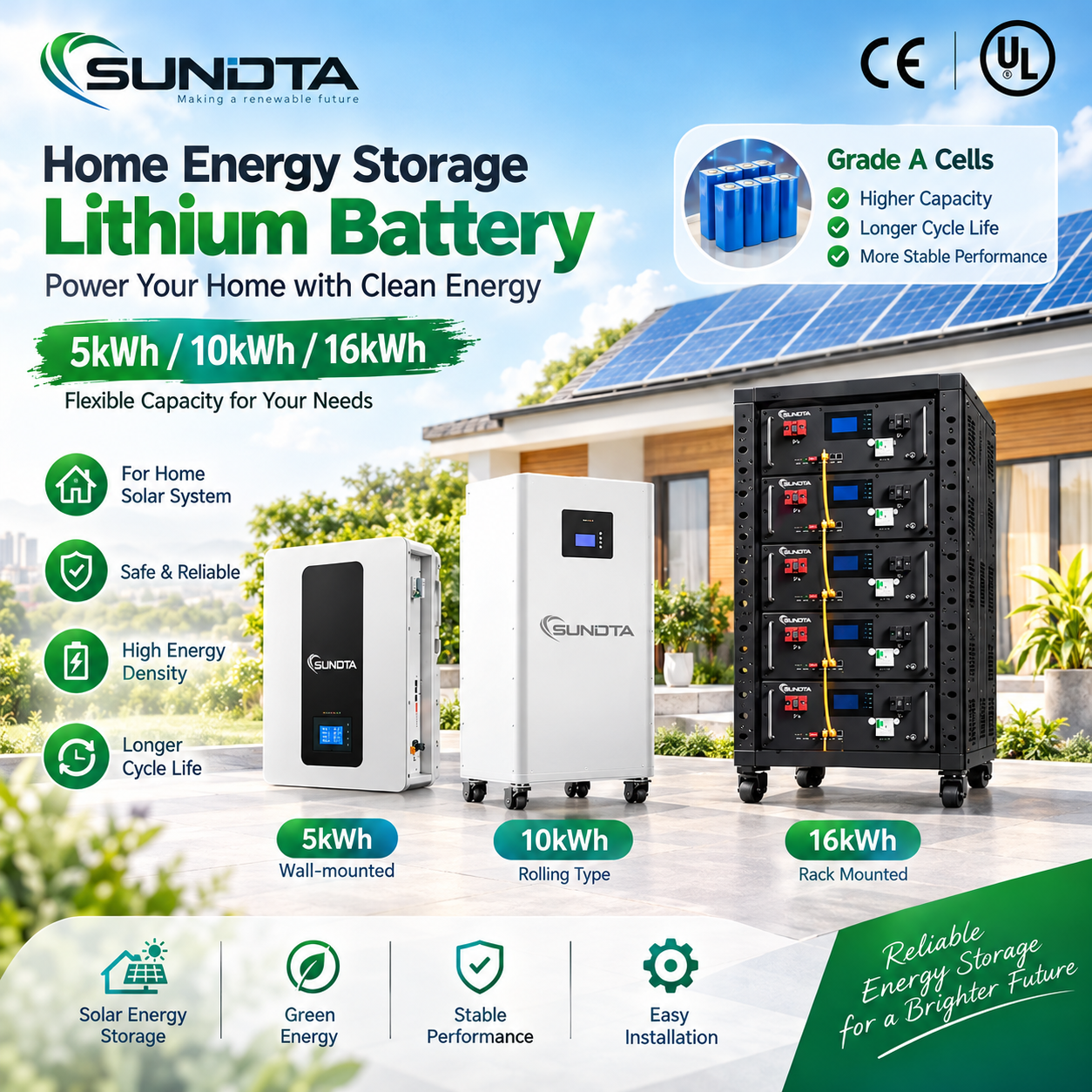
Every Sundta LiFePO4 battery pack is integrated with an intelligent hardware BMS equipped with dual CAN and RS485 communication channels. Firmware protocols are pre-loaded to handshake directly with Deye, Solis, Victron, and Growatt inverters. Installers simply connect the standard RJ45 communication cable, select the corresponding battery protocol ID on the inverter touch screen, and the system automatically reads state-of-charge (SoC), individual cell voltages, and thermal safety cutoffs.
Institutional Manufacturing Power
Why Regional Solar Contractors & Distributors Partner with Anhui RJV
Headquartered in the national high-tech clean energy manufacturing hub of Hefei, Anhui RJV New Energy Co., Ltd. operates state-of-the-art automated photovoltaic production lines combined with advanced power electronics integration laboratories.
TÜV Rheinland Audited
On-site audited production facilities ensuring compliance with IEC 61215, IEC 61730, CE, UN38.3, and ISO9001/14001 international reliability certifications.
2.0 GW Annual Module Output
Fully automated multi-busbar cell stringing and EL testing guarantee zero micro-fractures, backed by a 12-year workmanship and 30-year linear performance warranty.
One-Stop System Compatibility
Eliminate field commissioning finger-pointing between component vendors. We match the module voltage strings, inverter MPPT inputs, and battery BMS firmware prior to container packing.
7×24 Engineering Support
Our dedicated bilingual photovoltaic applications engineering team provides complete PVsyst simulation reports, single-line electrical schematics, and remote commissioning support.
Accelerate Your Solar & Energy Storage Projects in Heredia
Whether you are designing a high-reliability off-grid installation for an eco-lodge in Sarapiquí, upgrading a coffee processing facility in Barva, or expanding your wholesale PV supply catalog in Heredia, our engineering team is standing by to prepare complete technical proposals and CIF quotations.