Engineering Excellence in Solar Maximum Power Point Tracking (MPPT)
In modern photovoltaic system design, the Maximum Power Point Tracker (MPPT) represents the operational brain that bridges erratic atmospheric irradiance with chemical battery storage. As solar module wattage expands with N-Type TOPCon and high-current bifacial cells, choosing industrial-grade MPPT architecture from accredited Chinese manufacturers is the definitive factor in minimizing Levelized Cost of Energy (LCOE) and preventing catastrophic thermal throttling.
Integrated MPPT Hybrid Systems & LiFePO4 Storage Architecture
Explore our Tier-1 fully integrated MPPT power systems, modular high-voltage energy storage cabinets, and residential smart battery configurations directly engineered for global project clearance.
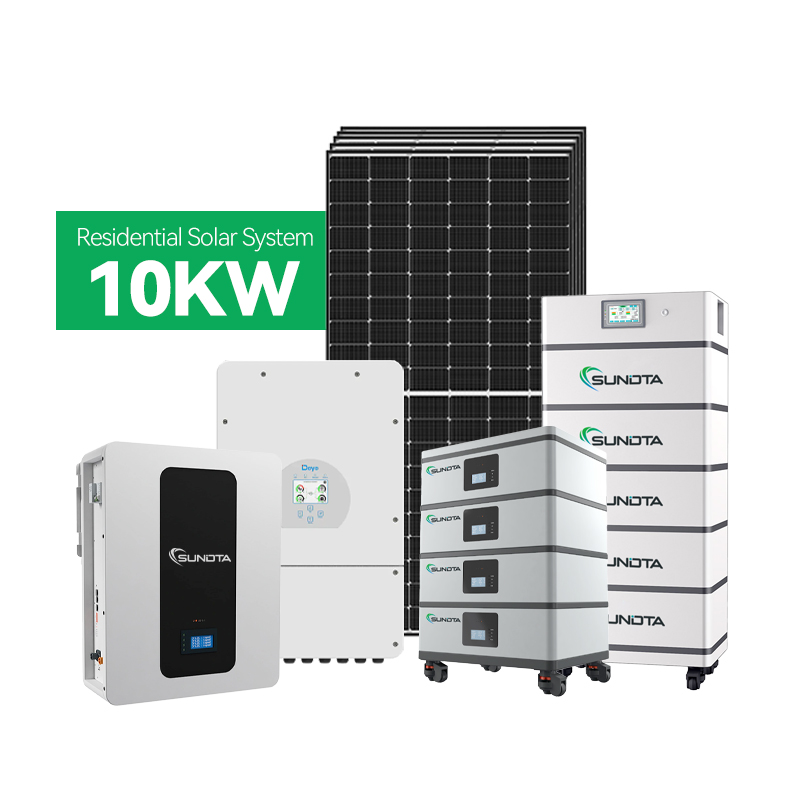
2026 Sundta Low Price 10KW 12KW Hybrid Solar System for Home Use with Lifepo4 Battery and BMS System
- Dual high-speed MPPT trackers (150V–800V)
- Integrated CAN/RS485 closed-loop smart BMS
- Rapid <10ms automatic transfer switch (UPS grade)
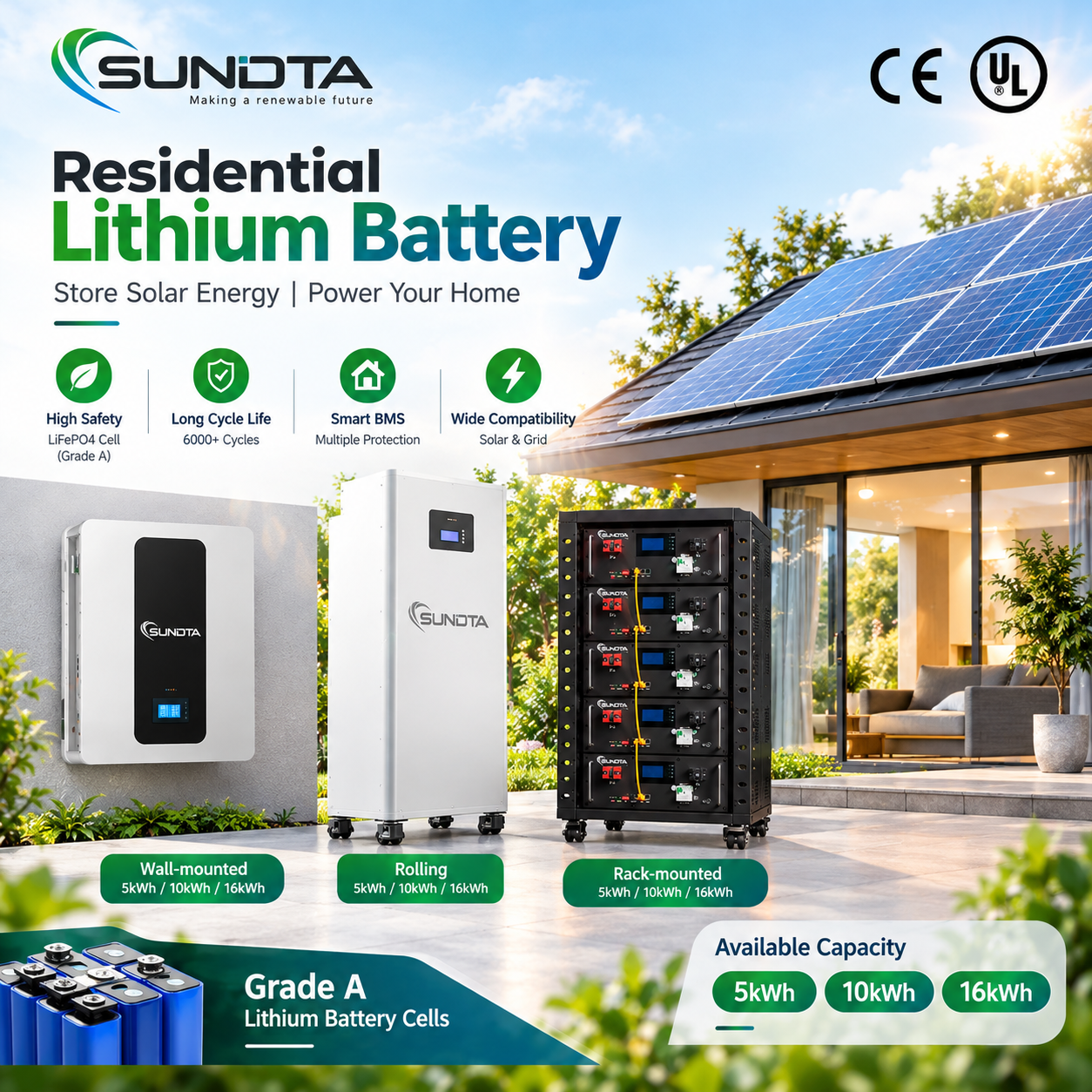
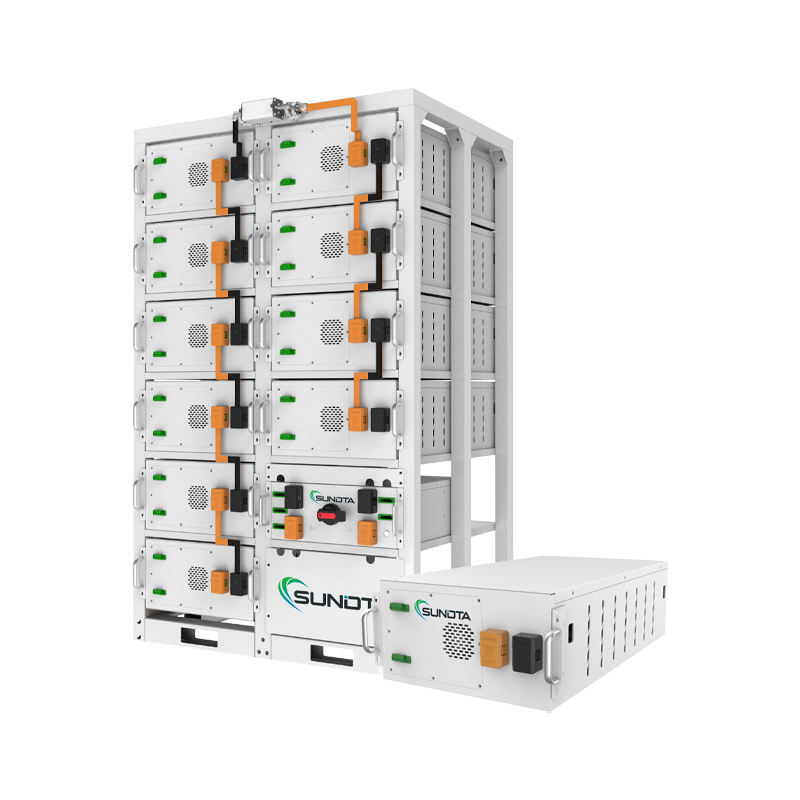
Sundta Stacked 10kWh 20kWh 30kWh Modular LiFePO4 Battery Stacked Solar Energy Storage Battery for Home Solar
- High-voltage stacking avoids heavy cable losses
- Seamless pairing with high-voltage MPPT inverters
- 6,000+ deep cycles at 90% Depth of Discharge (DoD)
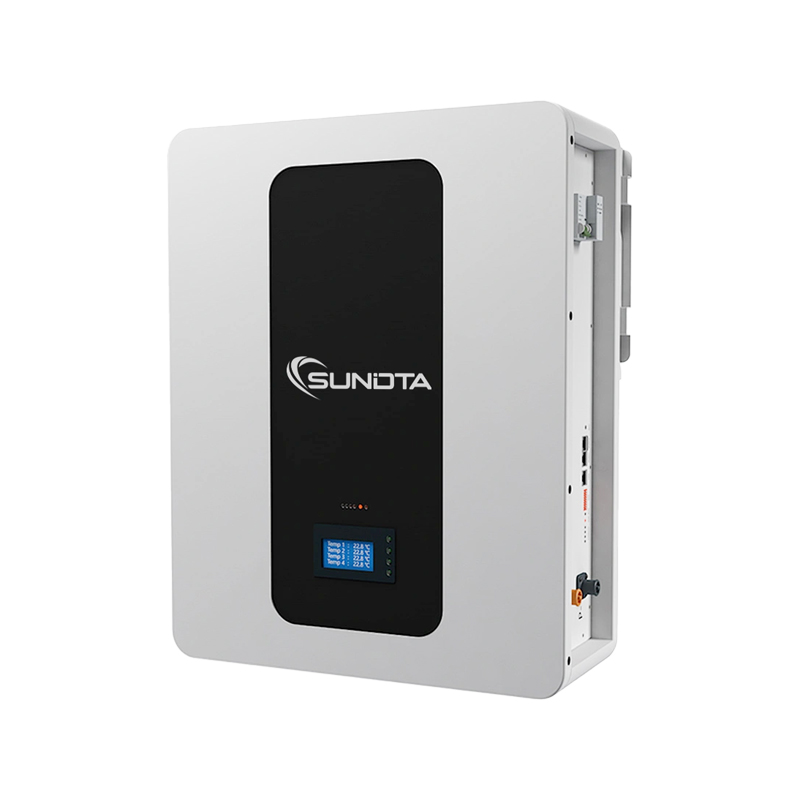
Sundta EU Warehouse 48V/51.2V LiFePO4 Lithium Ion Battery 10kWh Solar Home Energy Storage System Wall-Mounted 200Ah Capacity
- Germany/Rotterdam duty-paid warehouse dispatch
- Compatible with Solis, Deye & Growatt MPPT charge units
- Integrated active cell-balancing circuitry
All in One Energy Storage Outdoor Cabinet 100kw 200kw 500kw Lifepo4 Solar Battery Energy Storage Systems Residential Energy
- Integrated centralized MPPT & bidirectional PCS
- Industrial HVAC liquid / direct air-cooling matrix
- Aerosol auto-fire extinguishing & IP55 enclosure
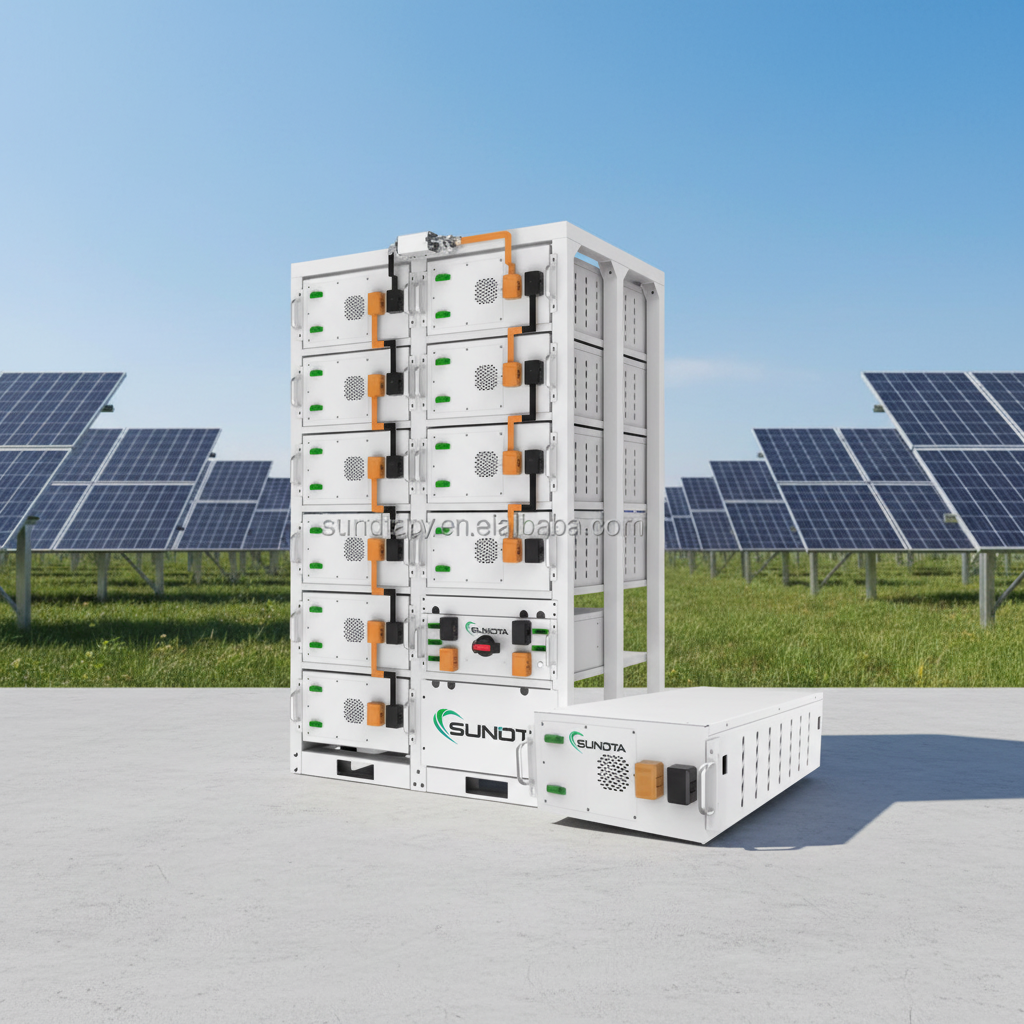
Commercial High Voltage LiFePO4 Energy Storage System 40kWh 50kWh 100kWh Air Cooling LiFePO4 Battery Cabinet for on Off Grid
- Supports multi-string commercial MPPT controllers
- Industrial peak-shaving & emergency backup microgrids
- High-durability CATL / EVE grade-A prismatic cells
High Quality LiFePO4 Lithium Battery Stackable 51.2V 14.336kWh Wall-Mounted 10-Year Warranty Home Energy Storage Solar Battery
- Matched for 48V–150V MPPT charge topologies
- Automotive-grade cell construction with dual-MCU safety
- Ultra-slim form factor for indoor/outdoor installations
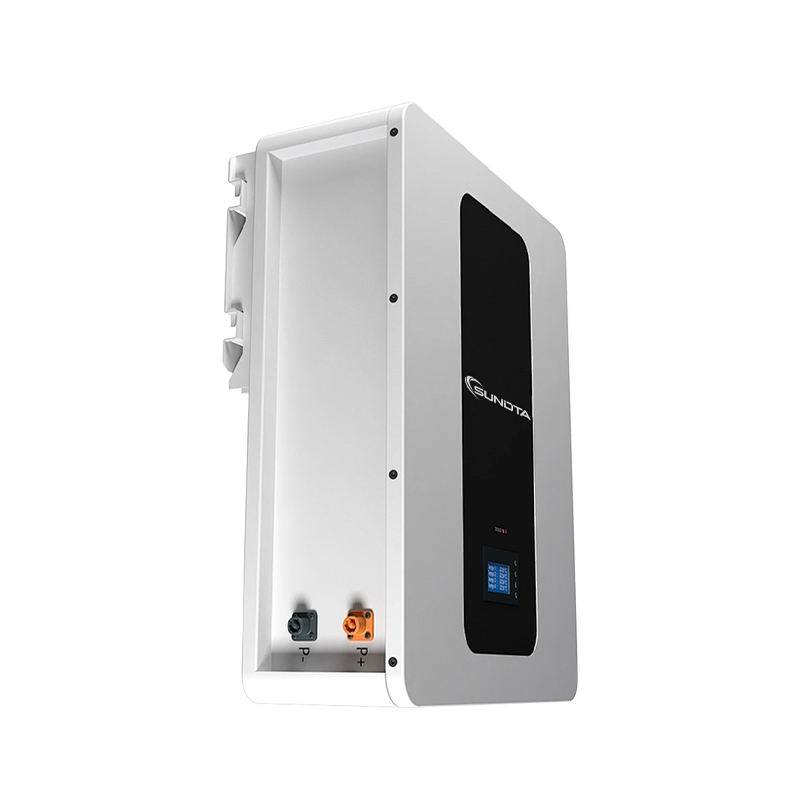
Sundta POLO-W1 LiFePO4 Lithium Battery Wall-Mounted 5kWh Home Power Storage Solar Energy System Deep-Cycle 51.2V 100Ah IP65
- Direct plug-and-play with external MPPT charge units
- Full IP65 rating against humidity, dust, and coastal salt-spray
- Compact plug-in wiring terminals for 1-person install
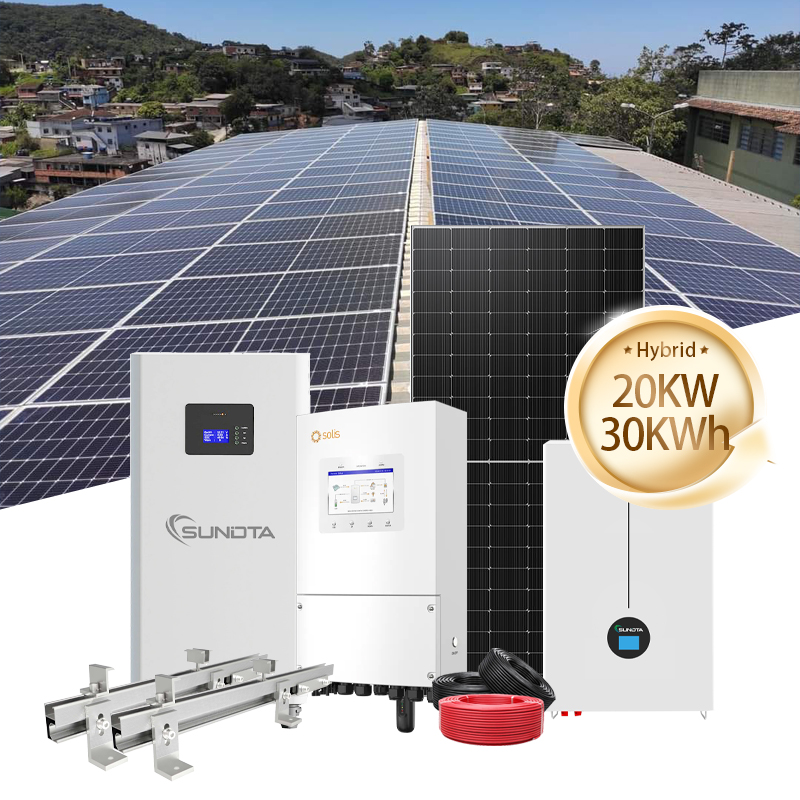
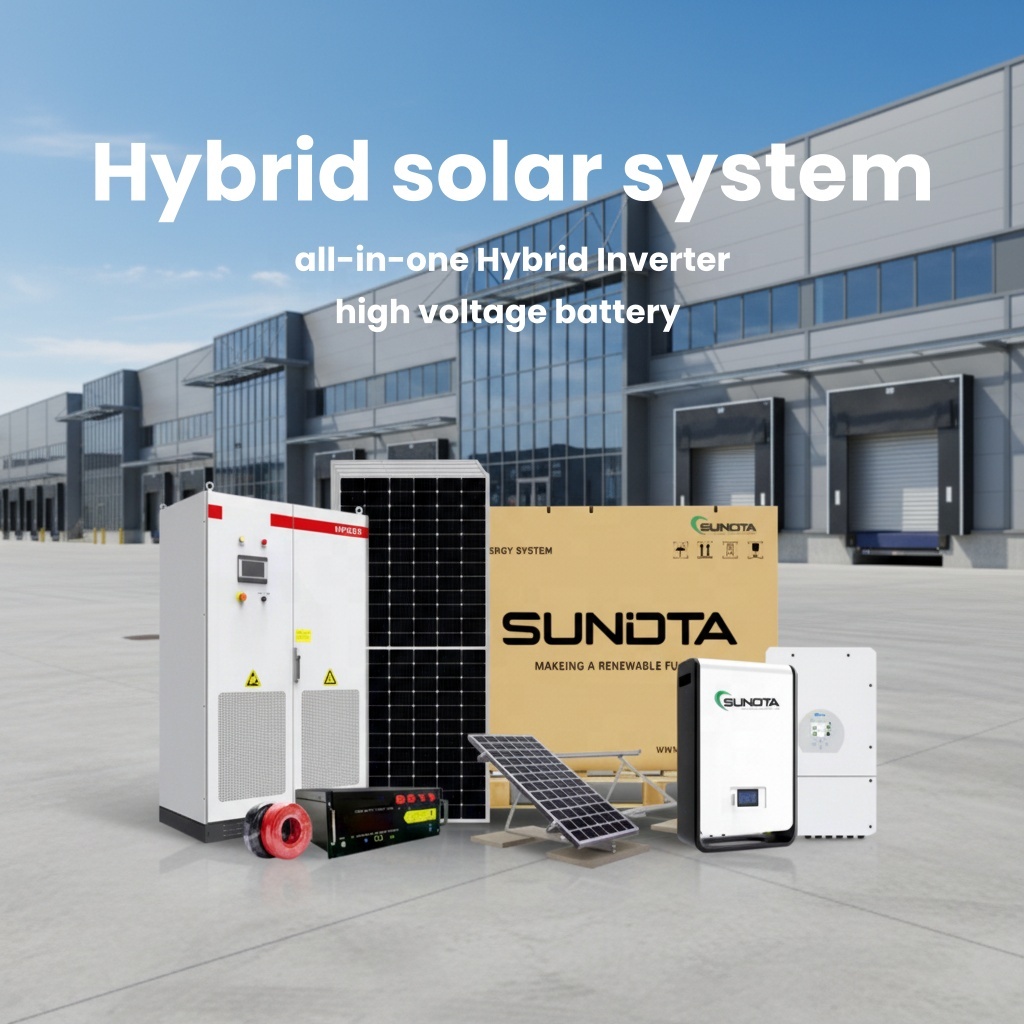
Complete Hybrid Solar Energy Storage System 20KW 30KW 50KW All in One Solar Panel Energy System for Home with Lithium Battery
- High-efficiency multi-channel MPPT tracking built-in
- Complete bill-of-materials: panels, inverter, battery & racks
- Factory pre-wired and pre-tested before global container freight
Why International EPCs & Distributors Partner With RJV New Energy
Operating out of Hefei's world-renowned solar innovation corridor, Anhui RJV New Energy Co., Ltd. consolidates R&D engineering, high-volume automated manufacturing, and stringent quality control protocols to protect tier-1 solar assets.
2.0 GW Automated Production
State-of-the-art robotic assembly lines with rigorous 3-stage EL testing, optical inspection, and automated cell-matching ensure zero micro-cracks and flawless module-to-controller power conversion.
TÜV Rheinland Assessed
Our Hefei production hubs and testing laboratories hold comprehensive on-site TÜV Rheinland verification, CE certifications, IEC 61215/61730 ratings, and UN38.3 transport compliance.
EU Warehouse Fast Dispatch
Strategic bonded warehouse facilities located in Germany and the Netherlands provide duty-paid, rapid-response logistics for urgent residential and commercial project replacement or expansion.
Turnkey Engineering & OEM
From custom algorithm parameter tuning for specialized lithium chemistry to bespoke industrial OEM brand labeling and custom cabinet enclosures, we deliver custom-engineered hardware.
Technical Comparison: Standalone MPPT vs. Hybrid Integrated MPPT Architecture
Comprehensive engineering benchmarks for procurement directors and PV system designers.
| Technical Dimension | Traditional Standalone MPPT | Next-Gen Hybrid Inverter MPPT | Utility/C&I High-Voltage ESS Unit |
|---|---|---|---|
| Max Input Voc (Open Circuit) | 100V – 250V DC | 500V – 1,000V DC | 1,000V – 1,500V DC |
| Tracking Dynamic Efficiency | 98.2% – 99.0% | 99.6% – 99.9% | >99.9% (Triple Core DSP) |
| Battery Voltage Bus | 12V / 24V / 48V Low Voltage | 48V LV to 400V HV Stack | 600V – 1,200V High Voltage |
| Cable Conductor Sizing | Large AWG (High $I^2R$ Losses) | Optimized Thin Cross-Section | Industrial Busbar Integration |
| Cooling Topography | Passive Aluminum Heatsink | Smart Variable Speed Fan | Closed-Loop Liquid / HVAC Core |
| BMS Communication Protocol | Analog Volts / Basic RS485 | High-Speed CAN 2.0B / Modbus TCP | Fiber-Optic / SCADA Gateway |
| Target Application Field | Off-Grid Cabins, Telecom Towers | Modern Homes & Light Commercial | Industrial Parks, Microgrids, ESS |
| Procurement Recommendation | Legacy Replacement | Best for B2B Distribution | Commercial EPC Sourcing |
Future Sourcing Trends for MPPT Power Equipment (2026–2030)
Global PV procurement is undergoing structural transitions toward high voltage, digital communications, and wide-bandgap semiconductors. Understand how these four macro trends will dictate your procurement return on investment.
Migration to High-Voltage DC Coupling
Traditional low-voltage 12V/24V/48V charge architectures incur severe copper conductor costs and thermal resistance losses when PV array sizes cross 10kW. Strategic procurement is overwhelmingly transitioning toward 400V–800V high-voltage DC-coupled battery buses. By stepping up string voltages, balance-of-system (BOS) cabling thickness drops by over 60%, drastically cutting install labor while boosting overall round-trip conversion efficiency from 93% to over 97.6%.
Wide-Bandgap Silicon Carbide (SiC) MOSFETs
The standard silicon IGBT switch has reached its thermal and frequency threshold. Elite Chinese manufacturers are deploying Silicon Carbide (SiC) and Gallium Nitride (GaN) power stages into solar MPPT topologies. Operating at three-to-five times higher switching frequencies, these wide-bandgap semiconductor units slash transformer and inductor footprint by 40%, generating virtually no waste heat while sustaining 99%+ operational efficiency even at ambient operating temperatures exceeding 50°C.
Closed-Loop CANbus Multi-Protocol BMS
Unmanaged "voltage-target" charging is now obsolete for modern Lithium Iron Phosphate (LiFePO4) storage. Sourcing requirements now mandate multi-protocol dual-MCU BMS integration where the MPPT controller dynamically receives microsecond-level State of Charge (SoC), State of Health (SoH), and internal cell temperature metrics via CAN 2.0B or Modbus TCP. Controllers automatically modify maximum charge currents dynamically to protect cell life cycles up to 8,000 deep cycles.
Technological Evolution: From Simple P&O to AI-Driven Multi-Peak Global MPPT
A deeper examination of why modern high-efficiency panels require sophisticated tracking mathematics under partial shading, cloud transients, and high-temperature environments.
Multi-Peak Scanning (GMPPT)
Standard Perturb and Observe (P&O) algorithms routinely become trapped at local power false maximums when trees, chimneys, or passing clouds partially shade strings. Advanced Chinese digital MPPT firmware utilizes Global Maximum Power Point Tracking (GMPPT) sweeping algorithms, analyzing the full P-V curve in under 250 milliseconds to extract up to 25% more usable energy under adverse real-world sky conditions.
Bi-Directional DC-DC Topologies
Modern microgrid architectures require solar MPPT charge controllers to work bidirectionally. Under grid-assist or generator backup commands, the same inductor core and power stage reverse polarity to support black-start battery conditioning, EV vehicle-to-home (V2H) power flow, and instantaneous frequency stabilization without supplementary external rectifiers.
IoT Edge-Computing & Telemetry
Equipped with native Wi-Fi, 4G LTE, and Bluetooth BLE 5.0 hardware, today's MPPT charge equipment functions as an intelligent IoT edge device. Cloud-based fleet portals provide engineering teams with real-time string voltage graphs, thermal heatsink temperatures, impedance checks, and over-the-air (OTA) firmware patches without costly on-site truck rolls.
Dynamic Thermal Derating Curves
Unlike consumer-grade charge units that shut off abruptly when heat builds, industrial RJV MPPT hardware incorporates continuous thermistor feedback coupled to progressive pulse-width modulation (PWM) derating curves. Power delivery gently tapers rather than drops off, ensuring continuous power supply even inside unconditioned desert equipment shelters.
Frequently Asked Questions on Sourcing MPPT Hardware from China
Get immediate, transparent answers to the most common engineering, compliance, and supply chain questions raised by B2B importers, EPC developers, and wholesale distributors.
How do we accurately calculate the Open Circuit Voltage (Voc) safety margin to prevent MPPT damage in sub-zero winter temperatures?
To compute correct string sizing: Find the record minimum temperature at the installation location. If the site reaches $-20^\circ\text{C}$, the temperature differential from Standard Test Conditions (STC, $25^\circ\text{C}$) is $\Delta T = 45^\circ\text{C}$. Multiply this by the temperature coefficient to establish the voltage increase: $45 \times 0.30\% = 13.5\%$. A panel string rated at $400\text{V } V_{\text{oc}}$ at STC will produce $454\text{V}$ on a freezing, sunny morning. Your controller's rated maximum input voltage must provide at least a 10% safety cushion above this calculated cold-weather peak.
Can we intentionally oversize the solar panel DC array wattage relative to the MPPT controller's rated capacity?
Industrial-grade MPPT controllers will safely clip excessive generation current by shifting the operational operating point higher up the I-V curve, drawing only the maximum amperage the internal buck converter can safely handle. However, you must strictly ensure that the total array Short-Circuit Current ($I_{\text{sc}}$) remains within the controller's physical hardware maximum limit to prevent inductor core saturation.
What is the difference between closed-loop and open-loop charging when pairing MPPT controllers with LiFePO4 batteries?
In a closed-loop system, an active digital data link (via CAN 2.0B or RS485) connects the Battery Management System (BMS) directly to the MPPT processor. The battery actively dictates its precise voltage requirements, maximum charge current limit, and thermal derating commands. If an individual cell experiences an over-voltage or over-temperature condition, the BMS alerts the MPPT unit to ramp down or halt instantly, maximizing pack longevity and preventing cell inflation.
What certifications and documentation are mandatory for importing solar MPPT and storage equipment into the EU and US?
For the North American market, UL 1741 (for inverters and charge controllers) and UL 1973 / UL 9540 (for battery systems and fire safety mitigation) are necessary. RJV provides complete factory test certificates, flash test reports, and customs clearing documentation packages with every consignment.
What is the standard production lead time and Minimum Order Quantity (MOQ) for custom OEM configurations?
Direct Factory Pricing on Industrial Solar & MPPT Hardware
Partner with an audited Tier-1 manufacturer. Connect directly with our Hefei engineering team to receive customized CAD wiring diagrams, container loading plans, and full product line specifications.