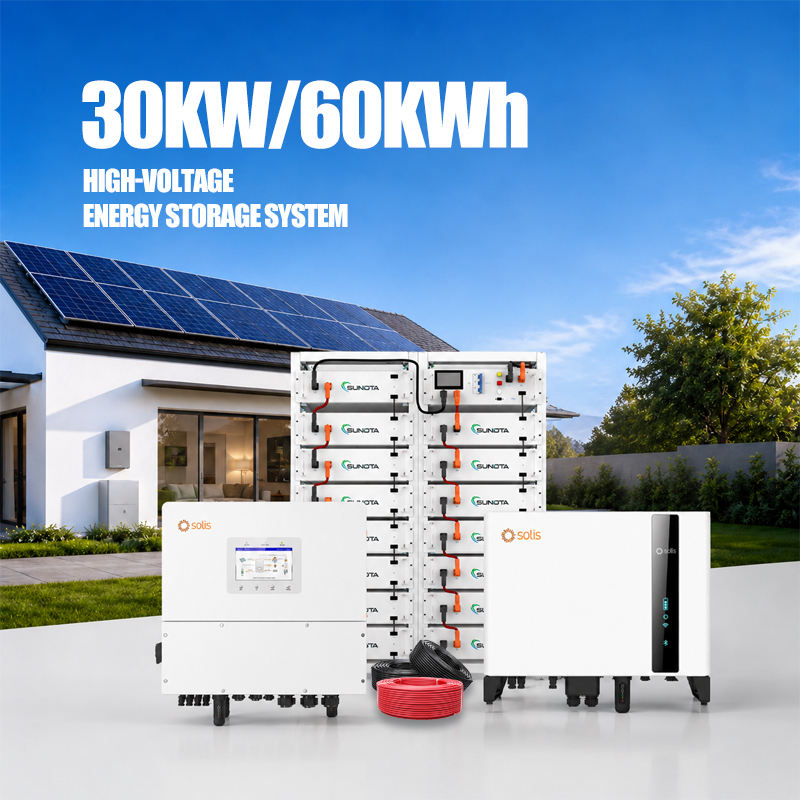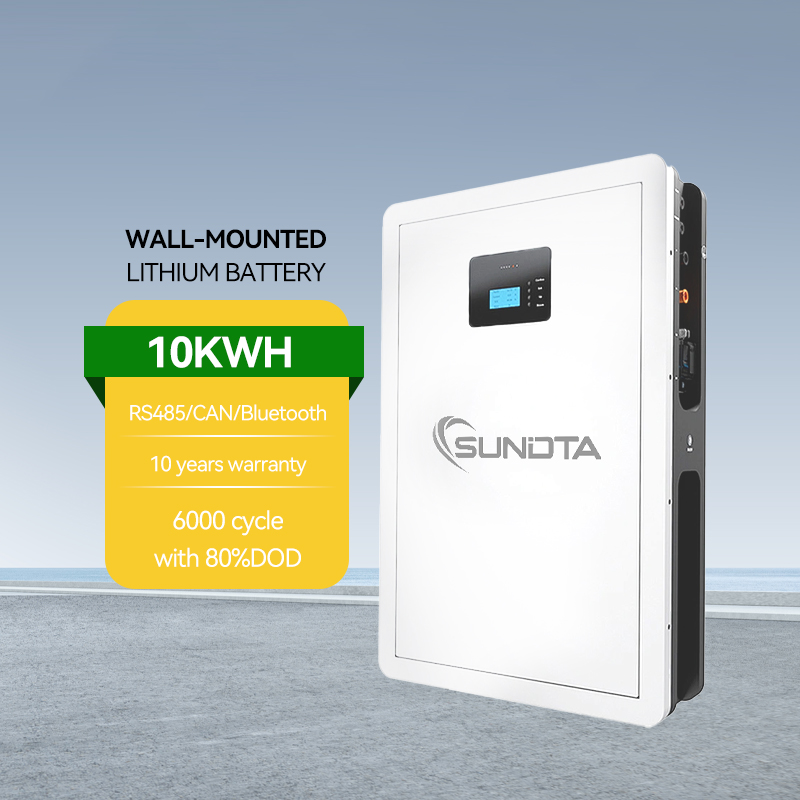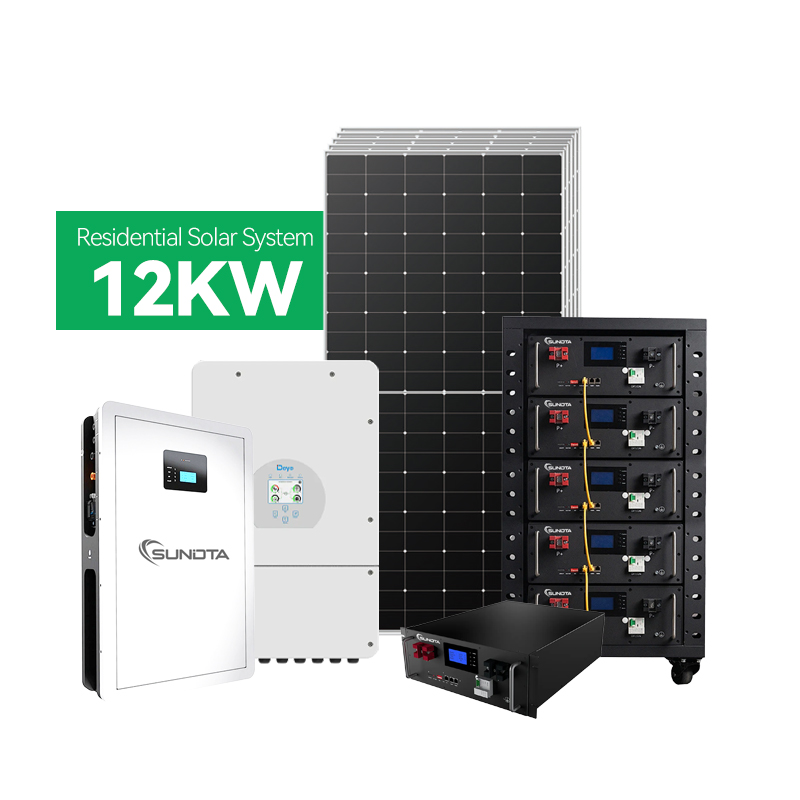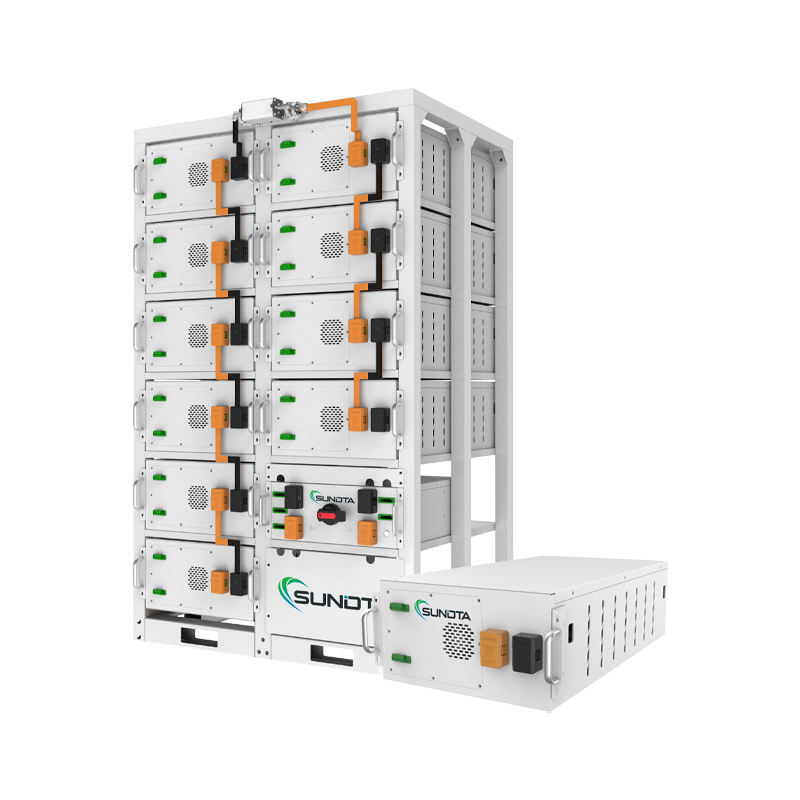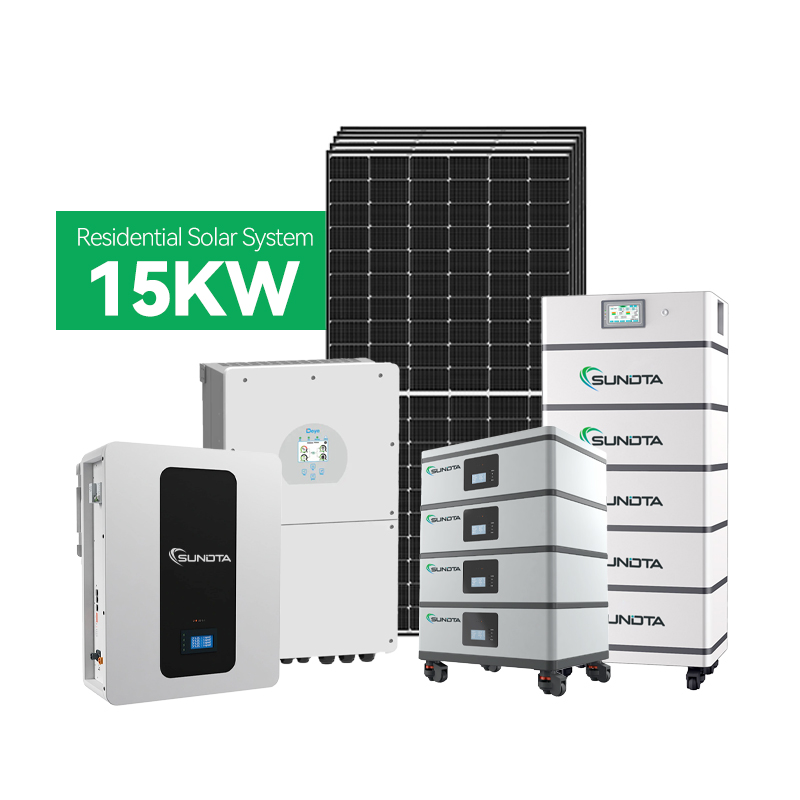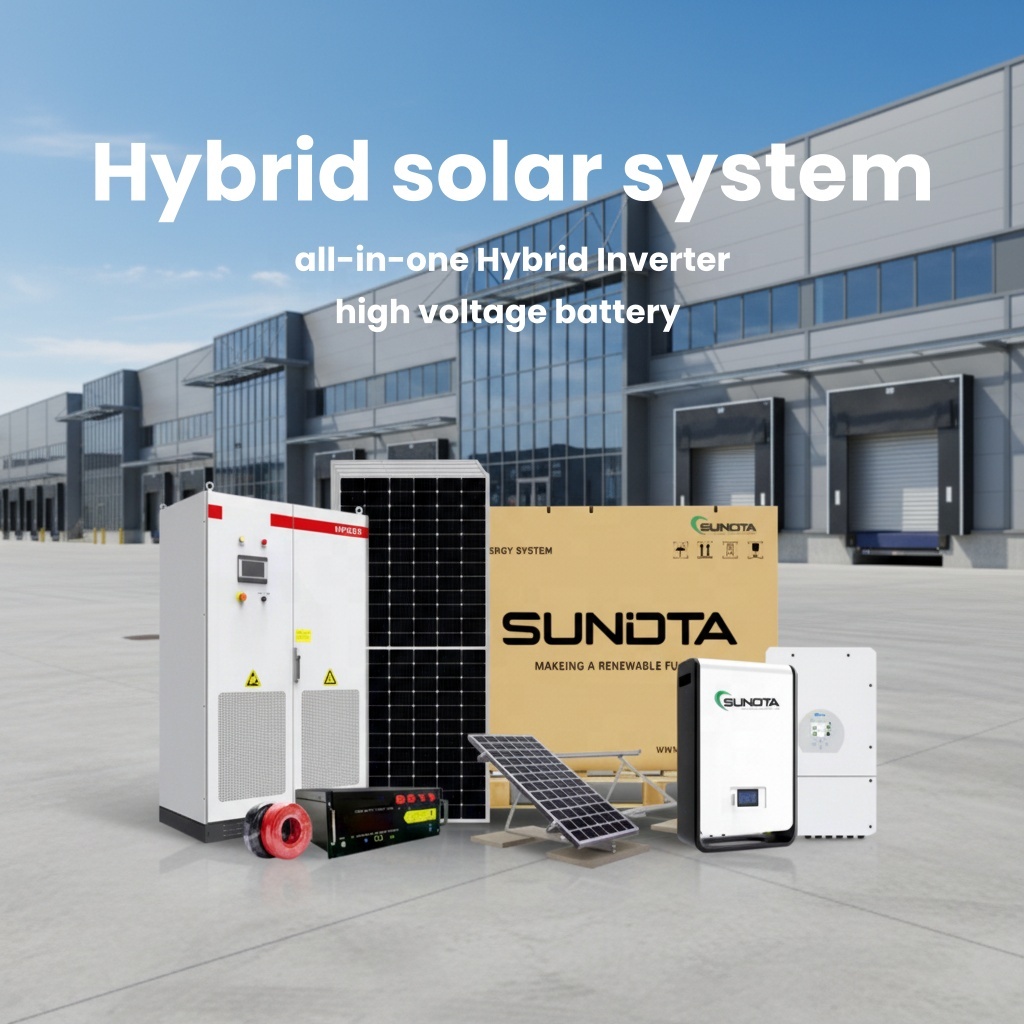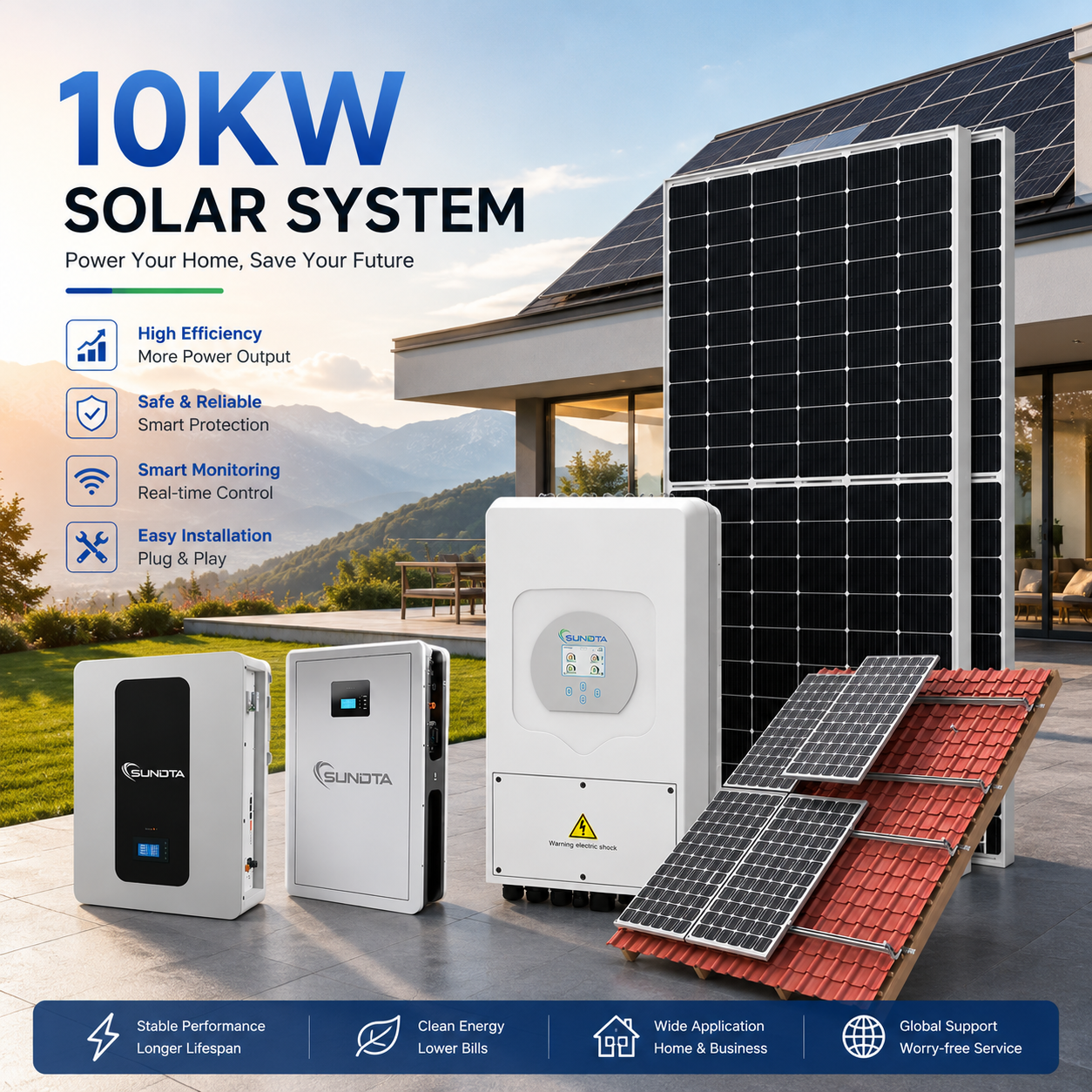
Emergency Backup Whole House Hybrid Solar Power System
- Smart MPPT battery controller with seamless sub-10ms transfer
- Scalable 15kW to 50kW pure sine wave emergency dispatch
- Compatible with dual-generator and utility inputs
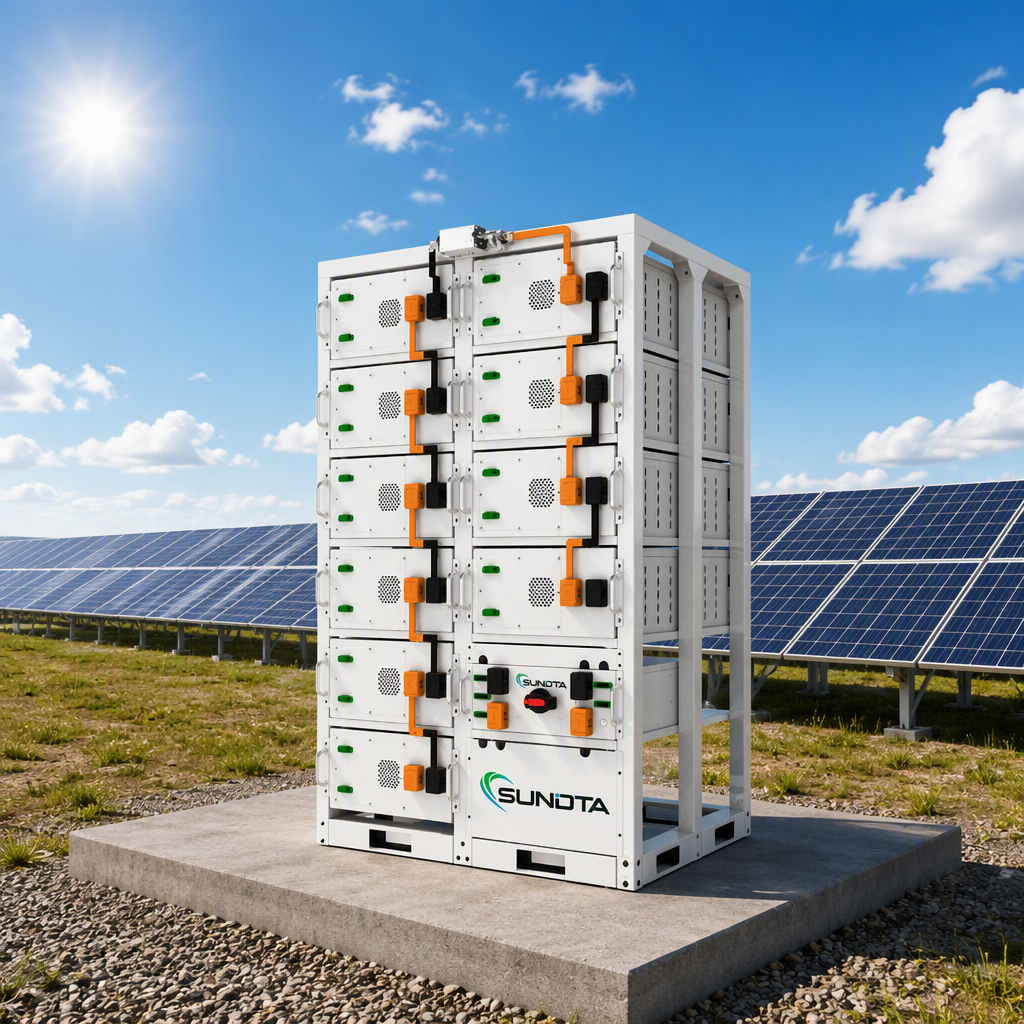
Our engineered product line integrates crystalline N-Type photovoltaic generation, fast-switching hybrid inverters, and Grade-A automotive-grade LiFePO4 lithium cell banks to deliver uninterrupted power stability.
Modern microgrids require precise balancing between intermittent distributed generation (solar PV, wind), dispatchable storage elements, and critical loads. Here is how our engineering team eliminates integration failure points.
Choosing between DC-coupling and AC-coupling is the foremost system architectural decision for EPC contractors. DC-coupled systems maximize solar-to-battery charging round-trip efficiency by bypassing multi-stage AC-to-DC conversion losses, reaching up to 96.5% system efficiency. This configuration is optimal for greenfield residential installations and remote off-grid clinics or communications stations.
Conversely, our AC-coupled microgrid architectures allow effortless retrofitting into pre-existing rooftop solar infrastructure. Central PCS (Power Conversion Systems) manage grid-forming operations, ensuring backward compatibility with installed string inverters while delivering instantaneous spinning reserve during utility blackout events.
Conventional grid-following inverters shut down when grid voltage collapses to prevent unsafe anti-islanding. Our advanced Deye, Solis, and proprietary RJV microgrid hybrid inverters operate in true grid-forming mode (droop control), establishing stable synthetic frequency (50/60Hz) and voltage envelopes independently.
The integrated High-Speed Static Transfer Switch (STS) accomplishes islanding transfer in under 4 to 10 milliseconds, meaning sensitive data centers, medical devices, and manufacturing CNC machines experience zero transient disruption during sudden brownout or blackouts.
Energy storage safety is paramount in microgrid engineering. RJV utilizes prismatic Lithium Iron Phosphate (LiFePO4) chemistry featuring exceptional chemical and thermal stability, completely avoiding the thermal runaway hazards associated with NCM lithium formulations.
Our microgrid systems employ a Three-Tier Battery Management System (BMS): cell-level monitoring of voltage and temperature, module-level active balancing, and cabinet-level total disconnection. Dual-loop CAN bus and RS485 communication protocols guarantee real-time parameter feedback to prevent over-discharge, micro-shorting, or cell degradation.
| System Category | Nominal Capacity | Coupling Mode | Battery Chemistry | Ideal Application Scenario | Grid Autonomy Rating |
|---|---|---|---|---|---|
| Residential Hybrid Kit | 5kW – 15kW / 10–30kWh | DC / AC Coupled | LiFePO4 (51.2V Low Voltage) | Villas, residential estates, net-metered homes | 24-48 Hours |
| C&I High Voltage Cabinet | 30kW – 100kW / 50–150kWh | AC Coupled / Hybrid | LiFePO4 (200V–600V High Voltage) | Manufacturing workshops, farms, commercial plazas | 36-72 Hours |
| Containerized BESS Unit | 250kW – 1MW / 0.5–2MWh | Centralized Utility Bus | Prismatic LiFePO4 (Liquid/Air Cooled) | Remote mining, island grids, factory peak-shaving | Indefinite (w/ Solar) |
| Off-Grid Rural Mini-Grid | 15kW – 50kW / 30–100kWh | DC Coupled Smart MPPT | Stackable 51.2V / High Voltage | Agricultural pumping, remote cell towers, eco-resorts | 100% Islanded |
* Technical specifications are customizable based on specific project irradiance profiles, wind coefficients, and ambient operating temperatures (-25°C to +55°C).
Purchasing directors and EPC engineering leaders must anticipate supply chain movements and technological obsolescence. These four procurement dynamics define successful international supply strategies.
Global procurement is rapidly pivoting away from legacy 48V/51.2V low-voltage battery banks toward 200V-800V high-voltage (HV) architecture. HV systems reduce current throughput, drastically lowering I²R cable heat losses, reducing installation copper wire diameter, and boosting overall DC-to-AC round-trip system efficiency by up to 4.2%.
European and North American border carbon adjustment regulations (CBAM) are compelling importers to require cradle-to-grave lifecycle documentation. Top-tier Chinese suppliers now provide comprehensive testing dossiers covering UL 1973, UL 9540A thermal runaway propagation testing, and full carbon footprint disclosure for all battery racks.
High local labor costs in target markets have made on-site component assembly economically unsustainable for EPCs. Procuring pre-assembled, factory-tested outdoor energy storage cabinets (BESS) featuring integrated fire suppression, internal HVAC, and pre-mapped EMS cuts on-site installation time by over 70%.
A microgrid power system is no longer simply backup hardware; it is an economic profit center. Modern procurement mandates out-of-the-box support for OpenADR, Modbus TCP, and automated time-of-use (ToU) peak arbitrage algorithms that enable microgrids to participate in local Virtual Power Plant (VPP) aggregations.
At RJV New Energy, our research and manufacturing teams continuously integrate groundbreaking power electronics and electrochemical milestones into standard production runs.
While LiFePO4 remains the benchmark for volumetric density and commercial maturity, sodium-ion technology is emerging as an ultra-low-temperature alternative. Sodium-ion cells retain over 85% available capacity at -30°C without parasitic heating loads. RJV's advanced R&D line is prototyping hybrid pack topologies capable of housing both chemistries inside standardized enclosures.
Next-generation inverter PCS units are incorporating Silicon Carbide (SiC) MOSFET power switches. Compared to traditional silicon IGBTs, SiC devices reduce switching losses by 60%, tolerate higher core temperatures, and permit higher operating frequencies. The result is a 30% reduction in inverter magnetic transformer volume and weight.
Microgrids operate most efficiently when balancing multiple generation vectors: solar PV, grid interconnection, backup diesel/gas generators, and battery banks. Our native cloud-linked Energy Management System (EMS) calculates sub-second marginal generation costs, automatically starting diesel generators only when battery state-of-charge (SoC) drops below programmable safety margins.
Headquartered in the national clean energy hub of Hefei, Anhui, China, Anhui RJV New Energy Co., Ltd. combines heavy module production capabilities with precision power system integration to safeguard your capital investments.
Our Hefei factory facilities undergo rigorous on-site supplier verification by TÜV Rheinland. We maintain transparent corporate integrity with documented AAA business credit rating and international commercial validation.
Featuring automated stringer lines, automatic optical inspection (AOI), and dual-chamber laminators, RJV guarantees on-time delivery across large utility arrays and C&I container schedules without shipment bottlenecks.
The single most destructive threat to microgrid timelines is protocol miscommunication between inverter firmware and battery BMS. We match and bench-test your exact component lineup prior to palletizing at our Hefei hub.
We provide sample customization, custom branding, personalized packaging, and full container load optimization. Supported trade terms include FOB, CFR, CIF, and EXW with full export documentation and bank L/C acceptance.
Clear answers to the most common electrical, logistical, and commercial inquiries submitted by project developers and international distributors.
Our minimum order requirements are structured to support both prototyping pilot projects and full commercial scale rollouts. Hybrid inverters (Deye, Solis, RJV) and modular 51.2V/high-voltage lithium battery units start from an MOQ of just 1 piece or 1 set for testing and evaluation.
Turnkey residential hybrid systems start at 1 full kit. Standard photovoltaic modules are quoted by full wooden pallet loads (typically 13.65 kW to 17.28 kW) or standard 40ft HQ container increments to safeguard against transit vibration damage. Mixed container consolidation (combining modules, inverters, racking, and battery banks) is fully supported.
Protocol incompatibility is the primary cause of delayed microgrid commissioning. RJV smart battery management systems (BMS) come pre-flashed with native firmware supporting CAN bus and RS485 communication protocols for all mainstream hybrid inverters, including Deye, Solis, Growatt, Victron, Schneider, and SMA.
Before dispatch from our Hefei testing bay, our engineers execute a closed-loop handshake validation. When you turn on the system, the inverter immediately recognizes battery parameters, charging/discharging voltage limits, maximum current thresholds, and SoC data without requiring manual register mapping.
Yes. Our commercial and residential hybrid inverters feature dedicated generator input dry contacts. In full off-grid or weak-grid environments, the system treats solar PV as the primary energy source and the battery bank as the operational buffer.
If solar generation is absent and battery SoC drops below a programmable floor (e.g., 20%), the inverter's automatic generator start (AGS) dry contact closes to spin up the backup generator automatically. The generator then supplies the critical load bus while recharging the LiFePO4 bank back to safety, shutting off immediately upon completion to minimize diesel fuel consumption.
All exported microgrid hardware is manufactured under stringent ISO 9001, ISO 14001, and ISO 45001 facility certifications. Photovoltaic modules carry TÜV certifications according to IEC 61215 and IEC 61730 for mechanical load resistance and electrical safety.
Our LiFePO4 storage batteries carry CE markings, UN38.3 lithium battery transport certification, and comprehensive MSDS reports for hazardous cargo maritime customs clearance. Cell-level test reports conforming to UL 1973 and IEC 62619 are provided with commercial invoices upon dispatch.
To provide security for international buyers, RJV accepts diverse payment methods: Telegraphic Transfer (T/T), Irrevocable Letters of Credit at Sight (L/C), Documents Against Payment (D/P), Western Union, Credit Card, and PayPal for sample runs.
We routinely contract under standard Incoterms 2020: FOB (Free on Board) Shanghai/Ningbo, CFR/CIF to your destination sea port, or EXW from our Hefei manufacturing site. Our dedicated logistics team handles maritime DG hazardous booking for lithium storage battery containers.
RJV provides 24/7 bilingual electrical engineering support. Inverter and battery systems are equipped with integrated Wi-Fi / 4G remote monitoring dataloggers. Our Hefei software team can remotely diagnose system fault codes, update BMS firmware over-the-air (OTA), and adjust grid-code parameters across international time zones.
All LiFePO4 battery products carry guaranteed cycle life warranties ranging from 5 to 10 years, supported by direct factory replacement part dispatches in the event of an approved technical defect.