High-Efficiency Portable & Hybrid Storage Systems
Pre-engineered, factory-tested solar generators, smart hybrid inverters, and high-cycle LiFePO4 batteries designed for seamless compatibility, zero commissioning delay, and global grid code certification.
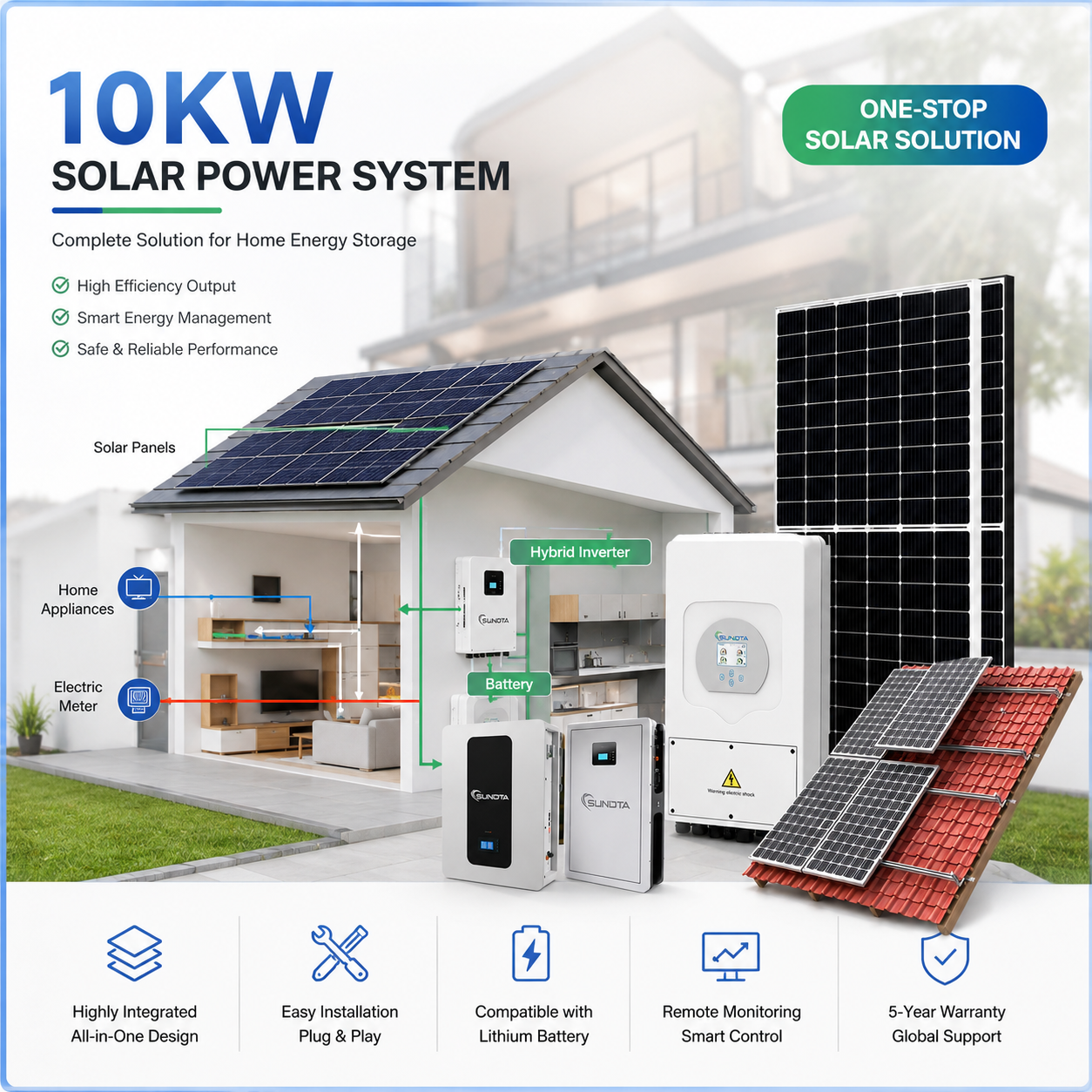
15kW-50kW High-Efficiency Hybrid Solar Power System with Smart MPPT for Whole-House Backup
- Smart MPPT Dual Tracking Input
- Whole-House Split-Phase/3P Switching
- Zero-Transfer Emergency UPS Mode
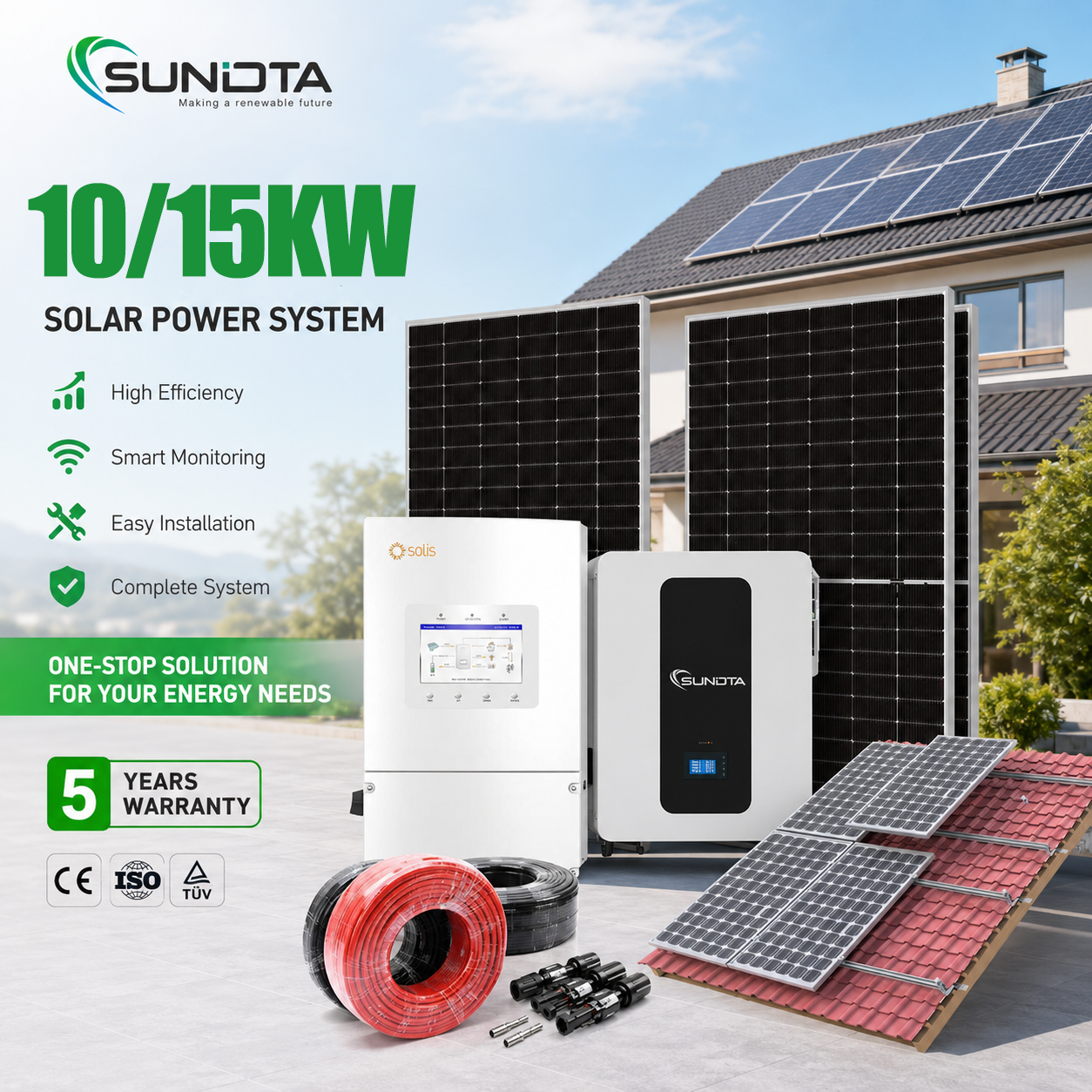
Hybrid 15kWh Inverter System 300Ah Lithium Ion Battery Split Stackable CAN Communication Home Use MPPT 15kW
- 300Ah Prismatic Grade-A LFP Cells
- CAN / RS485 Dual Bus Inverter Link
- Modular Toolless Stacking Rail
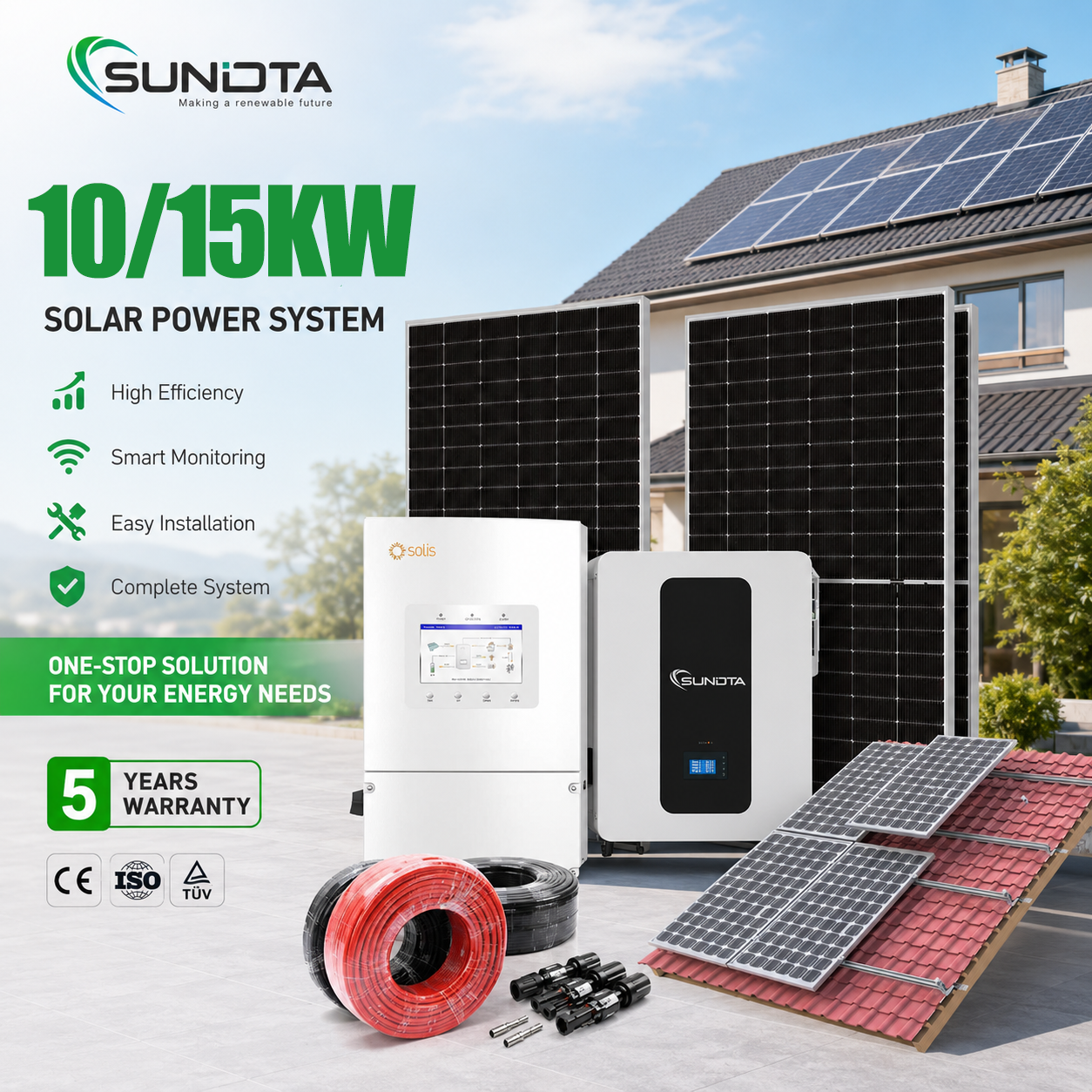
Customized Factory Price 8kW 10kW 15kW On-Off Grid Solar System Full Set with Mono Solar Panel & Lithium LiFePO4 Battery
- Matched Single-SKU BoM Package
- Factory Calibrated Charge Profiles
- High Surge Tolerance for Inductive Loads
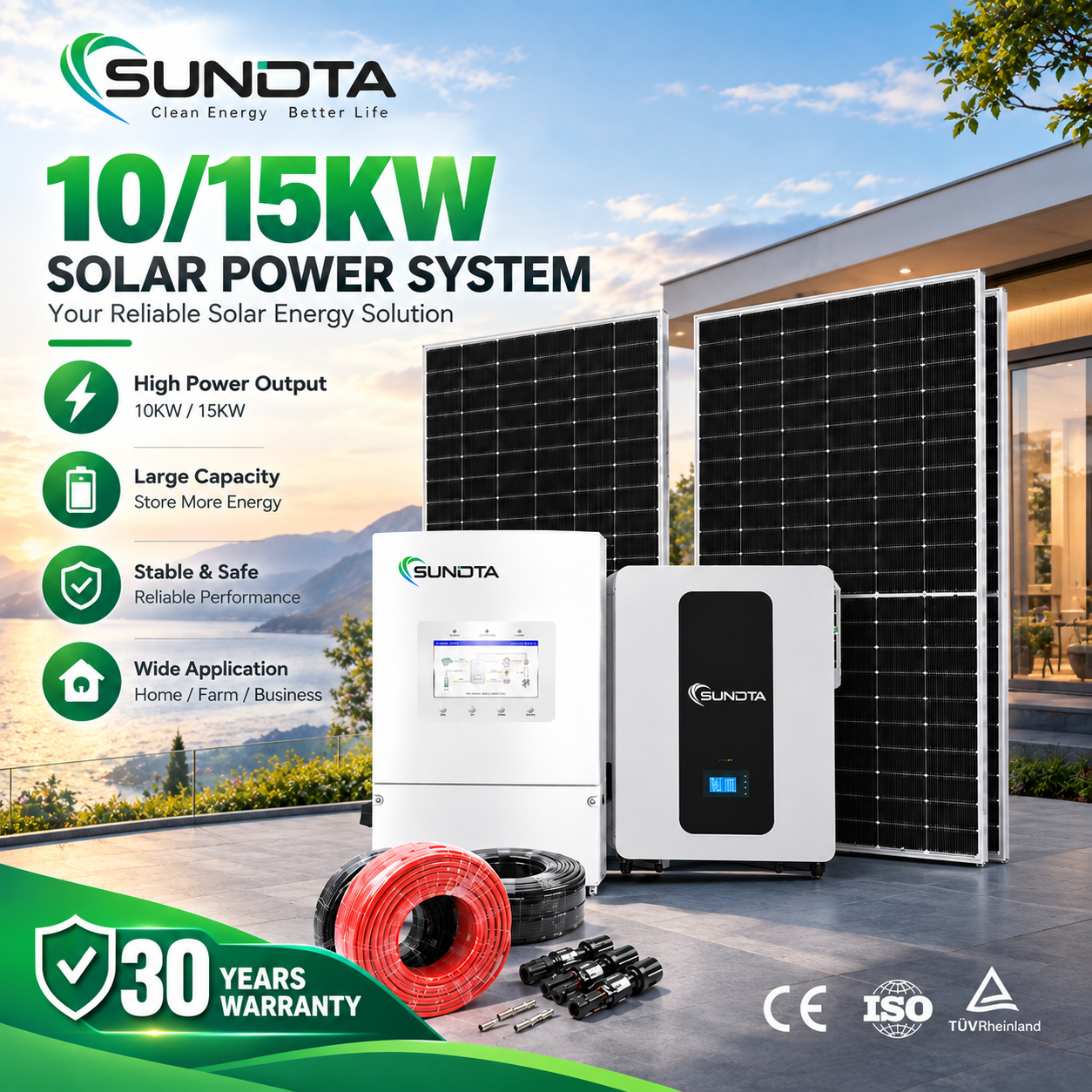
Premium 585W-595W N Type Bifacial PV Module High Yield Monocrystalline Solar Panels 590W Tier 1 Solar Power System
- Up to 23.1% Module Conversion Efficiency
- 80%±5% Bifaciality Factor Yield
- Near-Zero Light Induced Degradation
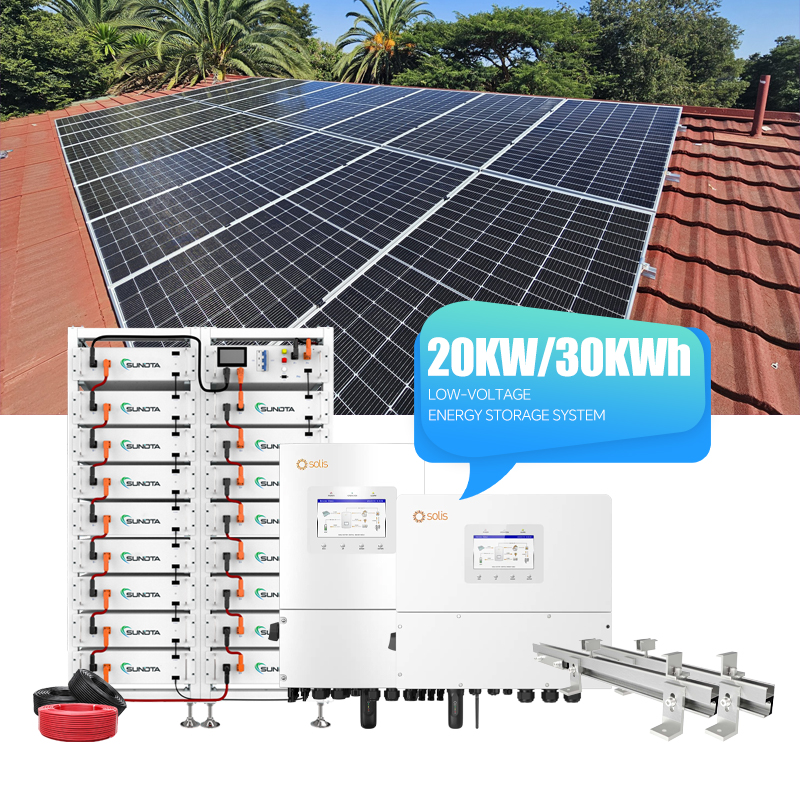
Complete Set of 20kW Solar Energy Storage System Hybrid Solar Panel Power Kits 20kW, 25kW, 30kW, 35kW With Cheap Price
- Expandable Architecture to 35kW
- Integrated Balance of System (BoS)
- Complete Certifications (CE, IEC)
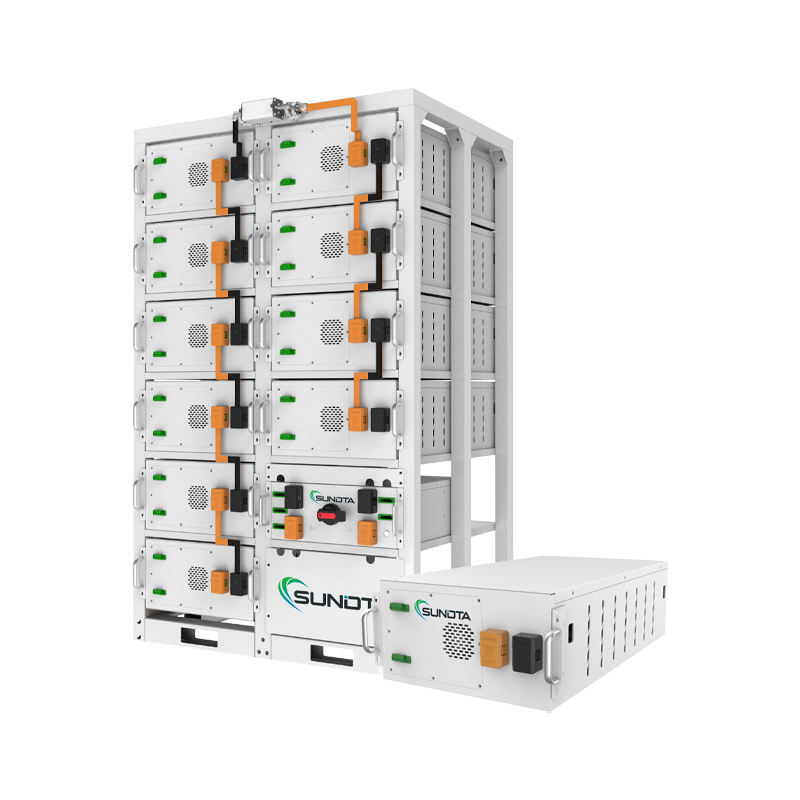
High Quality LiFePO4 Lithium Battery Stackable 51.2V 14.336kWh Wall-Mounted 10-Year Warranty Home Energy Storage Solar Battery
- 51.2V 280Ah Prismatic Configuration
- >6,000 Cycles @ 80% DoD
- Automotive-Grade Aerosol Fire Suppression
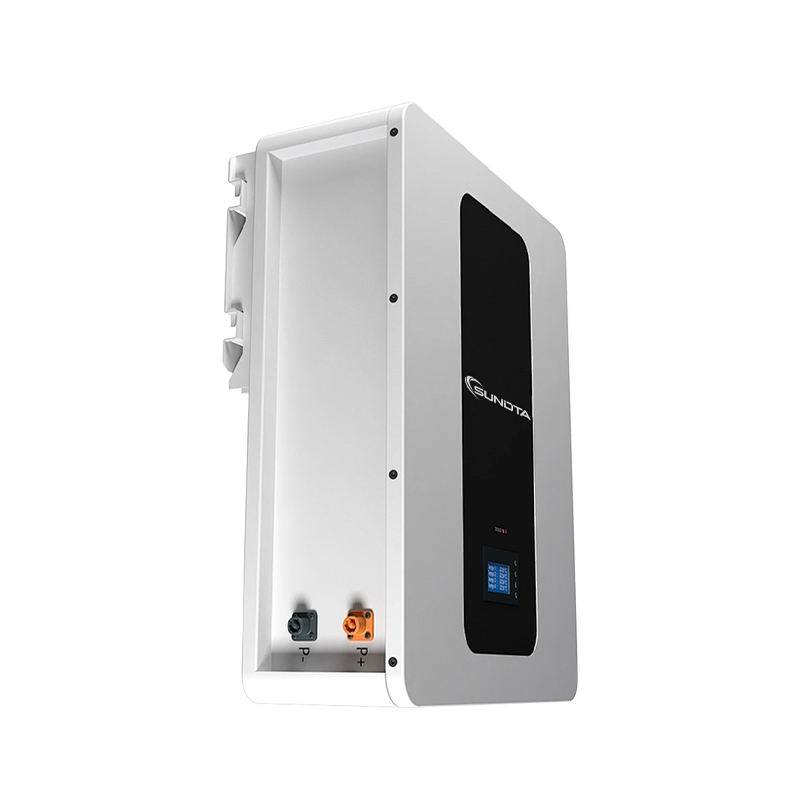
Sundta POLO-W1 LiFePO4 Lithium Battery Wall-Mounted 5kWh Home Power Storage Solar Energy System Deep-Cycle 51.2V 100Ah IP65
- Ultra-Slim 125mm Architectural Profile
- IP65 Rated Outdoor Enclosure
- Multi-Brand Protocol Matching (Deye, Solis)
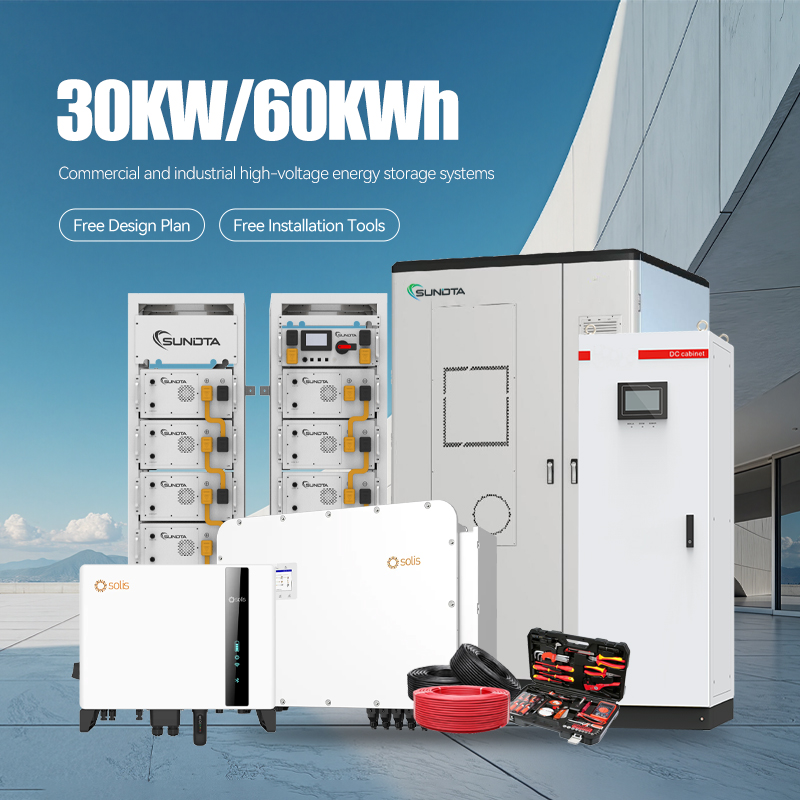
30KWH 51.2V 314AH LiFePO4 Battery Solar Energy Home Energy Storage 48v Solar Battery ALL in ONE SOLAR POWER SYSTEM
- High-Capacity 314Ah Prismatic Cell Base
- All-in-One Integrated Power Cabinet
- Cloud IoT Real-Time Cell Telemetry
The Paradigm Shift in Mobile Energy Storage: Engineering Whitepaper
The global demand for decentralized energy resilience has propelled portable power stations (PPS) and mobile energy storage systems (MESS) from recreational outdoor consumer gadgets into mission-critical infrastructure. For B2B importers, EPC contractors, regional distributors, and solar brand operators, procuring from China is no longer simply about searching for low manufacturing costs. It is an exercise in rigorous supply chain auditing, cell electrochemical safety validation, bidirectional inverter topology appraisal, and thermal management engineering.
Historically dominated by ternary lithium (NCM/NCA) 18650 cylindrical cells with capacities sub-1,000Wh, the commercial market has pivoted decisively toward Lithium Iron Phosphate (LiFePO4 / LFP) chemistry in high-density prismatic form factors. Modern commercial portable stations now regularly scale from 2,000Wh to over 30,000Wh through high-speed modular DC-bus interconnects. These systems bridge the operational divide between field mobility and whole-home microgrid resilience.
Core Architectural Pillars of Industrial-Grade Portable Power Stations
When evaluating high-capacity portable power systems and scalable energy storage hubs manufactured in China, technical procurement teams must audit three foundational engineering subsystems:
1. Electrochemical Integrity and Prismatic LFP Integration
Safety is the foremost operating benchmark. Prismatic LiFePO4 cells feature an inherent thermal runaway threshold exceeding 270°C (compared to 150°C–180°C for conventional cobalt-based ternary chemistries). Premium Chinese manufacturers utilize certified Grade-A automotive cells sourced from tier-one production nodes, delivering over 4,000 to 6,000 deep discharge cycles at 80% Depth-of-Discharge (DoD). This longevity lowers the Levelized Cost of Storage (LCOS) to under $0.05/kWh over the device operational life cycle.
2. Bidirectional Inverter Topologies & Extreme AC Fast-Charging
Bulky, external AC-to-DC charging bricks have become obsolete. Tier-1 manufacturers implement onboard bidirectional inverters utilizing Silicon Carbide (SiC) or Gallium Nitride (GaN) power switches. This enables the station’s internal H-bridge inverter to reverse its power flow when connected to utility AC, rectifying grid power directly into the battery bank at rates up to 2,000W–3,600W. Full system replenishment is routinely achieved within 60 to 90 minutes without degrading cell thermal envelopes.
3. High-Voltage MPPT Solar Controllers & Direct PV Ingestion
A mobile storage station is only as sustainable as its solar recharging capabilities. Leading manufacturers now engineer wide-voltage MPPT (Maximum Power Point Tracking) inputs supporting up to 150V–500V DC. This architecture enables field operators to string commercial high-efficiency N-Type TOPCon or bifacial PERC modules directly into the power unit without requiring fragile low-voltage combiners, achieving dynamic tracking efficiencies in excess of 99.8%.
| Evaluation Parameter | Legacy Consumer Units (NCM/18650) | Standard Commercial (LFP Cylindrical) | Next-Gen Industrial Systems (Prismatic LFP / Solid-State) |
|---|---|---|---|
| Cycle Life (to 80% Capacity) | 500 – 800 cycles | 2,000 – 3,000 cycles | 4,000 – 6,500+ cycles |
| Thermal Runaway Margin | 150°C (High Risk of Oxygen Release) | 270°C (Self-Extinguishing Chemistry) | >350°C (Non-Flammable Electrolytes) |
| AC Recharging Velocity | 6 – 8 Hours (External Adaptor) | 2 – 3 Hours (Internal Charger) | 0.8 – 1.2 Hours (Bidirectional GaN Inverter) |
| PV Tracking Topology | PWM / Narrow MPPT (12V–30V) | Standard MPPT (10V–60V) | Wide-Band MPPT (up to 150V–500V String Ready) |
| UPS Auto-Transfer Speed | >30ms (Sufficient for Lights Only) | 20ms (Occasional IT Reset) | <10ms (True Uninterruptible Server Grade) |
Strategic Procurement Trends: Navigating 2025–2030 Global Demand
The portable energy storage supply chain in China is maturing rapidly, spurred by automated giga-scale production lines, vertical supply integration in regional hubs like Hefei and Shenzhen, and increasingly stringent international import compliance mandates. Professional buyers must prepare for several decisive shifts:
Modular Scalability Replaces Fixed-Capacity Enclosures
Inventory risk remains a major headache for distributors. Keeping dozens of distinct SKUs (ranging from 1kWh up to 10kWh) ties up working capital. The industry is converging around modular master-slave architectures: a single 2kW–3kW bidirectional inverter host unit paired with universal, hot-swappable battery expansion packs. This gives dealers flexible SKU customization, allowing end-users to buy an initial 2.5kWh setup and stack up to 20kWh as their budget expands.
Split-Phase and Universal Grid-Tie Interoperability
Cross-border compliance used to restrict sales channels. Western markets require split-phase 120V/240V outputs for heavy-duty appliances (pumps, HVAC, high-draw power tools). Modern high-power Chinese systems integrate dual-inverter synchronization protocols or high-frequency toroidal auto-transformers, providing pure sine wave power suitable for both 120V US residential sub-panels and European 230V single-phase / 400V three-phase mini-grids.
Cloud Telemetry, Open BMS Protocols, and Dynamic Tariff Shaving
Software is the new frontier. Advanced buyers prioritize suppliers that provide open CAN and RS485 communication protocols, allowing the battery management system (BMS) to interface seamlessly with mainstream residential inverters (such as Deye, Solis, and Growatt). Through embedded 4G/Wi-Fi IoT modules and Matter-compliant architectures, units can automatically recharge during off-peak power hours and discharge during high-tariff periods, delivering demonstrable ROI beyond emergency blackouts.
Key Technological Innovations Shaping Tomorrow's Sourcing
Stay ahead of technological obsolescence. These five structural innovations are driving next-generation RFP specifications for institutional energy tenders and high-volume brand catalogs.
Solid-State & Semi-Solid Batteries
Semi-solid lithium cells are transitioning from test laboratories to premium production lines. Delivering volumetric energy densities over 350 Wh/L with non-liquid gel electrolytes, these systems decrease portable pack weight by up to 35% while virtually eliminating thermal runaway danger in extreme ambient heat.
Gallium Nitride (GaN) Power Electronics
Replacing traditional silicon IGBT switches with GaN and SiC semiconductors cuts internal switching heat dissipation by up to 40%. The result is silent, fan-less or smart low-RPM cooling topologies, extreme power densities (>1.8W/cm³), and pure sine wave inversion operating above 95% electrical efficiency.
Balcony Solar & Micro-Storage Integration
In response to explosive European and Japanese demand, portable power stations now incorporate dual micro-inverter outputs that back-feed power into home circuits through standard wall outlets, adhering strictly to VDE-AR-N 4105 and CE standards with dynamic anti-islanding protection.
Smart Active BMS Balancing
Traditional passive bleed balancing burns off excess energy as heat. Modern industrial BMS platforms feature high-efficiency inductor-based dynamic active balancing, redistributing charge across cell groups at currents up to 2A to prolong usable pack life even under continuous fast-charge cycles.
Automotive-Grade Fire Containment
Global logistics and storage regulations are tightening. Next-generation enclosures integrate multi-layered aerogel thermal barriers between individual cell cans, paired with miniature aerosol fire suppressant modules that automatically actuate if internal cell temperatures spike abnormally.
Low-Temperature Sodium-Ion Hybridization
For operations in sub-zero alpine and northern climates where standard lithium-ion chemistries suffer cold-temperature lithium plating during charge, emerging dual-chemistry platforms pair sodium-ion cells with LFP packs, retaining up to 85% capacity at -30°C without requiring internal preheating.
Why Tier-1 Importers Partner with Anhui RJV New Energy
Headquartered in the national photovoltaic hub of Hefei, China, Anhui RJV New Energy Co., Ltd. combines automated PV manufacturing lines with high-precision lithium energy storage assembly, providing distributors and project developers with single-source reliability.
2 GW Manufacturing Run-Rate
Fully automated cell-stringing, automated optical inspection (AOI), and laser busbar welding facilities delivering consistent manufacturing yields across modules, inverters, and lithium storage solutions.
TÜV Rheinland Audited Facility
Operations, production workflows, supply chain controls, and ESG compliance audited and verified on-site by TÜV Rheinland. Full model-level CE, IEC 61215, IEC 61730, and UN38.3 test dossiers available.
38 Patents & Proven Track Record
With 12+ years of clean energy R&D experience, 38 national intellectual property patents, and over 500 MW in worldwide solar and storage installations, our engineering teams remove integration risks.
Single-SKU System Compatibility
Never deal with cross-vendor finger-pointing. We ensure inverter MPPT profiles, battery BMS firmware protocols, and solar module string voltages match perfectly before cargo departs the factory floor.
Frequently Asked Questions by Global Importers & EPCs
Clear, direct answers regarding factory minimum order quantities, international hazmat transport, OEM/ODM customizations, and warranty accountability.