Featured MPPT Power Systems & Energy Storage Kits
Engineered for uncompromising yield in microgrid, hybrid commercial, and off-grid residential installations across West End. Tested under dynamic solar irradiance fluctuations and high maritime moisture environments.
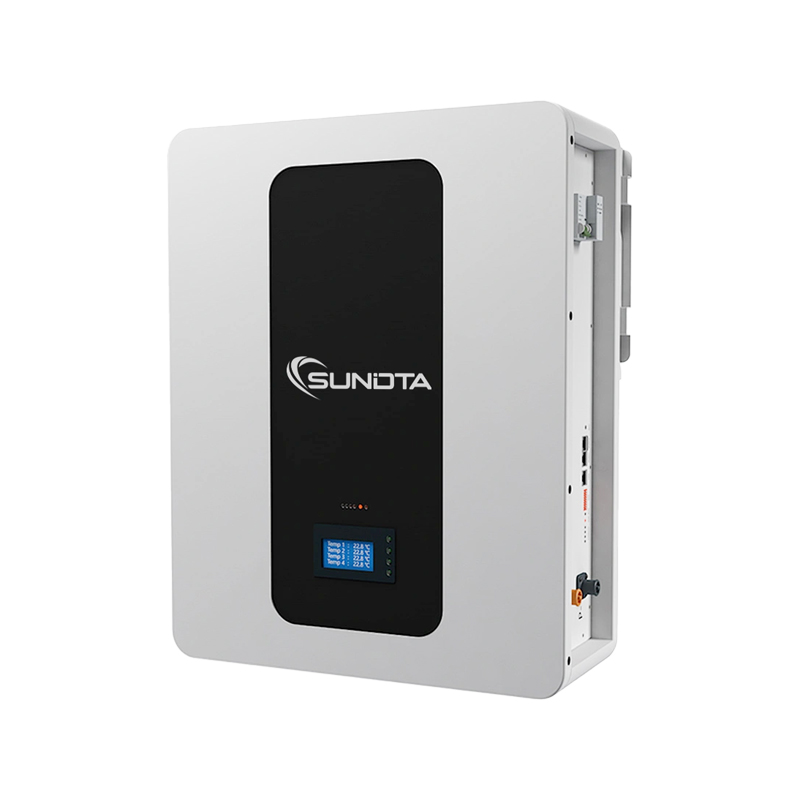
Sundta EU Warehouse 48V/51.2V LiFePO4 Lithium Ion Battery 10kWh Solar Home Energy Storage System Wall-Mounted 200Ah Capacity
- Nominal Voltage: 51.2V / 200Ah (10.24 kWh)
- Closed-loop CAN/RS485 smart inverter communication
- Deep cycle LiFePO4 grade-A prism cells (>6,000 cycles)
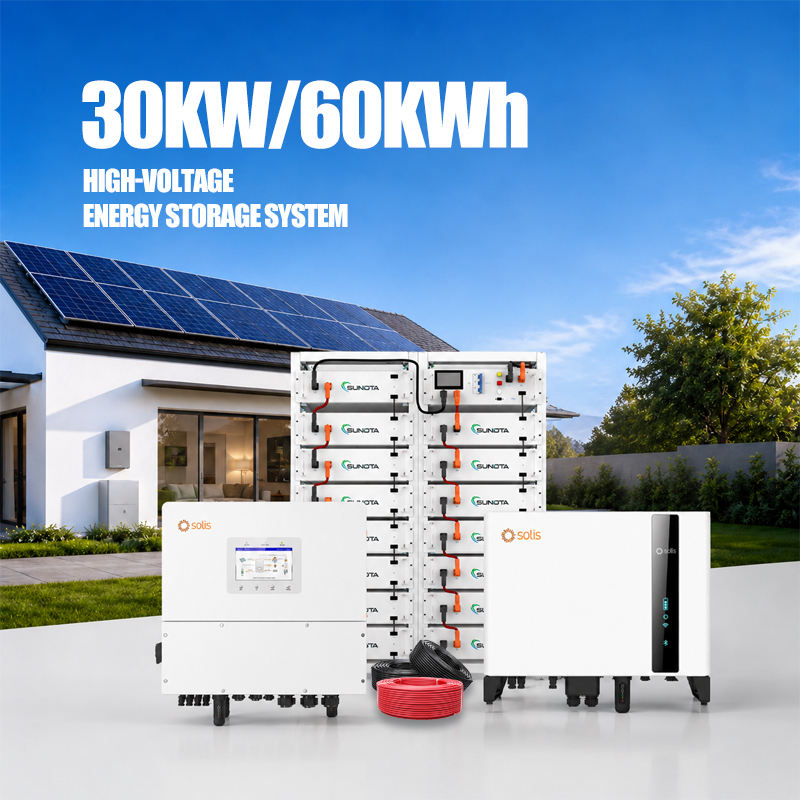
51.2V Split All-in-One Solar Battery Inverter System 30kWh 30kWh LiFePO4 Energy Storage Backup Power Hybrid CAN CE Long Warranty
- High-capacity 30 kWh scalable modular architecture
- Integrated dual-channel high-voltage MPPT tracker
- Zero-millisecond switchover seamless UPS performance
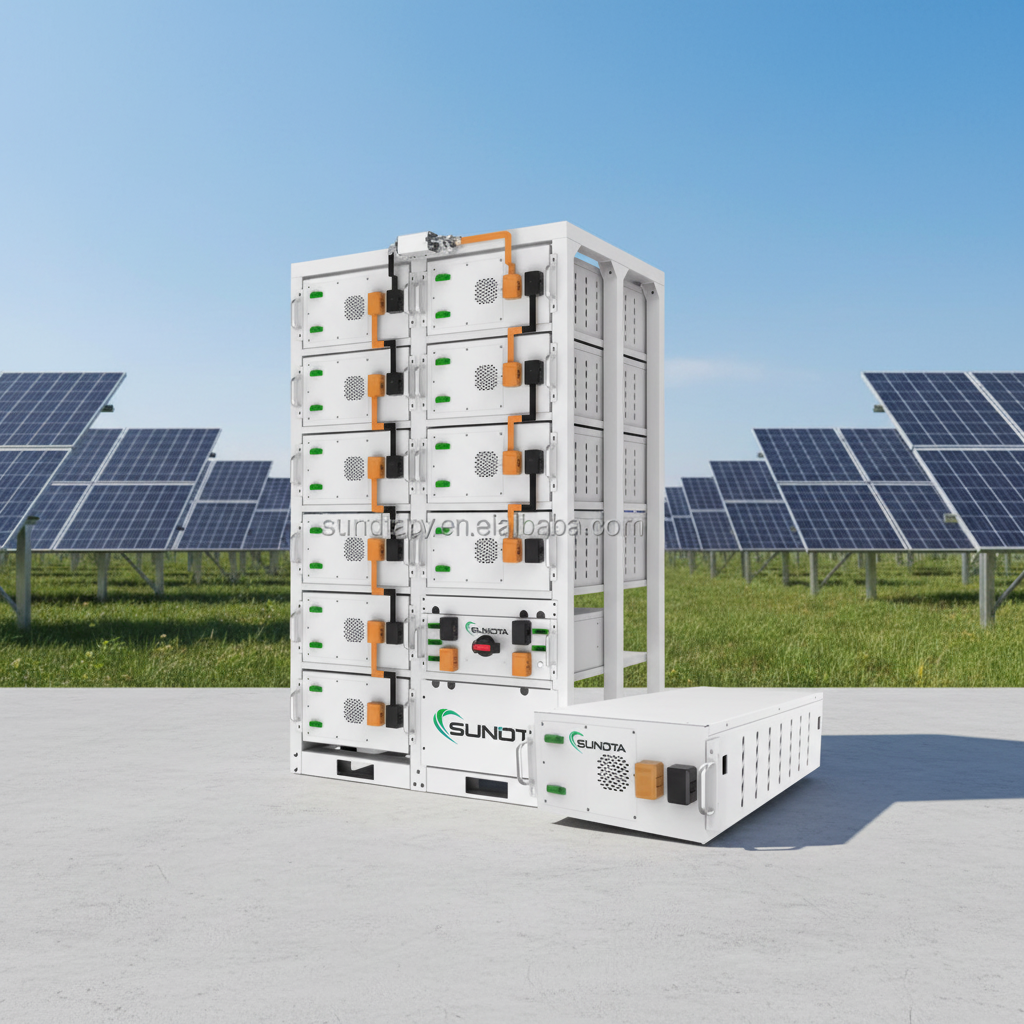
Commercial High Voltage LiFePO4 Energy Storage System 40kWh 50kWh 100kWh Air Cooling LiFePO4 Battery Cabinet for on Off Grid
- HV Range: 200V–800V DC reduced conversion loss
- Forced air-cooling & aerosol fire suppression built-in
- Peak shaving & demand load management optimization
Complete 50kw Hybrid Solar System deye 3 Phase 380v on off Grid 10kw 15kw 20kw 25kw 30kw 40kw 50kw Solar Energy System
- Deye commercial 3-phase hybrid topology (380V/400V)
- Quadruple MPPT inputs maximizing multi-angle arrays
- Microgrid diesel generator interaction controller
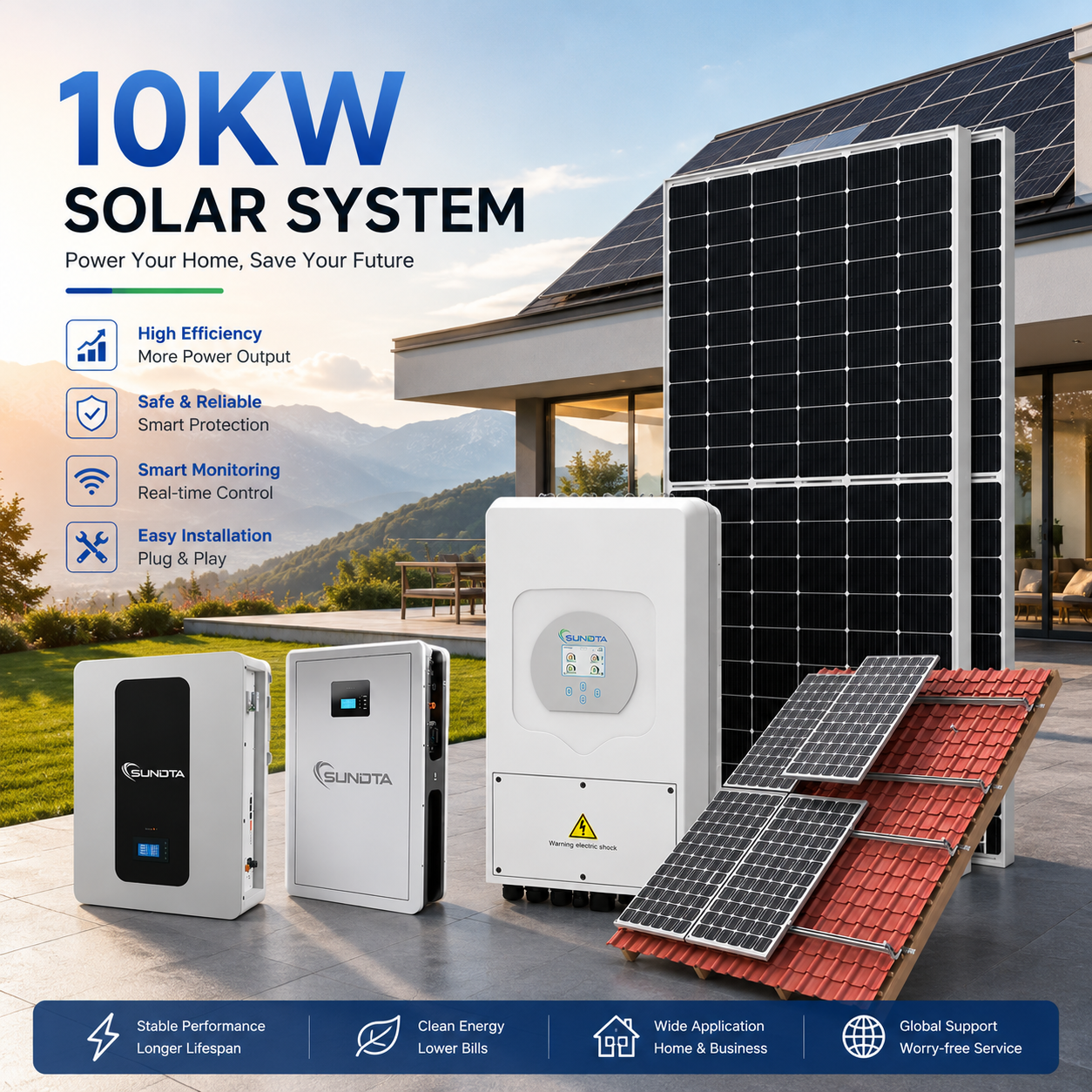
Emergency Backup Whole House Hybrid Solar Power System 15kW 20kW 25kW 30kW 50kW Solar Generator with Smart MPPT Battery
- Heavy-duty 15kW–50kW instantaneous surge handling
- Dynamic solar tracking under erratic weather conditions
- Automated grid shedding & critical circuit isolation
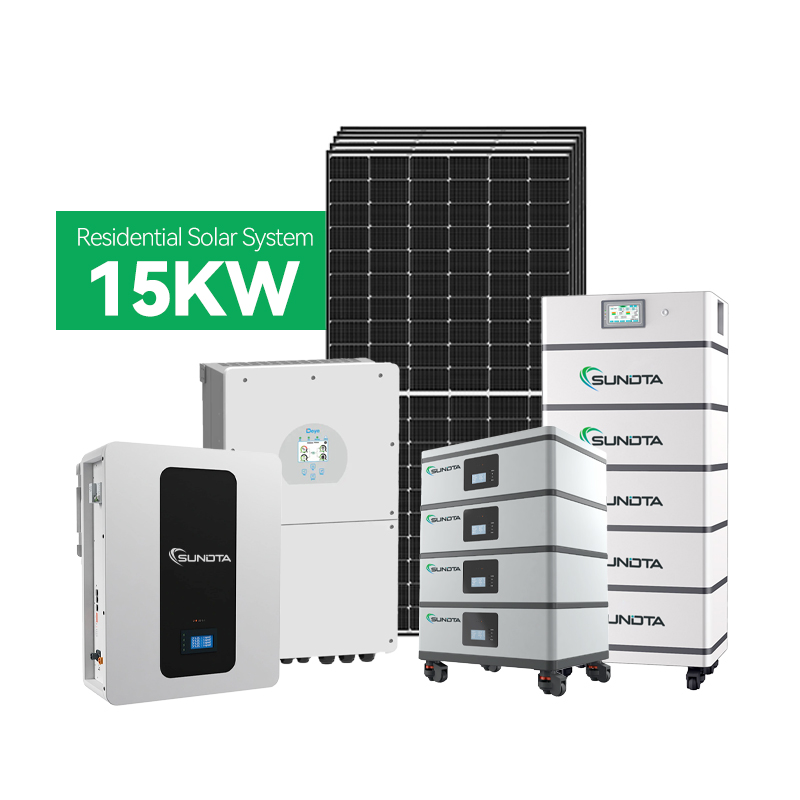
Sundta Hybrid Solar Energy System Low Price Solar Panel Kit 5KW 10KW 12KW 15KW Full Set Solar System Kit Home System
- Pre-matched PV-to-inverter wiring loom and DC combiner
- High tracking accuracy MPPT charge governance
- Certified for rapid field installation and commissioning
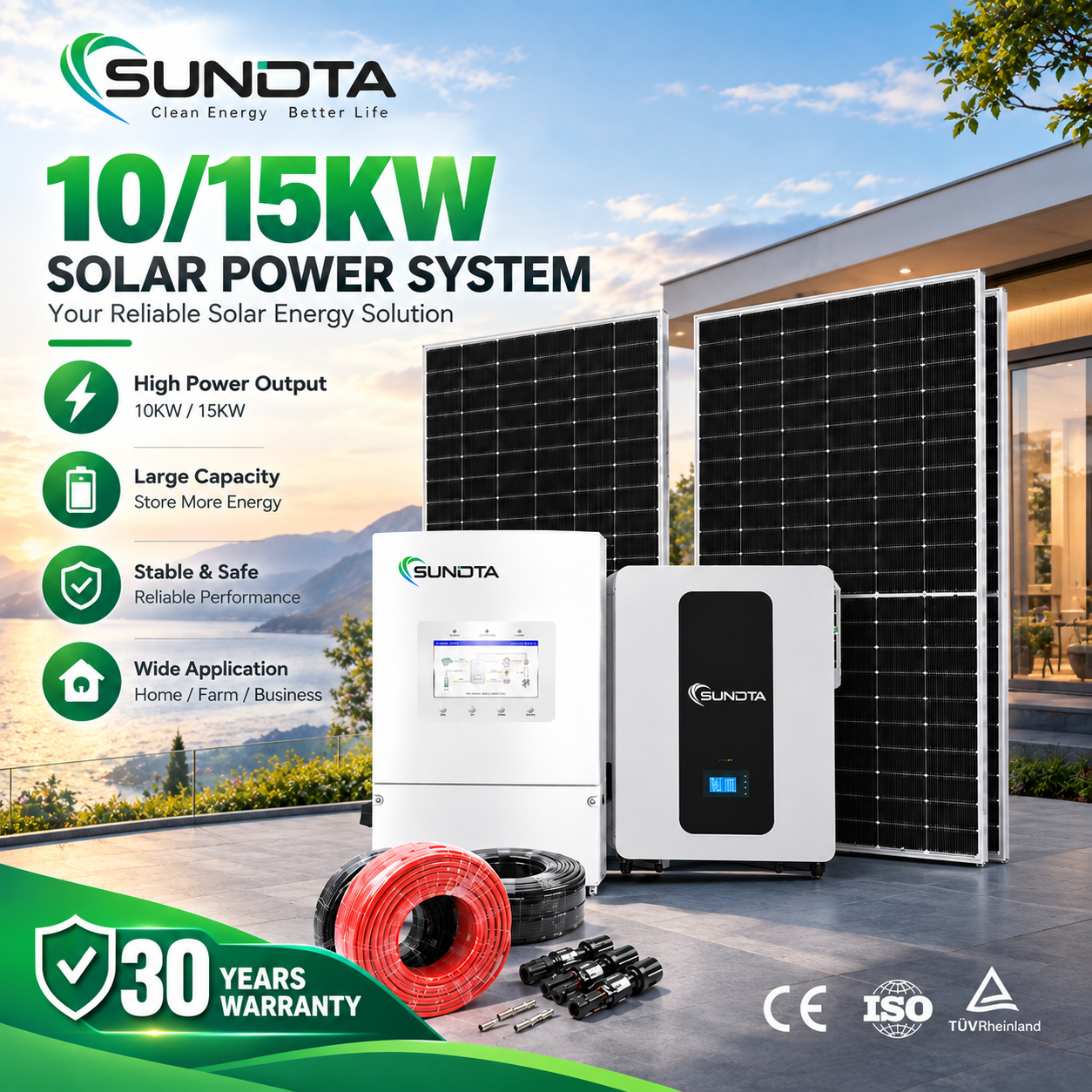
Premium 585W-595W N Type Bifacial PV Module High Yield Monocrystalline Solar Panels 590W Tier 1 Solar Power System
- Module efficiency up to 23.03% with zero light-induced LID
- Bifacial gain of 10%–30% on reflective ground / flat roofs
- Optimized Voc for longer series strings and lower DC cabling
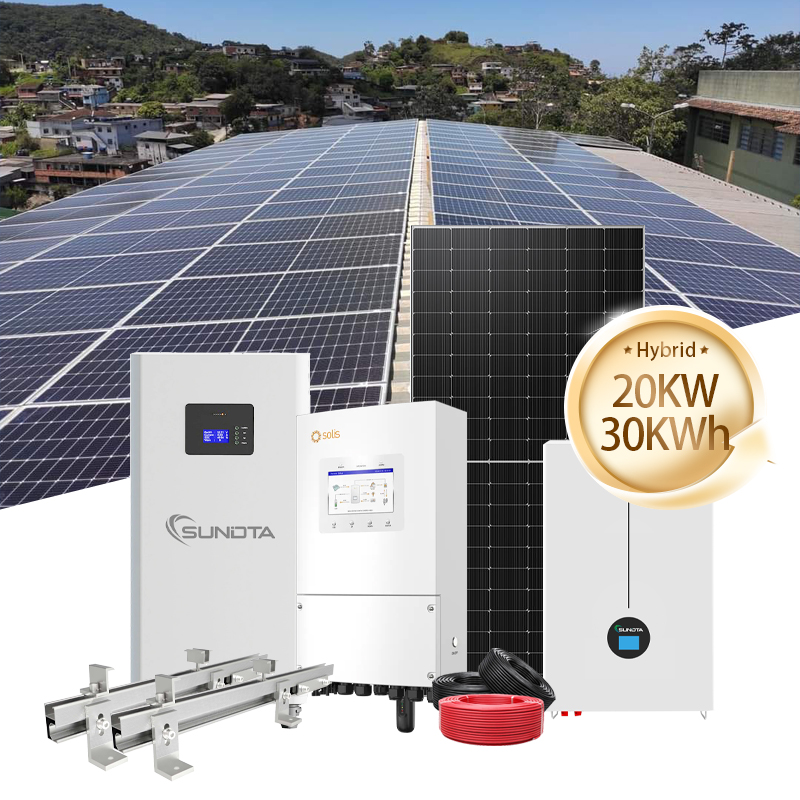
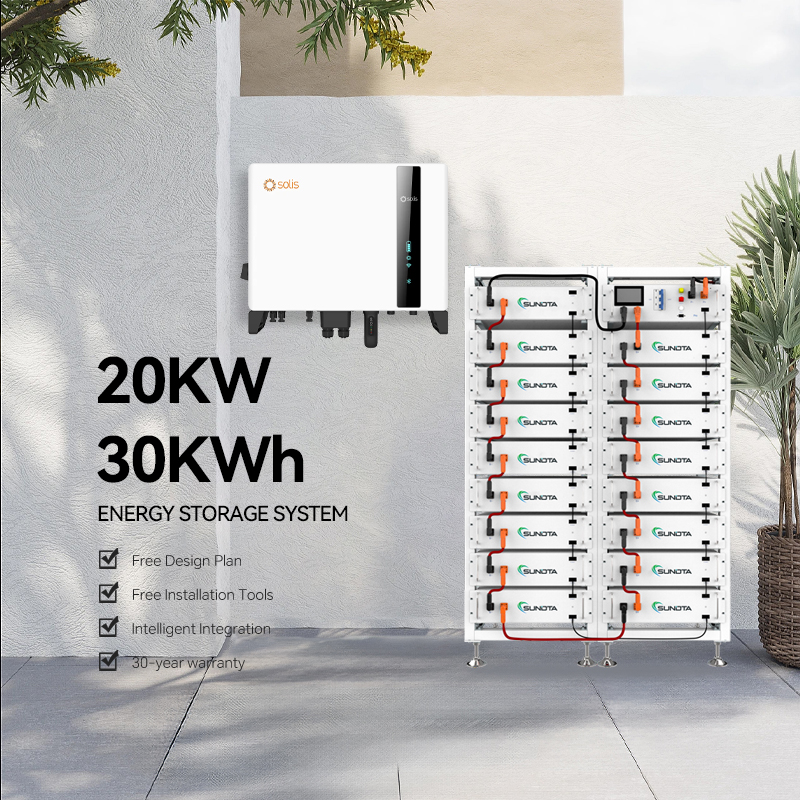
Complete Hybrid Solar Energy Storage System 20KW 30KW 50KW All in One Solar Panel Energy System for Home with Lithium Battery
- High efficiency DC-coupled MPPT battery charging path
- Wide MPPT operating voltage window (150V–850V)
- Advanced cloud IoT energy routing with mobile app dashboard
Engineering White Paper: Next-Generation MPPT Dynamics & BMS Symbiosis
Maximum Power Point Tracking (MPPT) is the thermodynamic and electrical nucleus of modern photovoltaic infrastructure. In high-density coastal and urban districts such as West End, conventional solar charging methods often degrade in overall energy yield due to micro-climatic cloud transits, high ambient temperatures, and complex roof shading patterns. Standard Pulse Width Modulation (PWM) systems force the solar panel to operate at battery voltage levels, causing up to 35% of array potential to be discarded as unharvested energy.
As a seasoned supplier and global exporter, Anhui RJV New Energy Co., Ltd. implements an advanced multi-phase synchronous rectification circuit coupled with high-speed Perturb and Observe (P&O) and Incremental Conductance tracking algorithms. Operating at high switching frequencies with automotive-grade silicon carbide (SiC) MOSFETs, our MPPT units sweep the IV-curve in under 15 milliseconds, continuously capturing the global maximum power peak even during partial array shadowing.
| Operational Parameter | Conventional PWM Regulators | Standard Commercial MPPT | RJV Industrial MPPT Architecture |
|---|---|---|---|
| Harvesting Efficiency | 68% – 75% | 94% – 96% | 99.2% – 99.8% Dynamic Tracking |
| PV Input Voltage Margin (Voc) | 1.2 × Battery Voltage | Up to 100V – 150V DC | Up to 500V – 1000V DC (High Voltage Strings) |
| Thermal Derating Threshold | Sharp derating at 40°C | Derating at 45°C | Full nominal output sustained to 55°C |
| BMS Communications | Analog voltage sensing only | RS485 open loop | Dual-CAN / RS485 Dual Isolated Protocol |
| Partial Shading Recovery | Trapped at local minima | Slow sweep (10–30s) | Ultra-fast Multi-Peak Global Scan (<15ms) |
Localized Application Scenarios in West End
Understanding the operational challenges unique to the West End geographical and commercial footprint is paramount for system sizing, equipment selection, and ensuring multi-decade reliability.
High-Density Urban & Heritage Estates
Space-constrained residential architecture in West End demands maximum watts per square meter. Our high-voltage MPPT controllers allow long series strings of N-Type TOPCon panels that operate at elevated voltages, minimizing conduit footprint and eliminating large junction boxes. Combined with our wall-mounted 51.2V LiFePO4 batteries, homeowners achieve full emergency autonomy while conserving critical floor space.
Marine, Estuary & Waterfront Microgrids
Proximity to saline marine breezes in coastal sectors of West End introduces accelerated corrosion risks and thermal stress. RJV MPPT charge regulators feature conformal-coated PCB assemblies, IP65-rated ingress-protected die-cast aluminium enclosures, and passive heatsink convection. These marine-grade protections prevent salt-spray galvanic corrosion in harbour-side power banks and waterfront villas.
Commercial Retail & Logistics Hubs
For industrial facilities with variable HVAC and machinery loads, peak energy tariffs present a severe operational cost. Our complete 50kW hybrid solar platforms, incorporating quad-MPPT Deye platforms and modular LiFePO4 storage cabinets, execute automated programmatic peak-shaving, peak-shifting, and reactive power compensation with sub-cycle precision.
Market Outlook & Renewable Evolution in West End
The renewable energy infrastructure across West End is undergoing a structural paradigm shift driven by stringent carbon mitigation mandates, high baseline grid tariffs, and the modernization of electrical distribution infrastructure. Procurement specialists, EPC engineers, and energy distributors must navigate four decisive market transitions:
Transition to High-Voltage DC Storage
Low-voltage (48V) systems are rapidly giving way to High-Voltage (200V–800V) DC buslines in projects over 15kW. By stepping up operating voltage, busbar copper volume decreases fourfold, transmission heat losses plunge, and DC-to-DC conversion efficiency surpasses 98.5%.
Mandatory Grid-Code Compliance
Distribution Network Operators (DNOs) in West End are enforcing rigid export-limiting and rapid shutdown compliance. RJV hybrid MPPT systems integrate built-in zero-export firmware limits, arc-fault circuit interrupters (AFCI), and remote over-the-air parameter configuration.
LFP Chemistry Dominance
Cobalt-free Lithium Iron Phosphate (LiFePO4) has completely displaced NMC and flooded lead-acid batteries. Offering extraordinary chemical stability, non-combustible properties under nail-penetration tests, and 6,000+ cycle life, LFP is now non-negotiable for commercial project insurance.
Containerized Microgrid Scaling
For commercial agricultural clusters, construction estates, and islanded systems surrounding West End, localized buyers are bypassing fragmented multi-vendor procurement in favor of all-in-one containerized 1MWh–2MWh BESS units equipped with pre-engineered multi-MPPT arrays.
Why Global B2B Buyers Partner with Anhui RJV New Energy
Sourcing renewable energy components requires deep manufacturing transparency, consistent metallurgical and semiconductor quality, and an unwavering commitment to after-sales technical support. Located in Hefei, the Silicon Valley of Chinese clean technology, Anhui RJV New Energy Co., Ltd. serves as a direct manufacturer and integrated system integrator.
TÜV Rheinland Assessed Manufacturing
Our manufacturing and assembly lines undergo rigorous on-site validation by TÜV Rheinland. We enforce strict multi-stage automated EL (Electroluminescence) testing, flash tests, and high-potential insulation testing on all PV modules and MPPT inverter systems prior to container stuffing.
Unified BOM Compatibility
The single greatest cause of site commissioning delays is protocol mismatch between MPPT chargers, battery management systems (BMS), and third-party inverters. RJV pre-programs and validates CAN/RS485 closed-loop communication across our entire lineup with Deye, Solis, and Growatt ecosystems.
Strategic Logistics & EU Warehousing
To support buyers facing acute project deadlines in West End and broader European hubs, we maintain continuous inventory of high-demand 48V/51.2V LiFePO4 modules and all-black N-Type solar panels directly in our European bonded warehouses, enabling rapid dispatch within 48 to 72 hours.
Frequently Asked Questions: Sourcing MPPT Controllers & ESS in West End
Essential technical, financial, and logistical insights compiled by RJV senior field application engineers for engineering procurement teams.
How does an MPPT controller handle low solar irradiance and high temperature in West End?
Under overcast coastal skies or high ambient summer temperatures, solar cell open-circuit voltage (Voc) drops significantly. An MPPT charge controller utilizes high-speed tracking (sweeping up to 100 times per second) and a wide DC input window. While a standard PWM controller fails when panel voltage drops near battery level, RJV MPPT hardware steps up the voltage or captures energy from early dawn to late dusk, harvesting up to 30% more daily watt-hours. Furthermore, our heavy-gauge finned heat sinks prevent thermal throttling up to 55°C ambient conditions.
What is the minimum order quantity (MOQ) and sample policy for B2B buyers in West End?
We maintain highly flexible procurement structures tailored for distributors, installers, and EPC contractors. Complete residential hybrid solar kits and standard hybrid inverters are available with an MOQ of 1 set / 1 unit for verification and testing. LiFePO4 wall-mounted batteries start from 1 piece. Solar modules are generally supplied by full pallet loads (e.g., 13,650W or 17,280W) to prevent transit vibration damage. Consolidated multi-product container orders (mixing panels, MPPTs, and batteries) are fully supported.
Are your MPPT and battery energy systems compatible with existing Deye or Solis inverters?
Yes. Our Sundta 51.2V and high-voltage rack batteries incorporate multi-protocol BMS motherboards pre-flashed with native firmware for Deye, Solis, Growatt, Victron, GoodWe, and Sofar platforms. Connection via standard RJ45 CAN bus ensures real-time reporting of State of Charge (SOC), cell voltage anomalies, charge current limits, and automatic fault cutoffs without manual dip-switch configuration.
Which Incoterms, payment options, and international certifications apply to West End shipments?
We routinely execute shipments under FOB, CIF, CFR, and EXW agreements, alongside door-to-door DDP arrangements for European and UK regional deliveries. Accepted financial settlement mechanisms include T/T, Irrevocable L/C at sight, Western Union, and secure credit options. All export hardware holds comprehensive compliance dossiers, including CE, TÜV Rheinland assessment reports, IEC 61215, IEC 61730, UN38.3 battery transport safety certification, and MSDS sheets for expedited local customs clearance.
How does RJV deliver technical support and warranty fulfillment across international time zones?
Anhui RJV New Energy operates a dedicated 24/7 technical engineering desk. Field installers can access real-time sizing calculations, single-line diagrams (SLD), remote inverter telemetry troubleshooting, and firmware updates. Our standard warranties range from 5 years on standalone power electronics to 10 years (or 6,000 cycles at 80% DOD) on LiFePO4 battery modules, backed by full component swap-out and spare parts provisioning.
Accelerate Your Renewable Projects in West End
Direct factory pricing, verified TÜV Rheinland engineering compliance, and pre-integrated solar storage solutions. Request a tailored technical proposal and bill of materials quote from our senior application engineers.