Core PV & Storage Components Ready for Cibao Importers
Engineered for high-temperature tropical stability, unbalanced phase loads, and harsh industrial environments. Explore our factory-direct three-phase hybrid inverters, N-type PV modules, and modular LiFePO4 batteries.
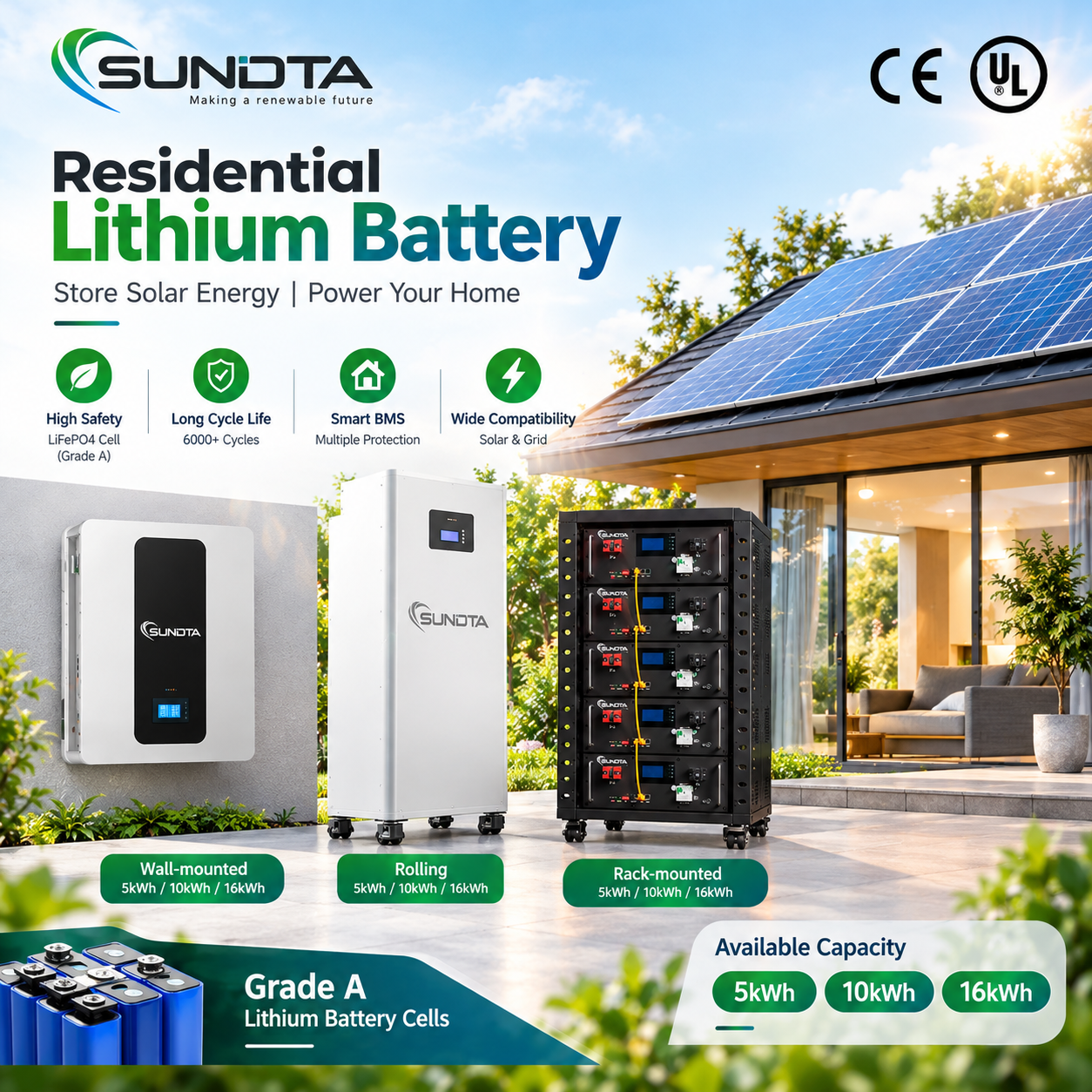
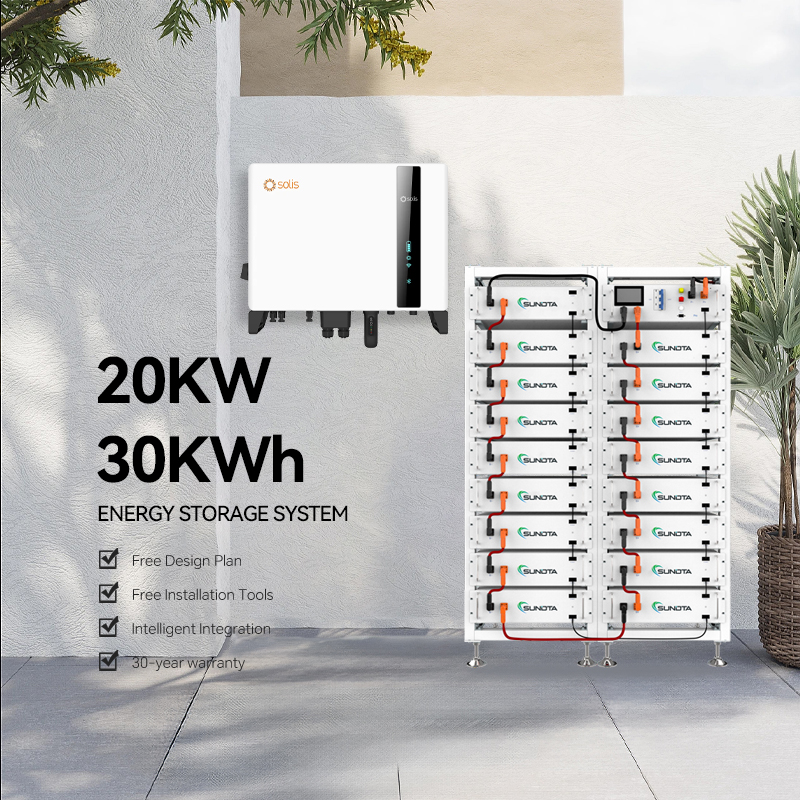
Sundta Stacked 10kWh–30kWh Modular LiFePO4 Battery System
- Scalable 10kWh to 30kWh stack design
- Closed-loop CAN/RS485 hybrid inverter comms
- 6,000+ deep cycles with Grade-A prismatic cells
Premium 585W–595W N-Type Bifacial Monocrystalline PV Module
- Bifacial gain up to 25% for reflective roofs
- Low temperature coefficient: -0.30%/°C
- Enhanced PID/LID resistance for tropical heat
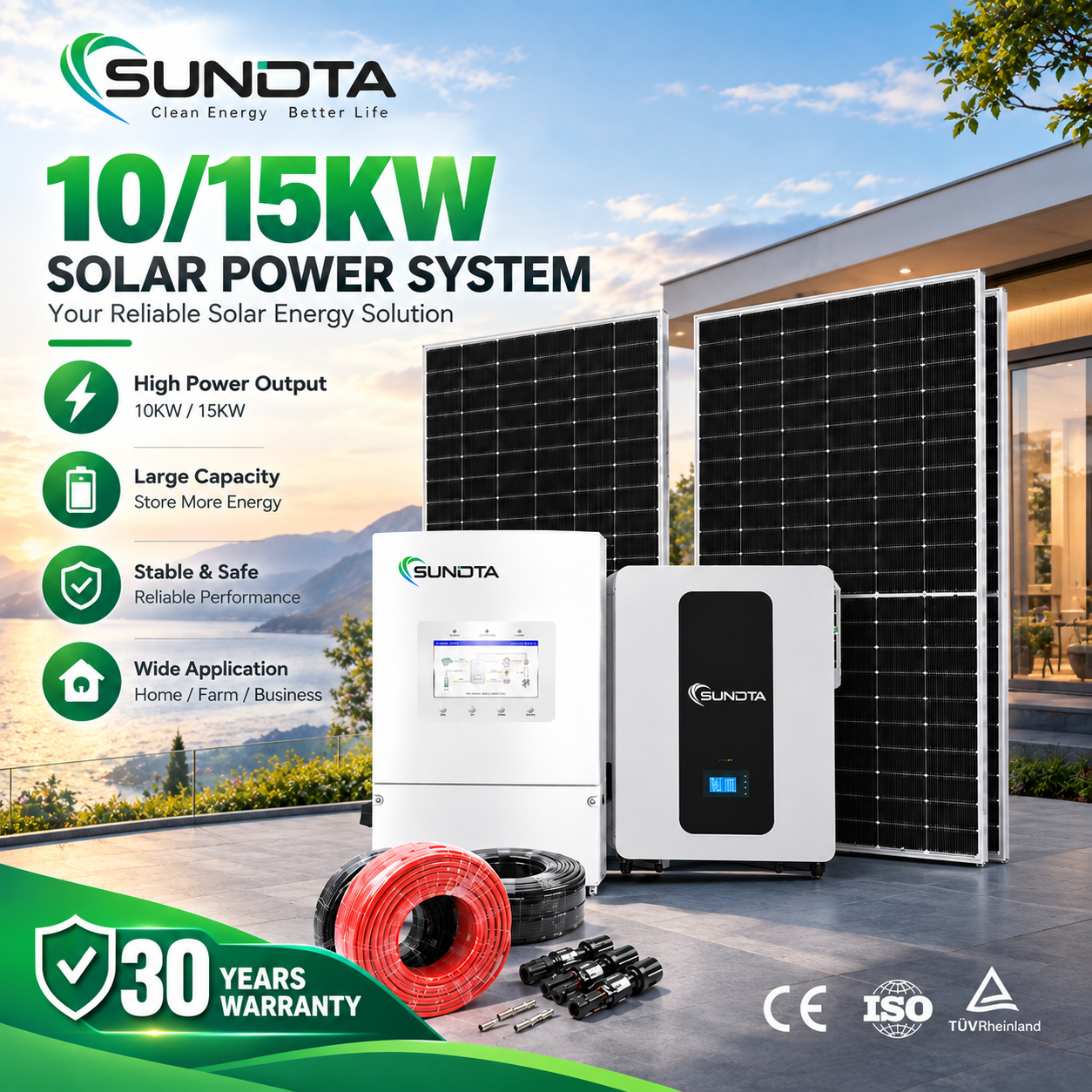
Complete 50kW Deye Three-Phase 380V Hybrid Solar System
- 10kW to 50kW multi-MPPT high-voltage engine
- Seamless diesel generator & grid synchronizing
- 100% unbalanced load capacity per phase
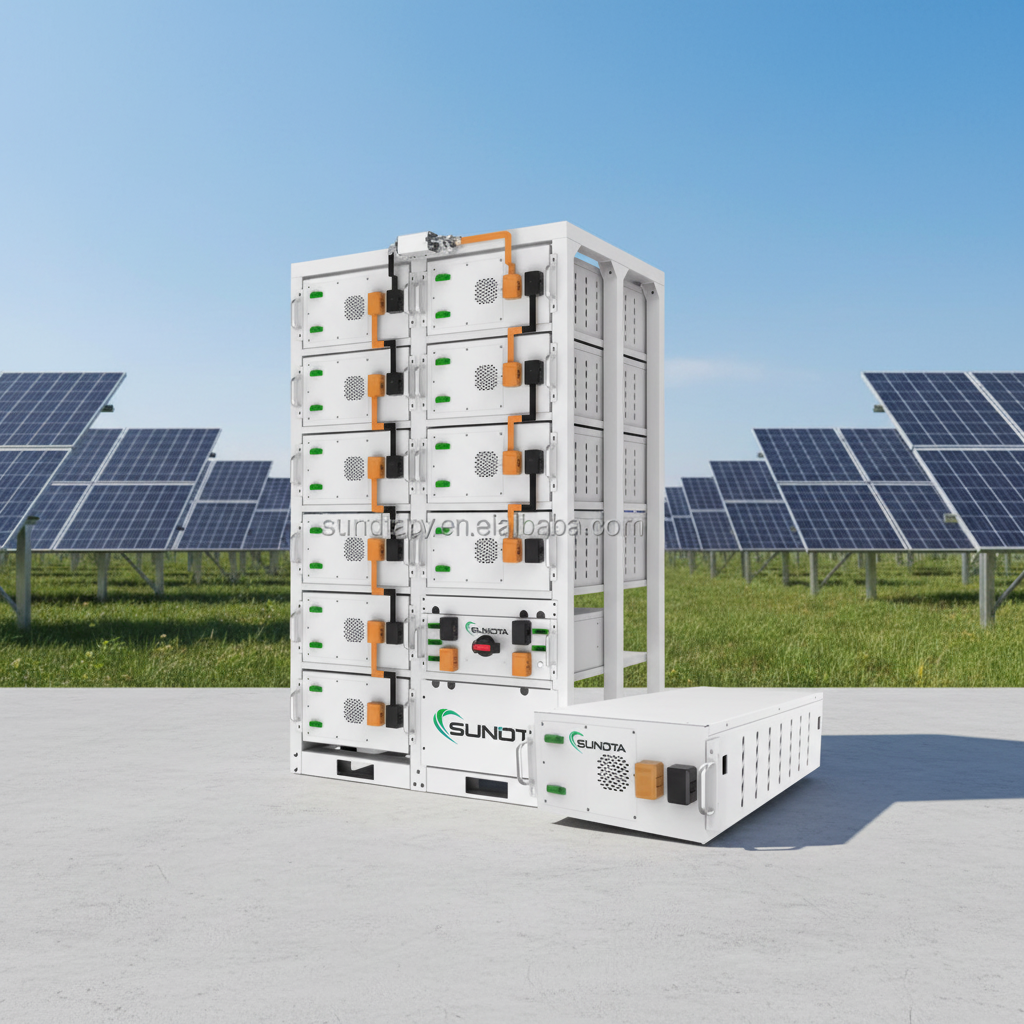
Commercial High-Voltage 40kWh–100kWh LiFePO4 ESS Cabinet
- HV rack configuration with integrated air cooling
- High round-trip efficiency >95%
- Optimized for factory peak shaving & demand offset
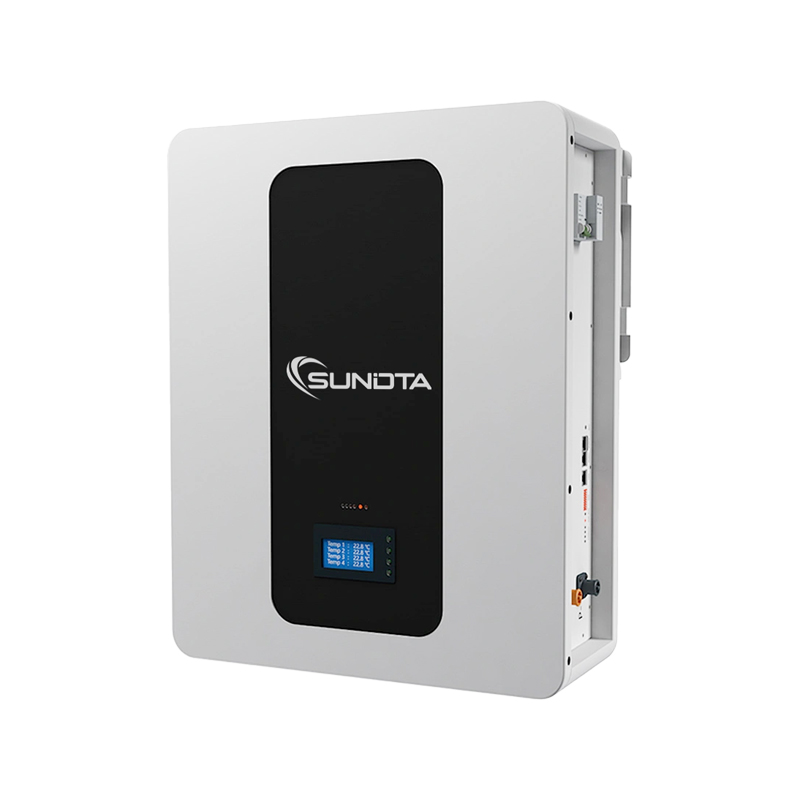
Sundta 51.2V 200Ah 10kWh Wall-Mounted LiFePO4 ESS
- Compact footprint for residential & light commercial
- Built-in smart BMS with overcurrent protection
- Parallel capability up to 15 modular units
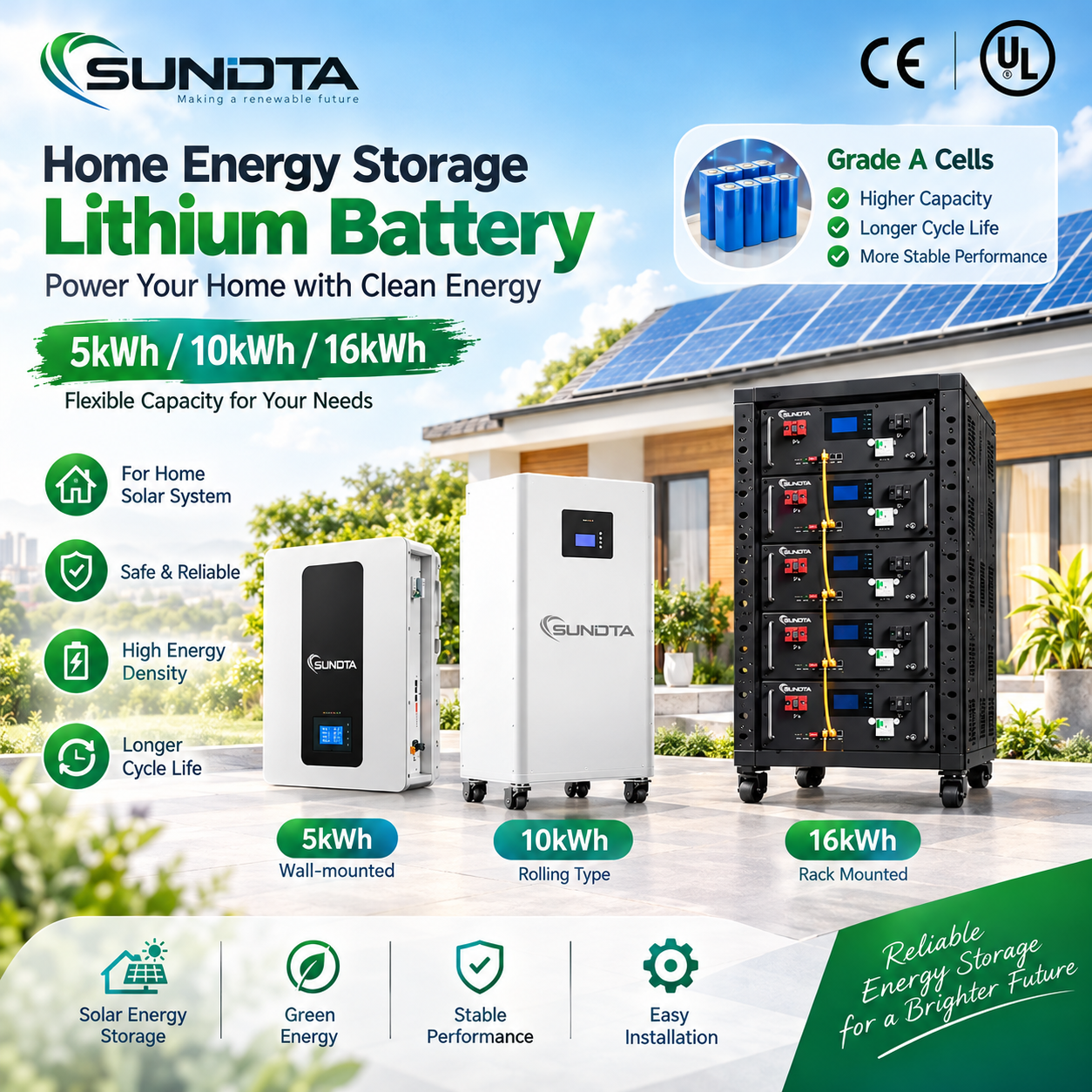
Sundta 51.2V 200Ah Home & Office Solar Storage Battery
- Heavy-duty extruded aluminum enclosure
- Comprehensive telemetry (voltage, temp, SOC)
- Seamless integration with Solis & Deye hybrids
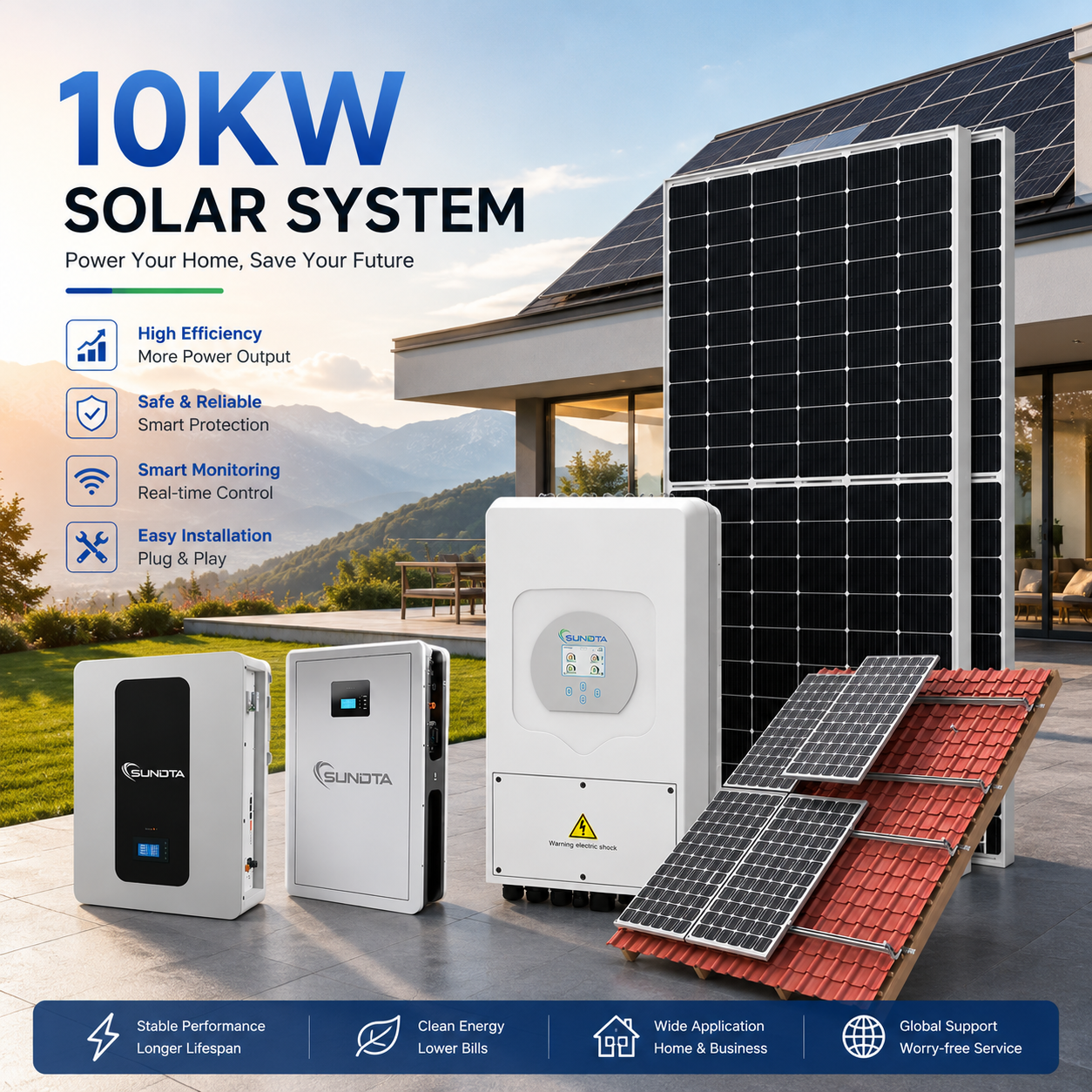
Emergency Whole-House & Facility 15kW–50kW Hybrid System
- Integrated smart MPPT solar charge controllers
- Dual AC output for critical & regular facility loads
- Remote mobile cloud monitoring & remote firmware
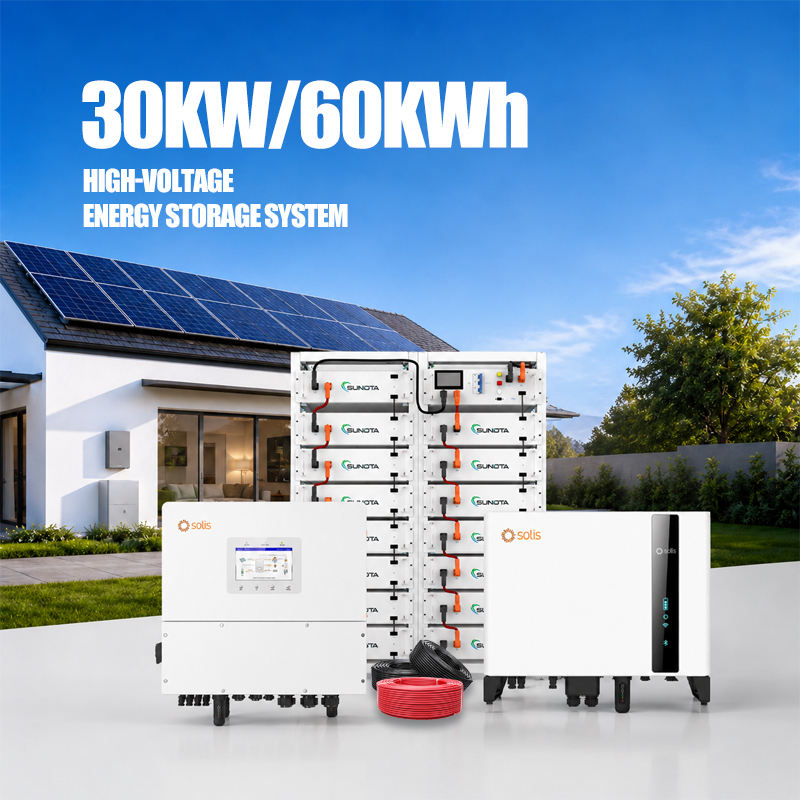
51.2V Split All-in-One 30kWh LiFePO4 Inverter System
- Streamlined pre-wired inverter + storage cabinet
- CANbus/Modbus integration for low commissioning time
- High thermal endurance under continuous 40°C ambient
Engineering Three Phase Hybrid Inverters for Santiago de los Caballeros: Grid Dynamics & Cibao Climate Realities
Santiago de los Caballeros stands as the undisputed industrial and commercial epicenter of the northern Dominican Republic. Home to the bustling Parque Industrial Víctor Espaillat Mera (PIVEM), major tobacco curing and manufacturing facilities, large-scale agro-industrial processing hubs, and sprawling commercial districts along Avenida Juan Pablo Duarte, the city's economic vitality hinges heavily on uninterrupted power. However, enterprise engineers and solar EPC contractors operating within the Cibao Valley continuously grapple with two interlocking challenges: persistent electrical grid instabilities from the local distribution network (EDENORTE) and severe tropical thermal stresses that rapidly degrade sub-par power electronics.
Standard on-grid string inverters, while historically popular under early net-metering regimes, are inherently unequipped to solve the daily operational vulnerabilities faced by Santiago's manufacturers. When EDENORTE experienced line faults, voltage sags, or localized blackouts, grid-tied PV systems are legally mandated to disconnect immediately via anti-islanding protections. For an industrial facility in Zona Franca or an agricultural cold storage warehouse in Navarrete, this causes instantaneous operational stoppages, damaged electronic process machinery, and hundreds of thousands of pesos lost in spoiled inventory or idle labor. This critical reliability gap has made the deployment of three phase hybrid inverters paired with high-capacity Lithium Iron Phosphate (LiFePO4) battery systems an imperative requirement for modern Dominican engineering projects.
Factory Insight: A high-performance three-phase hybrid inverter must act as an uninterrupted microgrid hub. It combines PV string power, battery bank energy conversion, diesel auxiliary generator inputs, and utility interconnect into an integrated architecture capable of switching from grid-tied to standalone island mode in under 10 milliseconds.
Grid Topology Adaptation: 220V/127V vs. 480V/277V and Unbalanced Phase Loads
One of the primary failure points when importing generic European three-phase inverters into the Dominican Republic is the distribution voltage architecture. While mainland Europe standardizes on 400V/230V 50Hz networks, Santiago de los Caballeros operates primarily on 60Hz infrastructure with varied secondary distribution voltages. Commercial facilities frequently operate on 208V/120V three-phase wye or 240V delta networks, whereas modern industrial parks and large-scale manufacturing installations run on 480V/277V systems, stepping down to 380V/220V for specialized European imported machinery.
Our direct-factory three-phase hybrid platforms (including custom RJV architecture and specialized Deye-platform units ranging from 10kW to 50kW+) feature wide AC voltage tracking bands and independent phase regulation. A frequent and costly occurrence in Dominican manufacturing plants is phase load unbalance—where heavy single-phase air conditioning, refrigeration units, or office loads sit disproportionately on one phase, leaving others lightly loaded. Generic three-phase inverters fault or trip under high phase imbalance. RJV-manufactured hybrid platforms support up to 100% unbalanced load output across each individual phase, directing surplus solar or battery stored power directly to the exact phase demanding load, preventing parasitic export to the grid and eliminating nuisance breaker trips.
Industrial Application Scenarios Across Santiago de los Caballeros & the Cibao Region
The economic profile of Santiago requires specialized engineering considerations across diverse commercial sectors. Below are the primary deployment frameworks where three-phase hybrid inverters deliver verified economic and operational information gain:
Free Zone Light Manufacturing (PIVEM)
Garment sewing plants, electronic assembly, and medical equipment factories require zero-flicker UPS-grade transitions (<10ms) to safeguard automated production lines from daily EDENORTE brownouts.
Tobacco Curing & Packaging Plants
High-precision humidity and temperature control chambers require steady 24/7 power. Hybrid inverters intelligently blend rooftop PV generation with LiFePO4 batteries during high peak daytime tariff hours.
Agro-Cold Chain Storage (Licey / Navarrete)
Heavy refrigeration compressors introduce massive inductive surge currents on startup. Our hybrid inverters withstand 2x rated surge power for 10 seconds without dropping offline.
Commercial Plazas & Private Clinics
Healthcare diagnostic imaging equipment and retail refrigeration utilize peak-shaving scheduling, reducing costly maximum demand billing (kVA charges) imposed by Dominican energy distributors.
Santiago Market Trends: Regulatory Compliance, EDENORTE Net Metering & Energy Arbitrage
The renewable energy landscape across the Dominican Republic is currently undergoing a pivotal regulatory and economic transformation. Driven by the Comisión Nacional de Energía (CNE) and the Superintendencia de Electricidad (SIE), framework updates surrounding Ley 57-07 de Incentivo al Desarrollo de Fuentes Renovables de Energía have created profound incentives for decentralized commercial solar self-consumption.
Historically, commercial adopters relied solely on net metering (Medición Neta) where excess solar generation was sent directly into the utility grid for tariff credit. However, as distributed PV penetration climbs throughout the EDENORTE concession territory, local substations in Santiago frequently experience reverse power flow saturation. This has led to tighter interconnection review times and stringent feed-in limitations for commercial projects above 50kW. Consequently, forward-looking EPCs are deploying hybrid smart export limitation. Our hybrid inverters are equipped with secondary precision CT (Current Transformer) sensor loops capable of modulating AC inverter output dynamically in milliseconds to match the building's internal electrical consumption precisely, ensuring zero feed-in violations while maintaining maximum solar utilization.
Furthermore, energy pricing structures for commercial and industrial rate classes (such as MTD-1, MTD-2, and VTD) reflect pronounced demand peak charges. By programming the multi-period Time-of-Use (TOU) scheduling parameters integrated into our three-phase hybrid inverters, plant managers can discharge high-voltage LiFePO4 battery banks during peak evening tariff windows, completely bypassing expensive utility energy rates and dramatically shortening the system's capital payback period (typically reducing ROI timelines from 5.5 years down to 3.2 years).
Engineering Comparison: Traditional String Inverters vs. Three-Phase Hybrid Architecture in the Dominican Context
To assist procurement managers, electrical consultants, and EPC engineering directors in Santiago de los Caballeros in specifying optimal hardware, the following matrix details technical distinctions under field operating conditions:
| Engineering Metric | Standard Commercial Grid-Tie | RJV Three-Phase Hybrid (Deye / Sundta Platform) | Impact on Santiago Facilities |
|---|---|---|---|
| EDENORTE Blackout Reaction | Shuts down completely (Anti-islanding) | Transitions to Off-Grid Backup in <10ms (UPS-Grade) | Zero computer reset, zero continuous production line stoppage. |
| Phase Load Balancing | Requires strictly balanced 3-phase loading | 100% Unbalanced power distribution per phase | Allows heavy single-phase A/C and chillers without inverter trips. |
| Thermal Derating Profile | Derates heavily past 40°C ambient | Intelligent dual-fan cooling, full output to 45°C ambient | Maintains maximum MWh yield under Cibao Valley summer heat waves. |
| Diesel Generator Integration | Incompatible or requires complex external interlocks | Integrated Gen Input with auto dry-contact start/stop | Cuts diesel consumption up to 75% during extended grid outages. |
| Battery Storage Coupling | Requires expensive external AC-coupled inverters | Direct DC-coupled HV/LV Lithium bus connection | Higher round-trip efficiency (95.5%) and 20% lower balance of system (BOS) cost. |
| Export Limiting Precision | Slow external RS485 power meters (1-3s latency) | Sub-second direct split-core CT closed-loop limiting | Guarantees zero unauthorized export under EDENORTE interconnection rules. |
Why Global EPCs & Caribbean Importers Source Directly from Anhui RJV New Energy
Headquartered in the high-tech manufacturing cluster of Hefei, China, Anhui RJV New Energy Co., Ltd. bridges the gap between state-of-the-art power electronics engineering and local project execution in the Dominican Republic.
TÜV Rheinland Assessed & CE Certified
Our manufacturing and assembly lines undergo rigorous on-site verification by TÜV Rheinland. Every unit comes backed with certified CE declarations, IEC 62109, and IEC 61000 test certificates required by Dominican customs clearance and EDENORTE compliance auditors.
True Closed-Loop Protocol Matching
Incompatible BMS protocols are the leading cause of commissioning delays. Our engineering labs pre-flash and validate CANbus and RS485 protocol communication between our Sundta LiFePO4 batteries and Deye / Solis three-phase hybrid inverters prior to export dispatch.
Consolidated PV Container Shipments
Eliminate procurement fragmentation. RJV ships full consolidated 40ft HQ containers containing Tier 1 N-type TOPCon panels, matched hybrid inverters, LiFePO4 rack batteries, DC disconnects, and cabling directly to Puerto Multimodal Caucedo or Port of Haina.
Frequently Asked Questions: Sourcing Three Phase Hybrid Inverters for Santiago
Direct answers for solar installers, industrial facility engineers, and importing distributors across Santiago de los Caballeros and the Dominican Republic.