High-Efficiency Photovoltaic Modules & Integrated Storage Systems
Engineered to eliminate micro-cracks, minimize shading losses from Fergana Valley dust storms, and deliver reliable power during Tajikistan’s seasonal grid load-shedding cycles.
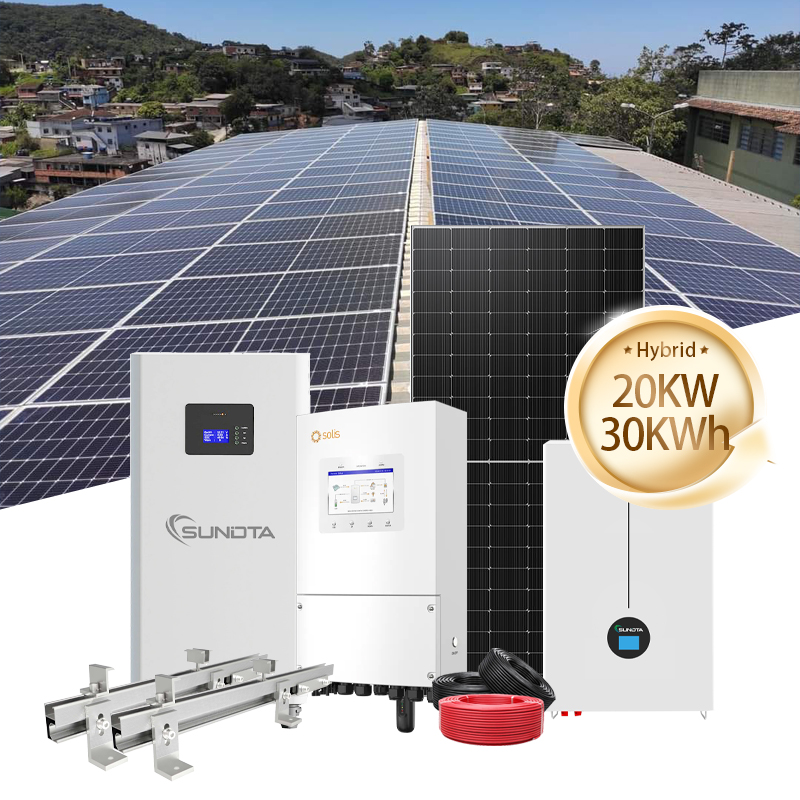
Complete Hybrid Solar Energy Storage System 20KW 30KW 50KW All in One System with Lithium Battery
- Configured with high-yield Shingled/TOPCon modules
- Matched with high-voltage LiFePO4 battery cabinets
- Instant 10ms UPS transfer during Barki Tojik outages
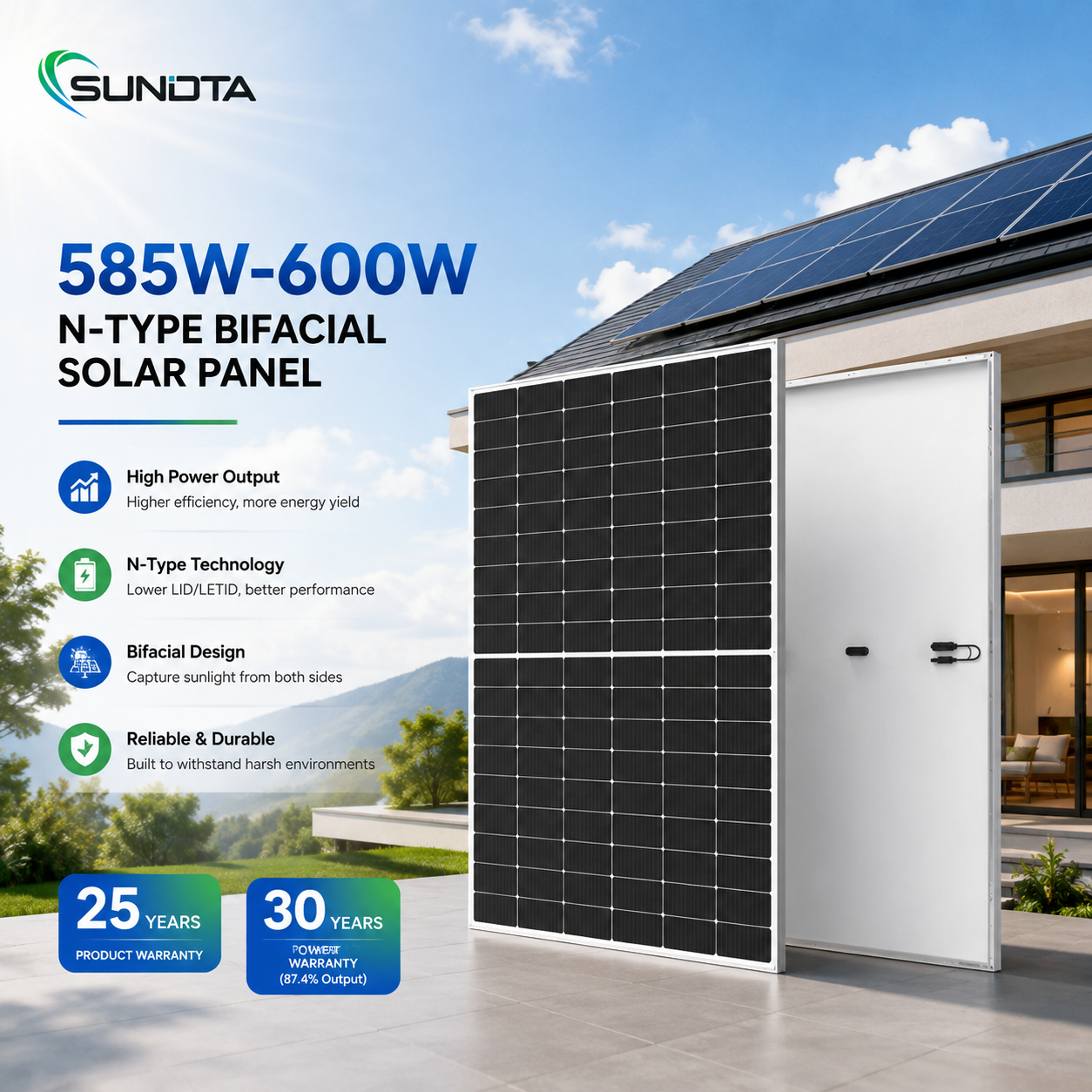
585W-595W Premium N-Type Bifacial PV Module | Monocrystalline Solar Panel for High-Yield Energy Generation
- Up to 23.1% conversion efficiency; 30-year warranty
- Low temperature coefficient: -0.30%/°C for hot Khujand summers
- Dual-glass design rated for 5400Pa mechanical load
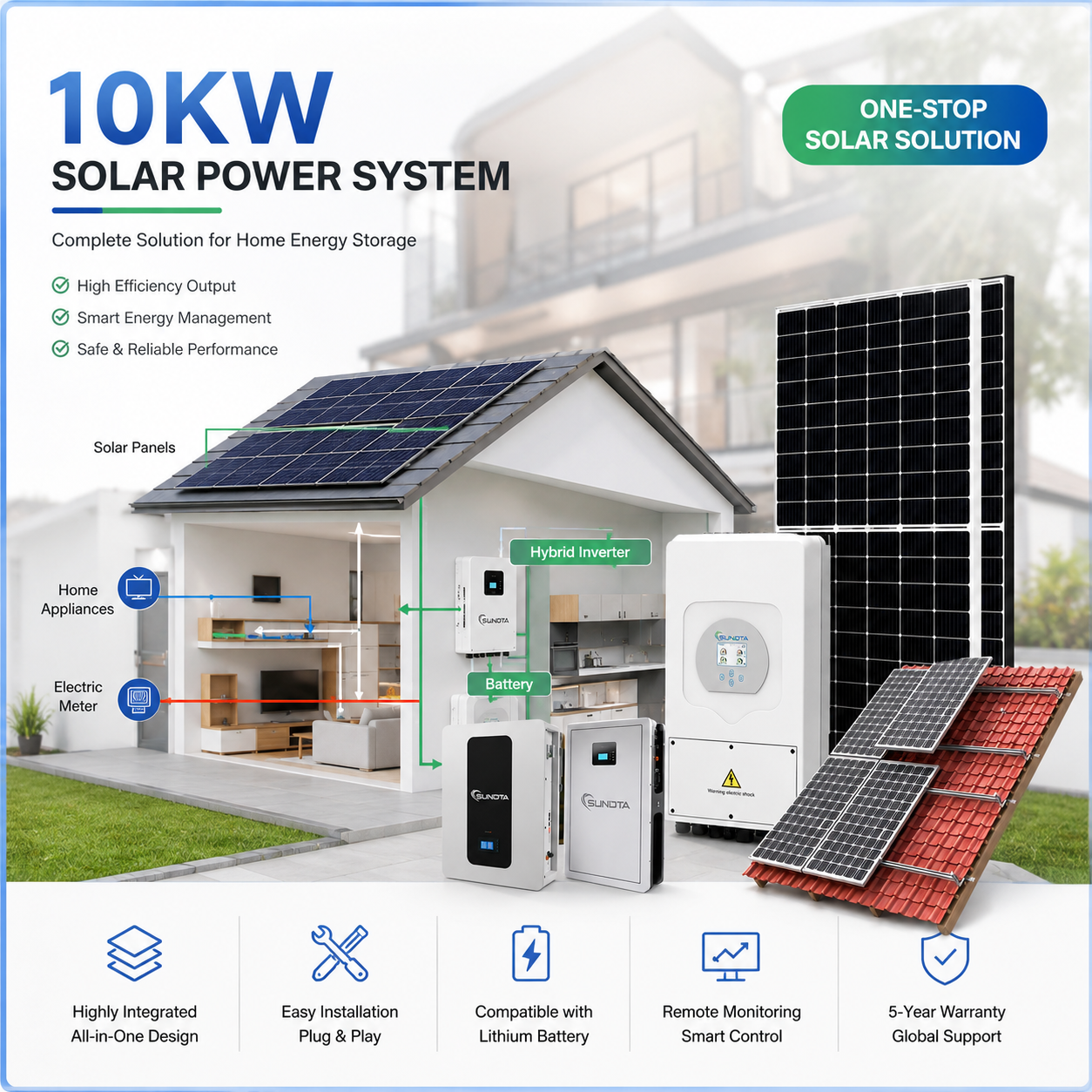
15kW-50kW High-Efficiency Hybrid Solar Power System with Smart MPPT for Whole-House Backup
- Dual/Triple MPPT tracker architecture for complex roofs
- Wide MPPT operating voltage window (150V–850V)
- Supports unbalanced 3-phase load outputs up to 100%
Premium 585W-595W N Type Bifacial PV Module High Yield Monocrystalline Solar Panels 590W Tier 1 Solar Power System
- Up to 25% rear-side energy gain on reflective ground
- Zero LID/PID degradation via SMBB cell technology
- Optimized resistance against dust abrasions & sandstorms
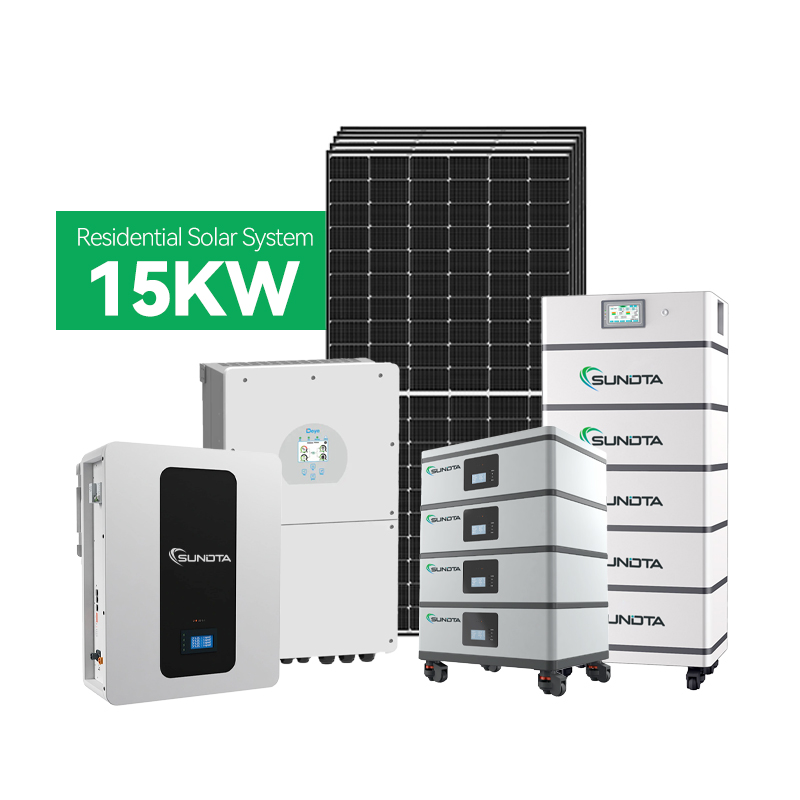
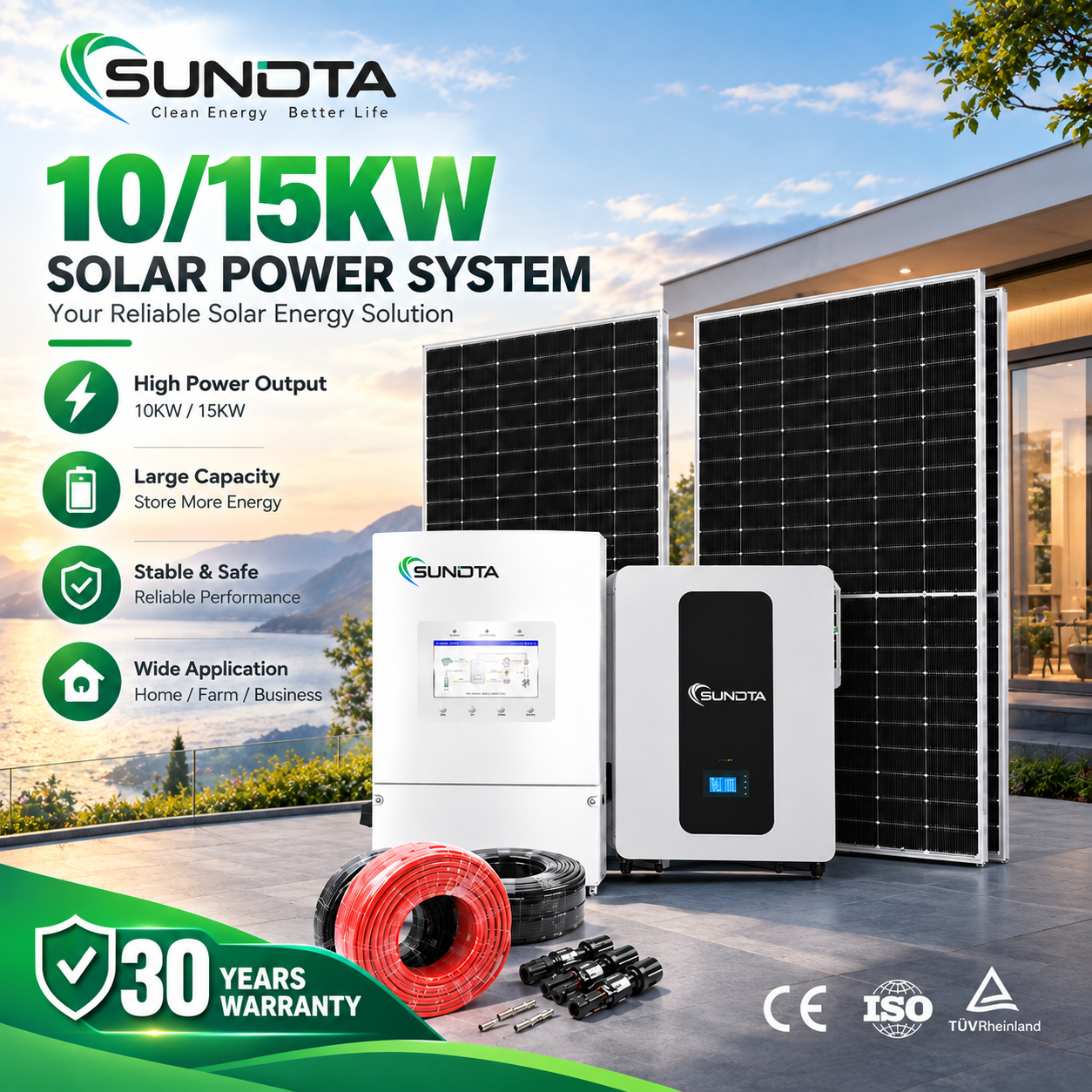
Sundta Hybrid Solar Energy System Low Price Solar Panel Kit 5KW 10KW 12KW 15KW Full Set Solar System Kit Home System
- Ideal for private villas and rural estates across Khujand
- Pre-wired combiner box with Class II surge arresters
- Plug-and-play installation with smart mobile monitoring
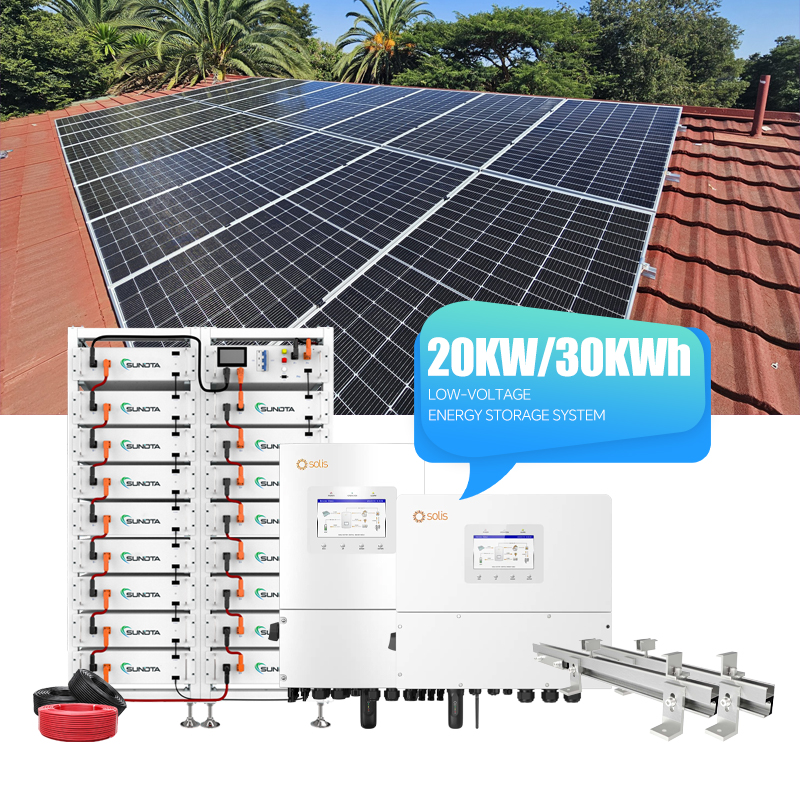
Complete Set of 20kW Solar Energy Storage System Hybrid Solar Panel Power Kits 20kW, 25kW, 30kW, 35kW With Cheap Price
- Designed for textile workshops and commercial agricultural facilities
- High-durability hybrid inverter with parallel expandability
- Automated generator start contacts for severe winter resilience
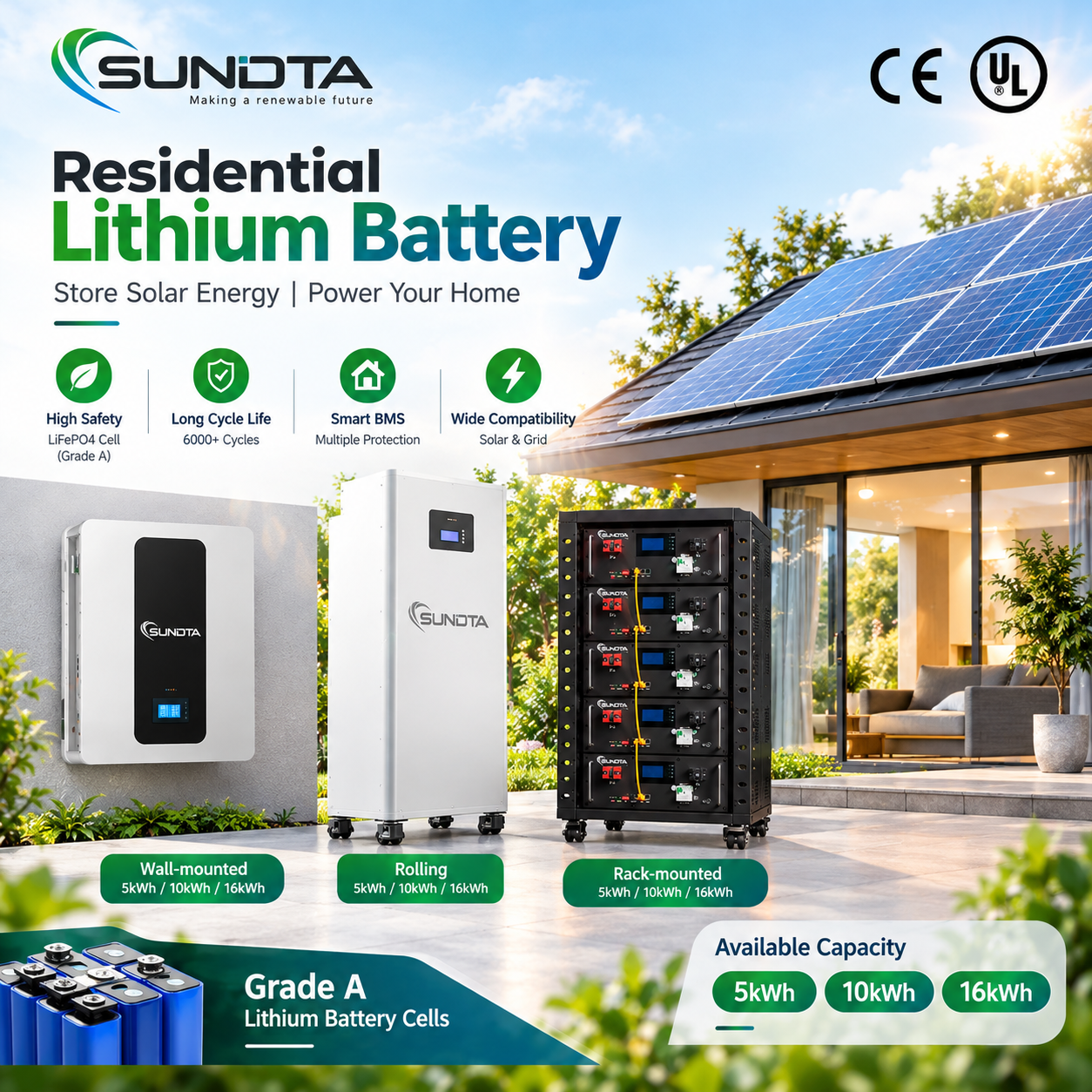
Sundta Stacked 10kWh 20kWh 30kWh Modular LiFePO4 Battery Stacked Solar Energy Storage Battery for Home Solar
- Premium Grade-A prismatic LiFePO4 cells (>6,000 cycles)
- Stackable wireless busbar connection — zero messy cabling
- Closed-loop CAN/RS485 handshake with Deye/Solis inverters
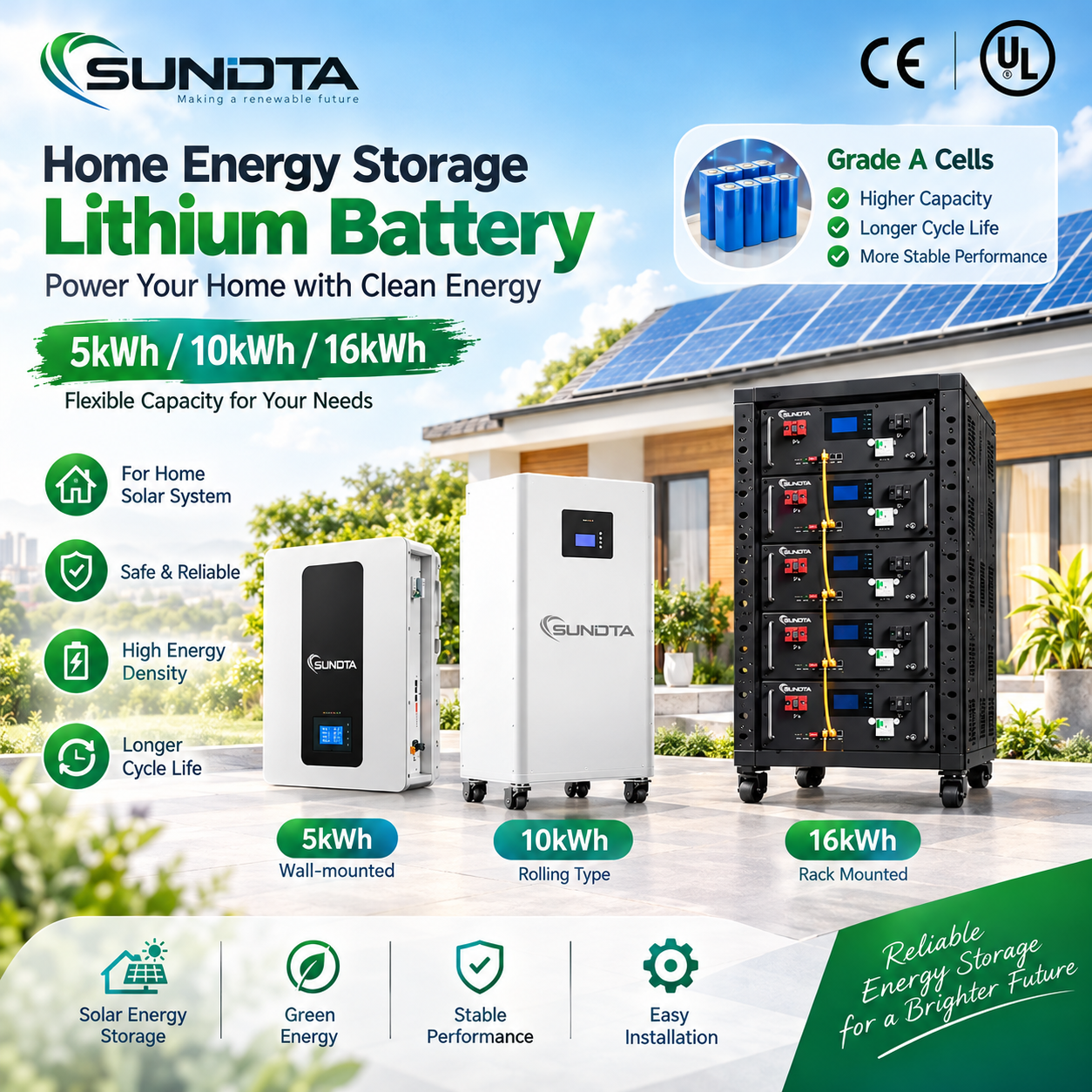
Sundta 51.2V 200Ah 10kWh LiFePO4 Battery Wall Mounted Home Solar Energy Storage Battery with Smart BMS
- Ultra-slim aesthetic wall-mounted form factor
- Multi-tier protection: over-voltage, low-temp charge lockout
- Integrated LCD status screen & automated cell balancing
Why Shingled PV Technology is the Superior Solar Architecture for Khujand
A rigorous thermomechanical and electrical degradation assessment under the extreme continental conditions of the Syr Darya River Basin and Fergana Valley.
The Climatic Challenge of Sughd Province
Khujand experiences one of the most demanding environmental profiles in Central Asia. During peak summer months (July–August), ambient daytime temperatures routinely surge past +42°C, causing rooftop PV cell operational temperatures to surpass +70°C. Conversely, winter temperatures plunge below -15°C. This severe diurnal and seasonal thermal swing triggers relentless mechanical expansion and contraction along traditional soldered copper busbars.
Furthermore, seasonal high-velocity dust fronts ("Garmsil" and regional winds carrying fine sand from adjacent arid steppes) cause non-uniform soil accumulation on the lower edges of tilted solar panels. Conventional half-cut monocrystalline modules suffer severe string mismatch losses and localized hot-spot overheating when their bottom cell rows are partially shadowed by sand drifts. Shingled solar module architecture eliminates these systemic failure vectors through three structural breakthroughs:
| Engineering Metric | Standard Half-Cut Multi-Busbar (MBB) | Anhui RJV Shingled Solar Modules | Operational Impact in Khujand |
|---|---|---|---|
| Cell Interconnect Method | High-temp soldering copper ribbons (~230°C) | Electrically Conductive Adhesive (ECA) curing (<150°C) | Zero Micro-Cracking Eliminates thermal stress fracture during -15°C to +70°C cycling. |
| Partial Shading Tolerance | Vertical 3-string diode activation cuts 33%–100% output | Parallel dense strip matrix with multi-bypass paths | 35% Less Mismatch Loss Bottom dust accumulation leaves upper horizontal sub-strings fully producing. |
| Operating Current & Hot Spots | High operating current per string (13A–18A) | Divided low working current (approx. 2A–3A per strip) | 40% Lower Hot-Spot Temp Drastically reduces risk of backsheet burn-through in blazing summer heat. |
| Effective Active Area Ratio | 88%–91% (large cell gaps and visible busbars) | >95% (overlapping cell-to-cell shingled layout) | Maximum kWp per m² Critical for space-constrained rooftops in Khujand's urban & industrial sectors. |
| Temperature Coeff. (Pmax) | -0.34% to -0.38%/°C | -0.29% to -0.31%/°C | Higher Summer Yield Retains significantly higher watt-hour yield during scorching July afternoons. |
Conductive Adhesive (ECA) Resilience
Our modules utilize aerospace-grade isotropic conductive adhesives that flex with temperature-induced strain. By eliminating soldered copper ribbons, RJV shingled panels completely avoid the thermal fatigue and delamination typical of standard modules in Central Asian continental zones.
Parallel Shading Tolerance
Because shingled modules are partitioned into hundreds of parallel overlapping mini-cells, dust settling along the bottom frame rail only affects the bottom-most parallel circuit. The rest of the module continues to generate full power, outperforming traditional 144-half-cut panels by 20–35% in sandy environments.
Certified Low-Degradation BOM
Incorporates double anti-reflective coated POE/EVA encapsulation and 3.2mm tempered solar glass with self-cleaning nanocoatings. Backed by flash test data, anti-PID (potential induced degradation) certification, and a 30-year linear performance guarantee ensuring >84.8% residual power.
High-Yield Solar & Storage Applications in Northern Tajikistan
Custom-engineered bills of materials tailored to the specific grid infrastructure, tariffs, and industrial topology of Khujand and the Sughd Free Economic Zone (FEZ).
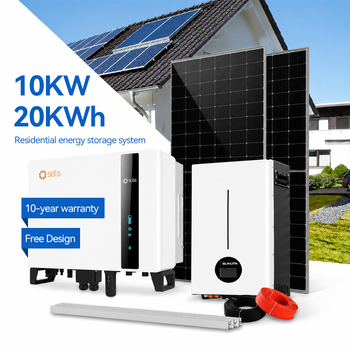
Textile & Cotton Processing Mills
Khujand's spinning, ginning, and garment plants face costly production interruptions during peak tariff hours and winter grid rationing. RJV 50kW–250kW hybrid arrays integrated with Solis high-voltage inverters offset daytime loads while ensuring critical spinning machines never shut down mid-cycle.
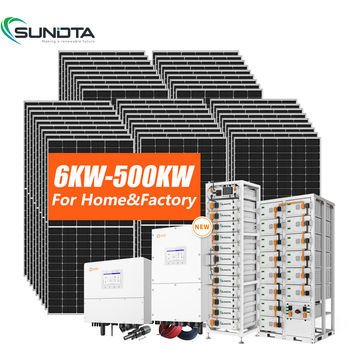
Agro-Food Cold Storage Facilities
The Fergana Valley is Tajikistan’s agricultural hub for apricots, grapes, and peaches. Our N-type bifacial arrays paired with 100kWh–500kWh LiFePO4 ESS maintain continuous compressor cooling during sudden transformer trips, protecting millions of dollars of perishable export inventory.
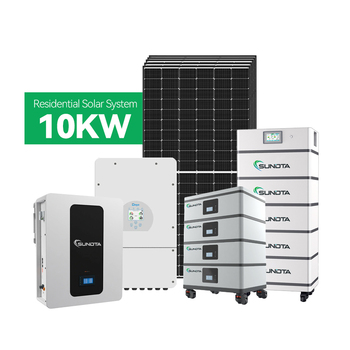
Urban Villas & Residential Microgrids
Severe winter deficits in domestic hydropower routinely force rural and peri-urban Khujand households into 6–10 hour blackouts. Our Sundta 10kW–20kW hybrid kits with modular stacked batteries deliver seamless whole-house backup power for heating pumps, lighting, and refrigeration.
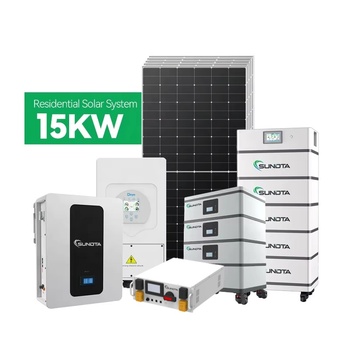
Syr Darya Solar Water Pumping
Agricultural irrigation schemes along the Syr Darya River benefit from our off-grid high-voltage MPPT pumping configurations. High-efficiency shingled modules drive high-capacity submersible pumps without requiring expensive diesel generators or lengthy medium-voltage grid extensions.
Solar Market Trends & Economic Drivers in Sughd Province
Strategic tailwinds transforming decentralized photovoltaics and battery storage from a luxury into an essential industrial asset across Northern Tajikistan.
Seasonal Hydropower Volatility
Tajikistan relies on hydro for over 90% of its electricity generation. While summer river runoffs produce surplus electricity, winter freezes in the Pamir mountains sharply reduce reservoir levels at Nurek and Kairakkum. Shingled solar and battery installations flatten this acute seasonal deficit, providing localized energy autonomy exactly when the state grid imposes rotational load shedding.
National Clean Energy Policy 2030
Under Tajikistan's National Development Strategy, the government has set an explicit goal to develop 700MW+ of solar capacity by 2030. Fiscal incentives include zero-customs duty allowances and VAT exemptions on certified renewable energy machinery, dramatically shortening the payback horizon for commercial solar projects in Sughd Province to under 3.8 years.
Industrial Modernization in FEZ Sughd
Khujand's Free Economic Zone is attracting regional processing plants requiring uninterruptible power quality. Mismatched voltages, harmonics, and sudden frequency drops from legacy transmission corridors are driving factory owners to invest in hybrid solar microgrids that combine solar yield smoothing with clean inverter-regulated sine-wave power.
Secure Cross-Border Transit Logistics: Hefei, China to Khujand
Complete export documentation, heavy-duty sea/rail containerized packaging, and established logistics corridors ensuring zero breakage across Central Asian transport routes.
Route 1: China-Europe Railway (Freight Train)
Direct containerized rail freight departing Hefei / Xi'an via the Alashankou or Khorgos border gateway through Kazakhstan and Uzbekistan directly to Khujand Station (Station Code: 745800). Transit time: 14–18 days. Optimal for multi-megawatt volume orders and containerized ESS units.
Route 2: Cross-Border TIR Road Trucking
Direct bonded heavy-truck transport via Xinjiang through the Irkeshtam or Kulma dry ports directly into Sughd Province customs terminals. Transit time: 7–11 days. The ideal method for high-priority commercial hybrid kits, inverters, and modular LiFePO4 batteries needing swift project commissioning.
Export Packaging & Marine-Grade Protection
All RJV solar panels feature reinforced corner guards, high-density EPE shock absorption buffers, and vertical heavy-duty wooden crate packaging. Anti-tilt and shock sensors are attached to battery and panel crates to prevent micro-cracking across mountainous terrain.
Anhui RJV New Energy: Direct Manufacturer & PV BOM Integrator
Eliminate project delays and mismatched hardware. Sourcing directly from our Hefei manufacturing headquarters guarantees single-source accountability for modules, power electronics, and energy storage.
TÜV Rheinland Audited
Our automated production facilities, testing laboratories, and inventory controls are assessed and verified on-site by TÜV Rheinland. Full CE, IEC 61215, IEC 61730, and UN38.3 battery dossiers accompany every bill of lading.
Pre-Matched Compatibility
We eliminate commissioning headaches. Inverter MPPT input windows, string design calculations, and LiFePO4 BMS CAN/RS485 closed-loop communication protocols (Deye, Solis, Growatt) are certified before shipment leaves the factory.
One-Stop PV Sourcing
Consolidate your entire balance of system into a single container. Modules, hybrid inverters, battery storage, UV-resistant PV cabling, MC4 connectors, and aluminum mounting racks arrive together with perfectly matched documentation.
24/7 Engineering Support
Our dedicated bilingual solar application engineers provide string sizing, single-line diagrams (SLD), remote commissioning assistance, and rapid warranty replacement processing across Central Asian time zones.
Frequently Asked Questions for Solar Importers in Khujand
Everything you need to know regarding minimum order volumes, customs documentation, warranty claims, and local electrical standards in Tajikistan.
Why are shingled solar modules better suited for Khujand than standard half-cut panels?
What is the Minimum Order Quantity (MOQ) and can we order mixed container loads?
Which Incoterms and payment terms are supported for shipments into Tajikistan?
Do RJV lithium batteries support plug-and-play communication with Deye and Solis inverters?
What certification documents are provided for customs clearance in Tajikistan?
Ready to Engineer Your Solar Project in Khujand?
Consult with our senior technical engineers for comprehensive bill of materials sizing, single-line electrical diagrams, and custom container freight pricing to Sughd Province.