Engineered for Ecuador's Grids, Altitudes & Coastal Climates
Explore our core 8 product platforms specifically matched for Ecuadorian solar EPCs, agribusinesses, and industrial off-grid operations. Fully compatible with CAN/RS485 closed-loop inverter communications, extreme UV indices, and 60Hz split-phase electrical topologies.
Premium 585W-595W N Type Bifacial PV Module High Yield Monocrystalline Solar Panels 590W Tier 1 Solar Power System
- Up to 22.84% Module Efficiency
- Dual-Glass Bifaciality: 80% ± 5%
- Temperature Coefficient: -0.30%/°C
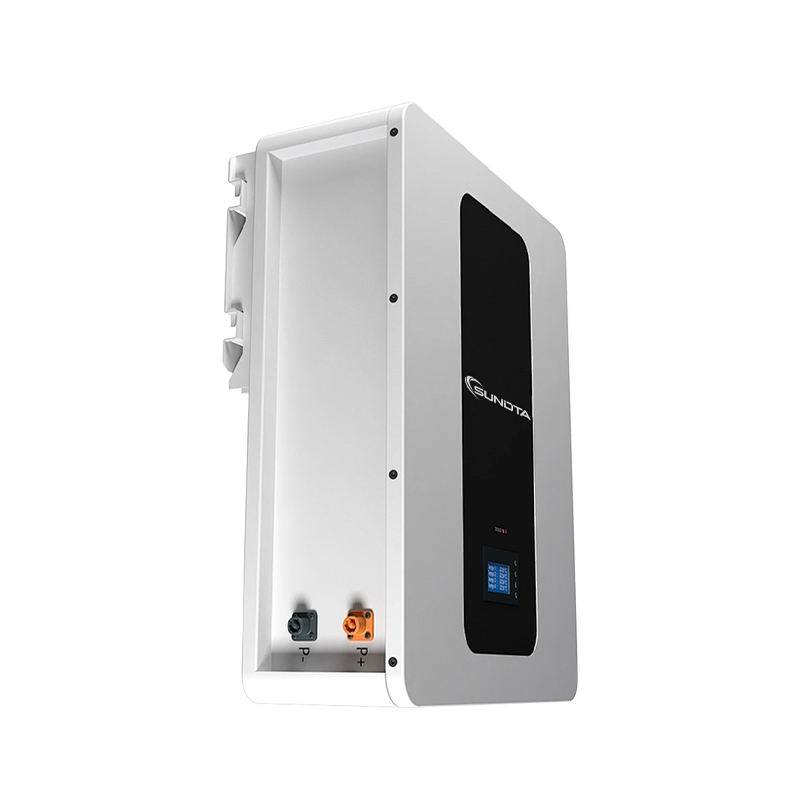
Sundta POLO-W1 LiFePO4 Lithium Battery Wall-Mounted 5kWh Home Power Storage Solar Energy System Deep-Cycle 51.2V 100Ah IP65
- 51.2V 100Ah Tier-1 Grade A Prismatic Cells
- >6,000 Cycles @ 80% DoD
- Multi-Inverter CAN/RS485 Protocol
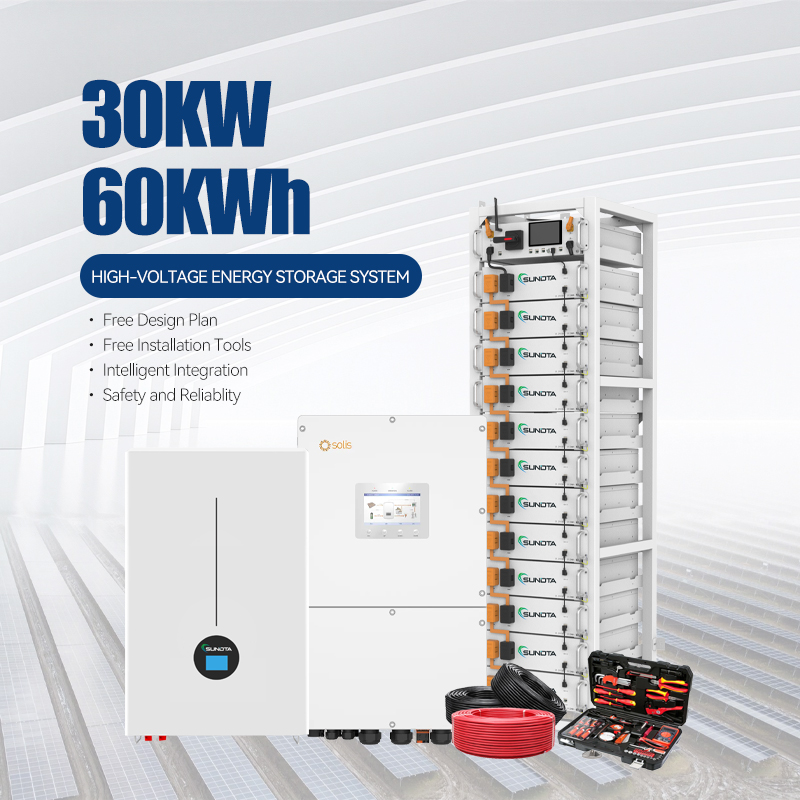
Energy Bank Powerwall 51.2V 314AH 200AH 8KW 10KW Lithium Battery Sell Home Solar Battery 15kwh Battery Pack for Home Energy
- 15 kWh Capacity / 314Ah Form Factor
- Integrated Smart BMS & Active Balancing
- Parallel Expansion up to 15 Units
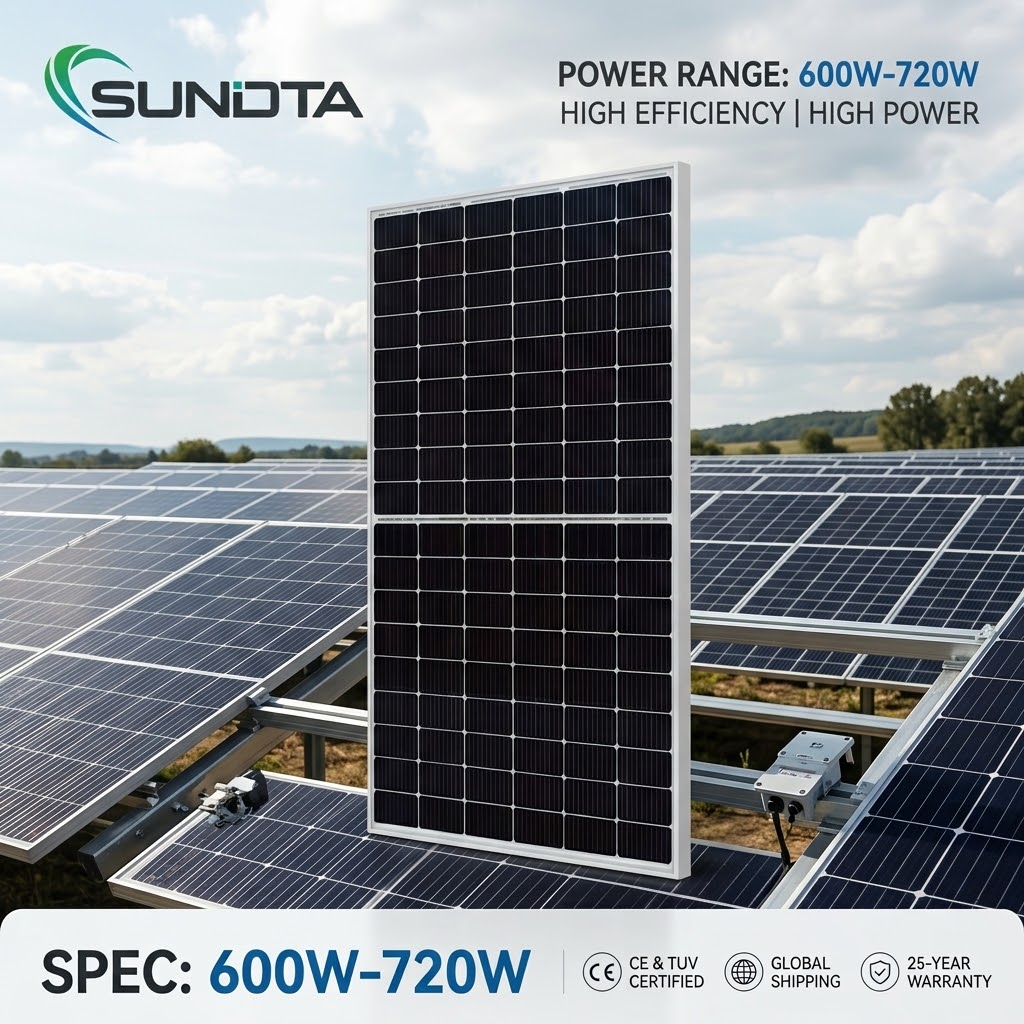
Factory Price SUNDTA 500W-595W Black Glass Bifacial PV Module 23.03% Efficiency Half-Cut PERC Solar Panel for Home Energy System
- Heavy Mechanical Load: 5400Pa Snow/Wind
- Anti-PID Cell Architecture
- Double Glass Anti-Corrosion Barrier
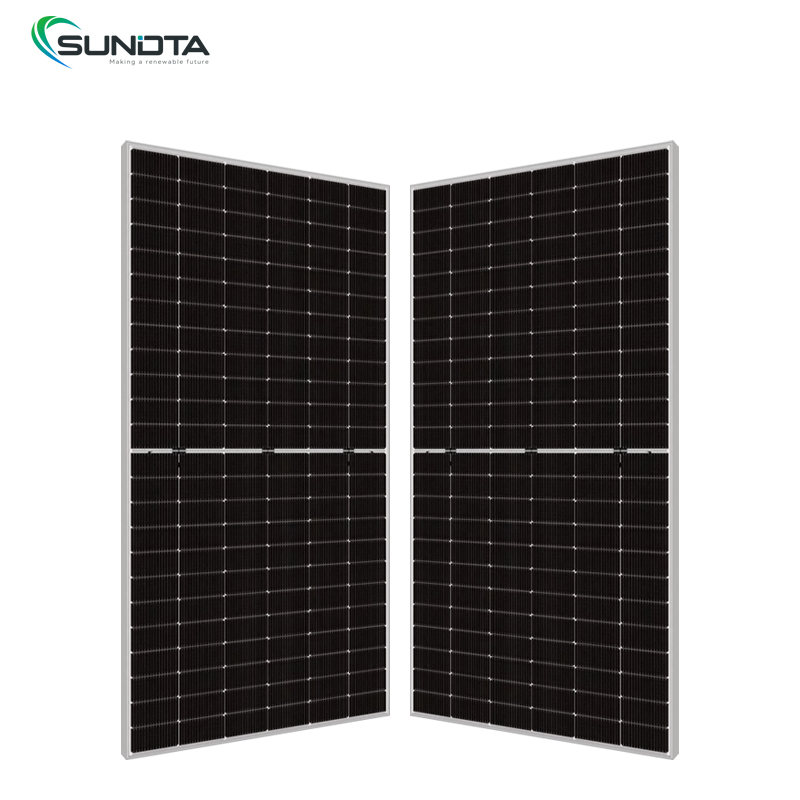
Tier 1 Solar Panel Sodenergy 700W 705W 710W 715W 720W 725W 730W N Type Solar Panel
- 210mm Large Silicon Wafer Platform
- Significant BOS & Cable Savings for Land
- 30-Year Linear Power Warranty
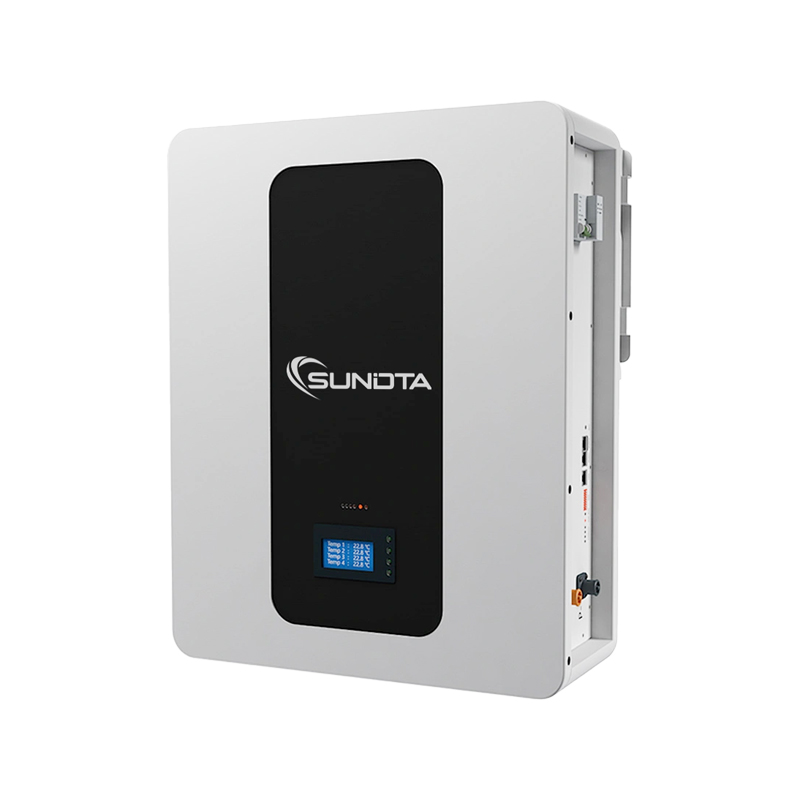
Sundta EU Warehouse 48V/51.2V LiFePO4 Lithium Ion Battery 10kWh Solar Home Energy Storage System Wall-Mounted 200Ah Capacity
- 51.2V 200Ah Solid Core Pack
- Dual Breaker & Isolated Ground Safety
- Native Plug & Play with Solis & Deye
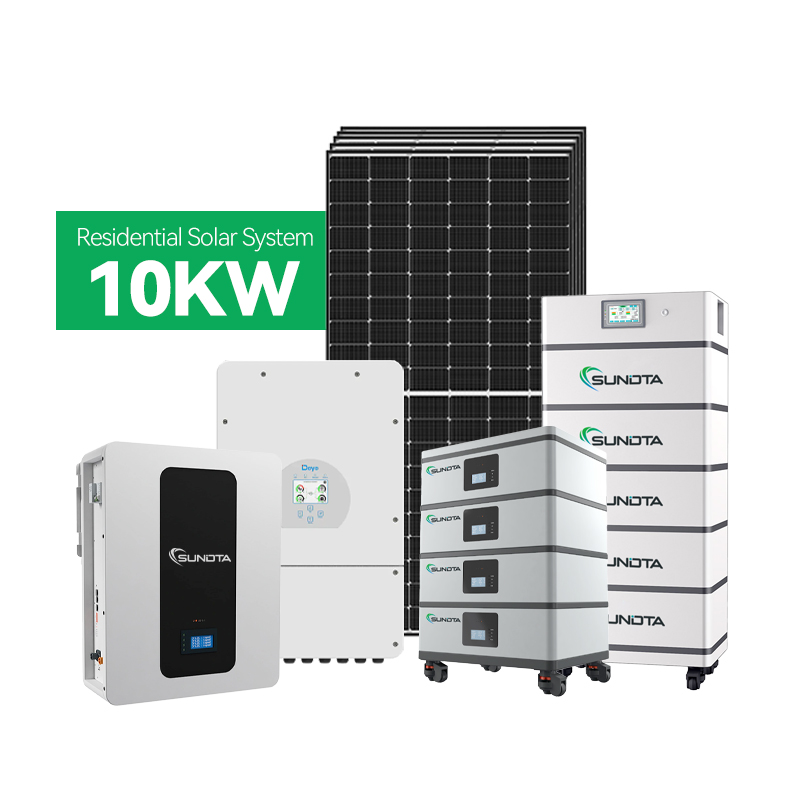
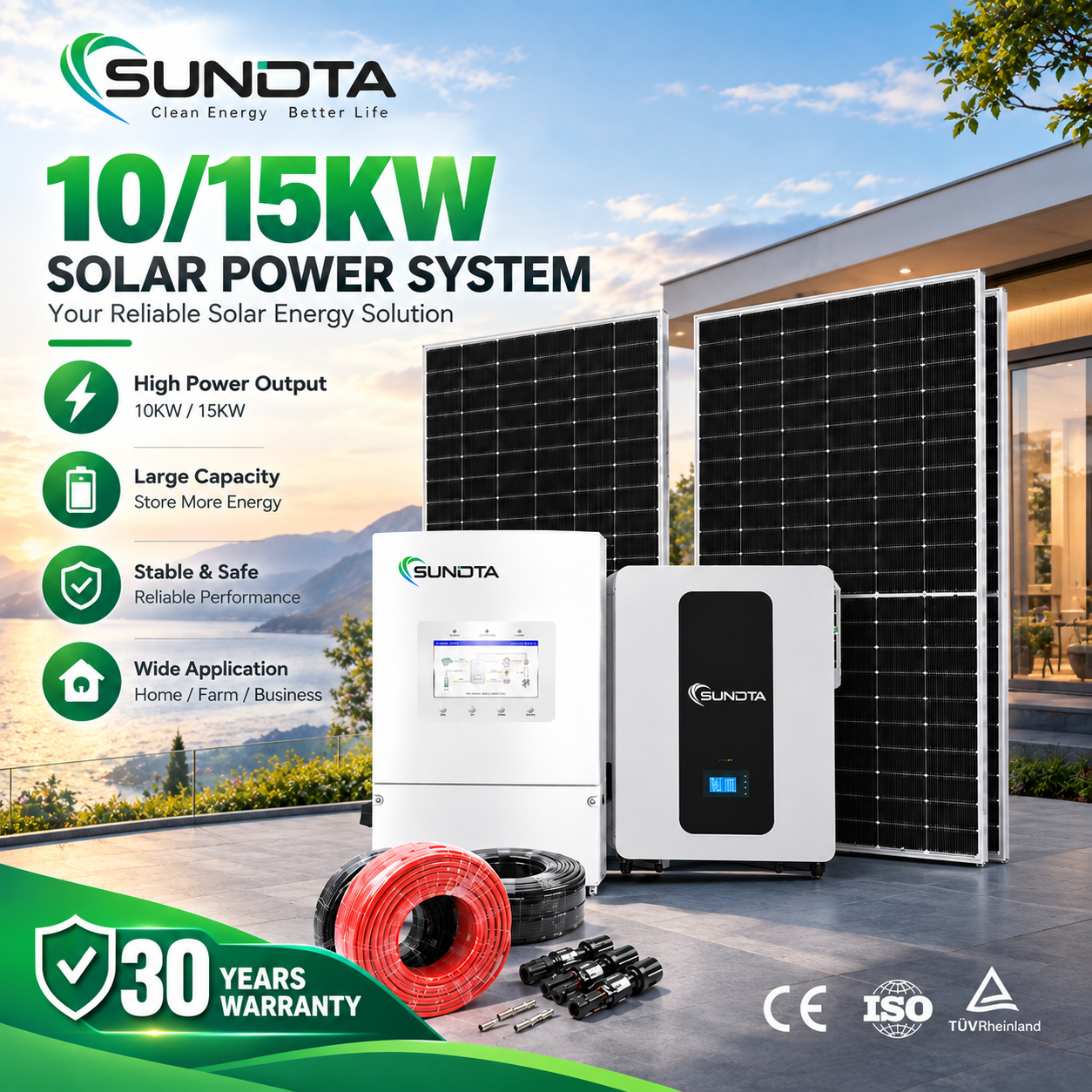
2026 Sundta Low Price 10KW 12KW Hybrid Solar System for Home Use with Lifepo4 Battery and BMS System
- 12kW Split-Phase 120/240V Hybrid Inverter
- Matched Tier-1 LiFePO4 Battery Pack
- Pre-wired Combiner, Breakers & Cables
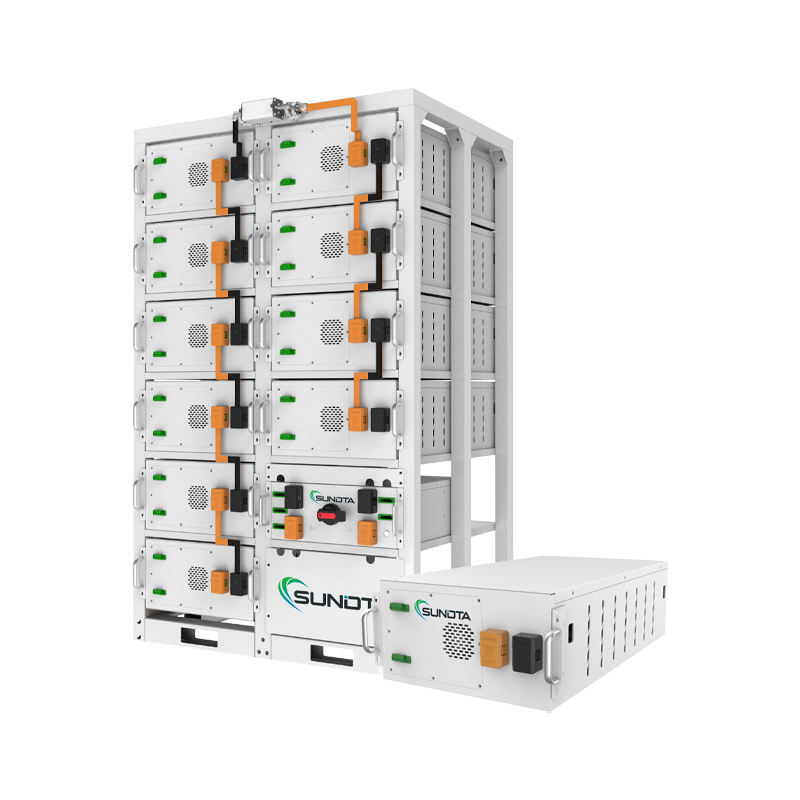
High Quality LiFePO4 Lithium Battery Stackable 51.2V 14.336kWh Wall-Mounted 10-Year Warranty Home Energy Storage Solar Battery
- 14.336kWh High Density Energy Block
- Quick-Lock Modular Stacking (Zero Cables)
- Automotive-grade BMS Thermal Overload Trip
Technical Whitepaper: Off-Grid Solar Architecture & System Sizing in Ecuador
The Ecuadorian power grid has entered an era defined by severe structural volatility. Over 75% of the national electricity grid depends directly on hydroelectric generation assets situated across the eastern watershed—primarily the Paute-Mazar and Coca Codo Sinclair complexes. During prolonged drought conditions (estiaje), catastrophic power deficits have triggered scheduled rolling blackouts across major economic arteries including Guayaquil, Quito, and Cuenca, with industrial outages extending anywhere from 6 to 14 consecutive hours. For manufacturing facilities, agro-processing cold chains, commercial aquaculture, and mining concessions, utility grid dependence represents an intolerable commercial risk.
Consequently, procurement behaviors among Ecuadorian solar distributors and EPC contractors have transitioned from simple grid-tie compensation arrays toward hardened, multi-source off-grid and AC-coupled hybrid microgrid systems. Deploying solar generation in Ecuador, however, presents unique engineering and geographic challenges that standard commodity hardware cannot address. A system engineered for standard temperate climates will suffer rapid thermal degradation at equatorial sea-level installations or experience catastrophic insulation breakdown and thermal de-rating when installed in the high-altitude Andean Sierra.
Photovoltaic Performance Under Extreme Equatorial Ultraviolet & Albedo Dynamics
Ecuador sits directly on the Equator (Latitude 0°), resulting in an angle of incidence that remains near-perpendicular year-round. This geographic positioning produces two critical environmental variables: extreme Solar Ultraviolet Index levels (frequently reaching UV Index 11 to 16+ in the Andean corridor) and exceptionally high ambient midday irradiance often exceeding 1,150 W/m² due to cloud-edge albedo lensing. Standard p-type PERC solar cells undergo accelerated Light-Induced Degradation (LID) and Light and elevated Temperature-Induced Degradation (LeTID) under these prolonged high-UV flux conditions.
To eliminate these premature yield losses, Anhui RJV New Energy engineers our export configurations for Ecuador utilizing N-Type TOPCon (Tunnel Oxide Passivated Contact) silicon technology. Our N-type cells feature zero boron-oxygen defect complexes, completely eliminating boron-related LID. Furthermore, our 585W–595W and 700W+ module series utilize POE (Polyolefin Elastomer) encapsulation rather than standard EVA films. POE encapsulation provides total immunity against Potential Induced Degradation (PID) and acidic hydrolysis, preventing water-vapor ingress in the hyper-humid conditions prevalent across the coastal Guayas basin and the eastern Amazonian basin (El Oriente).
Storage Resilience: Why Prismatic LiFePO4 Chemistry is Mandated Over Lead-Acid & NMC
Historically, remote Ecuadorian systems relied on flooded deep-cycle lead-acid or gel OPzV batteries. However, under Ecuador's tropical thermal cycles, lead-acid chemistries suffer drastic cycle life reduction—often dropping from 1,200 nominal cycles down to fewer than 450 actual cycles when operating in unconditioned ambient enclosures exceeding 32°C in Manabí, Los Ríos, or Sucumbíos. Nickel-Manganese-Cobalt (NMC) chemistries, while energy-dense, introduce thermal runaway risks in remote unattended regions lacking specialized fire suppression systems.
Anhui RJV New Energy standardizes exclusively on Lithium Iron Phosphate (LiFePO4 / LFP) chemistry across our Sundta and Energy Bank product lines. Featuring an olivine crystal structure with ultra-stable P-O covalent bonding, our LFP cells demonstrate thermal stability thresholds up to 270°C without exothermic oxygen release. Operating across a wide ambient range (-10°C to 55°C), our battery systems deliver over 6,000 continuous 80% Depth-of-Discharge (DoD) cycles. This enables commercial installations to withstand rigorous, twice-daily cycling regimes (discharging during daily national grid curtailment and recharging via peak equatorial solar yield) across an operational lifespan exceeding 12 to 15 years.
Localized Off-Grid Application Scenarios Across Ecuador
From saline Pacific coastal estuaries to volcanic Andean plateaus and isolated rainforest concessions, RJV power architectures are customized for Ecuador's distinct regional microclimates:
Coastal Aquaculture & Camaroneras
Shrimp farm aerators, water circulation pumps, and processing stations across Guayas, El Oro, and Esmeraldas operating in high-salinity C5-M atmospheric corrosion zones. System designs incorporate dual-glass anti-corrosion modules, IP65 wall-mount LFP storage, and sealed inverter enclosures.
Andean High-Altitude C&I Facilities
Commercial cold storage, floriculture packhouses, and manufacturing facilities in Pichincha, Tungurahua, and Azuay operating at altitudes between 2,200m and 3,200m. Hardware engineered with widened dielectric creepage distances, oversized inverter heat dissipation profiles, and extreme UV-stabilized backsheets.
Amazonian Mining & Petroleum Concessions
Off-grid extraction camps, telemetry stations, and indigenous community microgrids in Orellana, Pastaza, and Morona-Santiago. Replacing high-cost logistics of barging diesel fuel with heavy-duty 700W+ bifacial modules paired with containerized 1MWh–2MWh BESS units.
Galápagos Clean Energy Archipelago
Strict ecological zero-fossil mandates across Santa Cruz, San Cristóbal, and Isabela. Demanding zero-emission, ultra-safe LFP battery banks, closed-loop smart BMS reporting, and low-frequency hybrid conversion designed to integrate seamlessly with existing island microgrid governors.
Engineering Comparison: Off-Grid Architectural Topologies for Ecuador
Selecting the optimal power conversion and storage topology determines long-term levelized cost of energy (LCOE) and system survivability during prolonged utility outages. Our sales engineering team applies this comparative matrix for Ecuadorian project developers:
| Evaluation Parameter | Pure DC-Coupled Off-Grid System | AC-Coupled Hybrid ESS System | Containerized Utility BESS Microgrid |
|---|---|---|---|
| Target Power Capacity | 3 kW – 15 kW (Single / Split Phase) | 10 kW – 125 kW (Split & Three-Phase) | 250 kW – 2.5 MW / 1 MWh – 5 MWh |
| Typical Ecuador Application | Remote eco-lodges, rural telecom towers, standalone residential haciendas. | Commercial packing houses, urban clinics, medium-scale industrial plastics plants. | Centralized agro-processing, Amazonian mining bases, island grids (Galápagos). |
| Grid Connection Dynamic | 100% Galvanically Isolated from National Grid (CENACE). | Dual-Mode: Self-consumption during grid uptime; seamless sub-10ms UPS transfer during blackouts. | Black-start capable, synthetic inertia generation, primary frequency regulation. |
| Battery Bus Voltage | Low-Voltage 51.2V DC (Safe installation, modular) | Low-Voltage (48V/51.2V) or High-Voltage (150V–600V DC) | High-Voltage Utility Bus (700V–1100V DC) |
| Round-Trip Efficiency (RTE) | 84% – 88% (Battery-dominant) | 92% – 95% (Direct solar-to-load during day) | 89% – 93% (Integrated HVAC & liquid-cooled PCS) |
| Generator Integration | Dry-contact auto-generator start (AGS) built-in. | Smart-port bidirectional generator & micro-inverter coupling. | Automated diesel synchronization with dynamic fuel-saving curve control. |
| Corrosion & Climate Rating | IP65 Enclosure / Standard Salt-Mist Tested | IP66 Power Electronics / C5-M Harsh Coastal Coated | ISO Shipping Container with C5-M Marine Coating & Fire Suppression |
Ecuador Renewable Energy Landscape: Regulatory Drivers & Trends
1. Hydroelectric Vulnerability & The Urgency of Industrial Microgrids
Ecuador's dependence on the Amazonian hydrological basin has created recurring structural risks. El Niño and La Niña climate oscillations have made historical precipitation models unreliable. The 2023–2025 energy crises resulted in emergency presidential decrees allowing private enterprises to install behind-the-meter generation without arbitrary generation caps, provided energy is self-consumed. Commercial payback periods for 10kW–50kW solar-plus-storage systems have shortened from 7.2 years to 3.4 to 4.1 years when factoring in diesel generator fuel consumption, maintenance, and production line losses caused by unscheduled factory downtime.
2. ARCONEL Regulatory Framework & Distributed Generation Dynamics
Under resolutions issued by the Electricity Regulation and Control Agency (ARCONEL, specifically regulatory frameworks governing Non-Conventional Renewable Energy - ERNC), distributed generation permitting continues to evolve. While grid interconnection approvals for net metering can suffer administrative delays from regional distribution companies (such as CNEL EP and Empresa Eléctrica Quito), off-grid and zero-export hybrid systems operate with complete regulatory autonomy. By integrating Deye and Solis zero-export smart meters (CT clamps) supplied by RJV, commercial buyers can commission hybrid PV-battery systems immediately without awaiting utility interconnection approvals.
3. Macroeconomic Stability via Full USD Dollarization
A profound advantage for international B2B commerce in Ecuador is its official dollarized economy (USD). Unlike neighboring markets in Colombia, Peru, or Argentina—where currency devaluation and volatile foreign exchange controls complicate multi-container PV purchases—Ecuadorian importers execute transactions directly in US Dollars. This eliminates currency hedging costs and allows RJV to provide stable, forward-looking CIF and FOB pricing schedules that protect project margins for local EPC contractors.
4. Electrification of the Coastal Agro-Industrial & Shrimp Sector
Ecuador is the world's leading exporter of Pacific white shrimp (Litopenaeus vannamei). The national "Plan de Electrificación del Sector Camaronero" aims to replace over 50,000 diesel-powered mechanical aeration pumps across the Gulf of Guayaquil with high-efficiency electric motors. However, regional rural electrical feeders lack the transmission capacity to support these surging industrial electrical loads. Off-grid solar-plus-storage systems, engineered by RJV with heavy peak surge output (2.0x nominal inverter surge capacity for inductive motor starting), provide the only viable zero-emission alternative to expensive diesel power generation.
Why Tier-1 EPCs and Distributors Choose Anhui RJV New Energy
Sourcing complete off-grid solar systems requires comprehensive accountability. Component mismatches between photovoltaic panel open-circuit voltages, inverter MPPT tracking ranges, and lithium battery BMS communications cause the vast majority of field failures. Anhui RJV New Energy Co., Ltd., operating from our automated manufacturing campus in Hefei, Anhui Province, provides fully integrated bills of materials backed by rigorous internal engineering control:
2GW Automated Manufacturing
State-of-the-art multi-busbar (SMBB) stringing, dual-stage automated EL (Electroluminescence) testing, and automated framing equipment ensuring zero cell micro-cracks before packing.
TÜV Rheinland Assessed
Our complete Hefei manufacturing lines, quality management systems (ISO 9001/14001), and financial credibility are audited and certified on-site by TÜV Rheinland, guaranteeing verifiable Tier-1 compliance.
Native Protocol Integration
Our Sundta and Energy Bank LiFePO4 batteries feature pre-programmed CANbus and RS485 protocols matching Deye, Solis, and Growatt inverters, eliminating BMS communication handshake errors.
24/7 Global Engineering Desk
Direct pre-sale PVsyst simulation models, string configuration checks, CAD single-line drawings, and round-the-clock remote commissioning assistance supporting local engineers across Ecuadorian time zones (UTC-5).
Step-by-Step Logistics & Customs Protocol for Ecuador
Navigating maritime logistics and customs clearance through the National Customs Service of Ecuador (SENAE) requires thorough regulatory compliance. Anhui RJV New Energy provides streamlined supply chain execution tailored specifically to Ecuadorian port operations:
1. Main Entry Ports: Containerized ocean shipments are typically routed from Shanghai or Ningbo directly to Puerto Marítimo de Guayaquil (Contecon / TPG) or Puerto de Manta. Direct trans-Pacific maritime transit times average 28 to 36 days.
2. Tariff Classification & Tax Exemptions: Solar photovoltaic equipment imported into Ecuador benefits from substantial fiscal incentives. Under Ecuador's Organic Code of Production, Trade and Investment (COPCI) and active ERNC clean energy initiatives, verified solar panels and specialized inverters often qualify for 0% Ad-Valorem tariffs and exemption from specific municipal levies, subject to accurate HS Code declaration (e.g., HS 8541.43.00 for PV modules; HS 8504.40.90 for power inverters; HS 8507.60.00 for lithium storage batteries).
3. Comprehensive Document Bundling: With every ocean container dispatched, RJV provides full documentation to ensure customs clearance without demurrage penalties: Original Bills of Lading (B/L), Commercial Invoice in USD, Detailed Packing Lists with individual module flash-test serial numbers, Certificate of Origin, and model-level CE/IEC 61215/61730 and UN38.3 lithium safety dossiers.
Frequently Asked Questions (FAQ) for Ecuadorian Solar Procurement
How do RJV inverters and solar panels perform at high Andean altitudes (Quito 2,850m, Cuenca 2,560m)?
At altitudes above 2,000 meters above sea level, thinner atmospheric density reduces convection cooling efficiency for inverter power electronics, and lower air dielectric strength increases the risk of electric flashover. RJV addresses high-altitude conditions through specialized hardware selection: our Deye and Solis hybrid units feature industrial-grade heatsinks, internal variable-speed forced air cooling, and dielectric creepage clearances compliant with IEC 60664-1 standards up to 4,000m.
For photovoltaic modules, higher altitude results in lower ambient temperatures combined with extreme UV irradiance—ideal operating conditions for our N-Type TOPCon panels. Because TOPCon possesses an industry-leading low temperature coefficient (-0.30%/°C), our panels routinely generate up to 8% to 12% higher real-world power yields in the Sierra compared to standard panels operating in tropical lowlands.
Are RJV systems compatible with Ecuador's 120V / 240V 60Hz split-phase electrical standard?
Yes. While standard European inverters operate at 230V single-phase 50Hz, Ecuador mandates a 60Hz grid frequency with either 120V single-phase, 120V/240V split-phase (two hot legs and one neutral), or 127V/220V / 277V/480V three-phase commercial configurations. RJV supplies North American/Latin American market-specific Deye and Solis hybrid inverters factory-configured with native 120V/240V split-phase 60Hz architectures.
This native compatibility eliminates the costly need to install external, inefficient autotransformers to power standard 120V Ecuadorian domestic and light-commercial circuits.
How do RJV dual-glass modules resist corrosive coastal environments in Guayaquil and Esmeraldas?
Coastal Ecuador—particularly the Gulf of Guayaquil and the provinces of Manabí and Santa Elena—experiences intense marine salt mist combined with high relative humidity and elevated temperatures, classified as a severe C5-M atmospheric corrosivity environment.
Our dual-glass monocrystalline and TOPCon series replace permeable polymer backsheets with two layers of 2.0mm high-transmission, heat-strengthened glass hermetically sealed with POE encapsulation. The anodized aluminum alloy frames receive a high-thickness (15-18μm) surface oxidation coating, and junction boxes are rated IP68 with anti-corrosion silicone potting. All RJV coastal modules carry formal certification under IEC 61701 (Salt Mist Corrosion Testing, Severity Level 6) and IEC 62716 (Ammonia Corrosion Resistance for agricultural applications).
Can RJV hybrid systems automatically trigger backup diesel generators during prolonged blackouts?
Yes. All RJV commercial and residential hybrid inverters (including our 10kW–12kW models and 50kW industrial units) come equipped with an integrated programmable dry-contact Auto-Generator Start (AGS) terminal. When utility power fails and the LiFePO4 battery bank discharges to a user-defined State of Charge (SoC, typically 20%), the inverter automatically sends a start signal to the on-site diesel or propane generator.
The inverter dynamically manages generator power: it supports critical building loads while routing remaining capacity to recharge the battery bank. Once the battery reaches 80% to 90% SoC, the inverter disengages the generator, minimizing fuel consumption and maintenance hours.
What are the minimum order quantities (MOQ) and lead times for shipping to Ecuador?
We offer flexible procurement tiers designed for both mid-sized contractors and high-volume regional distributors:
• Hybrid Inverters & LiFePO4 Storage Batteries: MOQ starting from 1 unit for sample evaluations and pilot projects.
• Photovoltaic Panels: MOQ typically 1 full pallet (approx. 31 to 36 modules, depending on frame dimensions) or mixed container loads (FCL) of 20GP/40HQ.
Production lead time at our Hefei manufacturing hub averages 12 to 18 business days from proforma confirmation. Ocean transit directly from Ningbo or Shanghai port to Guayaquil typically takes 30 to 35 calendar days.
Prepare Your Ecuadorian Energy Projects for Grid Resiliency
Whether you require a mixed container of 585W TOPCon panels and 10kWh wall-mount batteries for residential distribution, or an engineered 100kW+ industrial microgrid for an aquaculture facility, RJV engineers provide matched BOM configurations, flash reports, and direct CIF Guayaquil pricing within 24 hours.